






If you want to know how to open a BMP file on Windows, double-click it first. When the wrong program opens, right-click the file, choose Open with, and select Photos or Paint. Microsoft Photos supports BMP images. Do not rename the extension or convert the only copy just because the first app fails. Check the file’s size and try a second built-in viewer; those quick tests show whether the problem is the app, the file, or its storage location.
A BMP is a Windows bitmap image. The .bmp extension tells Windows which kind of file to expect, but the extension alone cannot make damaged image data readable. A screenshot, a scan, or an image exported from older software may all arrive as BMP. The aim here is to see the actual picture without changing its only surviving copy, then choose a useful next step if that picture does not appear.
Open the file without altering it
Find the BMP in File Explorer and note its folder. Double-click it. If Photos opens and displays the picture, you are done; you do not need recovery software or a conversion. Microsoft lists BMP in the formats supported by Photos. If Windows asks you to choose an app, select Photos. To test another viewer, right-click the file, choose Open with, then choose Paint. Paint offers a second way to check whether the image can be decoded.
If the picture opens in Paint but not Photos, the file is probably readable and the issue belongs to the viewer or its association. You can keep using the working app or change the default for .bmp files through Windows’ default-app settings. Before changing associations across the system, make sure you selected the BMP extension rather than another image type. A single program’s failure is not evidence that the image needs repair.
Keep editing tests separate from the original
Use a copy when you need to test editing, resizing, or conversion. In File Explorer, copy the BMP to a healthy folder, rename the copy clearly, and leave the original untouched. That way you can compare results if an editor changes color, transparency, dimensions, or metadata. Do not save the experiment over the only file. A converted JPG or PNG may be convenient for sharing, but it cannot recreate image detail that the original never contained.
What if Photos shows a blank image or an error?
First inspect Properties in File Explorer. Is the file zero bytes? Does its size look implausibly small for the expected image? A zero-byte file contains no picture data for Photos to show. Even a normal-sized file may be incomplete; size alone does not prove corruption. Compare it with another BMP from the same camera, scanner, or export job if you have one.
Try the same file in Paint. If both built-in apps fail while other BMP images open normally, suspect this particular copy rather than Windows’ entire image stack. When every BMP fails in Photos but Paint opens them, focus on Photos or the file association. Note the exact error text and whether you see a thumbnail. A thumbnail can come from a cache and may survive even when the full image cannot be decoded.
Check the source of an interrupted transfer
If the file came from a USB drive or an interrupted download, check the source and transfer history. Try opening the original at its source if it is still available, then copy it once to a healthy local folder and compare sizes. Do not keep writing new files to a storage device that is disconnecting or reporting read errors. A transport problem can create an incomplete copy without damaging the source, but repeated failures on the source itself need a storage diagnosis.
Confirm that the extension matches the contents
Turn on file-name extensions in File Explorer so you can see whether the actual name ends in .bmp. A file named image.bmp.jpg is a JPG with “bmp” inside its base name. A file named image.bmp might still contain something else if an application assigned the wrong extension. Renaming it does not convert its contents. Keep the original and ask the sender or exporting program which format it produced.
Why the extension is only a label
Microsoft identifies BMP as a Windows Bitmap Format handled by its imaging components. That technical description matters because it explains why a real BMP has more than a three-letter name: it also has image-structure data that a decoder must understand. You do not need to edit headers by hand to open an ordinary picture. A hex editor may help a specialist inspect a damaged file, but changing bytes without a verified copy can turn a recoverable problem into a harder one.
When you receive a BMP from an unknown sender, treat it like any other untrusted file. Use a current security check and open it in a supported app rather than running an unexpected executable that only resembles an image name. File-name extensions help reveal disguises, but they are not a complete security assessment. If the sender can resend or re-export the image, a fresh copy is often more useful than experimenting with a suspicious attachment.
Look for a better copy before trying repair
Return to the application that created the image. A scanner may retain the original scan, while a drawing program may keep a project file or an export history. Check an email attachment, cloud version history, external backup, or another computer. Open each candidate and compare a meaningful part of the picture, not only its filename. A lower-resolution thumbnail may resemble the missing image but cannot replace a full-sized original.
If the BMP was edited and then saved over, version history or an older backup is the best first path to the earlier state. Disk scanning cannot guarantee previous bytes after an overwrite. If the file itself is present but has broken image data, Drecov does not repair those pixels. A separate intact source, backup, or earlier exported copy may solve the problem without attempting to reconstruct a damaged BMP.
For a missing photo rather than a viewer error, the photo recovery overview covers related loss situations. It is not a reason to scan a file that opens normally in Paint. Keep the diagnosis tied to the evidence: openable in one app, absent from the folder, zero bytes, or unreadable in every app each suggests a different next action.
Recover a missing local BMP, not a broken viewer
PandaOffice Drecov is Windows data recovery software. It is relevant if a BMP or another intact copy has been deleted or is inaccessible on a stable, readable local drive, USB device, or memory card. Its read-only recovery mode, Quick Scan, Deep Scan, filters, preview, and save-to-another-device workflow help locate and inspect candidates. Lost Partition Recovery applies when an entire former partition is missing. Drecov does not change the default photo app, decode an unsupported image, repair physical damage, or guarantee an overwritten version.
Prepare a safe recovery destination
Before scanning, check Recycle Bin, backups, cloud trash, and the exporting application’s own project or history. Stop writing to the original storage when the BMP is truly gone. Prepare another healthy device for recovered files; do not install the program on the partition that held the missing image. If a card or USB drive clicks through a reader, drops offline, or reports severe read errors, stop repeated direct scans and ask about imaging or specialist help.
⚠ Warning: Install it on a drive different from the one where your data was lost to prevent overwriting.
Step 1: Open Drecov and choose the original image location
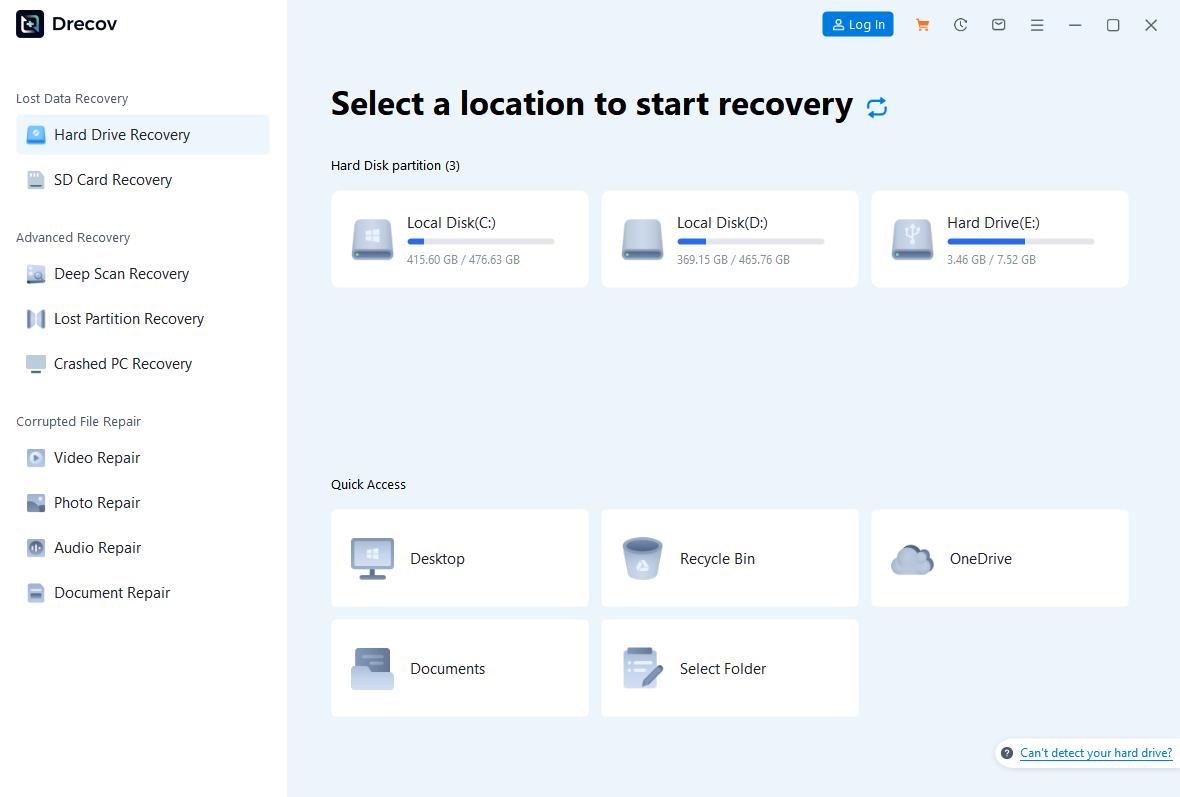
Start Drecov on a working Windows PC. Select the volume or removable device where the full BMP last existed, matching its capacity and identity rather than assuming its drive letter stayed the same. If the image was copied to a new folder and only that copy is corrupt, examine the earlier source or backup first. Choose Lost Partition Recovery only if the former partition is actually absent.
Step 2: Run Quick Scan and compare candidates
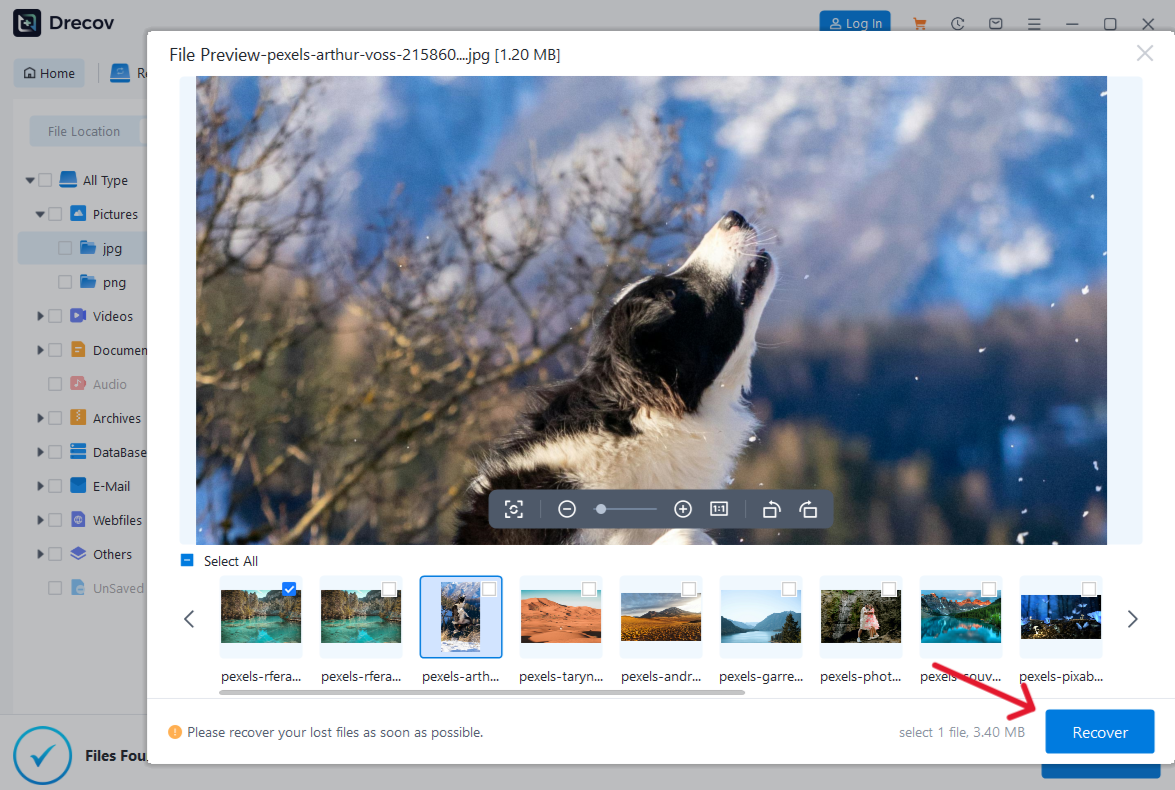
Look for the expected .bmp name, former folder, and date. Check whether the scan finds the original file or a different export. Preview a representative supported image, then compare dimensions and visible content with what you remember. A preview thumbnail is only a sample; it does not prove every pixel or related project asset is present.
Step 3: Try Deep Scan if the source remains stable
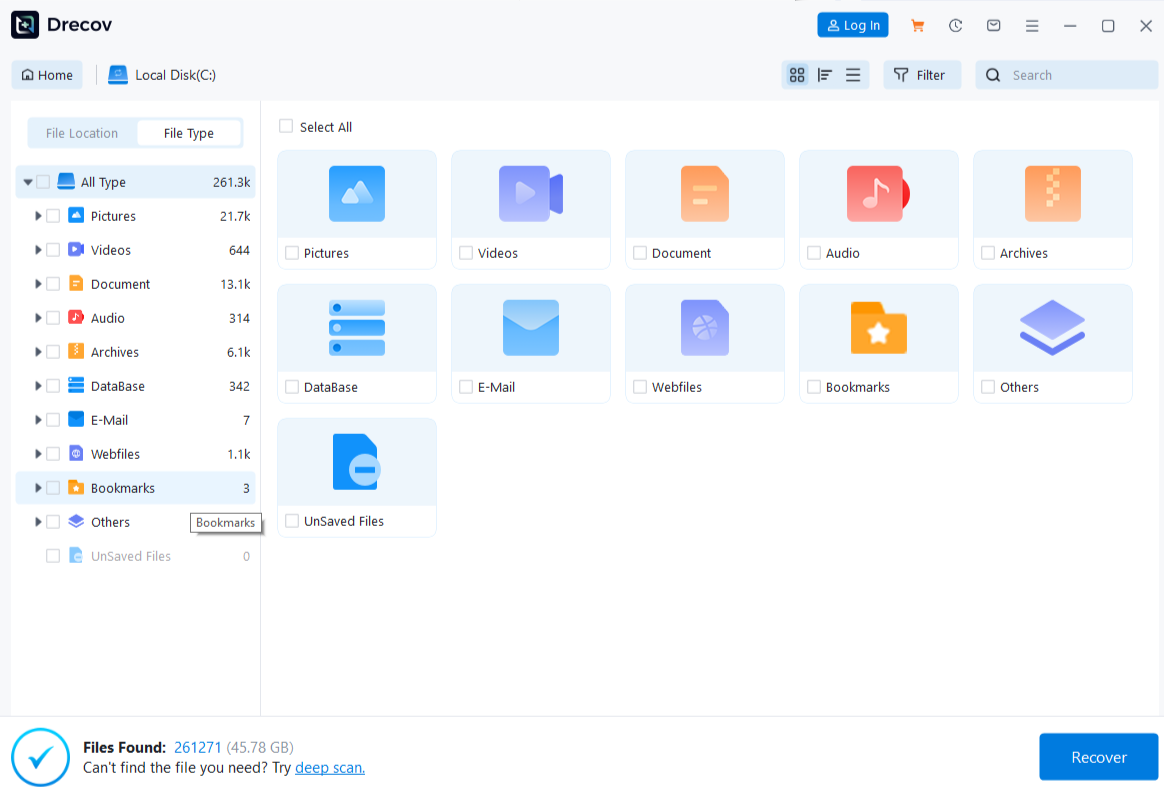
When Quick Scan misses the BMP, run Deep Scan only while the device reads consistently. Filter by image type, location, name, or date where possible. Results without original names may require visual comparison. Do not continue scanning if the source begins disconnecting or producing worsening errors.
Step 4: Save elsewhere and open the recovered image
Recover selected files to the separate healthy device, not the scanned source. If the output is missing from your chosen folder, check any Drecov Folder or Recovery Folder at the destination. Open the result in Photos and Paint, inspect its full dimensions, and zoom into several important areas. The file recovery page explains other missing-file cases; the Drecov homepage lists current recovery modes.
⚠ Warning: Install it on a drive different from the one where your data was lost to prevent overwriting.
FAQs
Can Windows Photos open BMP files?
Yes. Microsoft lists BMP among the image formats supported by Photos. If one BMP fails, test that file in Paint and compare it with another known-good BMP before deciding that Photos is broken.
Will changing .bmp to .jpg make the picture open?
No. Renaming the extension changes the label, not the image data. Open the original with an appropriate viewer or ask the creator to export a genuine JPG copy. Convert only a copy of a readable BMP.
What does a zero-byte BMP mean?
The named file contains no image bytes. Check the original source, a completed download, backup, or earlier export. A recovery scan might find a different deleted copy on stable local storage, but it cannot create pixels inside the empty file itself.
Why does the thumbnail look fine while the full image fails?
Explorer may show a cached preview or an embedded small representation. Open the complete file in more than one viewer and inspect its size. Do not accept a thumbnail as proof that the full-resolution image remains usable.
Conclusion
Most BMP files open directly in Windows Photos or Paint. When one does not, keep the original untouched and distinguish an app-association problem from a zero-byte, incomplete, or missing image. Check the creator’s copy and backups before modifying anything. If the full BMP truly disappeared from stable local storage, Drecov can search the original location and save candidate files to another healthy device. Open the recovered image and inspect its full content before treating the case as solved.
⚠ Warning: Install it on a drive different from the one where your data was lost to prevent overwriting.