






Toshiba Recovery Wizard is a factory-software recovery option on certain Toshiba or Dynabook computers, not a tool for retrieving one missing document. Its factory-image route can erase personal data. Stop at the warning screen if the computer still holds photos, documents, or project files you need. Identify the exact model and recovery option, make a copy to another device, and open sample files from that copy before allowing a reset to begin.
What the wizard is offering on this computer
Recovery menus differ by Toshiba model and age. Some systems show Windows Recovery Environment alongside a separate Toshiba Recovery Wizard. Others use recovery media, a hidden factory image, or Windows’ own Reset options. Read the wording on your actual screen rather than assuming that every menu labeled “recovery” preserves personal files. Dynabook’s recovery-environment guidance explicitly distinguishes Toshiba Recovery Wizard from Windows Recovery Environment and says its factory-software image procedure erases existing programs, documents, and other data.
Check the model label and, if Windows opens, the system information before following model-specific instructions. Keep the charger connected during any eventual system recovery. If the computer is managed by an employer or school, consult its administrator; encryption, device management, and institutional backups may change the safe path. A home user’s recovery partition is not a substitute for a current personal-file backup.
Do not confuse recovery media with a file archive. A manufacturer image aims to return software to a known factory state. It may help a software problem but cannot retrieve the latest version of a document that was never backed up. A restoration that completes successfully can still leave you without the files that were present yesterday.
Decide whether you need a reset at all
What problem brought you to this screen? If Windows boots but one application fails, use that application’s repair options or a targeted Windows troubleshooting path first. If you only need a deleted file, check the Recycle Bin, cloud account, and backup. Factory recovery is much broader than those tasks. If Windows fails to boot, note the exact error, whether the internal drive appears in firmware, and whether the machine can enter Windows Recovery Environment. Startup Repair or a verified backup restore may address a boot problem without immediately rewriting the factory image.
There are situations where a clean factory state is the intended outcome, such as preparing a machine for a new owner after data has been securely handled. That is a different goal from rescuing old files. Do not start the wizard “just to see what it does” if the warning says the drive will be erased. Back out and investigate before crossing the confirmation step.
If the machine clicks, repeatedly loses its internal drive, or shows an implausible drive capacity, stop software recovery attempts. A factory image cannot fix failed storage hardware. Repeated starts and writes may worsen access to remaining data. A disk image or specialist service is a better first discussion when the files are valuable.
Secure personal files before confirming factory recovery
Look for existing copies on a separate USB drive, network backup, or cloud account. Confirm the correct account and dates. Copy current files from Desktop, Documents, Pictures, Downloads, and any application-specific project folders if the system still boots. Do not assume that all game saves, email data, or creative-project files live in those common folders. Check the application where the work was created and record its storage location.
If Windows does not boot but the storage is stable, an appropriate recovery environment or a second Windows PC may let you read the drive before resetting. Keep any BitLocker recovery key available if the volume is encrypted. Work from a copy or image when the source seems unstable. Save rescued files to a different healthy device and open a sample. A copied filename is not proof that a document, archive, or video is complete.
Drecov is Windows data-recovery software for stable, recognizable PC storage. In this Toshiba scenario, it is a way to extract missing or inaccessible personal files before a factory-image operation, not a replacement for the manufacturer’s reset utility. The workflow includes Quick Scan, Deep Scan when appropriate, filters, preview, another healthy recovery destination, and Crashed PC Recovery for supported access situations. It cannot repair failing hardware, remove encryption without authorization, or guarantee recovery after the factory image has overwritten data.
⚠ Warning: Install it on a drive different from the one where your data was lost to prevent overwriting.
Step 1: Choose the original data source
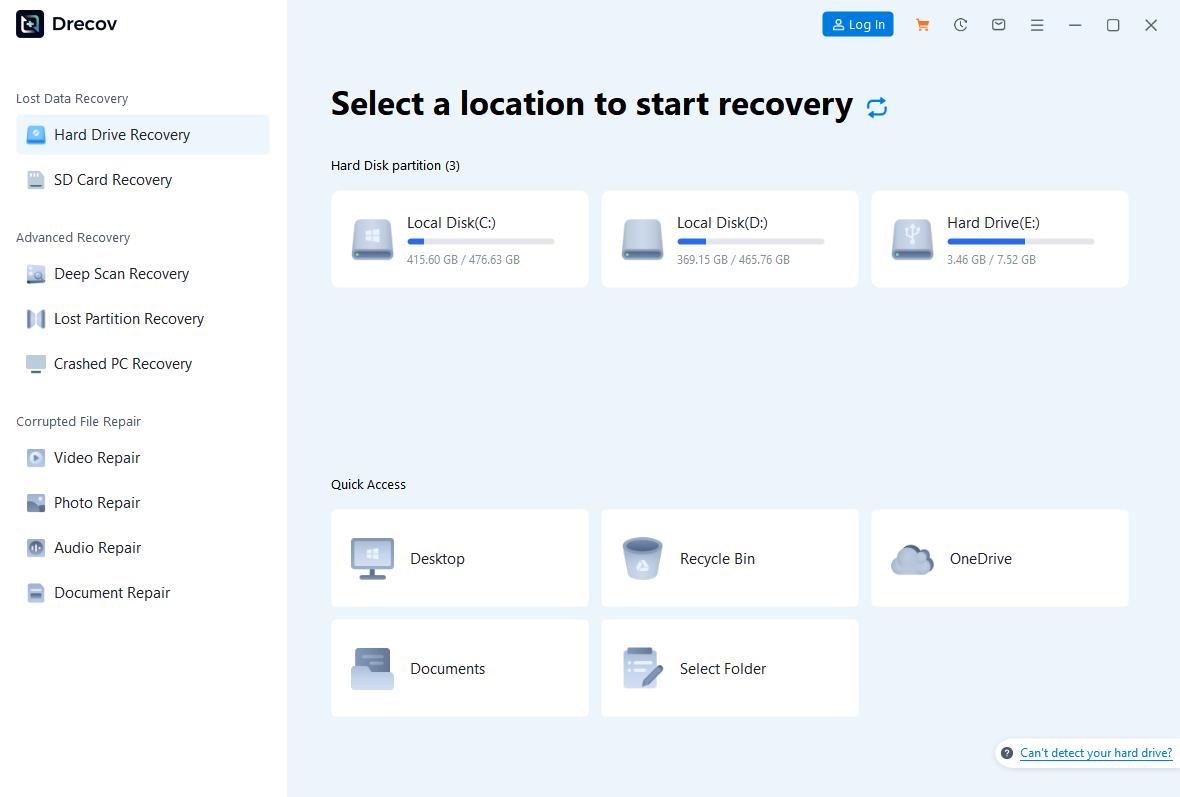
Prepare a healthy external drive for output. Do not install Drecov on the Toshiba partition containing lost files. If the laptop still runs Windows, open Drecov there only if installation can avoid the affected partition; otherwise use a suitable second Windows PC or the verified Crashed PC Recovery route. Select the original user-data partition or connected source drive, not the recovery-media USB. Confirm the displayed drive identity and capacity before scanning.
Step 2: Locate important folders on a stable drive
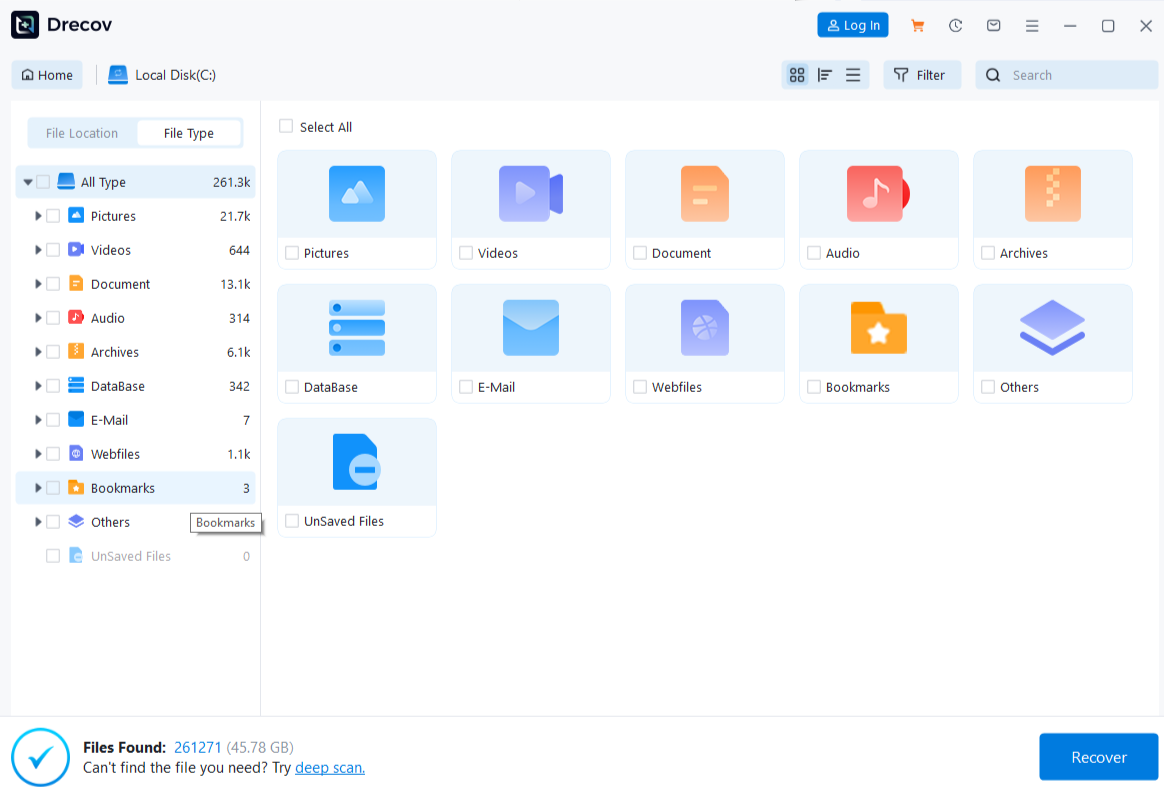
Run Quick Scan first. Browse user-profile folders and filter for the file types you actually need. If a vital file is absent and the drive remains stable, run Deep Scan. Preview representative supported files, remembering that one readable preview does not guarantee every page or frame. Stop direct scans if the drive repeatedly disconnects, clicks, or develops serious read errors. Seek imaging or professional help instead of pushing on to the factory reset.
Step 3: Save, open, and count the recovered files
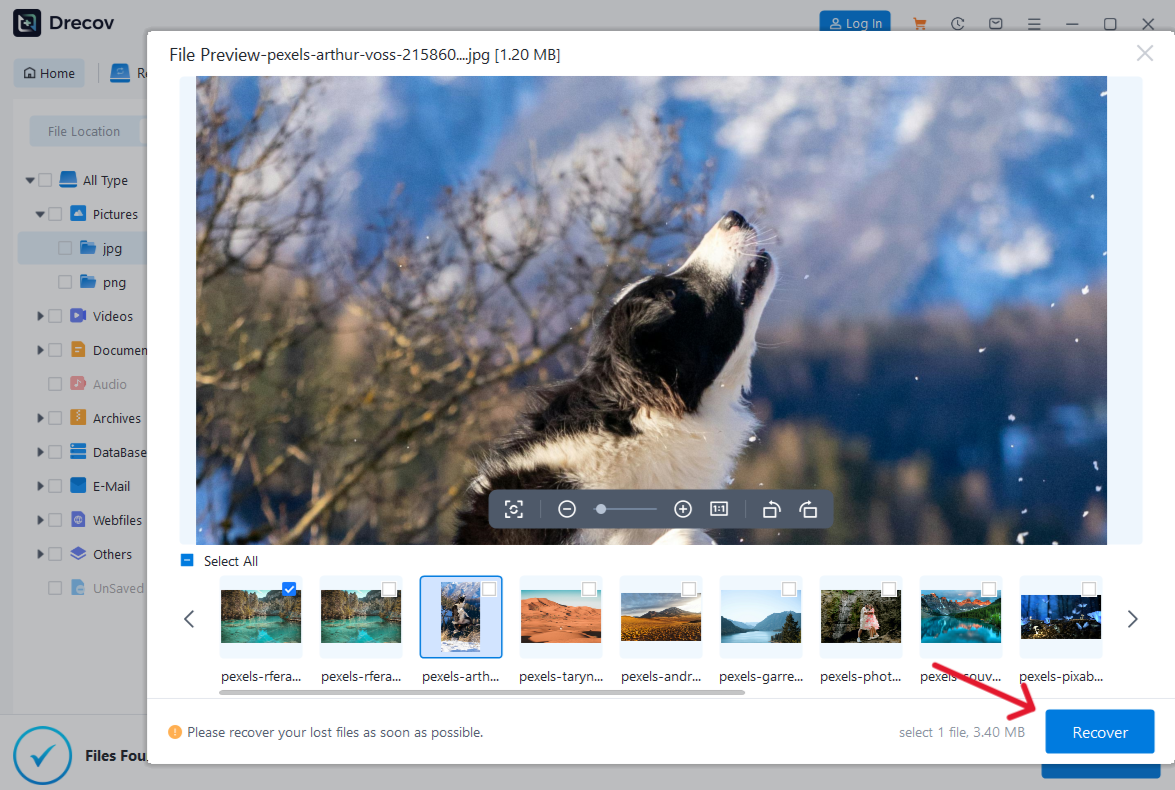
Recover selected candidates to the separate healthy device, never back to the Toshiba source. If output is not where you expected, inspect the Drecov folder or Recovery folder at the selected destination. Open documents, inspect full photos, and test project archives. Compare counts with a known folder list. Only after the important files are verified should you revisit the wizard’s erase warning.
⚠ Warning: Install it on a drive different from the one where your data was lost to prevent overwriting.
Understand the choices and warnings before proceeding
Read every available choice on your model’s screen. A label such as “restore factory image” means something different from restoring one personal file. Some older Toshiba instructions describe recovery partitions, recovery DVDs, or options for the factory image. Those details vary by model and do not justify a universal click path. If the screen warns that data will be deleted, treat that as the governing condition even if a third-party tutorial sounds more reassuring.
Check that the backup is physically separate from the internal disk that the wizard will write. A second partition on the same disk is not a safe independent backup if the recovery process repartitions or overwrites the device. Disconnect the backup drive once its contents have been verified, unless official model instructions require it for a specific step. Keep recovery media separate from the drive holding your only file copy.
After factory recovery, expect to reinstall applications, sign in again, and apply current updates according to the device’s supported Windows version. Do not assume the restored factory image is a current secure installation. Before transferring backed-up files onto the reset PC, open a few on another computer if possible; this helps reveal a corrupted backup before you rely on it.
If the wizard already ran, preserve what remains
If you completed the factory restoration before making a backup, avoid adding new files to the internal drive. Check external backups and cloud accounts from another device first. The wizard may have rewritten areas that once held personal data, and further installation or downloads can overwrite more. A scan may find some remnants on stable media, but no software can promise to reconstruct data that has been fully overwritten. SSD TRIM and the amount of rewriting can make recovery particularly limited.
Do not undo a finished reset by running another reset. Identify the old file locations and the current disk layout, then decide whether recovery software is reasonable. Drecov’s file recovery workflow can search a stable source, but it does not reverse the manufacturer’s imaging operation. If the old partition is missing or changed, its Lost Partition Recovery mode may help locate files from a lost partition; it is not partition-table repair and does not guarantee that the old structure survives.
For a computer that cannot boot into Windows, the boot-device guidance may help distinguish a firmware detection problem from an operating-system issue. Whatever route you choose, recover to another healthy device and verify files before trying more modifications to the Toshiba drive.
FAQs
Does Toshiba Recovery Wizard keep my personal files?
Do not assume it does. Dynabook’s factory-image guidance warns that the process erases existing documents and other data. Read the specific warning on your model and protect files first.
Is Toshiba Recovery Wizard the same as Windows Recovery Environment?
No. They can appear near each other, but the Toshiba factory-image choice has a different purpose and impact. Identify the exact menu item before proceeding.
Can a recovery partition act as my backup?
It usually contains factory software, not your latest personal files. Keep a separate backup that you have tested by opening copied files.
What if my Toshiba laptop does not show its drive?
Stop at detection and physical checks. A factory image cannot fix a missing or failing drive. Seek safe imaging or specialist advice if important data remains on it.
Will Drecov undo a completed factory reset?
No. It may find surviving files on stable storage, but data overwritten by the reset cannot be guaranteed. Scan only when the source is suitable and save results elsewhere.
Conclusion
Toshiba Recovery Wizard can be useful when your goal is a factory software state, but its erase warning makes file protection the first job. Identify the model and recovery choice, back up or recover important data, and verify it on another device before confirming a reset. Drecov can search a stable Toshiba drive for missing files and save recoverable copies elsewhere; it cannot make a factory-image operation harmless or repair physical failure. Proceed only after the files you need are genuinely safe.
⚠ Warning: Install it on a drive different from the one where your data was lost to prevent overwriting.