







Why dash cam videos suddenly become unplayable
Dash cam videos are widely used to record driving activity, accidents, and road conditions. A dash cam video camera or car dvr video dash cam continuously records footage onto a memory card while driving. However, many users encounter a situation where recorded files suddenly cannot be opened or played.
The error “Dash Cam Video can’t play” usually appears when the video file structure is damaged, incomplete, or incompatible with the media player. This often happens after sudden vehicle shutdowns, improper SD card removal, or power interruptions during recording.
Dash cams rely on continuous writing to storage. If recording is interrupted even for a second, the file header or index structure may be damaged, making the dash cam video unreadable even though the file still exists on the card.
Common triggering situations include:
- Engine turning off while recording is still active
- Sudden removal of memory card
- Overwritten storage space in loop recording
- Firmware instability in dash cam devices
Understanding these causes is essential before attempting any repair or recovery process.
Common reasons why dash cam video cannot play
When dash cam videos fail to open, the problem is usually related to file corruption, storage damage, or format issues. Because dash cams continuously record and overwrite footage, they are more vulnerable to data errors than standard cameras.
Test environment
- Device: 1080p car DVR dash cam
- Storage: 64GB microSD card
- Scenario: accident recording interrupted by sudden vehicle shutdown
Main causes include:
- Damaged video file structure
- Unsupported or corrupted video format
- Bad sectors on SD card
- Incomplete recording process
- Low-quality or counterfeit memory cards
- Firmware glitches in car dvr video dash cam systems
In this case, the dash cam video file existed but could not be decoded because the recording process was interrupted before completion.
⚠️Warning: Using damaged or low-quality memory cards significantly increases the risk of permanent video corruption.
Signs your dash cam video file is corrupted
Before a file becomes completely unplayable, there are usually warning signs that indicate corruption in dash cam videos.
Common symptoms include:
- Video freezes during playback
- Audio plays but video is missing
- File shows 0-second duration
- Playback errors appear immediately
- Frames skip or video stutters
Test environment
- Device: 4K dual-lens dash cam
- Storage: SanDisk Extreme microSD card
- Issue: corrupted recording after sudden engine shutdown
These symptoms suggest that the video header or encoding structure has been partially damaged.
Why Dash Cam Video can’t play errors happen frequently
The Dash Cam Video can’t play error is common because dash cams operate under continuous loop recording conditions. This means old footage is constantly overwritten to free up storage space.
Other contributing factors include:
- Cheap or fake SD cards
- Extreme heat inside vehicles
- Sudden voltage drops during driving
- Improper formatting of storage devices
- Firmware bugs in dash cam video camera systems
Because a car dvr video dash cam must constantly write data in real time, even small interruptions can cause file corruption.
⚠️Warning: High temperatures inside parked cars can significantly reduce SD card lifespan and stability.
How to fix dash cam videos that won’t play
Repair corrupted dash cam videos using professional recovery tools
One of the most effective ways to fix unplayable dash cam videos is to use specialized repair software capable of reconstructing damaged file structures.
PandaOffice Drecov supports deep scanning and recovery of corrupted video files from dash cam video camera devices, SD cards, and storage drives.
Test environment
- Device: 4K car DVR dash cam
- Storage: corrupted 128GB microSD card
- Issue: multiple videos showing “Dash Cam Video can’t play” error
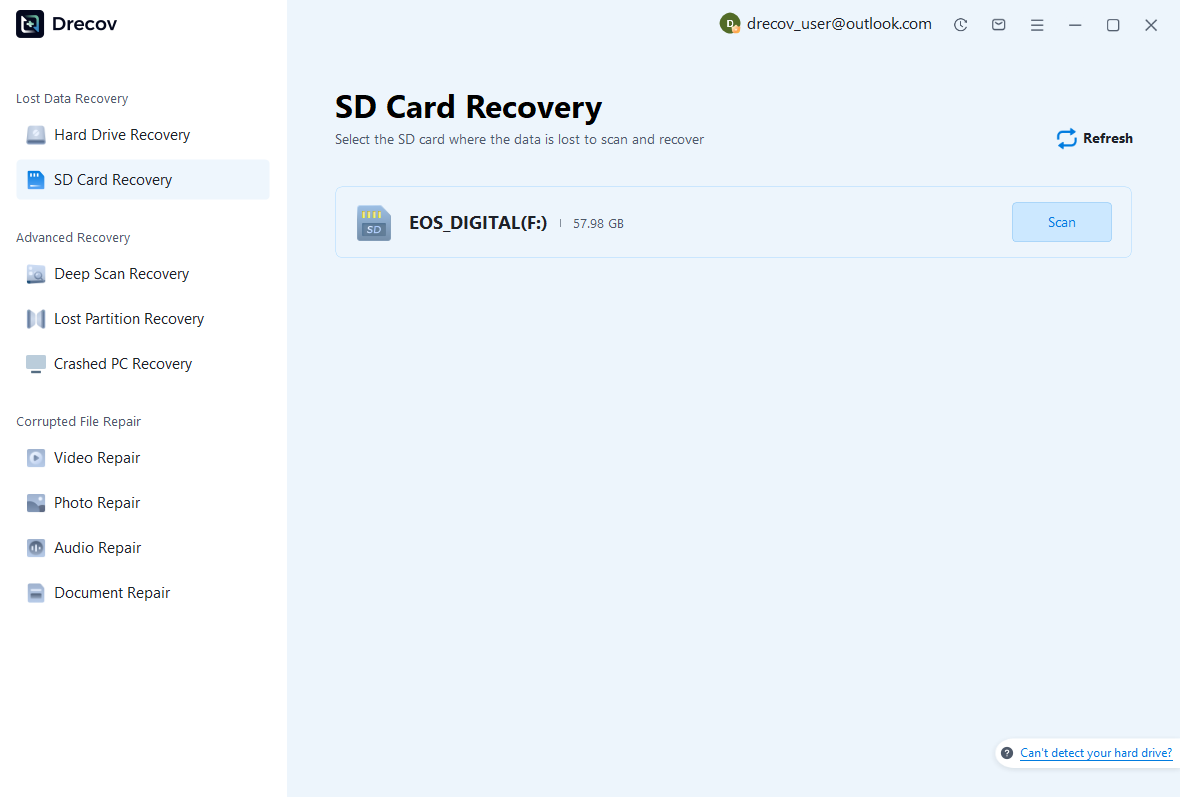
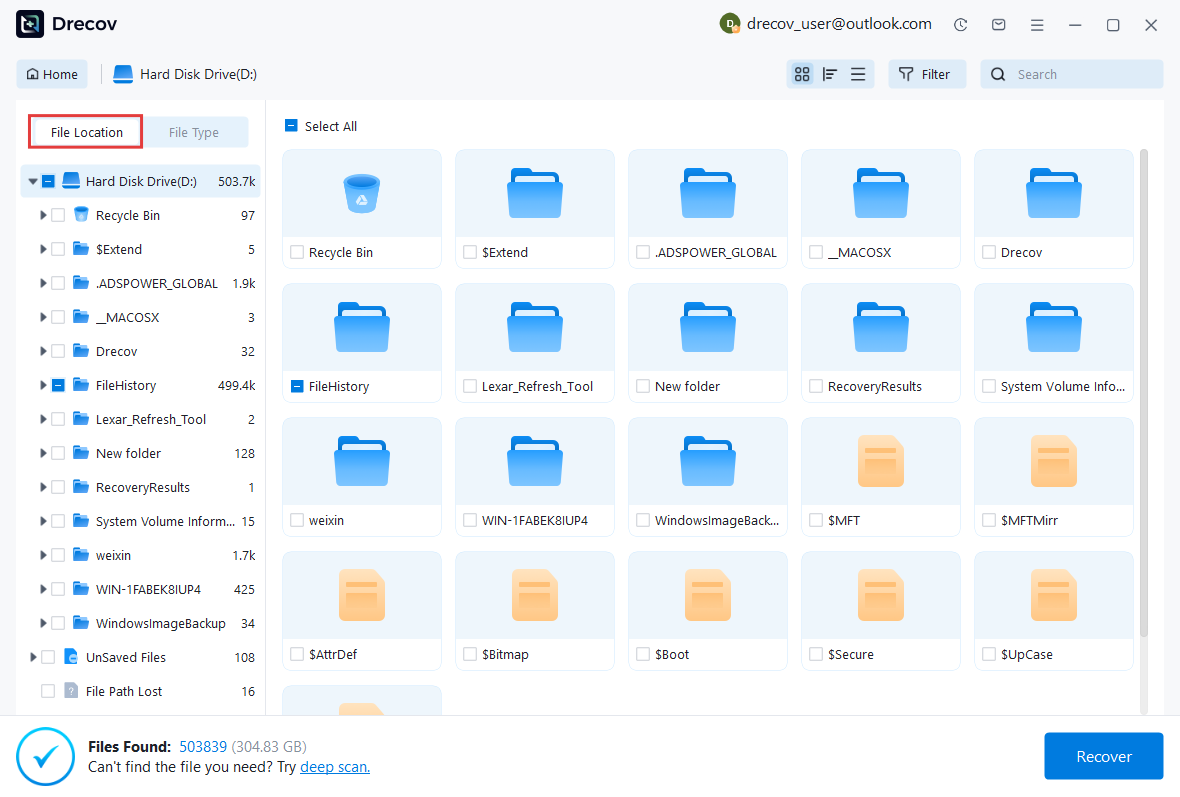
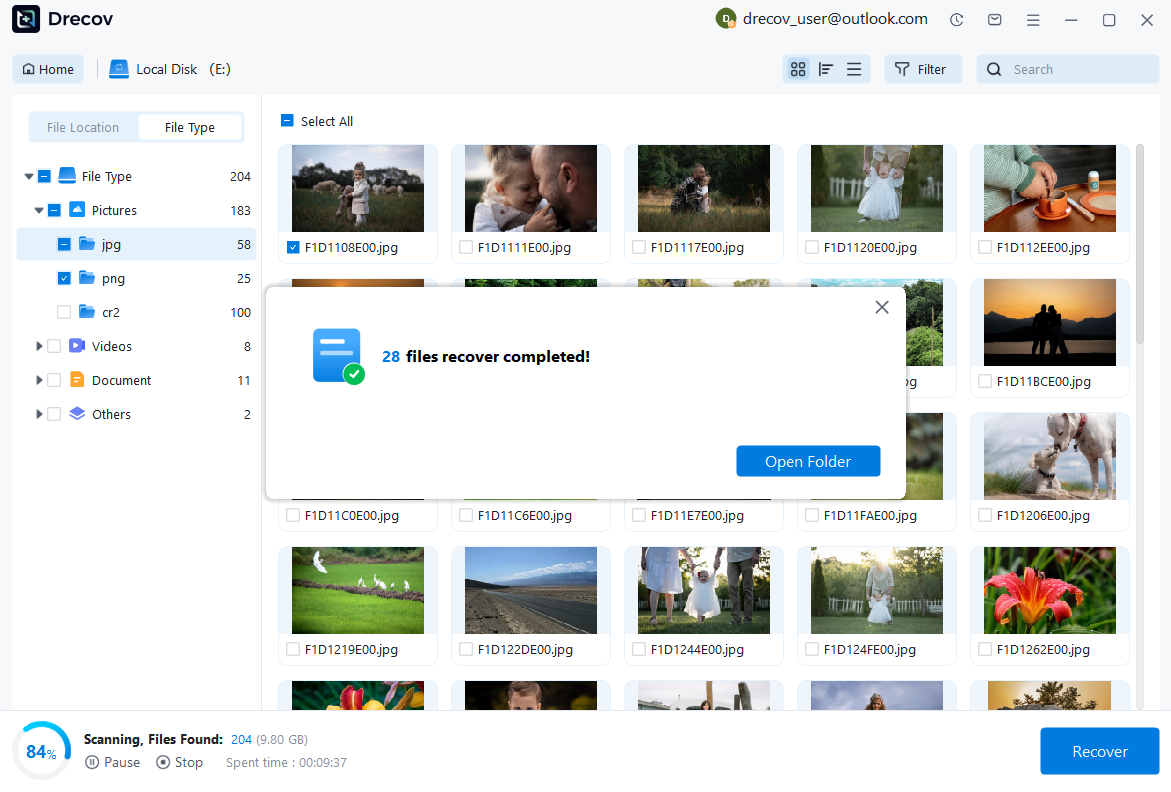
Repair process:
Connect memory card to computer
Insert the SD card into a card reader and connect it to a PC.
Launch recovery software
Open PandaOffice Drecov and select the affected storage device.
Perform deep scan
Scan for damaged or missing dash cam video files.
Repair video structure
The tool reconstructs broken video headers and encoding data.
Preview and save recovered files
Check repaired videos before exporting them to a safe location.
This method is especially useful for accident footage that needs urgent recovery.
Why Choose PandaOffice Drecov Recovery Software?
PandaOffice Drecov offers a fast, secure, and user-friendly solution for recovering lost files across multiple scenarios. Whether you need email recovery, ZIP File Recovery, format data recovery, or help to recover deleted drafts Outlook, the software provides reliable recovery performance for both personal and business users.
PandaOffice Drecov supports recovery from formatted hard drives, SSDs, USB drives, SD cards, and external storage devices. Its advanced scanning engine can locate deleted archives, damaged ZIP files, lost Outlook drafts, and accidentally removed documents with high accuracy. For users searching for how to find deleted messages in Teams, PandaOffice Drecov can also help recover exported chat files, attachments, and related local cache data when available.
Key advantages include:
- Deep scan technology for complex data loss situations
- Support for emails, archives, videos, photos, and office documents
- Recovery from accidental deletion, formatting, corruption, and system crashes
- Easy preview before restoring files
- Compatible with Windows and multiple storage devices
Unlike complicated enterprise recovery tools, PandaOffice Drecov keeps the recovery process simple. Users can scan, preview, and restore files in just a few steps without technical expertise.
Whether you are dealing with lost Outlook drafts, corrupted ZIP archives, formatted drives, or missing communication data, PandaOffice Drecov provides an efficient and practical recovery experience designed to minimize downtime and protect important files.
Convert dash cam video format for compatibility
Sometimes dash cam video files are not corrupted but simply unsupported by the media player being used. This can cause playback errors even if the file itself is intact.
Test environment
- Device: Nextbase dash cam
- System: Windows 11
- Issue: MP4 file not opening in default player
Steps to fix:
Identify video format
Check whether the file is MP4, AVI, or MOV.
Convert video format
Use a video converter to change the file into a widely supported format like MP4 (H.264).
Test playback
Open the converted file using VLC Media Player or another compatible player.
This method is effective when the dash cam video file is not damaged but simply incompatible.
Repair SD card errors causing dash cam video failure
A corrupted memory card is one of the most common reasons why dash cam videos fail to play properly.
Test environment
- Device: 1080p car DVR dash cam
- Storage: 32GB microSD card
- Issue: file system errors after repeated loop recording
Repair process:
Insert SD card into computer
Connect the memory card using a card reader.
Run disk repair tool
Use Windows error-checking tools to detect and fix file system issues.
Reformat SD card if needed
If repair fails, format the card after backing up data.
Test new recordings
Record a short dash cam video to verify stability.
⚠️Warning: Formatting will permanently erase all existing video data on the storage device.
Update dash cam firmware for better performance
Outdated firmware in a dash cam video camera can cause recording errors, freezing, and corrupted video files.
Test environment
- Device: dual-channel car DVR
- Problem: repeated corrupted recordings during driving
Steps:
Download latest firmware
Visit the manufacturer’s official website.
Install firmware update
Follow provided installation instructions carefully.
Restart dash cam
Reboot the device and test new recordings.
Firmware updates often resolve hidden encoding issues affecting car dvr video dash cam stability.
Prevent future dash cam video playback issues
Preventing corruption is always more effective than repairing damaged files.
Recommended practices include:
- Use high-quality SD cards only
- Format memory cards regularly
- Avoid removing SD cards during recording
- Prevent overheating inside vehicles
- Keep firmware updated
A properly maintained dash cam video camera significantly reduces the risk of file corruption and playback errors.
⚠️Warning: Interrupting recording or power supply during active video capture is the most common cause of corrupted dash cam videos.
Prevent future dash cam video playback issues
Preventing corruption in dash cam videos is far easier than repairing damaged files afterward. Most playback failures happen because of storage instability, sudden power loss, or poor maintenance habits rather than the dash cam itself failing.
A stable dash cam video camera setup relies on consistent writing conditions, high-quality storage media, and proper handling during every recording cycle. Since a car dvr video dash cam continuously loops recordings, even small interruptions can create long-term file damage.
Test environment
- Device: 1080p dual-lens dash cam
- Storage: 128GB high-endurance microSD card
- Usage: daily commuting (2–3 hours recording per day)
- Condition: repeated overwrite cycle for 30 days
In this environment, stable performance was achieved only after improving storage quality and adjusting usage habits.
Best practices to prevent “Dash Cam Video can’t play” errors
Use high-endurance memory cards
Dash cams write data constantly, so standard SD cards wear out quickly. High-endurance cards are designed for continuous recording workloads and reduce the risk of corrupted dash cam video files.
Format the memory card regularly
Formatting every 2–4 weeks helps maintain file system health and reduces fragmentation inside the storage device.
Avoid removing the card during recording
Removing the SD card while the dash cam video camera is still writing data is one of the most common causes of file corruption.
Protect the device from overheating
High temperatures inside parked vehicles can weaken memory cells and increase the likelihood of unreadable dash cam videos.
Keep firmware updated
Manufacturers often release updates to fix recording bugs and improve compatibility with newer storage cards.
⚠️Warning: Sudden power disconnection during active recording is one of the leading causes of permanently corrupted dash cam footage.
Frequently asked questions about dash cam video playback problems
Why do dash cam videos suddenly stop playing?
Most dash cam videos stop playing due to file corruption caused by interrupted recording, memory card errors, or sudden power loss. When the file structure is incomplete, the media player cannot decode the video correctly, resulting in the “Dash Cam Video can’t play” error.
Can corrupted dash cam video files be repaired?
Yes, many corrupted dash cam video files can be repaired depending on the level of damage. If the file header or metadata is partially intact, recovery tools can rebuild the structure and restore playback. Severe physical damage to storage devices may reduce success rates.
Why does my car DVR dash cam keep producing unreadable videos?
A faulty car dvr video dash cam may produce unreadable files due to low-quality SD cards, overheating, outdated firmware, or unstable power supply. Loop recording also increases the chance of overwrite-related corruption if storage is nearly full.
What is the safest way to store dash cam video footage?
The safest way to store dash cam videos is to regularly transfer important footage to a computer or cloud storage. Using high-endurance SD cards, proper formatting habits, and safe eject procedures greatly reduces the risk of losing critical recordings.






