







If you have ever searched your computer for a folder that mysteriously vanished, chances are the files are still there — they are just hidden. Windows 10 hides certain files and folders by default to protect critical system data and reduce clutter inside File Explorer. The good news? You can reveal them in just a few clicks.
This guide walks you through everything you need to know about how to see hidden files on windows 10 safely and effectively. Whether you are troubleshooting missing folders, recovering important documents, or simply curious about how Windows works behind the scenes, this article covers it all in simple English.
What Are Hidden Files in Windows 10?
Hidden files are files or folders that Windows intentionally conceals from normal view inside File Explorer. Think of them like the wiring behind the walls of your house. You usually do not need to see them while living comfortably, but they become important when something breaks or requires maintenance.
Windows 10 hides these files mainly to prevent accidental deletion or modification. Many hidden items are linked to system performance, application settings, or user preferences. For example, your browser history, saved app configurations, and temporary system files often exist in hidden directories. Microsoft specifically hides many of these items because deleting or changing them incorrectly could cause apps or Windows itself to malfunction.
Some hidden files are harmless and useful to access. Others are critical operating system files that should only be handled carefully. This is why understanding the difference between standard hidden files and protected operating system files matters so much.
Why Windows Hides Certain Files
Windows hides files for three major reasons:
| Reason | Explanation |
| System Protection | Prevents accidental deletion of critical files |
| Reduced Clutter | Keeps File Explorer cleaner and easier to use |
| Application Settings | Stores app configurations out of sight |
Imagine opening your kitchen drawer and seeing every screw, wire, and appliance component mixed together. It would become chaotic instantly. Windows uses hidden files to keep the operating system organized and user-friendly.
According to community discussions on Reddit and Microsoft forums, many users accidentally hide files without realizing it, which often creates confusion when folders suddenly disappear. Consequently, knowing how to see hidden files on windows 10 becomes an essential skill for everyday troubleshooting.
Difference Between Hidden Files and Protected System Files
Not all hidden files are equal. Standard hidden files are usually safe to view. Protected operating system files are much more sensitive.
Regular hidden files may include:
Desktop.iniThumbs.dbAppDatafolders- Temporary cache files
Protected operating system files include:
- Boot configuration files (
bootmgr) - Critical Windows DLL files
- System registry backups
Windows keeps these extra protected because deleting even one important system file could stop your computer from functioning properly. This extra layer acts like a safety lock on dangerous machinery.
Quickest Way to Show Hidden Files
The easiest method to view hidden files in Windows 10 takes less than 10 seconds. No technical skills required.
Using File Explorer
Microsoft officially recommends using File Explorer settings to reveal hidden files. This direct approach ensures you can view what you need without altering core system layouts.
Follow these simple steps:
- Step 1: Open File Explorer by clicking its icon on the taskbar or pressing the Windows Key + E on your keyboard.
- Step 2: Click the View tab located in the top menu bar of the File Explorer window.
- Step 3: Locate the Show/hide section on the right side of the ribbon interface.
- Step 4: Check the box labeled Hidden items.
Once enabled, hidden files and folders immediately appear in a faded or semi-transparent style. This is the fastest and safest approach for most users. Hidden files will remain visible until you disable the setting again.
Keyboard Shortcut Method
If you love shortcuts, Windows makes things even faster:
- Step 1: Press Windows + E to open File Explorer.
- Step 2: Press Alt + V to activate the View tab menu.
- Step 3: Press H to instantly toggle the Hidden items checkbox.
Keyboard shortcuts may feel small, but they save a surprising amount of time if you regularly troubleshoot Windows problems or manage files professionally.
How to Show Hidden Files Through Folder Options
Sometimes the simple method does not work properly due to system configurations or local group policies. In that case, Folder Options provides deeper control over how Windows handles concealed data.
Step-by-Step Instructions
Here is the complete process to modify these parameters through the Control Panel system:
- Step 1: Open File Explorer, then click on the View tab at the top.
- Step 2: Click on the Options icon (or click the drop-down and select Change folder and search options).
- Step 3: In the new window that opens, click to open the View tab.
- Step 4: Scroll down under Advanced settings until you locate the folder icon labeled Hidden files and folders.
- Step 5: Select the radio button next to Show hidden files, folders, and drives.
- Step 6: Click Apply, then press OK to save your changes.
This alternative method works particularly well if hidden files are not appearing correctly through the quick checkbox method. Many Windows troubleshooting guides still recommend Folder Options because it provides more advanced visibility settings.
Changing Advanced View Settings
Inside the same menu, you may notice another setting called Hide protected operating system files (Recommended). Unchecking this reveals extremely sensitive Windows system files that are deeper than normal hidden directories.
Be careful here. These files remain hidden for good reasons. Accidentally deleting them can break Windows features, disrupt applications, or even prevent the computer from booting properly. Think of this setting like opening the engine compartment of a moving car. Fascinating? Yes. Risk-free? Definitely not.
How to View Protected Operating System Files
Advanced users sometimes need access to protected system files while repairing Windows issues, modifying advanced settings, or fixing deeply rooted errors.
To enable them safely:
- Step 1: Open the Folder Options menu using the steps outlined in the section above.
- Step 2: Go to the View tab and locate the entry Hide protected operating system files (Recommended).
- Step 3: Uncheck the box next to this setting.
- Step 4: A stern warning message will pop up on your screen. Read it carefully, then click Yes to confirm.
- Step 5: Click Apply and then OK.
Immediately, you will notice many additional files appearing across your system drive (usually the C: drive), including ntldr, pagefile.sys, and hiberfil.sys.
Important Safety Warnings
Protected operating system files differ significantly from normal hidden files. These include:
- Boot loaders
- Driver files
- System recovery files
- Core Windows configurations
Deleting or modifying them carelessly may lead to critical issues:
| Risk Element | Possible Outcome |
| Deleted boot file | Windows fails to start entirely |
| Missing DLL | Core software programs crash instantly |
| Corrupted system config | Blue Screen of Death (BSOD) errors occur |
| Deleted driver file | Hardware components stop working |
Technology experts and Microsoft support documentation consistently warn users not to modify protected files unless they fully understand the exact consequences of their actions.
Using Command Prompt to Find Hidden Files
Sometimes File Explorer still does not reveal certain files, or your graphic user interface locks up. This is where Command Prompt (CMD) becomes extremely useful.
CMD Commands Explained
To execute these commands, you must first launch the text interface:
- Step 1: Press the Windows Key, type cmd, right-click Command Prompt, and choose Run as administrator.
- Step 2: Navigate to the folder you want to search by typing
cd C:\YourTargetDirectoryand pressing Enter. - Step 3: Type the command
dir /aand hit Enter.
The /a switch instructs the system to display all files, including hidden and system files. If you want to filter your results more precisely, you can append specific attributes:
- To see hidden files only:
dir /a:h - To see hidden system files only:
dir /a:s
The beauty of Command Prompt is that it bypasses some File Explorer limitations. It is like switching from looking through a window to walking directly inside the building.
How to See Hidden Files on Windows 10 and Restore Lost Data
Many times, learning how to see hidden files on windows 10 is born out of necessity because a vital document, photo collection, or business archive has completely vanished. You modify your folder settings, look through the directories, check the command prompt, yet the files are still nowhere to be found.
Why does this happen? When files are deleted, corrupted by a virus, or lost during a sudden system crash, Windows does not just hide them — it removes their directory pointers. The data still sits on your hard drive, but it becomes invisible to the operating system’s standard file system structure. At this stage, traditional File Explorer adjustments simply won’t work. You need specialized software designed to scan the physical sectors of your storage drive to locate these ghost files and bring them back to life.
Introducing the PandaOffice Drecov data recovery software Solution
When manual methods fall short, utilizing professional tools becomes the most reliable strategy. The PandaOffice Drecov data recovery software stands out as a powerful, user-friendly tool engineered explicitly for these complex scenarios. Whether your files became hidden due to a malfunctioning system update, accidental formatting, malicious malware, or partition damage, this tool can dig deep into your storage media to reconstruct lost directories.
It handles hundreds of file formats perfectly, ensuring your photos, videos, database files, and office documents return intact. Most importantly, it reads your drive safely without overwriting the delicate data you are trying to rescue.
⚠ Warning: Install it on a drive different from the one where your data was lost to prevent overwriting.
Step-by-Step Guide to Recover Hidden and Lost Files Using PandaOffice Drecov
Follow these explicit steps to scan your drive and recover files that cannot be revealed by basic Windows settings:
- Step 1: Launch the program and select your target location. Open the interface. On the main dashboard, you will see a list of available local drives, external disks, and common locations like the Desktop or Recycle Bin. Click on the specific drive where your hidden files were originally saved.

- Step 2: Initiate the comprehensive drive scan. Click the Scan button. The software will instantly begin a quick scan, followed automatically by a deep sector scan. A progress bar will indicate the remaining time, and found files will begin populating the screen in real-time.

- Step 3: Filter and preview the uncovered files. Once the scan finishes, use the left-hand folder tree to navigate through the files. You can look specifically for hidden system folders or lost partitions. Click on individual documents or images to view a live preview, ensuring the file is fully intact before recovery.
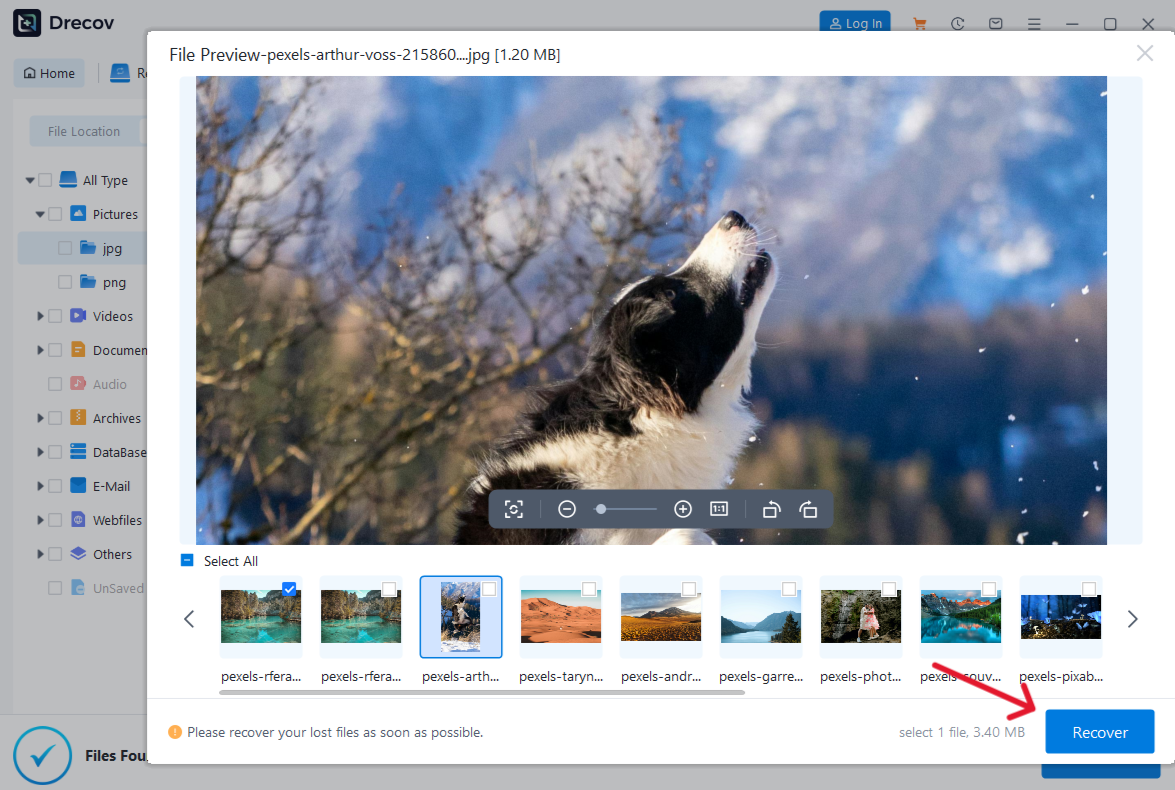
- Step 4: Execute the file recovery process. Check the boxes next to the folders or specific files you wish to restore. Click the Recover button at the bottom right. A prompt will ask you to select a destination directory.
⚠️ CRITICAL WARNING: Always save your recovered files to an external hard drive, USB flash drive, or a completely different partition than the one you just scanned. Saving them back to the original location can overwrite hidden remnants of data that still need to be rescued!
If you ever experience system failures or wish to expand your general troubleshooting knowledge, check out these highly detailed guides:
- If your system fails to boot due to damaged files, you should learn how to create a Windows 10 recovery disk to safeguard your operating system from permanent failure.
- For users working across multiple systems who run into office productivity crises, discovering how to recover PowerPoint files on Mac can save hours of lost presentation work.
- If your browser settings suddenly change or go missing after an update, finding out how to get your Google Chrome bookmarks back will restore your everyday workspace instantly.
Why Hidden Files Sometimes Do Not Appear
You enabled “Show Hidden Files,” yet the folder is still missing. Frustrating, right? Several specific system anomalies can cause this issue to occur.
Corrupted Settings
Windows settings occasionally become corrupted after major feature updates, sudden power outages, or improper registry tweaks. When this happens:
- Hidden files may refuse to appear even if the option is checked.
- Folder Options may reset automatically to default every time you close the window.
- Explorer settings may behave unpredictably or crash entirely.
Restarting File Explorer via Task Manager or resetting the folder views back to defaults inside the Folder Options menu usually fixes this mechanical glitch.
Malware or Virus Issues
Certain sophisticated viruses intentionally hide files and take over system permissions to confuse users or prevent their own removal. Common symptoms of malware interference include:
- Files suddenly disappearing from your desktop or documents folder.
- Hidden settings turning off automatically right after you enable them.
- Strange, unclickable shortcuts replacing your actual local folders.
Running a trusted antivirus scan is essential if files vanish unexpectedly. Many Microsoft support discussions mention malware as a common cause of permanently hidden folders, which requires deep system cleaning before files can be unhidden permanently.
How to Hide Files Again After Viewing Them
Once you finish troubleshooting or retrieving your data, hiding files again is a smart operational practice. Leaving system files visible permanently increases the chance of accidental deletion during routine cleanup tasks.
Re-Enabling Hidden Mode
To return your system back to its secure default environment, perform the quick switch:
- Step 1: Open File Explorer (Windows Key + E).
- Step 2: Navigate directly to the View tab.
- Step 3: Clear the checkbox next to Hidden items.
Alternatively, if you prefer using the advanced layout, return to the Folder Options menu, navigate to the View tab, select Don’t show hidden files, folders, or drives, and click Apply. This instantly restores the default safer Windows environment, keeping system files safe from stray mouse clicks.
Best Practices for Managing Hidden Files
Managing hidden files safely requires a little discipline and structured habits. Here are some proven best practices used by professional IT experts:
- Create system backups first: Before modifying hidden folders, create a system restore point or back up your system partition. This prevents permanent data loss if an error occurs.
- Avoid deleting unknown files: If you don’t know what a file does, look it up online before touching it. Reducing system damage risk is easier than fixing a broken OS.
- Use antivirus protection: Keep your security software active. Malware often exploits hidden folder structures to run background processes undetected.
- Hide files again afterward: Once you complete your tasks, toggle the visibility settings back to hidden. This prevents accidental edits during normal computer use.
- Use admin privileges carefully: Only grant administrative access to commands and applications you fully trust. This limits unwanted system-wide changes.
Professional IT technicians often recommend making a restore point before editing advanced system folders. That way, you can easily roll back changes if something goes wrong. Also, remember this important truth: Hidden does not mean secure. Anyone with basic Windows knowledge can reveal hidden files in seconds. If you need real protection for private data, utilizing file encryption or password-protected external storage is much safer.
Hidden files usually appear semi-transparent or faded to distinguish them from normal files. This visual effect helps users instantly identify which items carry hidden attributes so they don’t treat them like standard files.
Yes. Some malware hides files intentionally to avoid detection by standard users. If files suddenly disappear or become hidden unexpectedly without your input, run a full antivirus scan immediately.
Not always. Some hidden files are temporary caches and completely harmless to delete, while others are critical system configuration files. Never delete unknown hidden files without researching their specific purpose first.
4. How do I permanently unhide a folder?
Right-click the specific folder, choose Properties, and uncheck the Hidden attribute box at the bottom of the General tab. Click Apply and choose whether to apply the changes to subfolders if prompted.
Open File Explorer using Windows + E, then use the quick keyboard sequence Alt + V followed by H to toggle the visibility of hidden items instantly.
Conclusion
Learning how to see hidden files on windows 10 is one of those surprisingly useful computer skills that saves time, frustration, and sometimes even lost data. Whether you are trying to recover missing documents, troubleshoot software problems, or simply understand how Windows works internally, enabling hidden file visibility gives you deeper access to your computer.
Windows hides files mainly to protect users from accidental mistakes and reduce clutter inside File Explorer. Using the built-in View settings or Folder Options makes revealing hidden files simple and safe for most situations. Advanced tools like Command Prompt provide even greater control for power users and IT professionals, while specialized solutions like PandaOffice Drecov bridge the gap when those hidden files turn out to be deleted data.






