







Steam allows players to store, manage, and synchronize their game progress across different devices. During gameplay, most Steam titles create save files that record important information, including completed levels, character upgrades, inventory items, achievements, and personalized settings.
However, many players encounter situations where their progress suddenly disappears. This can happen after reinstalling a game, replacing a hard drive, reinstalling Windows, moving to a new computer, or experiencing unexpected file deletion. When this happens, users often search for solutions related to lost game data on steam.
Steam data loss does not always mean the entire game has disappeared. In many cases, the installed game files remain intact, but the personal save data becomes unavailable. Since Steam stores game installation files and save files separately, finding the game folder does not necessarily restore previous progress.
Issues involving steam game data lost may occur because of disabled Steam Cloud synchronization, missing local save folders, accidental deletion, corrupted files, or storage problems.
Fortunately, players can use several methods to locate and restore missing Steam progress. This guide explains how to retrieve lost game data on steam and provides practical solutions for recovering saved game information on Windows computers.
Whether you lost progress on your current PC or need to know how to retrieve lost game data on steam new computer, these methods can help you recover important gaming data and avoid starting your games from the beginning.
Why Does Steam Game Data Get Lost?
Understanding Different Types of Lost Steam Game Data
Before recovering Steam progress, it is important to understand what type of data has disappeared. Many users describe the problem as steam game lost data, but Steam stores different types of files that serve different purposes.
The first type is game installation data. These files include the main game program, graphics resources, audio files, maps, and other components required to launch and run the game. Steam usually stores these files inside Steam Library folders.
The second type is save game data. Save files contain personal progress, such as completed missions, unlocked characters, game settings, and achievements. These files are usually stored separately from the main installation folder.
Depending on the game developer, save files may be stored in locations such as:
- Windows Documents folder
- AppData folders
- Saved Games folder
- Steam userdata directory
- Game-specific folders
The third type is Steam Cloud data. When a game supports Steam Cloud, Steam can upload save files to online storage and synchronize them between devices.
The last type is configuration data. Some games store custom settings, controller layouts, graphics preferences, and user profiles separately from save files.
Understanding these differences helps you select the correct recovery method. For example, reinstalling a game may restore the program files, but it will not automatically restore deleted local saves unless Steam Cloud or another backup method is available.
Common Reasons Behind Steam Game Data Loss
Players may experience steam game data lost problems for many different reasons. Identifying the cause can help determine the best way to recover missing progress.
One common cause is accidental deletion. Users may remove save folders while cleaning storage space or uninstalling games. Since save files are often stored outside the Steam installation directory, they can be deleted without removing the game itself.
Another reason is reinstalling Windows. A clean Windows installation usually removes files stored on the system drive. If players do not back up their Steam saves before reinstalling the operating system, previous progress may disappear.
Moving to a new computer is another common situation. Steam can reinstall games automatically, but local save files may not transfer unless the user copies them manually or uses Steam Cloud.
Steam Cloud synchronization problems can also lead to missing progress. If synchronization was disabled or failed during the transfer process, Steam may not download previous saves.
Storage issues can also cause data loss. Hard drive errors, SSD failures, formatting operations, or file corruption may remove important Steam-related files.
⚠️Warning: If you recently deleted Steam save files, avoid downloading or saving large amounts of new data to the same drive. New files may overwrite deleted data and reduce recovery chances.
How to Retrieve Lost Game Data on Steam
Recovering Steam Save Files From Local Storage
Many Steam games store progress directly on the computer instead of online servers. If Steam Cloud was disabled or unavailable, checking local save locations is one of the first steps when recovering missing progress.
Test Environment:
- Operating System: Windows 11 Pro
- Steam Client: Latest version
- Steam Cloud: Disabled
- Storage Device: SSD
Windows games commonly save data inside several system folders. The most frequently used locations include:
C:\Users\Username\DocumentsC:\Users\Username\Saved GamesC:\Users\Username\AppData\LocalC:\Users\Username\AppData\RoamingBecause every game developer uses different storage methods, the save folder name may not always match the exact game title. Some games use the developer name, publisher name, or an internal identification number instead.
To search for local Steam saves:
- Open File Explorer.
- Enter the game name in the search field.
- Check Documents, Saved Games, and AppData folders.
- Look for recently modified files or folders.
- Copy any related save files to another location before testing.
Creating a backup copy before changing files is important because incorrect modifications may overwrite working data.
This method works best when the save files still exist but Steam or the game cannot detect them correctly. For example, reinstalling a game may create a new empty save folder while the previous progress remains somewhere else on the computer.
Finding these files is often the first step in solving how to retrieve lost game data on steam because many cases involve misplaced or disconnected local saves rather than permanent deletion.
Restoring Game Progress Through Steam Cloud
Steam Cloud provides a convenient way to synchronize supported game saves between multiple devices. When enabled, Steam automatically uploads save files to online storage and downloads them when users sign in on another computer.
Test Environment:
- Operating System: Windows 11 Home
- Steam Account: Same account used on multiple devices
- Steam Cloud: Enabled
To check whether Steam Cloud is active:
- Open Steam.
- Go to your Library.
- Right-click the affected game.
- Select Properties.
- Open the General section.
- Check the Steam Cloud option.
If Steam Cloud is enabled, reinstalling Steam or installing the game on another computer may automatically restore previous progress.
This method is especially useful for users searching for how to retrieve lost game data on steam new computer because Steam Cloud eliminates the need to manually transfer save folders.
However, Steam Cloud has some limitations. Not every game supports cloud synchronization, and some titles only store progress locally. In addition, synchronization conflicts may occur if different versions of save files exist on different computers.
When Steam detects conflicting saves, it may ask which version should be kept. Review the dates and file information carefully before selecting an option.
If Steam Cloud was disabled before the data disappeared, you may need to recover local save files instead.
Checking Previous Steam Installation Files
When players reinstall Steam or move their games to another location, older folders may still contain useful data. Checking previous Steam directories can sometimes help locate missing files.
Test Environment:
- Operating System: Windows 10 Pro
- Steam previously installed on secondary drive
- Local game files available
Steam usually stores installed games inside library folders. Common locations include:
Steam\steamapps\commonand:
Steam\userdataThe userdata folder may contain account-specific information, including some locally stored game data.
To check previous Steam folders:
- Open File Explorer.
- Search for Steam folders on connected drives.
- Open the steamapps and userdata folders.
- Compare the contents with your current Steam installation.
If you find older save folders, create a backup before replacing current files.
This method is useful when users reinstall Steam but forget that old files still exist on another drive.
However, simply copying the entire Steam folder does not always restore progress because some games store saves outside Steam directories.
Checking previous installation locations should be combined with searching common Windows save folders to increase the chance of finding missing data.
How to Retrieve Lost Game Data on Steam
Using Backup Files to Restore Steam Game Progress
When Steam game progress disappears, previously created backups can provide a reliable way to restore missing saves. Many players create copies of their game files before reinstalling Windows, replacing storage devices, or moving games to another computer.
Test Environment:
- Operating System: Windows 11 Pro
- Steam Client: Latest version
- Backup Location: External HDD
Backup files may exist on external hard drives, USB devices, cloud storage services, or manually created folders. If you created a backup before losing your progress, restoring your Steam data usually requires moving these files back to their original locations.
To restore Steam game saves from a backup:
- Locate the backup folder containing your previous game progress.
- Find the correct save directory for the game.
- Close Steam and the running game.
- Copy the backup files to the original save location.
- Restart Steam and launch the game to check the restored progress.
Before replacing existing files, create a copy of the current save folder. This allows you to recover the original files if the restored data does not work correctly.
Different games use different save structures. Some games store progress in a single file, while others require multiple files containing player profiles, settings, achievements, and configuration information.
Using backups is one of the safest ways to restore steam game data lost because it does not require modifying the original Steam installation.
However, many players do not create backups before losing their progress. If no backup exists, deleted files may require additional recovery methods.
Recovering Deleted Steam Game Data With PandaOffice Drecov
When Steam save files disappear because of accidental deletion, formatting, system crashes, or storage problems, they may no longer appear in normal folders.
Test Environment:
- Operating System: Windows 11 Pro
- Storage Device: Internal SSD
- Recovery Scenario: Deleted Steam save files
PandaOffice Drecov can scan supported Windows storage devices and search for deleted files that are no longer visible through File Explorer.
The software can analyze internal hard drives, SSDs, USB drives, and memory cards to locate available recoverable files.
To recover deleted Steam-related files:
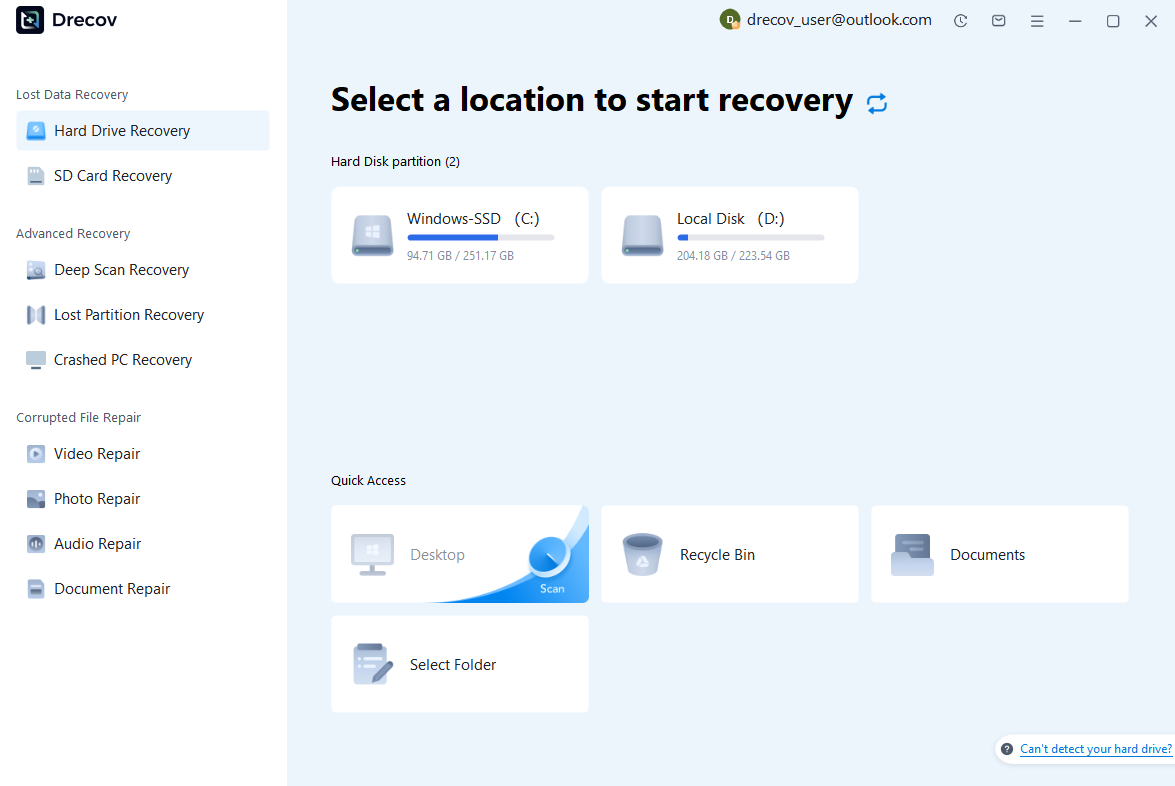
Step 1: Connect the Drive / USB)
Connect your device (SD card, HDD/SSD, or USB drive) to your computer and launch PandaOffice Drecov. Select the target device and start the scan. The software will perform a quick scan and deep scan to detect lost or deleted data.
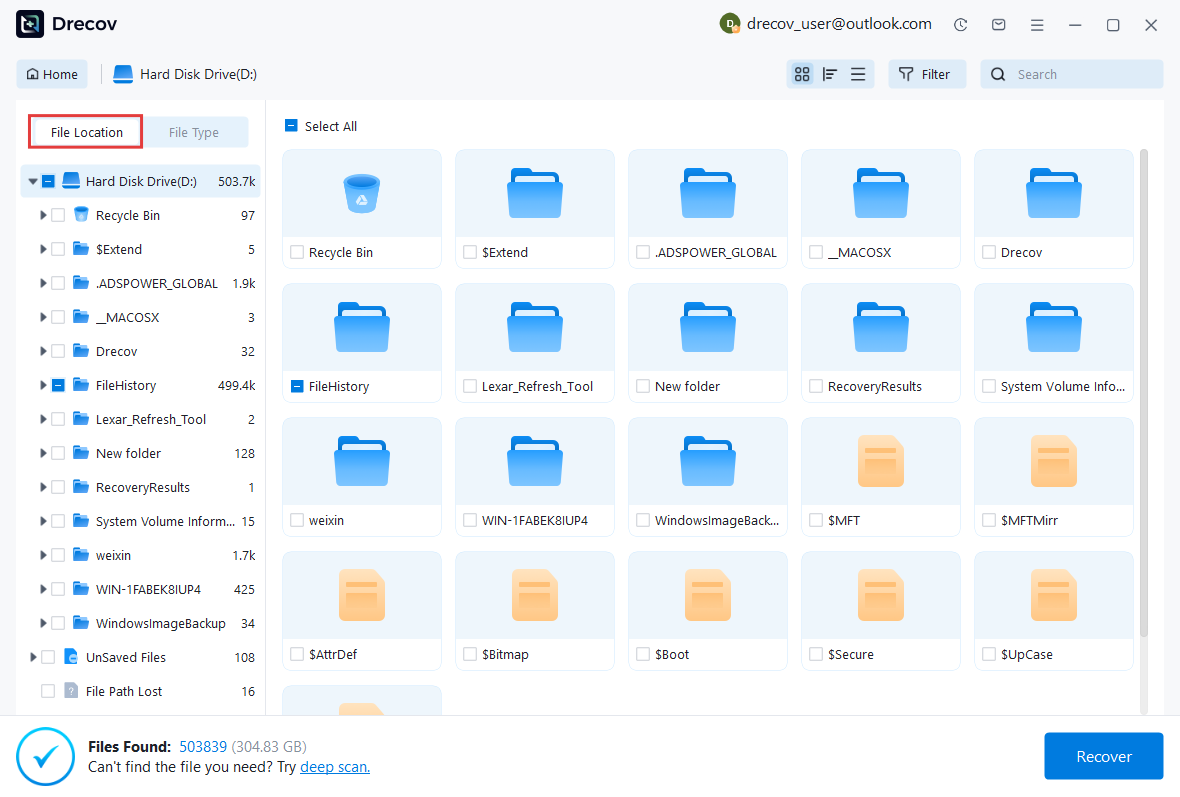
Step 2: Locate and Preview Lost Files
After scanning, browse the detected files and use the preview feature to check recoverable data. You can preview documents (Word, Excel, PDF), photos, and videos to ensure file integrity before recovery.
Step 3: Recover and Save to a New Location
Select the files you want to restore and click recover. Save all recovered data to a different drive or location (not the original device) to avoid overwriting lost data.

Some questions you may be interested in:
how to format a hard drive windows 11
how to recover deleted drafts in outlook
what is healthy recovery partition
how to make steam not open on startup
Recovering files to another drive is recommended because saving new data to the affected drive may overwrite deleted files.
This method can help when users experience lost game data on steam because of accidental deletion or storage-related failures.
Recovery results depend on several factors, including how long ago the files were deleted and whether new data has already replaced the deleted information.
⚠️Warning: Avoid installing applications or downloading large files to the affected drive before recovery. New data may overwrite deleted Steam files.
How to Retrieve Lost Game Data on Steam New Computer
Transferring Steam Save Files to a New Computer
Moving Steam games to a new computer is one of the most common situations where players lose access to previous progress. Steam can reinstall purchased games, but local save files may not automatically move with the game installation.
Test Environment:
- Operating System: Windows 11
- Previous Computer: Windows 10
- New Computer: Windows 11
- Steam Account: Same account used on both devices
For users searching how to retrieve lost game data on steam new computer, manually transferring save files is an effective solution.
Before replacing the old computer:
- Locate the save folder of the game.
- Copy the files to an external storage device.
- Install Steam on the new computer.
- Download the game.
- Move the save files into the correct folder.
Common save locations include:
- Documents folder
- Saved Games folder
- AppData folders
- Steam userdata folder
Because different games store their progress in different locations, you may need to search for the specific save directory of each game.
After transferring the files, launch the game and check whether previous progress has returned.
If the save data does not appear, confirm the following:
- The files were copied to the correct folder.
- Steam is signed into the original account.
- The save files match the current game version.
- Steam Cloud is not replacing local files.
Manual transfer gives players more control over their game progress and is especially useful for games without cloud synchronization.
Syncing Steam Cloud Data on Another Device
Steam Cloud allows supported games to synchronize save files between multiple computers. When this feature is enabled, Steam uploads saved progress online and downloads it when users sign in on another device.
Test Environment:
- Operating System: Windows 11 Pro
- Steam Cloud: Enabled
- Internet Connection: Stable
To restore Steam Cloud data:
- Install Steam on the new computer.
- Sign in using the original Steam account.
- Install the required game.
- Wait for Steam Cloud synchronization.
- Launch the game and check the saved progress.
Steam may display a synchronization conflict when different versions of save files exist between devices.
For example, a newly created empty save file on a new computer may have a newer timestamp than the original progress. Always compare the available save versions carefully before choosing one.
Steam Cloud is convenient, but it should not replace personal backups. Some games do not support cloud synchronization, and connection problems may prevent saves from uploading correctly.
Preventing Future Steam Game Data Loss
Backing Up Steam Saves Regularly
Losing game progress after spending many hours playing can be frustrating. Creating regular backups is one of the best ways to protect important Steam save files.
Test Environment:
- Operating System: Windows 11
- Steam Library: Multiple installed games
- Backup Device: External Storage
Players can protect their progress by regularly copying important save folders to another location.
Recommended backup options include:
- External hard drives
- USB storage devices
- Cloud storage services
- Network storage devices
A reliable backup routine includes:
- Creating backups before reinstalling Windows.
- Saving copies before changing computers.
- Backing up progress after major achievements.
- Keeping multiple backup versions.
Since different games store files in different locations, keeping a record of save directories makes future recovery easier.
Players should also avoid deleting unknown folders inside Steam directories because some files may contain important game information.
Regular backups reduce the risk of losing data caused by accidental deletion, system failures, or storage problems.
Maintaining Steam Files and Storage Health
Steam constantly reads and writes data during game installation, updates, and gameplay. Storage problems can increase the possibility of corrupted files or missing progress.
Test Environment:
- Operating System: Windows 11
- Steam Library: Installed on SSD
- Storage Condition: Healthy
Keeping storage devices healthy helps prevent future steam game data lost situations.
Recommended maintenance practices include:
- Keep enough free storage space.
- Avoid interrupting Steam updates.
- Shut down Windows properly.
- Monitor drive health regularly.
- Replace damaged storage devices when necessary.
Storage problems may show warning signs such as:
- Slow loading speed
- Missing files
- Frequent crashes
- Failed installations
Maintaining healthy storage protects Steam files and improves overall system reliability.
Frequently Asked Questions About Recovering Steam Game Data
Can I Recover Lost Steam Game Data After Deleting It?
Deleted Steam save files may still be recoverable if new data has not overwritten the original files.
Recovery possibility depends on several factors, including deletion time, storage condition, and whether the drive has been used after the files disappeared.
Why Did My Steam Game Data Disappear After Reinstalling Windows?
A Windows installation usually removes files stored on the system drive. If Steam saves were stored locally and were not backed up, previous progress may disappear.
Using Steam Cloud or creating manual backups before reinstalling Windows can help prevent this problem.
Does Reinstalling a Steam Game Delete Saved Progress?
It depends on how the game stores its save files.
Some games keep saves in separate folders, while others store progress inside the game directory that may be removed during uninstallation.
Checking save locations before removing a game is recommended.
How Do I Restore Steam Game Data on a New Computer?
You can restore Steam progress through Steam Cloud, manual save transfer, or backup restoration.
For users searching how to retrieve lost game data on steam new computer, checking both cloud synchronization and local save folders provides the best chance of recovering previous progress.
Final Thoughts on Recovering Lost Steam Game Data
Steam game progress can disappear because of accidental deletion, Windows reinstallations, hardware changes, synchronization problems, or storage failures.
When users experience lost game data on steam, they should first check local save folders, Steam Cloud settings, and available backups.
If files were deleted or lost because of storage issues, PandaOffice Drecov can help scan supported drives and recover available files.
To reduce the chance of future problems, players should regularly back up important saves, maintain storage health, and enable Steam Cloud whenever possible.
Understanding where Steam stores game data and choosing the correct recovery method allows players to restore their progress without starting games from the beginning.






