







Losing irreplaceable photos from a flash drive can be incredibly stressful. Fortunately, flash storage architecture means your files usually remain on the drive long after they disappear from view.This comprehensive guide covers everything you need to know about how to recover picture files from usb drives, ensuring you can restore your precious memories safely and efficiently.
Understanding the Basics of How to Recover Picture Files from USB
After deletion or quick formatting, some image data may remain readable, but flash-controller behavior, TRIM where supported, encryption, and earlier overwrites can prevent recovery. Stop writing to the USB drive and verify recovered originals individually.
However, several common challenges can complicate the recovery process:
- File Fragmentation: Large or high-quality images may be split across different sectors of the drive.
- File-system corruption: disconnecting a drive during an active write or losing power can leave file-system metadata inconsistent.
- Physical Damage: Broken connectors or failing flash chips require professional hardware intervention.
To overcome these logical issues, specialized data recovery software like PandaOffice Drecov data recovery software is required. This professional utility bypasses the operating system’s standard file system limitations to read the raw sectors of your storage device directly.
Whether your photos were lost due to accidental deletion, a sudden power surge, or a corrupted file system, Drecov scans the deep layers of the drive to piece fragmented files back together. It supports all major image formats including JPEG, PNG, RAW, and TIFF.
⚠ Warning: Install it on a drive different from the one where your data was lost to prevent overwriting.
Effective Methods to Recover Lost or Deleted Photos from a USB Drive
Method 1: Reveal Hidden Files via Windows Command Prompt
Sometimes your photos are not actually deleted; malware or system glitches may have simply altered their file attributes to make them invisible.
To restore visibility to these hidden images, press the Windows Key + R simultaneously to open the Run dialog box. Type cmd and press Enter to launch the Command Prompt. Next, type the drive letter assigned to your USB drive followed by a colon—for example, E:—and press Enter. Finally, type the following command precisely: attrib -h -r -s /s /d *.* and press Enter. This command strips away hidden, read-only, and system restrictions from all files on your storage media.
Method 2: Use PandaOffice Drecov Data Recovery Software
If the Command Prompt does not reveal your images, the files have been logically removed or the file system has become corrupted. In these scenarios, utilizing professional software is the most reliable way to recover pictures from usb drive storage safely.
⚠ Warning: Install it on a drive different from the one where your data was lost to prevent overwriting.
Follow these precise steps using PandaOffice Drecov data recovery software to scan and restore your lost imagery.
1.Connect and Launch
Insert your flash drive into an active USB 3.0 or USB 2.0 port on your computer. Open the newly installed data recovery suite from your desktop shortcut or your Windows Start Menu.
2.Select the Target Drive
Navigate the main user interface to locate the External Drives section. Select your specific flash drive from the list of available volumes to target the scan.
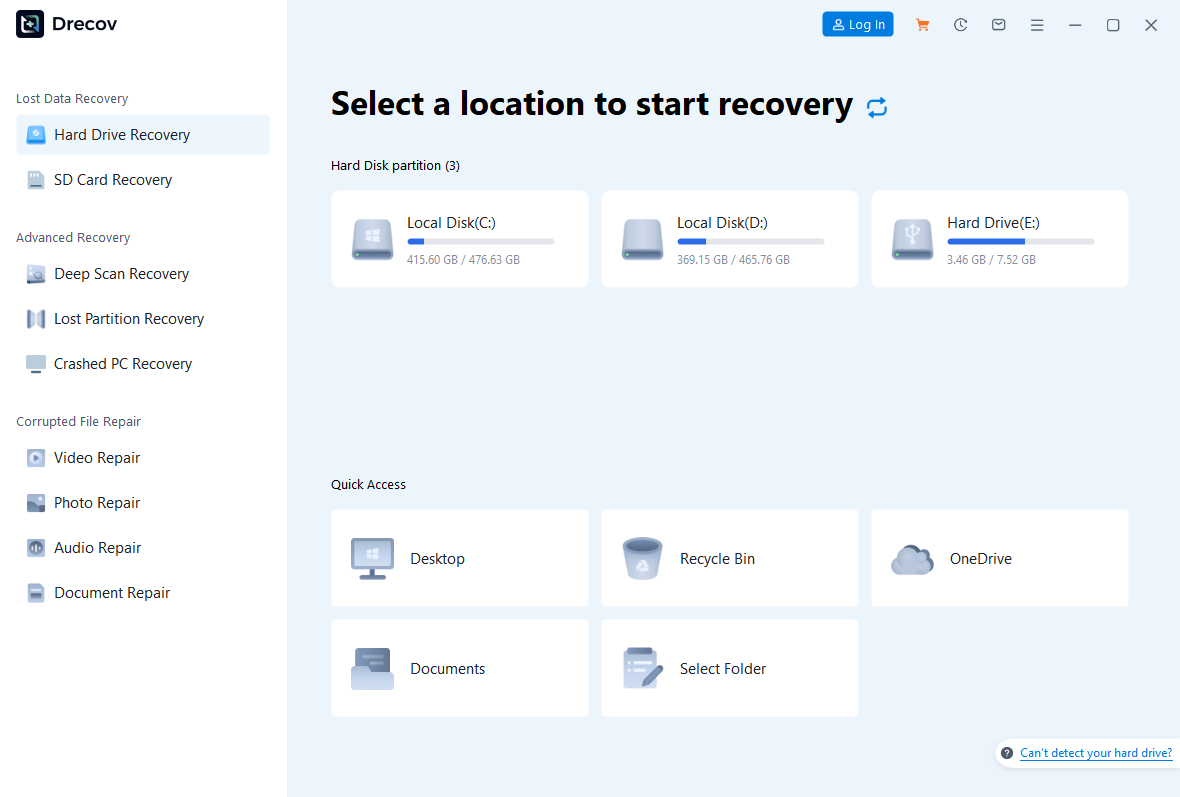
3.Execute Deep Scan。
Click the Scan button in the lower right corner of the application window. The software will initiate a quick scan followed automatically by a deep sector-by-sector analysis to locate hidden signatures.

4.Filter and Preview
Use the file type filter sidebar to select Pictures. Browse the generated thumbnail previews to confirm the visual integrity of your deleted or corrupted image files before proceeding.

5.Recover and Save
Check the boxes next to the photos you wish to retrieve. Click the Recover button and select a destination folder located strictly on your local hard drive rather than the source USB stick.
Alternative or Complementary Methods for USB Picture Recovery
While dedicated professional tools offer the highest success rates, alternative approaches exist depending on your specific data loss situation. Exploring these manual workarounds can provide a complementary path to recover pictures from usb drives before committing to an automated recovery tool.
Windows Backup and File History
If you previously configured Windows File History while the USB drive was connected, the operating system may have automatically cached copies of your files. To check this, navigate to the folder where your USB files used to be mirrored on your PC, right-click the directory, and select Restore previous versions.
Open-Source Command Line Utilities
Tools like TestDisk or PhotoRec are completely free open-source alternatives. They are highly effective at carving out raw file signatures from severely damaged partitions.
Comparative Evaluation
| Method | Recovery Success Rate | User Friendliness | Risk of Data Overwriting |
| PandaOffice Drecov | High | High | Low |
| Command Prompt | Low | Medium | Low |
| PhotoRec | Medium | Low | Medium |
Ultimately, open-source command tools lack graphical interfaces and file preview functions, making it easy for novice users to accidentally overwrite data. Professional software provides a safer sandbox by letting you preview files before committing to a restoration path.
For other unique USB management and system recovery tasks, you can explore specialized technical guides such as learning how to install PS3 ISO games from USB safely or troubleshooting peripheral data errors by reading the Windows Steam no licenses error fix guide.
Tips & Best Practices for USB Picture Recovery
Maximizing the chances of a successful data restoration requires immediate, deliberate action.
- Cease Using the Drive Immediately: The moment you realize photos are missing, unplug the flash drive. Writing even a tiny text file or log file to the device can permanently overwrite the sectors containing your deleted images.
- Recover to an Alternative Storage Device: Always save your restored images to your local computer desktop or an external hard drive. Saving them back onto the same USB drive during the recovery process will destroy the remaining unrecovered files.
- Address Corruption Early: If your computer states that the drive must be formatted before use, do not click format. Instead, run your data recovery scan first to pull the raw files out before fixing the file allocation system.
- Keep Software Updated: Ensure you are using the latest version of your recovery tool to take advantage of updated file signature databases.
If you encounter modern web storage errors while trying to back up your newly saved images to cloud systems, check out the comprehensive fixing the can’t download files from ChatGPT error guide to keep your workflows moving smoothly.
Frequently Asked Questions
How to recover picture files from usb stick devices if they are corrupted?
Corrupted photos usually occur due to a damaged file system header. You can use specialized recovery tools to bypass the broken partition table and extract the raw photo data directly from the storage sectors.
Can you recover deleted pictures from a usb flash drive without software?
Yes, you can attempt to use the Windows Command Prompt attribute command to unhide files. However, if the files were truly deleted from the file allocation table, a software tool is required to scan the raw sectors.
How to recover corrupted pictures from usb flash drive storage safely?
To avoid further corruption, perform a sector-by-sector clone of your drive if possible. Run your recovery software against that clone or directly on the drive, making sure to save the output files to a completely different hard drive.
How to recover deleted pictures from usb drives on a Mac computer?
The core data architecture remains identical on a Mac. You will need to plug the drive into a macOS device and utilize data recovery software compatible with FAT32, exFAT, or APFS file systems to extract the images.
Is it possible to recover pictures from usb devices that are physically broken?
If the computer does not recognize the drive at all due to physical damage, software cannot help. You must send the drive to a professional hardware data recovery lab where technicians can desolder the NAND flash chips manually.
Conclusion
Understanding how to recover picture files from usb drives is a vital skill in our heavily digital world. While accidental deletions and system corruptions happen frequently, your files are rarely gone for good right away. By halting all use of the device immediately and deploying a dependable tool like PandaOffice Drecov data recovery software, you can safely extract and preserve your valued photos before they are lost permanently. Moving forward, establishing a routine backup schedule across multiple physical or cloud locations is the absolute best defense against future data loss.
Verify the recovered original rather than only its thumbnail
First determine whether the photos are hidden, deleted, or on an unreadable device. If the USB reports its normal capacity and opens, enable hidden-item viewing without changing attributes across the whole drive. Copy visible originals before any cleanup. If the device disconnects, reports zero capacity, or becomes unusually hot, stop long scans.
During recovery, search the original camera or project folders and include the actual file types used, such as JPEG plus the camera’s RAW format. Keep RAW files, sidecars, and any paired JPEGs together when present. Similar names and capture dates can help organize candidates but do not prove their contents are valid.
Recover to a different physical device and inspect full-size images at several zoom positions. Check dimensions, color rendering, orientation, and whether the bottom of the image is missing. Compare a camera RAW file in a compatible application. Save thumbnails or partial images separately so they are not mistaken for complete recovered originals.
Further guidance: Microsoft Windows File Recovery






