







Hard disk drives remain one of the most widely used storage devices for personal computers, business workstations, gaming systems, and external storage solutions. Despite their reliability, HDDs can still experience accidental deletion, formatting errors, partition corruption, malware attacks, and hardware failures that result in data loss.
When important files disappear, many users begin searching for hdd recovery software capable of restoring documents, photos, videos, emails, and other valuable information. Fortunately, modern recovery solutions can often retrieve lost data before it is permanently overwritten.
This guide explores how hard drive recovery works, common causes of data loss, important features to look for in recovery applications, and practical methods for recovering files from damaged or inaccessible hard drives.
Understanding HDD Data Loss and Recovery Possibilities
Why Files Disappear from Hard Drives
Data loss can occur for numerous reasons, many of which happen unexpectedly.
Common causes include:
- Accidental deletion
- Drive formatting
- Partition loss
- Virus attacks
- System crashes
- Power interruptions
- Bad sectors
- File system corruption
In many situations, deleted files are not immediately destroyed. Instead, the operating system marks the storage space as available for future use.
Until new data overwrites those sectors, recovery may remain possible.
How HDD Recovery Software Works
Modern hdd data recovery software scans storage devices for file records, partition structures, and recoverable sectors.
Recovery applications typically perform:
- Quick scans
- Deep scans
- Partition analysis
- Signature-based recovery
- File reconstruction
These processes help locate data that the operating system can no longer access normally.
Can Lost HDD Files Always Be Recovered?
Not always.
Recovery success depends on factors such as:
- Amount of overwritten data
- Drive health
- Time since data loss
- Type of corruption
- Physical condition of the disk
The sooner recovery attempts begin, the higher the chances of success.
⚠️ Warning: Stop using the affected drive immediately after data loss occurs to avoid overwriting recoverable files.
What Makes the Best HDD Recovery Software?
Deep Scanning Capabilities
One of the most important features of the best hdd recovery software is the ability to perform deep scanning.
Deep scans search beyond standard file tables and analyze raw storage sectors directly.
Benefits include:
- Recovery after formatting
- Detection of deleted files
- Reconstruction of damaged partitions
- Access to hidden data
The quality of deep scanning often determines overall recovery effectiveness.
Support for Multiple File Types
A reliable recovery application should handle various file formats.
Commonly recovered files include:
- Documents
- Photos
- Videos
- Archives
- Emails
- Audio files
- Databases
Broad file support improves the likelihood of successful recovery.
Preview Functions Before Recovery
Preview features allow users to inspect files before restoration.
Advantages include:
- Verifying file integrity
- Saving time
- Avoiding unnecessary recovery operations
- Identifying critical files quickly
This functionality is especially useful when recovering large amounts of data.
Compatibility with Different Storage Devices
Quality recovery tools should support:
- Internal HDDs
- External hard drives
- SSDs
- USB drives
- Memory cards
- RAID volumes
Broader compatibility increases recovery flexibility across multiple devices.
Common HDD Failure Scenarios That Require Recovery
Accidental File Deletion
Human error remains one of the most frequent causes of data loss.
Examples include:
- Emptying the Recycle Bin
- Deleting folders unintentionally
- Removing project files
- Cleaning storage without backups
In many cases, deleted files remain recoverable if no significant overwriting has occurred.
Formatted Hard Drives
Formatting may occur intentionally or accidentally.
Users often format drives when:
- Reinstalling Windows
- Preparing new partitions
- Fixing file system issues
- Connecting drives to different devices
Although formatting removes file references, recoverable data may still exist underneath.
Partition Loss and Corruption
Damaged partition tables can make entire drives appear empty.
Symptoms include:
- RAW partitions
- Missing drive letters
- Unallocated space
- Inaccessible storage
These situations frequently require specialized hdd file recovery software capable of reconstructing lost partition information.
Bad Sectors and File System Errors
Physical or logical damage may affect specific storage sectors.
Common warning signs include:
- Slow file access
- Read errors
- Corrupted files
- Freezing during transfers
Early recovery attempts are recommended when bad sectors appear.
⚠️ Warning: Drives showing signs of physical failure should be backed up immediately before further troubleshooting.
Methods to Recover Data from an HDD
Recover Lost Files with PandaOffice Drecov
Test Environment
- Operating System: Windows 11 Pro
- Storage Device: 2TB SATA HDD
- Data Loss Scenario: Accidental deletion
- File Types: Documents, images, videos
- File System: NTFS
When important files disappear from a hard drive, one of the most effective approaches is using professional recovery software.
PandaOffice Drecov is designed to scan hard drives for deleted, formatted, and inaccessible files. The software can analyze storage sectors and locate recoverable content even when files no longer appear in Windows Explorer.
Recovery Steps
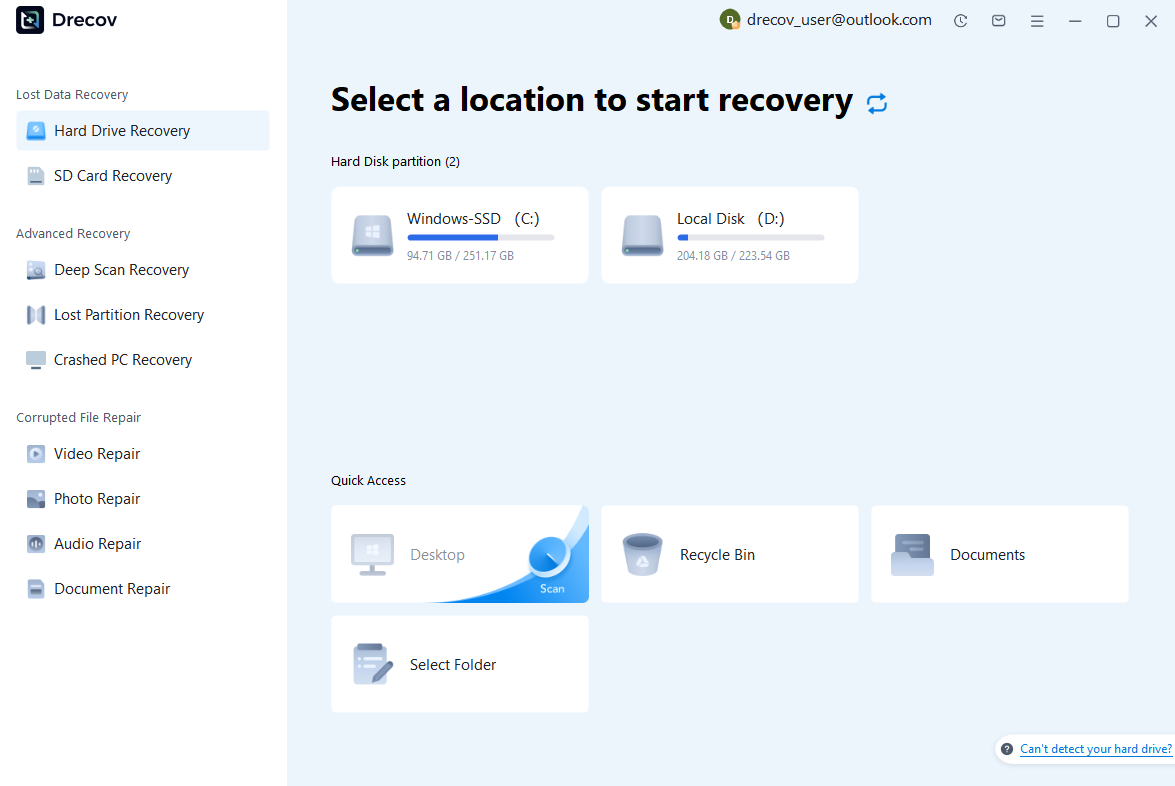
Step 1: Connect the Drive / USB)
Connect your device (SD card, HDD/SSD, or USB drive) to your computer and launch PandaOffice Drecov. Select the target device and start the scan. The software will perform a quick scan and deep scan to detect lost or deleted data.
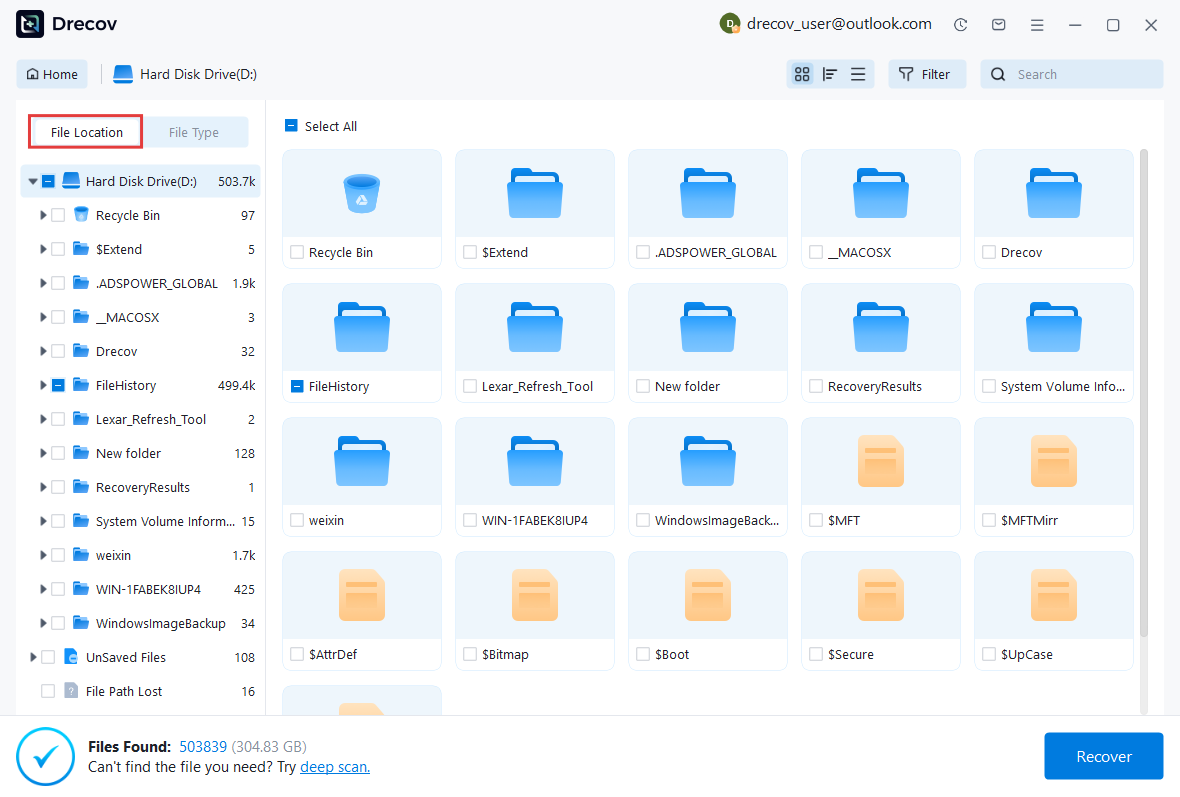
Step 2: Locate and Preview Lost Files
After scanning, browse the detected files and use the preview feature to check recoverable data. You can preview documents (Word, Excel, PDF), photos, and videos to ensure file integrity before recovery.
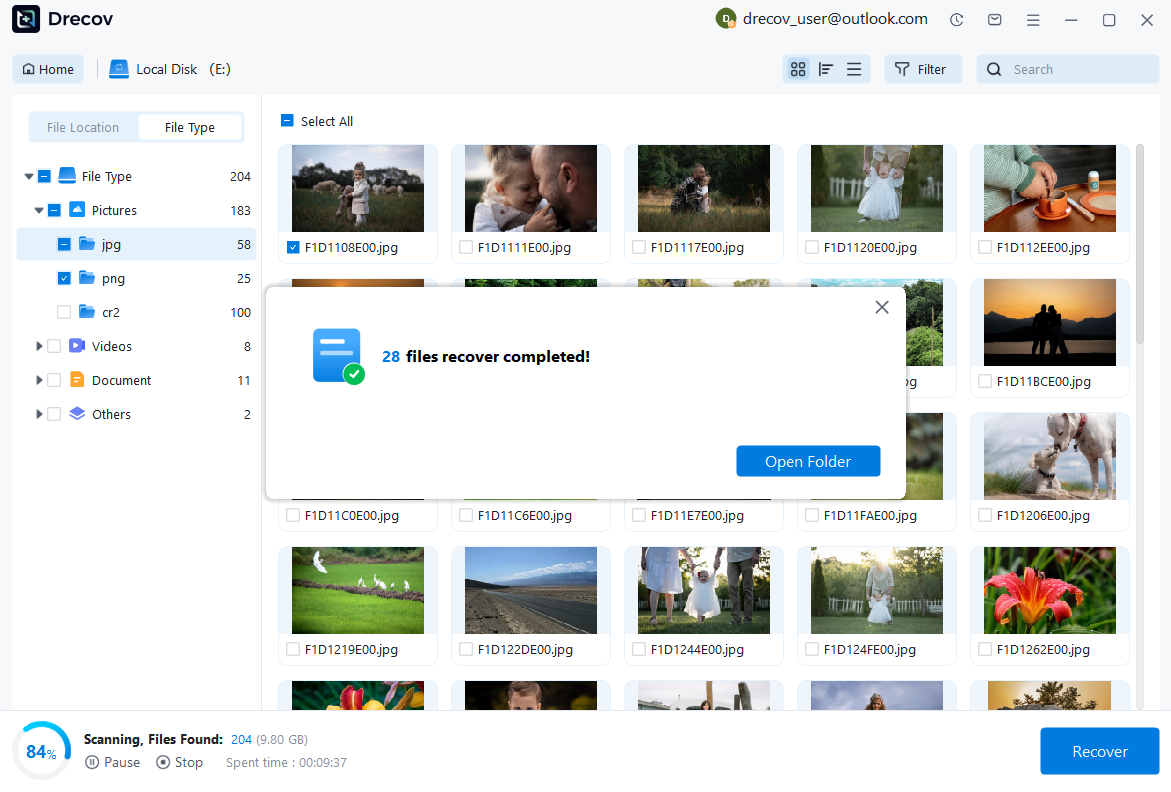
Step 3: Recover and Save to a New Location
Select the files you want to restore and click recover. Save all recovered data to a different drive or location (not the original device) to avoid overwriting lost data.
Why Choose PandaOffice Drecov Recovery Software?
PandaOffice Drecov offers a fast, secure, and user-friendly solution for recovering lost files across multiple scenarios. Whether you need email recovery, ZIP File Recovery, format data recovery, or help to recover deleted drafts Outlook, the software provides reliable recovery performance for both personal and business users.
PandaOffice Drecov supports recovery from formatted hard drives, SSDs, USB drives, SD cards, and external storage devices. Its advanced scanning engine can locate deleted archives, damaged ZIP files, lost Outlook drafts, and accidentally removed documents with high accuracy. For users searching for how to find deleted messages in Teams, PandaOffice Drecov can also help recover exported chat files, attachments, and related local cache data when available.
After recovery, test the file again. If the audio stream was damaged because of storage issues, a recovered version may play normally.
This method is particularly useful when only a few files exhibit audio problems while VLC works correctly with all other media.
This method can help users recover files from floppy disk storage after accidental deletion, formatting, or logical corruption.
Advantages
- Supports multiple file formats.
- Deep scanning technology.
- Preview before recovery.
- Suitable for deleted and formatted files.
Limitations
- Physical hardware damage may limit recovery results.
- Overwritten files may not be recoverable.
Many users searching for best hdd data recovery software prioritize solutions that provide both quick scanning and deep recovery capabilities.
Restore Files from Existing Backups
Test Environment
- Operating System: Windows 10
- Storage Device: External HDD
- Backup Solution: File History
- Recovery Scenario: Deleted project folder
If backups are available, restoration is often faster than performing a full recovery scan.
Common backup sources include:
- Windows File History
- NAS backups
- Cloud storage
- External drives
Restoration Process
- Open the backup platform.
- Locate the desired backup version.
- Browse available files.
- Select items to restore.
- Choose a restoration location.
- Verify recovered content.
Advantages
- Fast restoration.
- Preserves original file structure.
- Minimal recovery risk.
Limitations
- Requires pre-existing backups.
- Recently created files may be unavailable.
Recover Data from a Lost Partition
Test Environment
- Operating System: Windows 11
- Storage Device: 1TB HDD
- Failure Scenario: Partition accidentally deleted
- File System: NTFS
Partition loss can make large amounts of data appear missing even though the files still exist.
General Recovery Process
- Stop writing data to the drive.
- Scan the entire disk.
- Locate lost partitions.
- Analyze partition structures.
- Preview discovered files.
- Recover data to another location.
Advantages
- Recovers entire directory structures.
- Useful after accidental partition deletion.
- Supports large storage devices.
Limitations
- Severe corruption may complicate recovery.
- Scans can require considerable time on large drives.
Recover Data from a Formatted Hard Drive
Test Environment
- Operating System: Windows 11 Pro
- Storage Device: 1TB External HDD
- Data Loss Scenario: Accidental Quick Format
- File System: NTFS
- Data Type: Photos, videos, documents
Formatting a hard drive can instantly make years of data appear inaccessible. Fortunately, a quick format usually removes file system references rather than erasing the actual data sectors.
As long as the formatted drive has not been heavily used afterward, recovery chances can remain relatively high.
General Recovery Procedure
- Stop using the formatted drive immediately.
- Connect the drive to a healthy computer.
- Launch a recovery application.
- Select the formatted HDD.
- Perform a deep scan.
- Review discovered files.
- Recover data to another storage device.
- Verify file integrity after restoration.
Advantages
- Effective after accidental formatting.
- Can recover large quantities of files.
- Supports multiple file formats.
Limitations
- Success decreases if new data has been written.
- Deep scans may require significant time.
Many users searching for hdd file recovery software are attempting to recover data after formatting, making this one of the most common recovery scenarios.
Restore Files from a RAW Hard Drive
Test Environment
- Operating System: Windows 10 Pro
- Storage Device: 2TB HDD
- Drive Status: RAW
- File System Before Failure: NTFS
- Failure Cause: File system corruption
A RAW drive is a storage device whose file system can no longer be recognized by Windows.
Common symptoms include:
- Drive inaccessible
- Format prompts
- Missing files
- Partition errors
Although Windows may suggest formatting the drive, recovery should usually be attempted first.
Recovery Process
- Avoid formatting the drive.
- Connect the RAW HDD.
- Scan the entire device.
- Locate recoverable files.
- Preview discovered data.
- Save files to a different location.
- Rebuild or reformat the drive afterward.
Advantages
- Preserves data before repair.
- Supports heavily corrupted file systems.
- Useful for inaccessible partitions.
Limitations
- Severe corruption may affect file integrity.
- Recovery speed depends on drive size.
⚠️ Warning: Never format a RAW drive before attempting recovery if important files remain on the disk.
Retrieve Files from a Hard Drive with Bad Sectors
Test Environment
- Operating System: Windows 11
- Storage Device: 4TB HDD
- Issue: Increasing bad sectors
- SMART Status: Warning
- Data Priority: High
Bad sectors can interfere with file access and make portions of a drive unreadable.
Symptoms often include:
- Slow performance
- Read errors
- System freezing
- File corruption
The safest approach is usually to recover data before attempting extensive repairs.
Recommended Procedure
- Check SMART health information.
- Minimize drive usage.
- Create a disk image if possible.
- Scan the drive image.
- Recover critical files first.
- Verify recovered content.
Advantages
- Protects data from further degradation.
- Allows recovery before total drive failure.
- Supports partial sector access.
Limitations
- Physically damaged sectors may be unrecoverable.
- Recovery speed may be slower.
Users evaluating the best hdd recovery software often prioritize tools capable of handling unstable drives with bad sectors.
How to Choose the Best HDD Data Recovery Software
Evaluate Recovery Success Rates
One of the most important selection criteria is recovery effectiveness.
A reliable solution should successfully handle:
- Deleted files
- Formatted drives
- Lost partitions
- RAW volumes
- Corrupted file systems
Higher recovery success rates generally indicate stronger scanning technology.
Review Supported File Systems
Different storage devices use different file systems.
Common examples include:
- NTFS
- FAT32
- exFAT
- ReFS
- HFS+
- APFS
The best hdd data recovery software should support a broad range of file system structures.
Consider Ease of Use
Not every user has technical expertise.
Helpful features include:
- Guided recovery workflows
- Preview options
- Simple interfaces
- Clear scan results
Ease of use can significantly improve the recovery experience.
Check Deep Scan Performance
Deep scanning is often required when standard recovery methods fail.
Important factors include:
- Scan accuracy
- File reconstruction quality
- Detection of lost partitions
- Recognition of fragmented files
Many professionals consider deep scan capabilities a defining characteristic of quality hdd recovery software.
Best Practices to Maximize HDD Recovery Success
Stop Using the Drive Immediately
After data loss occurs, continuing to use the affected drive increases the likelihood of overwriting recoverable sectors.
Avoid:
- Saving new files
- Installing software
- Downloading content
- Running disk-intensive applications
The less activity performed on the drive, the better.
Recover Files to Another Storage Device
Recovered files should always be saved elsewhere.
Recommended destinations include:
- External hard drives
- SSDs
- Network storage
- Cloud storage
Saving files back to the damaged drive may overwrite additional recoverable data.
Prioritize Critical Files First
If the drive shows signs of instability, recover the most important files before attempting large-scale restoration.
Examples include:
- Business documents
- Family photos
- Videos
- Financial records
- Databases
This strategy minimizes risk if the drive deteriorates further.
Maintain Regular Backups
Recovery software is valuable, but prevention remains the best defense against data loss.
Recommended backup practices include:
- Weekly backups
- Cloud synchronization
- External storage copies
- Automated backup schedules
⚠️ Warning: No recovery software can guarantee 100% success after severe hardware failure or extensive overwriting.
Frequently Asked Questions About HDD Recovery Software
What Is HDD Recovery Software?
HDD recovery software is designed to scan hard drives and restore files that have been deleted, formatted, corrupted, or made inaccessible due to file system problems.
Can HDD Recovery Software Recover Permanently Deleted Files?
In many cases, yes.
If deleted sectors have not been overwritten, recovery applications can often locate and restore the lost files.
What Is the Best HDD Recovery Software for Formatted Drives?
The best hdd recovery software for formatted drives typically offers deep scanning, file preview functionality, partition recovery, and broad file system support.
Can HDD Data Recovery Software Repair a Physically Damaged Drive?
No.
Software can recover data from many logical failures, but physical damage usually requires specialized hardware repair or professional recovery services.
How Long Does HDD Recovery Take?
Recovery times vary depending on:
- Drive size
- Number of files
- Disk condition
- Scan type
Quick scans may finish within minutes, while deep scans can require several hours.
Can Recovery Software Restore an Entire Lost Partition?
Often, yes.
Many recovery tools can identify lost partitions and reconstruct their original directory structures.
Does HDD File Recovery Software Work on External Drives?
Yes.
Most modern solutions support:
- External HDDs
- USB drives
- Portable SSDs
- Memory cards
Can I Use Recovery Software on a RAW Drive?
Yes.
RAW drives are one of the most common scenarios where recovery applications are used before repair or formatting.
What Should I Do If Recovery Software Cannot Find My Files?
Consider:
- Running a deep scan
- Creating a disk image
- Testing another recovery method
- Contacting a professional recovery service
The appropriate option depends on the drive’s condition and the value of the lost data.
Final Thoughts on HDD Recovery Software
Data loss can happen unexpectedly, whether through accidental deletion, formatting mistakes, partition corruption, malware attacks, or hardware problems. Fortunately, modern hdd recovery software provides powerful tools for restoring inaccessible files and recovering valuable information from damaged storage devices.
The best hdd recovery software combines deep scanning, broad file system support, file preview capabilities, and reliable recovery performance. Whether you’re dealing with a formatted disk, RAW partition, deleted files, or bad sectors, choosing the right hdd data recovery software can significantly improve recovery success rates.
By acting quickly, minimizing drive usage, and following proper recovery procedures, users can maximize their chances of restoring important files while reducing the risk of permanent data loss.





