







What is ACCDB File and Understanding the ACCDB File Format
The ACCDB file format is the default database file type used by Microsoft Access starting from Access 2007. It replaces the older MDB format and introduces a more modern, flexible structure for handling relational databases. A typical file accdb stores tables, queries, forms, macros, and VBA modules in a single container, making it highly useful for both personal and enterprise-level database management.
Unlike simple document files, an .accdb file type is designed specifically for structured data storage and interaction. It allows users to manage large datasets efficiently while supporting advanced features such as multivalued fields and attachment data types. This makes the accdb file format especially popular in business environments where data organization and automation are critical.
From a structural point of view, a file accdb is composed of multiple internal objects rather than a single continuous dataset. These include table schemas, relational links, stored queries, and user interface components like forms and reports. Because of this complexity, the accdb file type is not meant to be opened with standard text editors.
Key Background of ACCDB File Format
The introduction of the accdb file format marked a major upgrade in Microsoft Access capabilities. It removed several limitations of the older MDB system and introduced stronger encryption and integration features. Today, most modern database applications that rely on Microsoft Access will default to this format unless backward compatibility is required.
Why ACCDB File Format is Important in Database Management Systems
The ACCDB file type plays a central role in Microsoft Access-based database systems. It is widely used for storing structured business data such as customer records, inventory systems, financial logs, and internal reporting databases. Its importance lies in its ability to combine data storage and application logic in one file.
One of the main advantages of the accdb file format is its flexibility. Users can design relational databases without needing advanced programming knowledge. The format also supports advanced data types, making it suitable for modern business applications that require more than simple tabular storage.
However, compatibility remains a key concern. Older Microsoft Access versions cannot open a modern file accdb without updates or conversion. This is why many organizations still maintain both MDB and ACCDB environments for legacy support.
⚠️Warning: Compatibility Limitations
Older software systems may fail to recognize the .accdb file type, leading to errors or missing data access. Always ensure your system supports Microsoft Access 2007 or later before attempting to open these files.
Security Advantage
Another key feature of the accdb file format is improved security. It includes better encryption mechanisms compared to older formats, making it more suitable for sensitive data storage.
How to Open ACCDB File on Different Systems and Applications
Opening a file accdb depends on the software and operating system being used. Below are several tested and widely used methods that work across different environments.
Method 1: Using Microsoft Access to Open ACCDB File (Test Environment: Windows 10 + Office 365)
The most reliable way to open an accdb file type is through Microsoft Access.
Steps:
- Install Microsoft Office with Access enabled
- Launch Microsoft Access
- Click “File” → “Open”
- Select your accdb file format
- The database will load with full functionality
This method ensures complete access to tables, forms, and queries without any limitations.
Method 2: Using Microsoft Access Runtime (Test Environment: Windows 11 Home Edition)
If you do not have a full Access license, you can use Microsoft Access Runtime.
Steps:
- Download Access Runtime from Microsoft
- Install it on your system
- Double-click the file accdb
- It opens in read-only or limited interaction mode
This is useful for users who only need to view or interact with databases without editing structure.
Method 3: Using LibreOffice Base (Test Environment: Ubuntu 22.04)
On Linux systems, LibreOffice Base can sometimes be used to open accdb file format databases.
Steps:
- Install LibreOffice suite
- Open LibreOffice Base
- Import the .accdb file type
- Use built-in database viewer tools
However, complex features may not display correctly.
Method 4: Converting ACCDB File to CSV or Excel (Test Environment: Windows 10 + Excel 2021)
For easier access, you can convert a file accdb into spreadsheet format.
Steps:
- Open Microsoft Access
- Export tables to Excel or CSV
- Save converted data for analysis
This method is ideal for reporting and data analysis.
⚠️Warning: Data Integrity Risks
Improper conversion of accdb file type may lead to loss of relationships between tables. Always backup your original file before exporting.
Method 5: Online Database Viewer Tools (Test Environment: Chrome Browser + Cloud Platform)
Some online tools allow viewing of accdb file format without installation.
Steps:
- Upload the file
- Wait for processing
- View extracted data in browser
These tools are convenient but should be used cautiously for sensitive data.
⚠️Warning: Security Risks with Online Tools
Uploading a file accdb to unknown platforms may expose confidential data. Always verify the trustworthiness of the service.
Common Problems When Working with ACCDB File and How to Fix Them
Working with an accdb file format is not always smooth, especially when dealing with corruption or compatibility issues. One common issue is that the file fails to open due to missing dependencies or outdated software versions. In such cases, updating Microsoft Access or repairing Office installation often resolves the issue.
Another frequent problem is file corruption caused by improper shutdowns or storage errors. A damaged file accdb may show errors such as “unrecognized database format” or simply refuse to load. This often requires repair tools or backup restoration.
In enterprise environments, version mismatch can also prevent access. For example, a database created in a newer .accdb file type may not open in older systems.
⚠️Warning: Avoid Force Closing Access
Interrupting Access while saving a accdb file type increases the risk of corruption. Always ensure proper shutdown procedures.
Advanced Tips for Managing and Optimizing ACCDB File Format
When working with a large accdb file format, performance and stability become critical concerns. Over time, database files may grow in size due to repeated edits, deleted records, and added objects. If not properly maintained, a file accdb can become slow or even unstable. This is why optimization techniques are essential for long-term database health.
One of the most important practices is compacting and repairing the database. Microsoft Access provides a built-in tool that reorganizes internal data structures and reduces file size. This process does not change the content of the accdb file type, but it significantly improves performance by removing unused space and fixing minor inconsistencies.
Another key optimization strategy is splitting large databases. A single file accdb can be divided into a front-end (forms, queries, UI) and a back-end (tables and data). This structure is especially useful in multi-user environments where multiple people access the same data simultaneously.
⚠️Warning: Avoid Overloading a Single ACCDB File
Storing too many tables and records in one accdb file format can lead to corruption risks and slow response times. Always consider database splitting for enterprise-level usage.
Advanced Security and Backup Strategies for ACCDB File Type
Security is one of the strongest improvements introduced in the accdb file format compared to older database systems. It supports encryption, user-level permissions, and password protection, making it suitable for sensitive business data.
To protect a file accdb, users should always enable database-level passwords. This prevents unauthorized access even if the file is copied or transferred. In addition, storing backups in secure cloud storage or external drives ensures data recovery in case of system failure.
Regular backups are especially important when working with frequently updated accdb file type databases. A good rule is to maintain at least three versions: current, recent backup, and archival backup.
Common Problems When Working with ACCDB File and Fixes (Extended)
Despite its reliability, the accdb file format can still encounter several technical issues. One common problem is sudden file corruption, often caused by unexpected shutdowns or hardware failures. When this happens, the database may fail to open or display missing objects.
Another issue is compatibility conflicts between different versions of Microsoft Access. A file accdb created in newer versions may not function properly in older systems, especially if advanced features like attachments or complex queries are used.
Network-based database access can also introduce latency or synchronization issues, particularly when multiple users modify the same accdb file type simultaneously.
⚠️Warning: Never Edit ACCDB Files Directly from Cloud Sync Folders
Editing a file accdb stored in real-time sync services (like shared cloud folders) may lead to file locking conflicts or corruption.
Repair and Recovery Methods for ACCDB File Format
When a accdb file format becomes damaged, there are several recovery approaches depending on severity.
Method 1: Built-in Microsoft Access Repair Tool (Test Environment: Windows 11 + Access 2019)
Microsoft Access includes a “Compact and Repair Database” feature.
Steps:
- Open Microsoft Access
- Go to “Database Tools”
- Select “Compact and Repair Database”
- Choose the corrupted file accdb
- Let the system process recovery
This method is effective for minor corruption issues.
Method 2: Import Data into a New Database (Test Environment: Windows 10 + Office 365)
If repair fails, you can recover data manually.
Steps:
- Create a new Access database
- Use “External Data” import option
- Import tables from damaged accdb file type
- Rebuild queries and forms
This method often preserves most usable data.
Method 3: Professional Recovery Tools (Test Environment: Windows 10 + Mixed Storage Devices)
For severe corruption cases, third-party recovery tools may be required. One option is PandaOffice Drecov, which can scan a damaged file accdb, extract recoverable tables, and reconstruct database structures when standard repair fails.
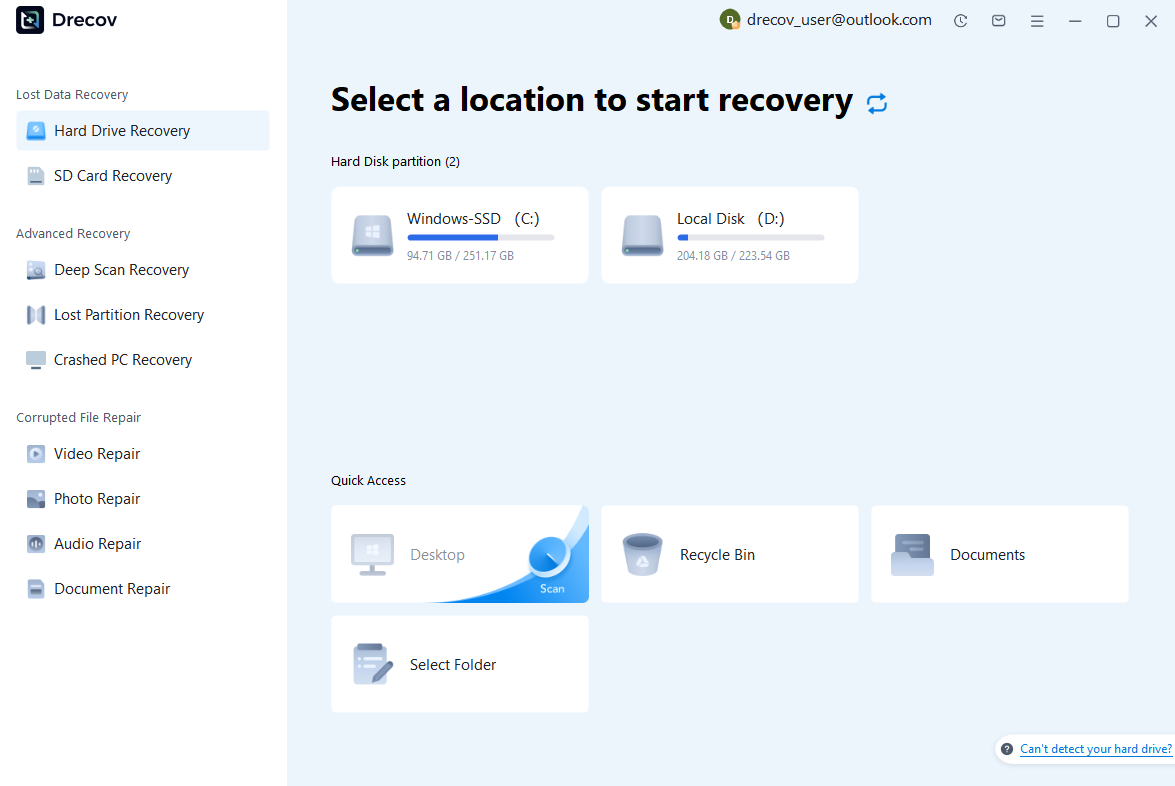
Step 1: Connect the Drive / USB)
Connect your device (SD card, HDD/SSD, or USB drive) to your computer and launch PandaOffice Drecov. Select the target device and start the scan. The software will perform a quick scan and deep scan to detect lost or deleted data.
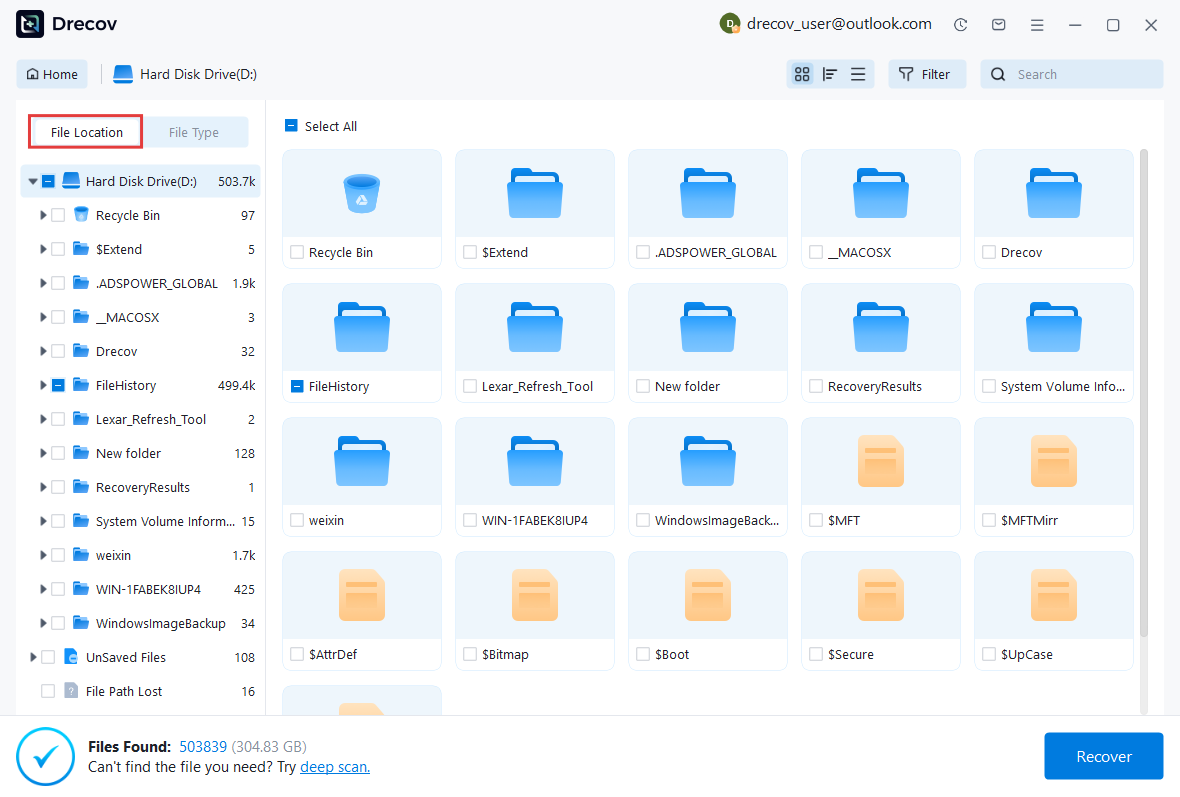
Step 2: Locate and Preview Lost Files
After scanning, browse the detected files and use the preview feature to check recoverable data. You can preview documents (Word, Excel, PDF), photos, and videos to ensure file integrity before recovery.
Step 3: Recover and Save to a New Location
Select the files you want to restore and click recover. Save all recovered data to a different drive or location (not the original device) to avoid overwriting lost data.

Why Choose PandaOffice Drecov Recovery Software?
PandaOffice Drecov offers a fast, secure, and user-friendly solution for recovering lost files across multiple scenarios. Whether you need email recovery, ZIP File Recovery, format data recovery, or help to recover deleted drafts Outlook, the software provides reliable recovery performance for both personal and business users.
PandaOffice Drecov supports recovery from formatted hard drives, SSDs, USB drives, SD cards, and external storage devices. Its advanced scanning engine can locate deleted archives, damaged ZIP files, lost Outlook drafts, and accidentally removed documents with high accuracy. For users searching for how to find deleted messages in Teams, PandaOffice Drecov can also help recover exported chat files, attachments, and related local cache data when available.
It is especially useful in cases where the accdb file format is partially overwritten or unreadable due to disk failure.
⚠️Warning: Stop Using the Device After Corruption
If a accdb file type becomes corrupted due to disk issues, continued use may overwrite recoverable data. Immediately stop writing new data to the storage device.
Frequently Asked Questions About ACCDB File Type
What is ACCDB File and how is it different from older formats?
The accdb file format is the modern Microsoft Access database structure introduced in 2007. Compared to MDB, it supports improved encryption, attachment fields, and better integration with external applications.
Can I open ACCDB File without Microsoft Access?
Yes, but with limitations. You can use Access Runtime, LibreOffice Base, or online viewers. However, full functionality of a file accdb is only available in Microsoft Access.
Why does ACCDB File become corrupted?
A file accdb may become corrupted due to sudden power loss, hardware failure, improper shutdown, or network interruptions during editing.
Is ACCDB File safe for storing sensitive data?
Yes, the accdb file format includes encryption features. However, security also depends on proper password protection and secure storage practices.
Best Practices for Working with ACCDB File Format
To ensure long-term stability, users should follow several best practices when handling a file accdb:
Always maintain regular backups to avoid data loss. Use compact and repair tools periodically to optimize performance. Avoid editing large databases over unstable network connections. Split databases when they grow too large for single-file handling.
In addition, restrict access permissions to prevent unauthorized modifications. This is especially important in shared environments where multiple users access the same accdb file type.
Conclusion: Key Takeaways About ACCDB File Format
The accdb file format is a powerful and flexible database solution widely used in Microsoft Access environments. It offers improved security, better performance, and advanced data handling compared to older formats.
Understanding how to open, manage, and repair a file accdb is essential for anyone working with structured data systems. From simple viewing methods to advanced recovery solutions, there are multiple ways to ensure accessibility and safety.
While built-in tools are often sufficient for minor issues, severe corruption cases may require professional solutions like PandaOffice Drecov to restore critical database content.
Ultimately, proper maintenance, regular backups, and safe handling practices are the most effective ways to ensure long-term reliability of the accdb file type in any environment.





