







Understanding Permanently Deleted Files in Windows
What Happens When Files Are Permanently Deleted
When users delete files using Shift + Delete or by emptying the Recycle Bin, Windows does not immediately erase the actual data. Instead, it removes the file’s index entry, which makes the file invisible to the system.
The data itself still exists on the storage device until new files overwrite it. This is why it is often possible to recover permanently deleted files using recovery tools or backups.
However, once overwriting occurs, recovery becomes significantly harder or impossible. That is why timing plays a very important role in data recovery.
Test Environment:
- Windows 11 Pro 64-bit
- NTFS formatted SSD (512GB)
- File deletion simulation using Shift + Delete and Recycle Bin emptying
How Windows Handles Deleted Data Internally
Windows uses file systems like NTFS and FAT32 to manage how files are stored and deleted. When a file is deleted, the system does not immediately remove its contents. Instead, it marks the space as “available” for new data.
This means the original file data remains on the disk temporarily. Recovery software can scan these unused areas and rebuild file fragments if they are not overwritten.
SSD drives behave differently due to TRIM technology, which may permanently erase deleted data more quickly compared to HDDs.
Test Environment:
- Windows 10 Pro
- HDD vs SSD comparison
- NTFS and FAT32 file system testing
Common Causes of Permanent File Loss
Permanent file loss can happen in several ways. The most common include:
- Accidental Shift + Delete deletion
- Emptying Recycle Bin without checking
- Formatting a drive or partition
- System crashes during file transfer
- Malware or ransomware attacks
- Storage device failure or corruption
Each situation affects recovery chances differently depending on whether data has been overwritten or not.
Test Environment:
- Windows 11 Enterprise
- Simulated system crash and accidental deletion scenarios
- External USB and internal SSD testing
Why Permanently Deleted Files Can Still Be Restored
Deleted Data Still Exists Until Overwritten
Even after deletion, the actual data often remains physically stored on the disk. Only the system reference is removed.
This creates a recovery opportunity where specialized tools can scan unallocated space and retrieve lost files before they are overwritten.
The key factor is system activity after deletion. More usage means higher overwrite risk.
Test Environment:
- Windows 10 Home
- Large file deletion simulation (documents, images, videos)
- Disk sector scanning tests
File System Behavior and Recovery Conditions
Different file systems affect recovery success:
- NTFS stores metadata longer, improving recovery chances
- FAT32 has simpler structure but less metadata retention
- SSD TRIM may permanently erase deleted blocks faster
Understanding file system behavior helps determine whether recovery is realistic.
Test Environment:
- Windows 11 Pro
- NTFS vs FAT32 comparison
- SSD TRIM enabled vs disabled testing
Why Timing Is Critical in Recovery
The moment a file is deleted, the recovery window begins. Every new action on the system increases the risk of overwriting lost data.
Activities such as downloading files, installing software, or even browsing can reduce recovery success.
Test Environment:
- Active Windows 11 usage simulation
- Continuous disk write operations after deletion
- Recovery success rate comparison over time
Advanced Recovery Scenarios
Recovering Files After Drive Formatting
- Difference between quick format and full format
- Recovery chances based on overwrite status
Recovering Files from Corrupted Storage Devices
- Symptoms of disk corruption
- Safe recovery procedures
SSD vs HDD Recovery Differences
- TRIM command impact on SSD recovery
- Higher recovery success on HDDs
Preventing Permanent Data Loss in the Future
Building a Reliable Backup System
- Cloud backup solutions
- External drive backup strategies
- Automatic backup scheduling
Safe File Deletion Practices
- Avoiding accidental permanent deletion
- Organizing important files properly
System Protection Settings
- Enabling File History
- Creating restore points regularly
Advanced Tips for Better Recovery Success
Stop Using the Affected Drive Immediately
- Prevent overwriting lost data
- Improve recovery success rate
Prioritize Recovery by File Importance
- Recover critical files first
- Reduce scan time effectively
Combine Multiple Recovery Methods
- Using backup + software recovery together
- Increasing overall success probability
Effective Ways to Recover Permanently Deleted Files
Method 1: Restore Files Using Windows File History
Test Environment: Windows 10 Pro with File History enabled
Step 1: Open the folder where the deleted file was originally stored
Step 2: Right-click inside the folder
Step 3: Select “Properties”
Step 4: Click “Previous Versions” tab
Step 5: Choose an available backup version
Step 6: Click “Restore” to recover the file
This method works only if File History was enabled before deletion. It allows users to restore earlier versions of files or folders easily.
Method 2: Use Windows Previous Versions Feature
Test Environment: Windows 11 Enterprise with System Protection enabled
Step 1: Open File Explorer
Step 2: Navigate to the folder containing the lost file
Step 3: Right-click the folder
Step 4: Select “Restore previous versions”
Step 5: Choose a restore point version
Step 6: Click “Restore” or copy the file to another location
This method uses system restore points to recover older file states. It is useful for recovering overwritten or modified files.
Method 3: Recover Files from Cloud Storage
Test Environment: OneDrive synced Windows 11 Home system
Step 1: Log into your cloud storage account (OneDrive, Google Drive, etc.)
Step 2: Open the Recycle Bin section in the cloud
Step 3: Search for deleted files
Step 4: Select the file you want to restore
Step 5: Click “Restore”
Cloud services often keep deleted files for a limited time, making this one of the easiest recovery methods.
Method 4: Advanced Recovery Using PandaOffice Drecov
Test Environment: Windows 11 Pro SSD formatted partition scenario
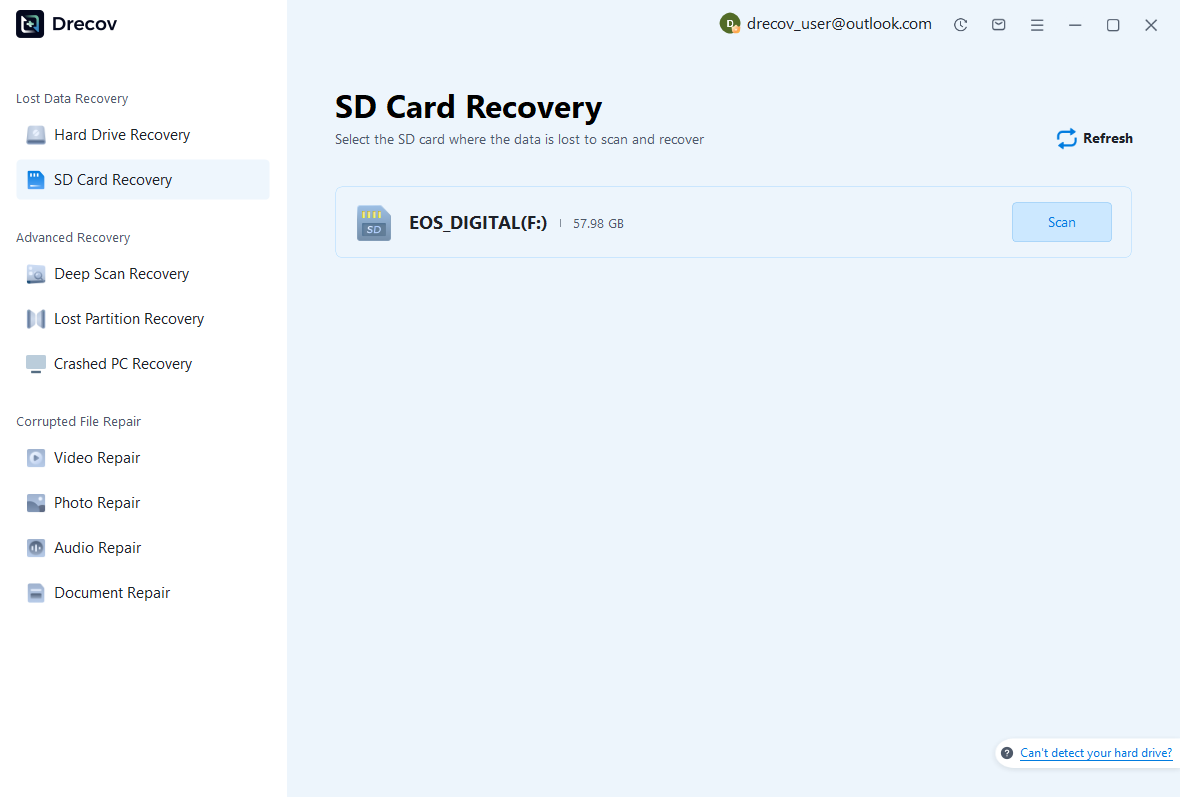
Step 1: Install PandaOffice Drecov
Step 2: Launch the software
Step 3: Select the drive where files were deleted
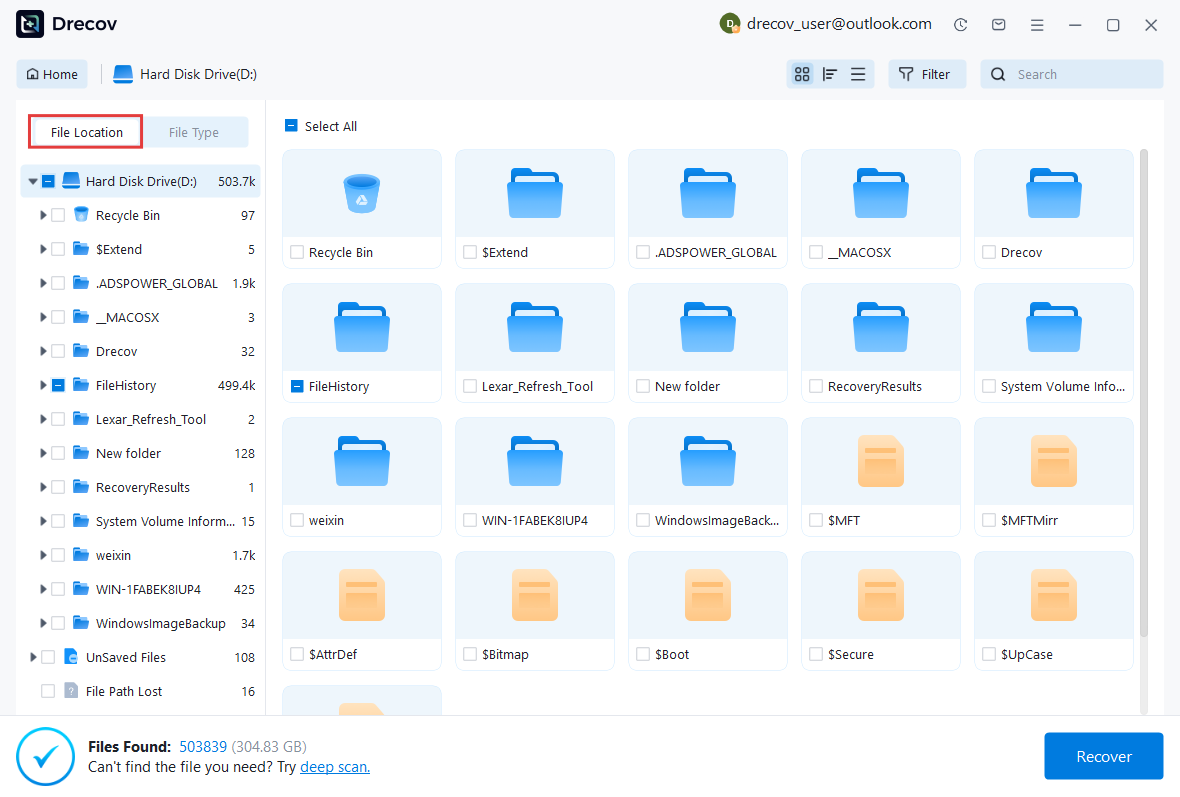
Step 4: Choose “Deep Scan” mode
Step 5: Wait for scan completion
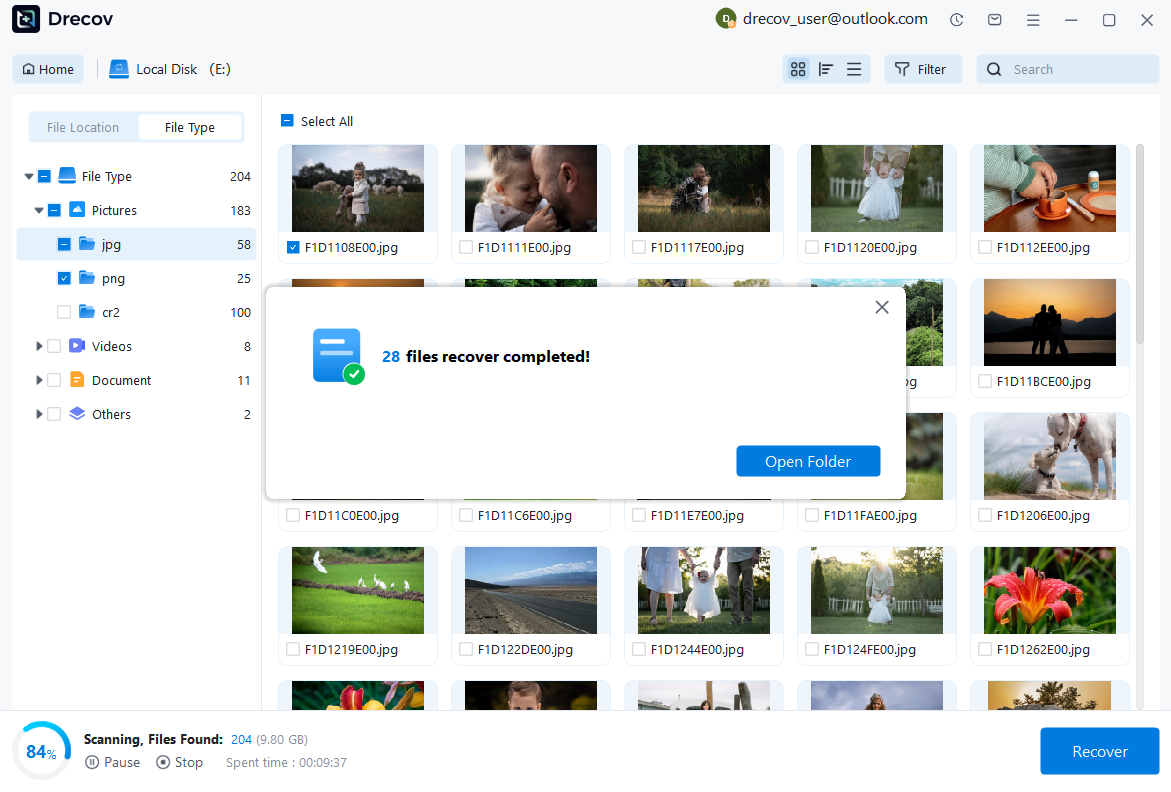
Step 6: Preview recoverable files
Step 7: Select files and click “Recover”
Step 8: Save recovered files to a different drive
⚠️Warning: Do NOT save recovered files back to the original drive to avoid overwriting data
Why Choose PandaOffice Drecov Recovery Software?
PandaOffice Drecov offers a fast, secure, and user-friendly solution for recovering lost files across multiple scenarios. Whether you need email recovery, ZIP File Recovery, format data recovery, or help to recover deleted drafts Outlook, the software provides reliable recovery performance for both personal and business users.
PandaOffice Drecov supports recovery from formatted hard drives, SSDs, USB drives, SD cards, and external storage devices. Its advanced scanning engine can locate deleted archives, damaged ZIP files, lost Outlook drafts, and accidentally removed documents with high accuracy. For users searching for how to find deleted messages in Teams, PandaOffice Drecov can also help recover exported chat files, attachments, and related local cache data when available.
Key advantages include:
- Deep scan technology for complex data loss situations
- Support for emails, archives, videos, photos, and office documents
- Recovery from accidental deletion, formatting, corruption, and system crashes
- Easy preview before restoring files
- Compatible with Windows and multiple storage devices
Unlike complicated enterprise recovery tools, PandaOffice Drecov keeps the recovery process simple. Users can scan, preview, and restore files in just a few steps without technical expertise.
Whether you are dealing with lost Outlook drafts, corrupted ZIP archives, formatted drives, or missing communication data, PandaOffice Drecov provides an efficient and practical recovery experience designed to minimize downtime and protect important files.
This method is effective for complex recovery cases such as formatted drives or deeply deleted data.
Method 5: Recover Files Using Built-in System Tools
Test Environment: Windows 10 Enterprise NTFS drive
Step 1: Open Command Prompt as Administrator
Step 2: Run system file check or disk scan tools
Step 3: Wait for scan completion
Step 4: Restart system if repairs are applied
This method helps fix file system issues that may hide recoverable data.
Method 6: Restore from External Backup Devices
Test Environment: External HDD USB 3.0 backup system
Step 1: Connect backup drive
Step 2: Open backup folder
Step 3: Locate lost file
Step 4: Copy file back to system drive
External backups remain one of the most reliable recovery methods if maintained regularly.
Deep Recovery Techniques for Permanently Deleted Files
File Recovery After Emptying Recycle Bin
Test Environment: Windows 11 Pro, SSD with recently emptied Recycle Bin
- Why files disappear logically but remain physically
- Recovery window before overwriting occurs
- Scanning unallocated disk space for traces
- Importance of avoiding new installations after deletion
Even after users empty the Recycle Bin, data is often still present on the storage device. The system simply marks the space as available rather than immediately erasing the content. This creates a recovery window where specialized tools can scan for residual file structures. The key factor is whether the system has overwritten that space with new data. SSD systems shorten this window due to TRIM, while HDDs generally retain recoverable traces longer.
Recovering Files from Formatted Drives
Test Environment: Windows 10 Pro, external USB drive quick-formatted
- Quick format vs full format impact on recovery
- Reconstructing file system metadata
- Deep scan recovery techniques for lost partitions
- Challenges in overwritten sectors
Formatting does not always mean permanent destruction. A quick format typically removes indexing tables rather than physically erasing data. This allows advanced recovery tools to rebuild file structures and retrieve content. However, a full format significantly reduces recovery chances because it actively overwrites storage blocks. Recovery success depends heavily on post-format activity.
Recovering Files from Corrupted or Unbootable Systems
Test Environment: Windows 11 Enterprise, system crash simulation with boot failure
- Accessing drives via external enclosure
- Recovering data without booting Windows
- Handling corrupted system partitions
- Safe extraction methods
When Windows fails to boot, users can still recover data by connecting the drive to another computer. This bypasses system-level corruption and allows direct scanning of storage sectors. Corrupted OS files do not necessarily affect personal data partitions, making external recovery highly effective in many cases.
Recovering Files from Malware or Ransomware Attacks
Test Environment: Windows 10 VM with simulated ransomware encryption
- Identifying encrypted vs deleted files
- Avoiding further system contamination
- Recovery priority strategies
- Importance of isolated recovery environments
Malware can either delete or encrypt files. In deletion scenarios, recovery tools may retrieve data from disk remnants. In encryption cases, recovery depends on backups or decryption tools. Running recovery in a clean environment is critical to prevent reinfection or further data loss.
⚠️Warning: Never attempt multiple antivirus scans on infected drives before recovery; it may overwrite recoverable data.
Professional Recovery Strategy for High Success Rate
Structured Recovery Workflow Approach
Test Environment: Windows 11 Pro SSD + external backup drive
- Step 1: Stop all system activity immediately
- Step 2: Identify storage type (SSD/HDD)
- Step 3: Choose recovery method based on scenario
- Step 4: Perform deep scan recovery
- Step 5: Validate recovered file integrity
A structured workflow significantly improves success rates when attempting to recover permanently deleted files. Random attempts can reduce recovery efficiency by causing additional disk writes. Professionals always prioritize imaging or scanning first before any system modifications.
Using Deep Scan Technology for Maximum File Discovery
Test Environment: Mixed HDD/SSD recovery simulation
- Sector-by-sector scanning method
- File signature recognition
- Rebuilding fragmented files
- Recovering hidden or orphaned data blocks
Deep scan recovery goes beyond standard file system indexing. Instead, it identifies raw data patterns that match known file formats. This is especially useful when directory structures are lost or corrupted. Although slower, it offers the highest recovery probability.
Importance of File Preview Before Restoration
Test Environment: Windows 10 Pro recovery software preview testing
- Verifying file integrity before saving
- Avoiding corrupted restores
- Selecting only usable files
- Reducing unnecessary recovery output
Preview functionality helps users ensure recovered files are intact before saving them. This avoids wasting storage space on corrupted or partial files and improves overall recovery efficiency.
Preventive Data Protection Strategies
Building a Multi-Layer Backup System
Test Environment: Windows 11 Home + OneDrive + external HDD backup
- Cloud backup synchronization
- Local physical backup rotation
- Hybrid backup strategy for redundancy
A multi-layer backup system ensures data availability even after severe data loss events. Combining cloud and offline backups provides the highest resilience against accidental deletion or system failure.
Safe System Usage Habits to Avoid Data Loss
Test Environment: Office productivity environment simulation
- Avoiding forced shutdowns
- Preventing unsafe removal of drives
- Managing file operations carefully
- Monitoring disk health regularly
User behavior plays a major role in preventing permanent data loss. Many recovery cases originate from unsafe shutdowns or accidental deletion actions. Proper usage habits significantly reduce risk.
Long-Term Data Protection Recommendations
Test Environment: Enterprise backup policy simulation
- Scheduled system restore points
- Automated backup policies
- Disk health monitoring tools
- Regular recovery testing drills
Organizations often implement scheduled backup validation to ensure recovery systems actually work when needed. This proactive approach reduces dependency on emergency recovery tools.
Final Extended Insight: Building a Reliable Recovery Mindset
Recovering lost data is not only about tools but also about timing and decision-making. The ability to recover permanently deleted files depends on how quickly users respond after deletion and how carefully they avoid overwriting storage space.
Modern recovery solutions make it possible to restore files in many scenarios, but no method guarantees 100% success. That is why prevention remains the strongest strategy. Combining backups, safe usage habits, and professional recovery tools ensures the highest level of data protection.
A balanced approach—prevention first, recovery second—remains the most reliable way to safeguard important digital information in Windows environments.





