







Seeing your computer power up while the screen remains completely black is incredibly frustrating. You hear the fans spinning and see the lights blinking, yet the system refuses to hand control over to the motherboard firmware. This exact scenario, where a computer is staying on but no bios loads, usually indicates a communication breakdown between your hardware components.
When your PC encounters this state, your data can become vulnerable due to improper shutdowns or sudden hardware failures. Meanwhile, safeguarding your files should be your top priority. Using an advanced tool like PandaOffice Drecov data recovery software ensures that your operating system files, personal documents, and partitions remain intact while you troubleshoot the underlying hardware issues.
Understanding the Basics of Computer Is Staying On But No BIOS
When a computer is staying on but no bios menu displays, the machine is failing its Power-On Self-Test. This test is a diagnostic routine built directly into your motherboard firmware to initialize system memory, processors, and peripheral controllers.
Common Challenges in Hardware Initialization
- Corrupted Firmware: A failed update or sudden power loss can corrupt the chip, leaving you wondering how do i reset bios settings to defaults.
- Memory Misconfiguration: Loose RAM sticks or incorrect speeds prevent the motherboard from completing its initial checks.
- Power Delivery Issues: The Power Supply Unit might provide enough voltage to spin the cooling fans but fail to deliver stable power to the CPU.
How PandaOffice Drecov Protects Your System
If your system experiences unexpected crashes during boot troubleshooting, data corruption can occur. PandaOffice Drecov data recovery software specializes in deep-scanning drives even when the host machine experiences critical boot errors.
Whether you need to extract data from a drive that won’t boot or retrieve lost browser files, this utility provides comprehensive recovery. For example, if you are wondering where are Firefox bookmarks stored on your PC, the software can locate those specific profile folders across hidden partitions. It works seamlessly across various storage mediums, making it indispensable when hardware instability threatens your digital storage.
⚠ Warning: Install it on a drive different from the one where your data was lost to prevent overwriting.
Solutions to Computer Is Staying On But No BIOS Issues
Method 1: Perform a Hard Power Reset and Clear Component Static
Static electricity buildup on the motherboard components can disrupt the startup sequence. Consequently, draining this residual power can force the motherboard to re-evaluate the hardware configuration.
- Turn off the power supply switch at the back of the PC chassis.
- Disconnect the main power cable from the wall outlet.
- Press and hold the physical power button on your computer case for thirty seconds.
- Reconnect the power cable and attempt a standard bios restart by pressing the power button.
Method 2: Recover Data Using PandaOffice Drecov Data Recovery Software
Before you attempt advanced hardware modifications or a complete system wipe, you must secure your data. If your primary computer cannot access its operating system, remove the storage drive and connect it to a working secondary computer to run the recovery process.
⚠ Warning: Install it on a drive different from the one where your data was lost to prevent overwriting.
- 1. Download and install PandaOffice Drecov data recovery software on a functioning secondary computer.
- 2. Connect your target hard drive or solid-state drive to this secondary computer using a SATA to USB adapter.
- 3. Launch the application and select the connected drive from the primary device list dashboard.

- 4. Click the Scan button to initiate a sector-by-sector analysis of the unbootable storage drive.

- 5. Preview the discovered files within the user interface after the scan completes.
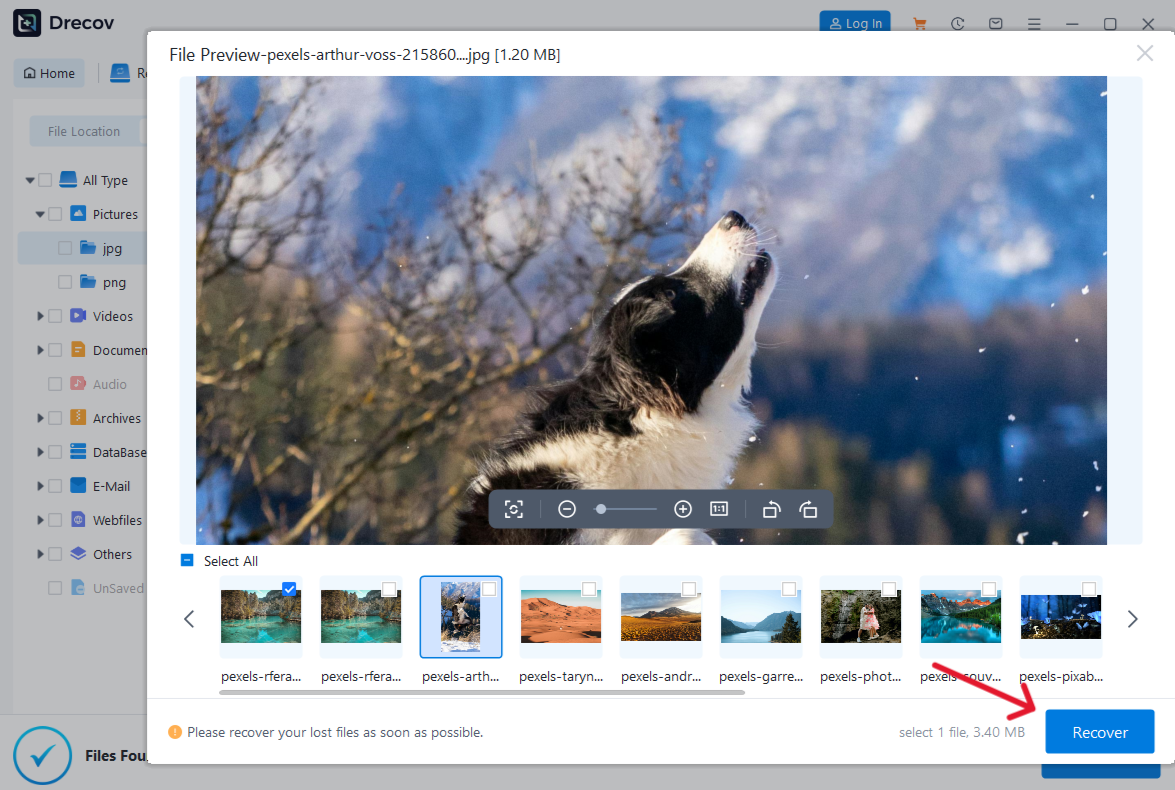
- 6. Select your vital files and click Recover to save them to a secure local directory on the host computer.
Furthermore, this utility is highly versatile. If your boot troubleshooting involved an external drive that became corrupted, you can learn how to repair corrupted USB flash drive without losing data using the built-in diagnostic tools. It also features dedicated support for specialized hardware brands, which you can read about in the complete guide to Toshiba hard disk data recovery.
Method 3: Reseat RAM Modules and Clean the Slots
A loose or dusty memory module will instantly halt the boot process before the display initializes. Cleaning the contacts establishes a clean connection.
- Open the side panel of your computer case to expose the motherboard.
- Push down on the retaining clips at both ends of the memory slots to release the RAM sticks.
- Clean the gold edge connectors of the RAM modules using a microfiber cloth.
- Insert the modules firmly back into the primary slots until the retaining clips click shut automatically.
Alternative or Complementary Methods
If basic hardware troubleshooting does not resolve the issue, you may need to apply manual firmware intervention techniques. The table below compares the most effective secondary approaches.
| Method | Pros | Cons |
| How to Manually Reset BIOS via CMOS Battery | Clears all corrupted settings instantly without needing display access | Requires physical access to the motherboard and removal of internal components |
| Motherboard Flashback Button | Rewrites corrupted firmware even if the CPU is not recognized | Requires a separate USB drive formatted precisely to FAT32 |
| Display Cable and Port Swap | Eliminates simple monitor communication issues quickly | Does not resolve underlying motherboard post failures |
How to Manually Reset BIOS via the CMOS Battery
When the system configuration data becomes corrupt, a manual hardware reset clears the volatile memory chip.
- Disconnect all external cables from the computer tower.
- Locate the silver, coin-sized CR2032 battery on the surface of the motherboard.
- Use a non-conductive plastic tool to release the retaining clip holding the battery.
- Remove the battery entirely and wait five minutes to clear the CMOS memory cache.
- Reinsert the battery, close the computer case, and check if the system can successfully restart to bios settings.
Tips & Best Practices
Optimizing data recovery success requires a careful approach to handling storage hardware. Never install data recovery software onto the exact same drive that contains your lost data, as this action will overwrite the sectors you need to scan.
Maintaining system stability requires clean power delivery and regular maintenance. In addition, you should always utilize a high-quality surge protector or an Uninterruptible Power Supply to prevent voltage spikes from corrupting your motherboard chip. For comprehensive hardware guidelines, check the official documentation on the Microsoft Hardware Support Portal.
Avoid These Common Pitfalls
- Avoid forcing hardware components into slots without aligning the notches properly.
- Do not leave the computer plugged into the wall while moving internal jumpers.
- Avoid interrupting a firmware flash process under any circumstances.
FAQs About Motherboard and Boot Settings
How to restart in bios mode when the display is working?
Navigate to the Windows Settings menu, select Update & Security, click Recovery, and choose Advanced Startup. Click Restart Now, then choose Troubleshoot, select Advanced Options, and click UEFI Firmware Settings to complete the how to restart in bios process.
How to open bios on pc during startup?
Turn on the machine and immediately tap the designated hotkey repeatedly before the operating system logo appears. The most common keys for how to open bios on pc systems are Delete, F2, F10, or F12.
Why does my pc keeps booting to bios instead of loading Windows?
This issue typically indicates that the motherboard cannot detect a valid bootable storage drive. Alternatively, it means the boot priority order has changed, causing a loop where the pc keeps booting to bios automatically.
How to reset to bios default values?
Access the firmware menu during startup and press the F9 key to load setup defaults. Confirm the choice, then press the F10 key to save the changes and execute a clean how to reset to bios routine.
How to factory reset pc from bios settings?
You cannot perform a direct operating system factory reset from within the firmware environment. However, you can alter the boot order to launch a recovery drive, which initiates the process of how to factory reset pc from bios menus or how to reinstall windows from bios bootable media.
Conclusion
Resolving a situation where a computer is staying on but no bios appears requires systematic troubleshooting of your internal hardware components. By checking your RAM modules and learning how do i reset bios settings manually, you can generally restore your computer to an operational state.
Throughout this diagnostic process, ensuring the safety of your files is paramount. Utilizing PandaOffice Drecov data recovery software provides the necessary security to retrieve your files from unstable or unbootable drives. Take control of your data security today by maintaining updated backups and keeping professional recovery tools ready for any hardware emergency.






