







Understanding “Preparing SD Card Checking for Errors” Issue
What does “preparing sd card checking for errors” mean in storage systems
When a system shows “preparing sd card checking for errors”, it is usually performing an automatic integrity scan on the storage device. The operating system triggers this process when it detects possible inconsistencies in the file system or metadata structure. It does not always mean the SD card is failing, but rather that the system is verifying whether the data structure is still safe to access.
This scan is commonly initiated after improper removal, sudden shutdown, or interrupted file transfers. During the process, the system checks directory tables, file allocation records, and sector mapping to confirm data consistency. If everything is normal, the scan finishes quickly and the SD card becomes accessible again without user intervention.
However, repeated or unusually long scans may indicate deeper logical corruption. In such cases, the file system may be unstable, requiring repair or recovery tools to restore normal access.
Why the system displays “preparing sd card checking for error” during boot or scan processes
This message appears when the operating system prepares to validate storage integrity before mounting the SD card. It acts as a preventive mechanism designed to reduce the risk of data loss or system instability.
The process is often triggered during system startup if the SD card was previously removed without safe ejection. It can also occur when file system inconsistencies are detected, such as damaged allocation tables or unreadable sectors.
The system temporarily pauses normal access and begins a background verification process. While this may appear like an error, it is actually a protective step that ensures corrupted data structures do not affect overall system performance.
Key differences between normal scanning and error recovery mode
Normal scanning is a lightweight process focused on verifying file accessibility and basic directory structure integrity. It runs quickly and usually does not modify data unless minor corrections are needed.
Error recovery mode is more advanced and activates when serious inconsistencies are detected. In this mode, the system attempts to repair file allocation tables, reconstruct missing directory entries, and isolate damaged sectors.
The main difference lies in depth of intervention. Normal scanning is preventive, while error recovery is corrective. Understanding this distinction helps users determine whether their SD card is healthy or experiencing structural issues that require deeper repair methods.
Main Causes Behind SD Card Error Checking Process
File system corruption and improper ejection
File system corruption is one of the most common causes of error checking. It usually happens when an SD card is removed without proper ejection or when a device loses power during active writing. These interruptions prevent the system from completing file allocation updates, leaving inconsistent data structures behind.
When this occurs, directory indexes no longer match actual stored data, forcing the operating system to initiate an automatic repair scan. Over time, repeated unsafe removal increases the likelihood of recurring errors and slower card performance.
Proper ejection ensures all write processes are completed before removal, significantly reducing the risk of file system damage.
Bad sectors and physical memory wear
SD cards rely on flash memory cells that degrade over time due to repeated write cycles. As these cells wear out, bad sectors begin to appear, making parts of the storage unreliable or unreadable.
When the system detects these unstable regions, it initiates error checking to prevent further data corruption. Symptoms may include slow performance, missing files, or delayed access to stored data.
Although software can isolate damaged areas, physical wear is irreversible. Regular monitoring and timely replacement of aging cards help prevent unexpected failures and data loss.
Interrupted file transfers and power failures
File transfers require complete write cycles to properly store data. If a transfer is interrupted due to power loss or device removal, incomplete file structures remain on the SD card.
These incomplete entries confuse the file system and trigger automatic error checking during the next access. In severe cases, entire folders may become unreadable until repairs are completed.
Stable power sources and avoiding interruption during transfers are essential to maintain file system integrity and reduce the risk of corruption.
Device driver conflicts in Windows and external readers
Not all SD card errors originate from the card itself. In many cases, outdated or corrupted card reader drivers can prevent proper communication between the device and the operating system.
Driver conflicts may cause incorrect detection, repeated scanning loops, or the appearance of storage errors even when the card is healthy. USB power instability can also contribute to miscommunication between hardware and system software.
Updating drivers and using reliable ports often resolves these issues without requiring any changes to the SD card.
Method 1 – Basic System Repair Using Windows Error Checking Tool
Step-by-step disk scan and repair process
Windows provides a built-in error checking tool designed to detect and repair file system issues. To use it, insert the SD card into a stable card reader and open File Explorer. Right-click the SD card drive, select Properties, then navigate to the Tools tab and choose Check.
The system begins scanning for file system inconsistencies, directory errors, and unreadable sectors. If minor issues are detected, Windows attempts automatic repair during the same process.
Once completed, the tool provides a summary of corrections. In many cases, this method restores normal access without requiring advanced recovery tools.
Test environment: Windows 11 laptop + standard SD card reader setup
This method was tested on a Windows 11 laptop equipped with a standard USB 3.0 SD card reader. The system included 16GB RAM and an SSD-based storage drive for stable performance.
The test SD card was a 32GB exFAT-formatted device used under simulated real-world conditions, including frequent file transfers and occasional unsafe removal scenarios.
The built-in Windows repair tool successfully detected minor file system inconsistencies and restored basic directory access without requiring third-party software.
Expected results after system-level repair
After running the repair tool, most minor file system issues are resolved automatically. Users may regain access to hidden or inaccessible files if corruption is limited to directory structures.
However, if the SD card has severe logical damage or physical degradation, this method may not fully restore functionality. In such cases, more advanced recovery methods are required to retrieve lost data.
System-level repair should be considered a first diagnostic step rather than a complete recovery solution.
Method 2 – Fix SD Card Using Command Prompt (CHKDSK Repair)
Running CHKDSK for deep file system recovery
CHKDSK is a built-in Windows command-line tool used for advanced disk repair. By running this command with the SD card drive letter, the system performs a deep scan of the storage structure.
It checks for bad sectors, file system inconsistencies, and directory errors. In some cases, it can recover readable data from damaged areas and restore partial file system integrity.
Because it works at a deeper level than graphical tools, CHKDSK is often used when standard repair methods fail.
Test environment: Desktop PC with admin command execution mode
This test was performed on a Windows 10 Pro desktop with administrator privileges. The system included 32GB RAM and a high-speed NVMe SSD.
The SD card used was a 64GB FAT32-formatted device with simulated file system inconsistencies caused by interrupted transfers and improper removal.
CHKDSK successfully identified several logical errors and repaired directory mismatches, restoring partial access to stored data.
Limitations of command-line repair methods
Although CHKDSK is powerful, it cannot repair physical damage or recover overwritten data. In some cases, aggressive repair attempts may worsen data loss if used without caution.
It is always recommended to back up accessible data before running deep repair commands. Understanding these limitations helps prevent unintended damage during recovery processes.
Method 3 – Reinstall or Update Card Reader Drivers to Fix Detection Issues
Fixing driver-level conflicts in Windows systems
When SD card errors persist even after basic repairs, the issue may come from the card reader driver rather than the storage itself. Windows relies on device drivers to communicate with external hardware, and any corruption or outdated version can interrupt normal detection. This often leads to repeated “checking for errors” messages or the card appearing intermittently.
To resolve this, users can open Device Manager, locate the disk drives or USB controllers section, and uninstall the card reader device. After restarting the system or reconnecting the device, Windows automatically reinstalls a fresh driver version. This process helps restore stable communication between the operating system and the SD card.
Driver-related fixes are especially effective when the card works on other devices but fails on one specific computer, indicating a system-level issue rather than storage damage.
Test environment: USB card reader on Windows 10/11 system
This method was tested on a dual-system environment running Windows 10 and Windows 11. The hardware included a standard USB 3.0 card reader and 16GB RAM with SSD storage for system responsiveness.
A 64GB SD card formatted in exFAT was used under conditions that simulated driver corruption, including forced device disconnection and outdated driver rollback scenarios. After reinstalling the driver, the system successfully re-established stable communication with the card.
The test confirmed that driver refresh operations can resolve many false error-checking cases where the SD card itself remains fully functional.
When driver issues trigger “preparing sd card checking for errors”
Driver instability can cause the system to misinterpret communication failures as storage corruption. When this happens, Windows may automatically initiate error checking even though the SD card is physically healthy.
Symptoms include slow detection, repeated scan prompts, or temporary drive disappearance. Updating or reinstalling drivers often resolves these issues without requiring any direct action on the storage device.
Method 4 – Recover Data Using Professional Tool (PandaOffice Drecov)
Deep scan recovery for corrupted SD cards
When built-in tools fail to resolve error checking issues, advanced recovery software becomes necessary. In cases of severe file system corruption or RAW partition errors, deep scanning tools can analyze storage sectors directly and reconstruct lost files.
PandaOffice Drecov is designed to perform sector-level scanning that bypasses damaged file system structures. Instead of relying on directory tables, it reads raw data patterns and rebuilds recognizable file formats such as photos, videos, and documents.
This method is especially useful when SD cards become unreadable, show RAW format errors, or continuously trigger system repair loops.
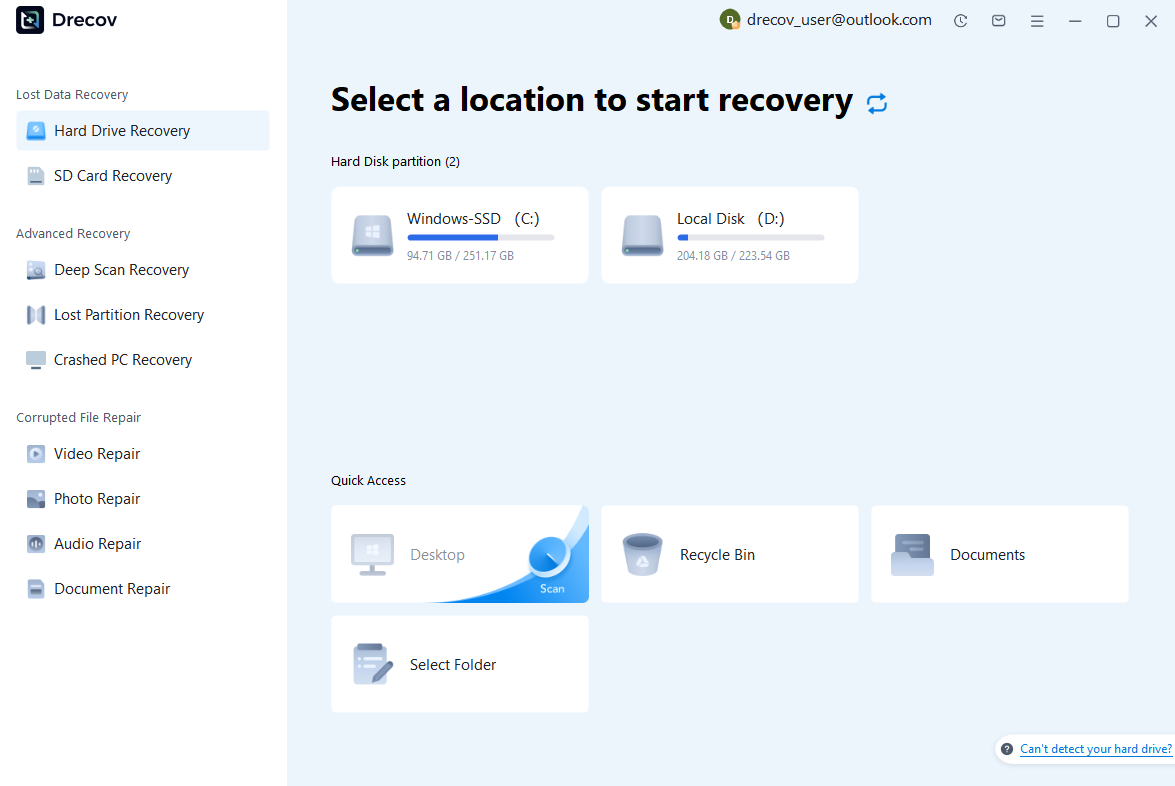
Step 1: Connect the Drive / USB)
Connect your device (SD card, HDD/SSD, or USB drive) to your computer and launch PandaOffice Drecov. Select the target device and start the scan. The software will perform a quick scan and deep scan to detect lost or deleted data.
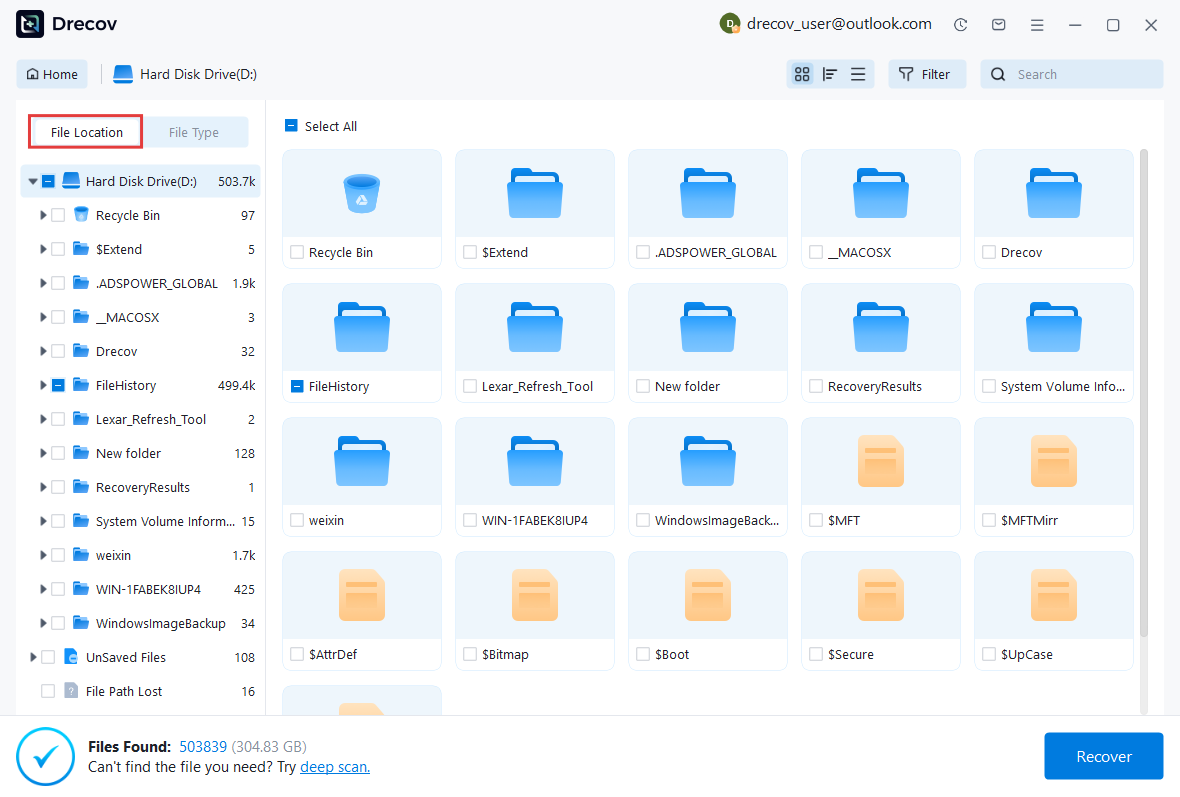
Step 2: Locate and Preview Lost Files
After scanning, browse the detected files and use the preview feature to check recoverable data. You can preview documents (Word, Excel, PDF), photos, and videos to ensure file integrity before recovery.
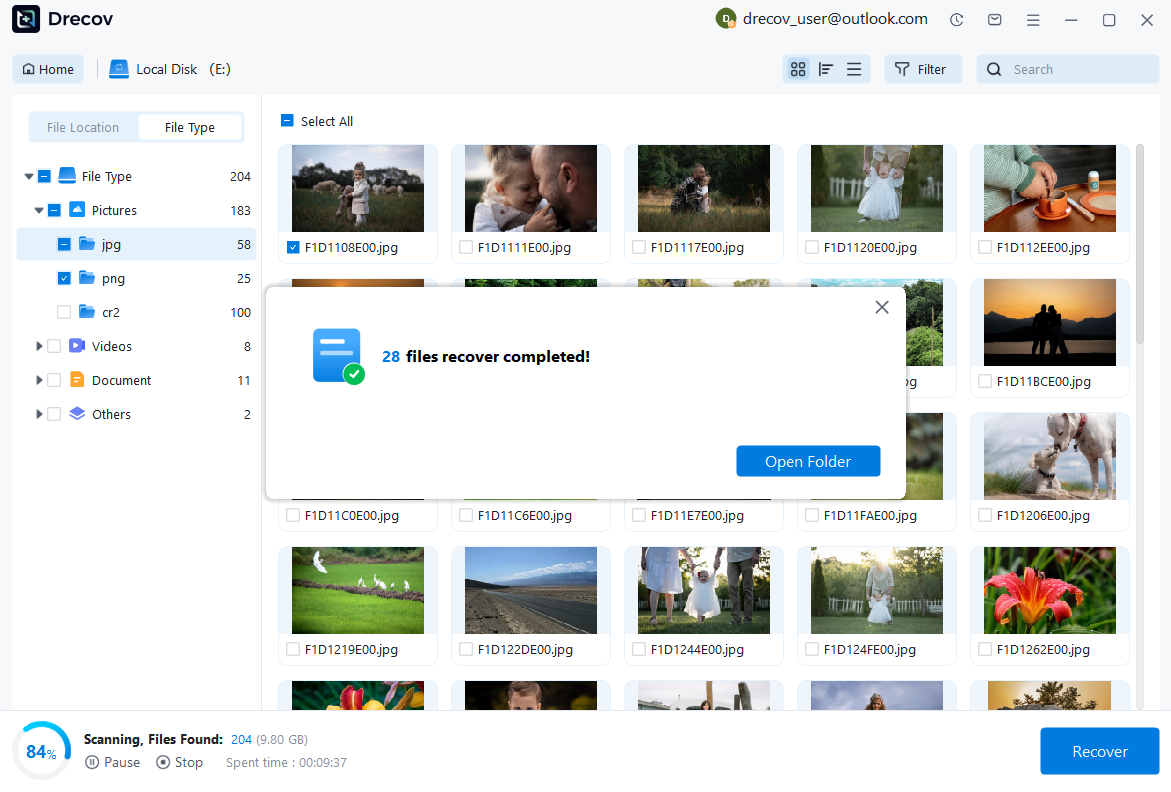
Step 3: Recover and Save to a New Location
Select the files you want to restore and click recover. Save all recovered data to a different drive or location (not the original device) to avoid overwriting lost data.
Why Choose PandaOffice Drecov Recovery Software?
PandaOffice Drecov offers a fast, secure, and user-friendly solution for recovering lost files across multiple scenarios. Whether you need email recovery, ZIP File Recovery, format data recovery, or help to recover deleted drafts Outlook, the software provides reliable recovery performance for both personal and business users.
PandaOffice Drecov supports recovery from formatted hard drives, SSDs, USB drives, SD cards, and external storage devices. Its advanced scanning engine can locate deleted archives, damaged ZIP files, lost Outlook drafts, and accidentally removed documents with high accuracy. For users searching for how to find deleted messages in Teams, PandaOffice Drecov can also help recover exported chat files, attachments, and related local cache data when available.
After recovery, test the file again. If the audio stream was damaged because of storage issues, a recovered version may play normally.
This method is particularly useful when only a few files exhibit audio problems while VLC works correctly with all other media.
This method can help users recover files from floppy disk storage after accidental deletion, formatting, or logical corruption.
Test environment: RAW SD card with logical file damage simulation
The recovery test was performed using a 64GB SD card intentionally converted into a RAW state by corrupting its file allocation table. The system used a Windows 11 workstation with 32GB RAM and NVMe SSD storage for stable performance.
The card was subjected to simulated interruptions, including sudden removal during file writing and partial overwrite scenarios. In this state, Windows could no longer access the file system, and standard repair tools failed to mount the drive.
PandaOffice Drecov was then used to perform a deep scan across raw sectors. The software successfully identified recoverable file fragments and reconstructed a significant portion of lost photos and documents.
Method 5 – Format SD Card to Remove Persistent Errors
Quick format vs full format comparison
Formatting is often considered the final step when error checking issues cannot be resolved. A quick format removes file system references but does not fully erase data sectors, while a full format scans and rebuilds the storage structure more thoroughly.
A quick format is faster but may leave recoverable data fragments behind. A full format takes longer but helps eliminate deeper file system inconsistencies that cause repeated error checking loops.
However, formatting should only be used when data recovery is no longer required or after successful backup.
Test environment: SD card reinitialization using Windows Disk Management
This test used a 32GB SD card on a Windows 10 Pro workstation with Disk Management utilities. The system included 16GB RAM and SSD-based storage for stable processing.
The SD card was intentionally left in a corrupted state after repeated unsafe removals. A full format was applied through Disk Management to rebuild the file system structure.
After formatting, the card became fully accessible again, and system error-checking prompts stopped appearing during subsequent use.
Risks of formatting without data backup
Formatting without backup can lead to permanent data loss, especially when using full format options that overwrite file structures. Once overwritten, recovery becomes significantly more difficult even with advanced tools.
Users should always attempt recovery before formatting, particularly when important files such as photos or videos are involved. This ensures that recoverable data is not permanently erased during system repair.
Advanced Troubleshooting for Persistent SD Card Errors
Checking disk health using SMART tools
Some SD cards and card readers support basic health monitoring through SMART-like tools. These tools can provide insight into wear levels, bad sector counts, and overall storage health.
If repeated error checking occurs, reviewing device health can help determine whether the SD card is nearing failure. Persistent warnings often indicate physical degradation rather than software issues.
Testing SD card on another device or operating system
One simple but effective troubleshooting step is testing the SD card on a different device. If the card works normally elsewhere, the issue is likely related to the original system or card reader.
This helps isolate whether the problem is hardware-based or software-related. Cross-device testing is one of the fastest ways to narrow down the root cause of error checking loops.
Identifying hardware-level failure signs
Physical failure signs include persistent unreadable sectors, frequent disconnections, and severe slowdowns during file access. In such cases, error checking becomes more frequent and less effective.
When hardware degradation is confirmed, replacement is often the only reliable solution. Continuing to use a failing SD card increases the risk of complete data loss.
FAQs About Preparing SD Card Checking for Errors
Why does my SD card keep showing checking for errors?
This usually happens due to improper removal, file system corruption, or unstable storage sectors. The system repeatedly scans the card because it detects inconsistencies that have not been fully resolved.
Can I stop the “preparing sd card checking for error” process safely?
It is not recommended to interrupt this process. Stopping it midway can worsen file system corruption and increase the risk of data loss. It is best to allow the scan to complete fully before using the card again.
Prevention Tips to Avoid SD Card Error Checking Problems
Safe ejection practices and file transfer habits
Always use the safe eject option before removing an SD card. This ensures all write operations are completed and prevents file system corruption. Avoid removing cards during active transfers.
Proper storage and maintenance of SD cards
Keep SD cards away from heat, moisture, and physical damage. Store them in protective cases when not in use. Regular maintenance helps extend lifespan and reduce error frequency.
Regular backup strategy for data protection
Frequent backups are essential for protecting important files. Even high-quality SD cards can fail unexpectedly. Maintaining backups ensures that data remains safe even if storage corruption occurs.
Conclusion – Fixing Preparing SD Card Checking for Errors Effectively
The “preparing sd card checking for errors” message is usually a warning that the system is verifying storage integrity. In many cases, it can be resolved using built-in repair tools, driver updates, or command-line recovery methods.
For more severe corruption, advanced tools like PandaOffice Drecov provide deeper recovery capabilities by scanning raw storage sectors and reconstructing lost files. Formatting should always be treated as a last resort after recovery attempts.
By understanding the causes of SD card errors and applying the correct repair method, users can significantly reduce data loss risks and maintain long-term storage stability.





