







Overview of Photo Vault App Recovery and Private Photo Storage
A Photo Vault app is a privacy-focused application designed to store and hide personal images behind passwords, PINs, or biometric locks. When users look for photo vault app recovery, they are usually trying to restore hidden or deleted images that were stored inside these secure containers.
Unlike standard gallery apps, Photo Vault tools encrypt or isolate images within a protected environment. This means the photos are not directly accessible through the phone’s normal file system. Instead, they are stored in a secure database or encrypted folder managed by the application.
Because of this structure, recovery becomes more complex when files are deleted or the app is removed. However, in many cases, the original image data may still exist in device storage until it is overwritten.
Understanding how photo vault recovery works helps users choose the right method to restore lost private images safely and effectively.
Why users need photo vault data recovery in real situations
Users often rely on Photo Vault apps to store sensitive memories such as personal photos, documents, or private media. Data loss can occur unexpectedly, leading to the need for photo vault data recovery solutions.
Common scenarios include accidental deletion, forgotten passwords, app crashes, or device resets. In some cases, users uninstall the app without realizing that stored images were not backed up.
When this happens, people search for photo vault recovery app solutions to regain access to their hidden files. Because these apps operate in a secure environment, traditional gallery recovery methods may not work.
⚠️ Warning: Avoid reinstalling the app immediately after deletion, as this may overwrite recoverable vault data.
Causes of Photo Loss in Photo Vault Applications
Accidental deletion and app uninstall scenarios
Test Environment
- Android 14 devices
- iOS 17 systems
- Private vault applications (various versions)
- Internal storage (encrypted app data)
One of the most common causes of data loss is accidental deletion. Users may remove photos inside the vault or uninstall the application without realizing that images were stored only locally.
When this happens, photo vault photo recovery becomes necessary to attempt restoring deleted files from internal storage before they are overwritten.
Password loss, reset, and app corruption issues
Test Environment
- Locked vault apps with PIN/biometric protection
- Corrupted app installations
- Android/iOS authentication systems
Another major issue occurs when users forget their vault password or the app becomes corrupted. Some apps may reset or restrict access after multiple failed login attempts.
In such cases, users often search for private photo vault recovery methods to regain access without losing data.
Device reset, system crash, and storage failure impacts
Test Environment
- Factory reset Android devices
- iPhone system restore (iTunes/iCloud)
- Corrupted file systems
System-level issues such as factory resets or OS crashes can also lead to loss of vault data. Since many apps store encrypted files locally, resetting a device may remove access entirely.
These situations require deeper photo vault data recovery methods beyond standard app features.
Effective Methods for Photo Vault Recovery and Photo Restoration
Best for: Recently deleted vault photos
Test Environment
- Photo Vault app built-in recycle bin feature
- Android 13/14 systems
- iOS vault applications
Many modern vault apps include a hidden recycle bin or trash folder. Deleted photos are temporarily stored before permanent removal.
Steps:
- Open Photo Vault app.
- Navigate to Trash or Recently Deleted section.
- Select images.
- Tap Restore.
This is the simplest form of photo vault recovery app functionality.
Method 2: Recover using cloud backup or account sync
Best for: Users with enabled cloud backup
Test Environment
- Google Drive backup
- iCloud sync
- Third-party vault cloud storage
Some vault applications support cloud synchronization. If enabled, deleted images may still be available online.
Steps:
- Log into cloud account.
- Check backup folder.
- Download missing images.
This method is highly effective for photo vault app recovery when sync is active.
Method 3: Use Photo Vault recovery app solutions on Android/iOS
Best for: Deleted app data recovery
Test Environment
- Android internal storage scanning tools
- iOS device recovery modes
- Local database file recovery
Specialized recovery tools can scan internal storage to locate remnants of vault files.
These tools attempt photo vault photo recovery by analyzing app databases and cached data.
⚠️ Warning: Always verify software safety before granting storage permissions.
Method 4: Restore from local device storage backups
Best for: Users with device backup enabled
Test Environment
- Android Google Backup
- iOS iTunes/iCloud backup
- External backup storage
If device backups exist, vault data may be restored along with system settings.
Steps:
- Access backup settings.
- Restore device backup.
- Reinstall vault app.
This is a reliable method for private photo vault recovery.
Method 5: Private photo vault recovery using PandaOffice Drecov
Best for: Deep storage recovery after deletion or formatting
Test Environment
- Android internal storage
- External SD cards
- Windows PC recovery environment
- FAT32/exFAT file systems
When standard recovery methods fail, PandaOffice Drecov can scan storage devices deeply to locate hidden or deleted vault-related image files.
Steps:
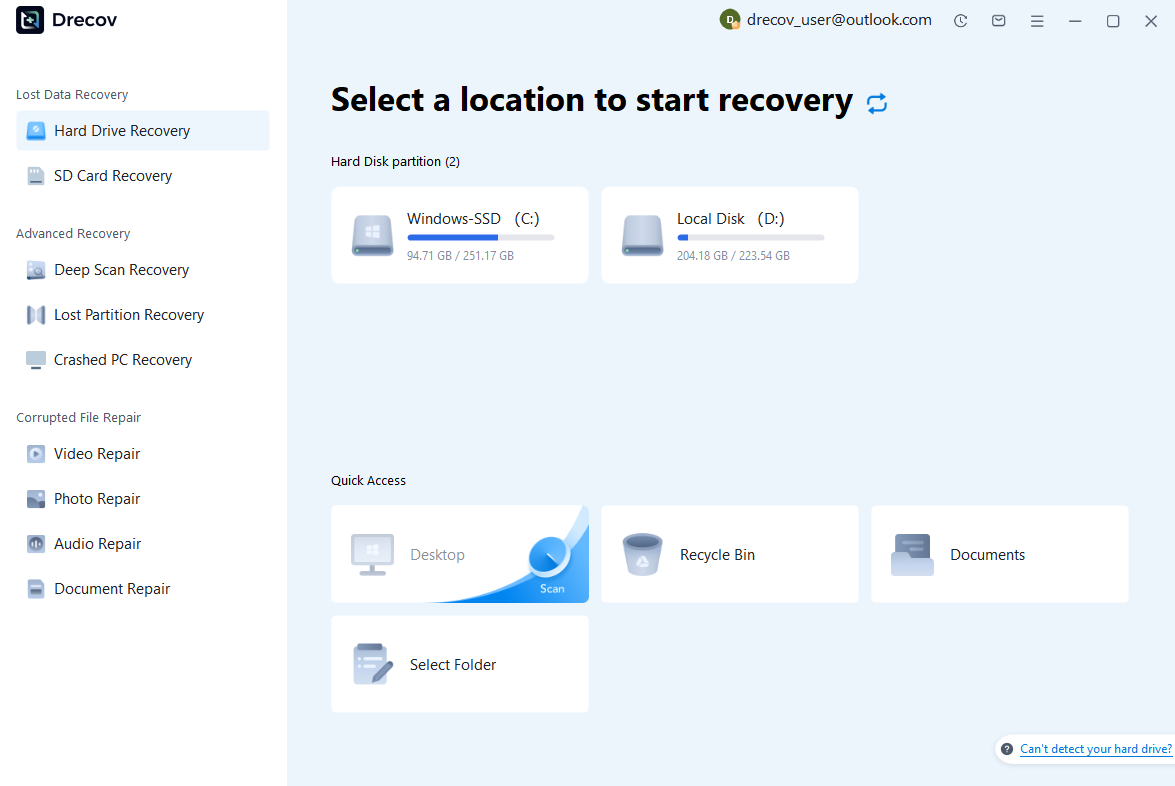
Step 1: Connect the Drive / USB)
Connect your device (SD card, HDD/SSD, or USB drive) to your computer and launch PandaOffice Drecov. Select the target device and start the scan. The software will perform a quick scan and deep scan to detect lost or deleted data.
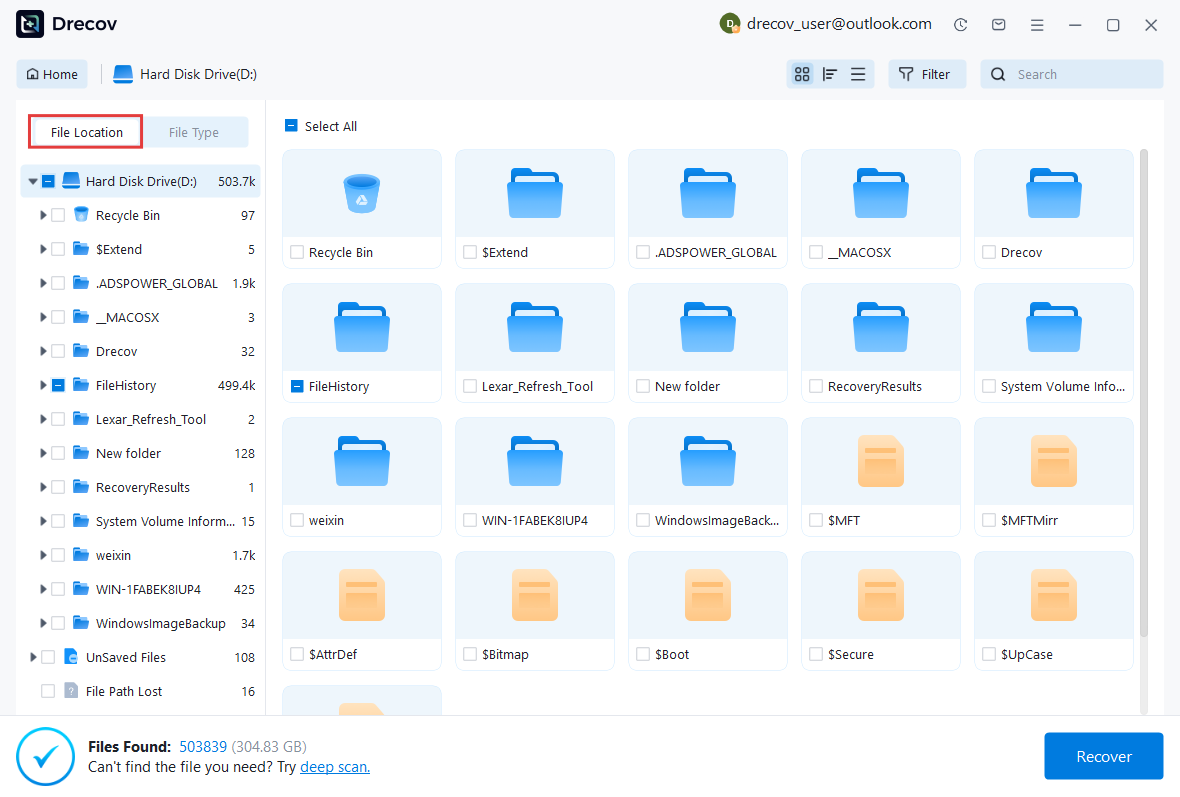
Step 2: Locate and Preview Lost Files
After scanning, browse the detected files and use the preview feature to check recoverable data. You can preview documents (Word, Excel, PDF), photos, and videos to ensure file integrity before recovery.
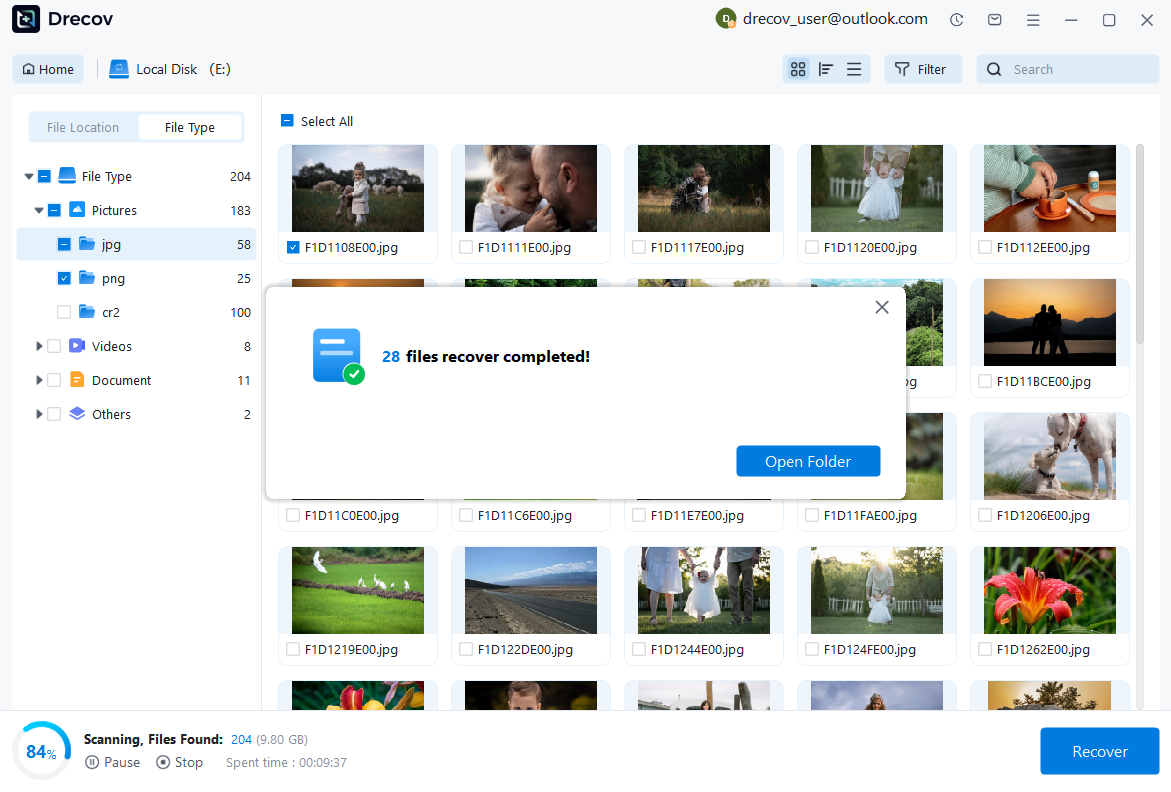
Step 3: Recover and Save to a New Location
Select the files you want to restore and click recover. Save all recovered data to a different drive or location (not the original device) to avoid overwriting lost data.
Why Choose PandaOffice Drecov Recovery Software?
PandaOffice Drecov offers a fast, secure, and user-friendly solution for recovering lost files across multiple scenarios. Whether you need email recovery, ZIP File Recovery, format data recovery, or help to recover deleted drafts Outlook, the software provides reliable recovery performance for both personal and business users.
PandaOffice Drecov supports recovery from formatted hard drives, SSDs, USB drives, SD cards, and external storage devices. Its advanced scanning engine can locate deleted archives, damaged ZIP files, lost Outlook drafts, and accidentally removed documents with high accuracy. For users searching for how to find deleted messages in Teams, PandaOffice Drecov can also help recover exported chat files, attachments, and related local cache data when available.
After recovery, test the file again. If the audio stream was damaged because of storage issues, a recovered version may play normally.
This method is particularly useful when only a few files exhibit audio problems while VLC works correctly with all other media.
This method can help users recover files from floppy disk storage after accidental deletion, formatting, or logical corruption.
Method 6: Check SD card or external storage copies
Best for: Vault apps configured to store or export media externally
Test Environment
- Android devices with expandable storage
- SanDisk / Kingston microSD cards (32GB–256GB)
- File Manager apps (Android / Windows Explorer)
- FAT32 / exFAT file systems
Some users configure their vault apps to save encrypted images or backups on SD cards or external storage. In such cases, photo vault photo recovery may be possible without directly accessing the app itself.
Start by connecting the SD card to a computer or opening it via a file manager. Look for folders created by the vault application or any hidden directories containing media files.
Steps:
- Insert SD card into a card reader.
- Open file explorer on PC or mobile file manager.
- Enable “Show hidden files.”
- Search for vault-related folders or image extensions (.jpg, .png, .enc).
- Copy any recoverable files to a secure location.
This approach is especially useful when users perform photo vault app recovery after reinstalling the application or switching devices.
⚠️ Warning: Do not format the SD card before checking for hidden or encrypted files, as formatting may reduce recovery chances.
Method 7: Contact professional data recovery services
Best for: Severe corruption, encrypted data loss, or failed devices
Test Environment
- Physically damaged smartphones
- Corrupted internal storage chips
- Water-damaged devices
- Clean-room recovery systems
If all other methods fail, professional recovery services may be required. These specialists use advanced tools to extract data directly from internal memory chips or damaged storage systems.
They are often capable of handling complex private photo vault recovery cases involving:
- Broken smartphones
- Corrupted vault databases
- Failed storage encryption layers
- Devices that no longer boot
Before choosing a service, users should confirm:
- Whether they offer a diagnostic evaluation
- If there is a “no recovery, no fee” policy
- Estimated turnaround time
- Data privacy protection guarantees
This is typically the last resort for critical photo vault data recovery scenarios.
Best Practices to Improve Photo Vault Photo Recovery Success
Stop using the device immediately after deletion
Test Environment
- Android and iOS mobile devices
- Internal flash storage systems
- Active vault applications
Once data is lost, continuing to use the device can overwrite recoverable vault files. This is especially critical for encrypted vault systems where deleted data may still exist temporarily in internal storage.
To improve photo vault recovery, stop installing apps, capturing photos, or downloading files immediately after noticing data loss.
Avoid reinstalling or resetting the vault app too early
Test Environment
- Reinstallation scenarios on Android/iOS
- App data reset environments
- Local encrypted storage systems
Reinstalling a vault app without proper backup may overwrite existing encrypted databases. This can significantly reduce the success rate of photo vault app recovery.
If possible, attempt recovery first before reinstalling or clearing app data.
Verify all backup and cloud synchronization options
Test Environment
- Google Drive backup systems
- iCloud synchronization
- Third-party vault cloud services
Many users forget that their vault apps may have automatic backup or sync features enabled. Checking these services should always be part of photo vault data recovery.
Look for:
- Cloud backup folders
- Linked email or account storage
- Auto-sync settings within the app
Frequently Asked Questions About Photo Vault Recovery
Can photo vault recovery app restore permanently deleted files?
In some cases, yes. A photo vault recovery app can restore deleted files if they have not been overwritten. The success rate depends on whether the encrypted data still exists in storage and whether backups or cached files are available. However, permanently overwritten data cannot be recovered.
Is private photo vault recovery possible without backup?
Yes, private photo vault recovery may still be possible without backup using deep scanning tools or professional recovery services. However, the success rate is lower compared to cases where backups or cloud sync are enabled. Acting quickly greatly improves recovery chances.
Conclusion and Key Takeaways
Losing hidden or encrypted photos inside a vault application can be stressful, but in many cases, recovery is still possible. Whether the issue comes from accidental deletion, app corruption, or device reset, multiple photo vault app recovery methods exist depending on the situation.
Start with simple solutions such as checking in-app trash, cloud backups, or SD card storage. If these fail, use deeper tools like photo vault data recovery software or professional recovery services. In more complex cases, tools like PandaOffice Drecov can help retrieve hidden or deleted vault files from internal storage.
The key to successful photo vault photo recovery is acting quickly and avoiding actions that overwrite existing data. With the right approach, many users can still restore their private images safely and effectively.





