







Overview of Enhancing Picture Quality and Image Improvement
What does enhance picture quality mean in digital images
When users try to enhance picture quality, they are referring to a process that improves the visual clarity, sharpness, color accuracy, and overall detail of an image. The goal is to make images look cleaner, more professional, and easier to use for sharing, printing, or publishing.
In digital imaging, enhance quality of picture can involve multiple technical improvements, such as increasing resolution, reducing noise, correcting exposure, and improving edge definition. Modern enhancement methods often rely on AI algorithms that reconstruct missing details based on patterns in the image.
This process is widely used in photography, social media editing, e-commerce product presentation, and even document restoration.
Why image quality degradation happens in photos
Image quality loss is extremely common in daily digital usage. It often happens during image compression, resizing, screenshot capture, or repeated editing. Messaging apps and social platforms also automatically reduce file size, which directly lowers image clarity.
Another important scenario involves recovered files. Even when using tools like repicvid photo recovery, restored images may appear incomplete, pixelated, or slightly damaged because original file fragments may no longer be fully intact.
Other common causes include:
- Low-light shooting conditions
- Camera motion blur
- Over-compression of JPEG images
- File transfer interruptions
- Storage device errors
⚠️ Warning: Repeated editing and saving in compressed formats can permanently degrade image quality and reduce recovery potential.
Importance of Improving and Enhancing Image Quality
Common situations where users need to enhance picture quality
People frequently need to improve image quality in both personal and professional environments. In personal use, this includes fixing blurry selfies, enhancing travel photos, or restoring old family pictures. In professional contexts, it is often required for product images, marketing content, or website visuals.
Low-quality images can reduce trust, reduce engagement, and negatively affect presentation quality. That is why users often look for ways to enhance picture quality free using AI tools or editing software.
Differences between low-resolution and high-resolution images
Low-resolution images contain fewer pixels, which makes them appear blurry, pixelated, or stretched when enlarged. These images lose detail quickly when zoomed in or edited.
High-resolution images contain more pixel data, allowing them to maintain sharpness even at larger display sizes. They are more suitable for printing, professional editing, and digital publishing.
Understanding this difference helps users determine when image enhancement or upscaling is necessary, especially when preparing content for digital platforms or restoring older images.
Role of tools like repicvid photo recovery in restoring images
Tools such as repicvid photo recovery are used to retrieve deleted or lost images from storage devices including hard drives, SD cards, and USB drives. These tools scan storage sectors to locate recoverable image fragments.
However, recovered images do not always return in perfect condition. Some may be partially corrupted, missing metadata, or compressed due to overwriting or storage damage. In such cases, users often need additional enhancement tools to improve clarity and usability.
Recovered files usually serve as a starting point before further editing or restoration is performed.
Effective Methods to Enhance Picture Quality Free
Method 1: Use online tools to enhance picture quality online free
Test Environment
- Google Chrome / Microsoft Edge browsers
- AI-based online image enhancers
- Cloud image processing platforms
- JPEG / PNG image formats
Online tools are one of the fastest ways to improve image quality without installing software. They rely on cloud-based AI models that automatically analyze and enhance images.
Step-by-step process:
- Open a trusted online image enhancement website.
- Upload the image from your device.
- Select enhancement mode such as “HD restore” or “AI upscale.”
- Adjust enhancement intensity if available.
- Start processing and wait for results.
- Download the enhanced image to your device.
This method is widely used when users need to enhance picture quality online free quickly for social media or personal use.
Method 2: Adjust brightness, contrast, and sharpness manually
Test Environment
- Adobe Photoshop / Lightroom
- GIMP or similar open-source editors
- Mobile editing apps (Android / iOS)
- Desktop image processing tools
Manual editing gives users full control over how an image is improved. It is especially useful when images require subtle adjustments rather than full AI reconstruction.
Step-by-step process:
- Open the image in an editing application.
- Adjust brightness to fix underexposed or overexposed areas.
- Modify contrast to improve depth and separation of elements.
- Apply sharpening to enhance edge clarity.
- Reduce noise if the image appears grainy.
- Export the final image in high-quality format (PNG or high JPG).
This method is often preferred by users who want precise control over enhance quality of picture results.
Method 3: AI-based tools to enhance quality of picture
Test Environment
- AI image upscaling platforms (web-based or software)
- Cloud-based processing systems
- GPU-accelerated enhancement engines
- Low-resolution image datasets
AI enhancement tools analyze image structure and reconstruct missing details using trained models. This allows low-quality images to appear sharper and more detailed.
Step-by-step process:
- Upload the image to an AI enhancement platform.
- Select resolution upgrade or enhancement mode.
- Start AI processing engine.
- Wait for the reconstructed image output.
- Compare original and enhanced versions.
- Download the improved image.
AI-based tools are especially effective when users want to enhance picture quality free with minimal manual work.
Method 4: Mobile apps for quick image enhancement
Test Environment
- Android 13+ smartphones
- iOS 16+ devices
- Mobile AI photo editing apps
- JPEG / HEIC image formats
Mobile apps provide fast and convenient enhancement features for everyday users who edit photos directly on their phones.
Step-by-step process:
- Install a photo enhancement app from app store.
- Open the app and import your image.
- Select auto-enhance or AI restore option.
- Adjust clarity, sharpness, or brightness manually if needed.
- Preview the enhanced image.
- Save the final version to your gallery.
This method is commonly used for quick enhance picture quality online free alternatives on mobile devices.
Method 5: Enhance image quality using desktop software
Test Environment
- Windows 10 / Windows 11 / macOS systems
- Adobe Photoshop, Lightroom, GIMP
- High-resolution monitor (recommended)
- JPEG / PNG / RAW image files
Desktop software provides the most stable and precise control when users need to improve image clarity. It is especially useful for professional editing, batch processing, and detailed enhancement work.
Step-by-step process:
- Open desktop editing software on your computer.
- Import the image you want to enhance.
- Adjust exposure settings to fix lighting issues.
- Increase contrast to improve visual depth.
- Apply sharpening tools to enhance edge clarity.
- Reduce noise to clean up grainy areas.
- Export the final image in high-quality format (PNG or TIFF recommended).
This method is widely used for users who want consistent results when they enhance quality of picture at a professional level.
Method 6: Restore and enhance images using PandaOffice Drecov
Test Environment
- Windows 10 / 11 PC
- External HDD / SSD storage devices
- SD cards and USB flash drives
- Deleted or corrupted image files
When images are deleted or lost due to storage issues, recovery becomes the first step before enhancement. Tools like PandaOffice Drecov help retrieve lost images from damaged or formatted storage devices.
Step-by-step process:
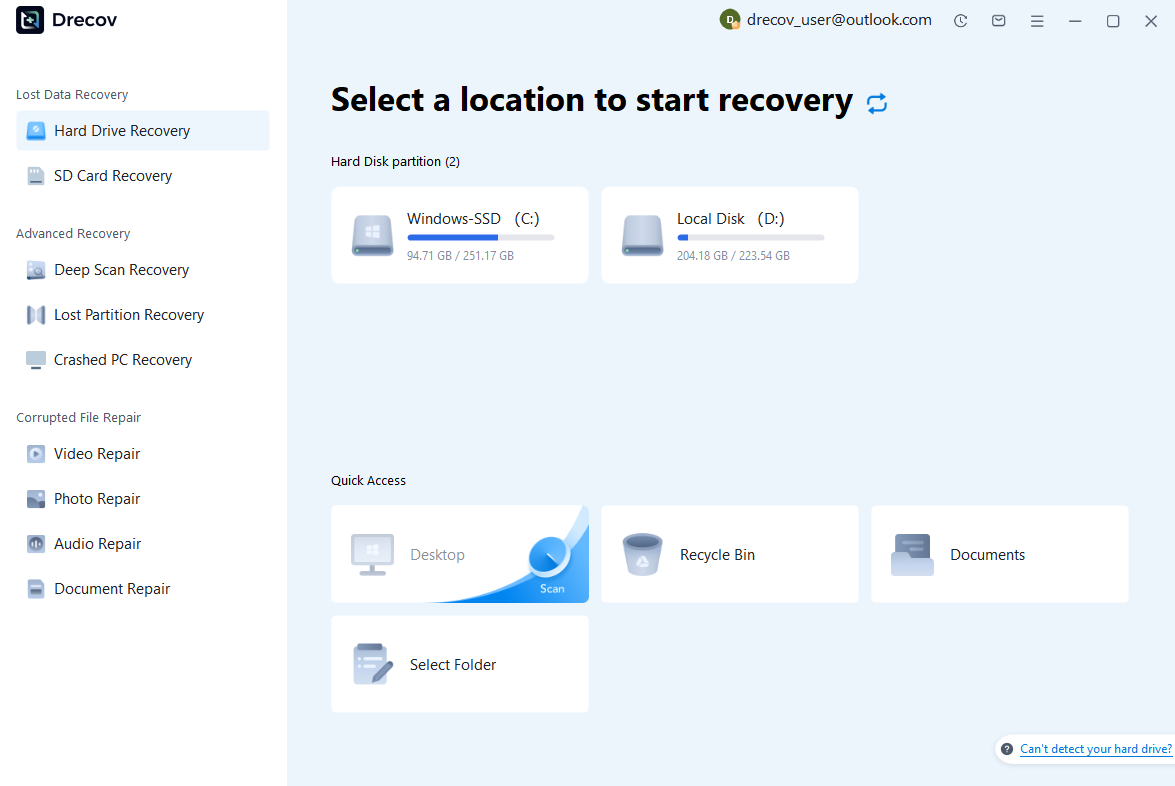
Step 1: Connect the Drive / USB)
Connect your device (SD card, HDD/SSD, or USB drive) to your computer and launch PandaOffice Drecov. Select the target device and start the scan. The software will perform a quick scan and deep scan to detect lost or deleted data.
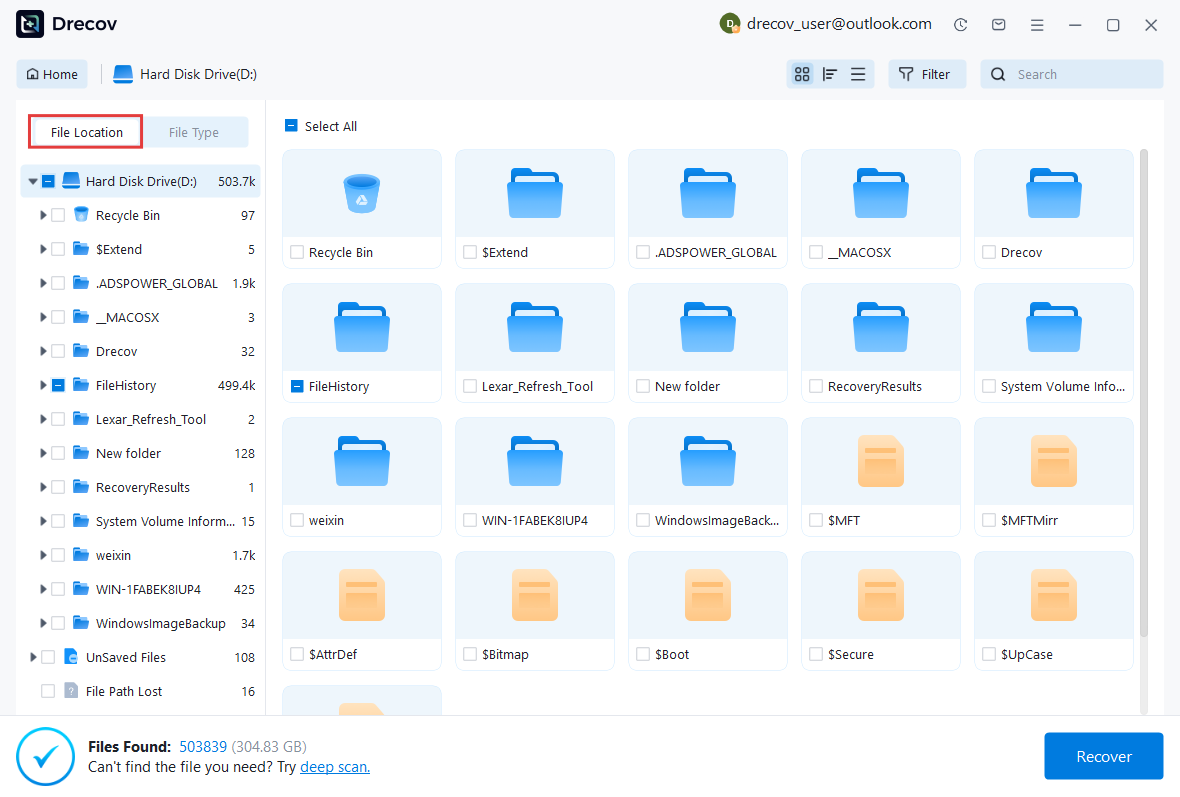
Step 2: Locate and Preview Lost Files
After scanning, browse the detected files and use the preview feature to check recoverable data. You can preview documents (Word, Excel, PDF), photos, and videos to ensure file integrity before recovery.
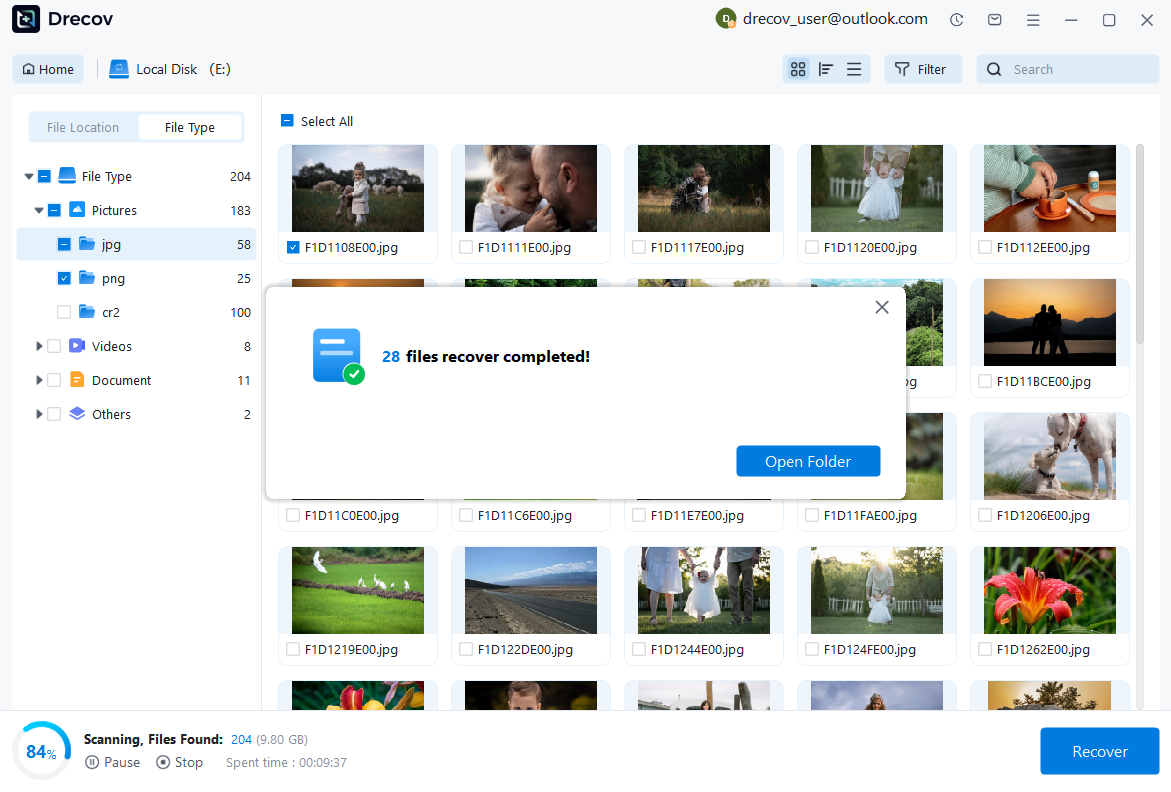
Step 3: Recover and Save to a New Location
Select the files you want to restore and click recover. Save all recovered data to a different drive or location (not the original device) to avoid overwriting lost data.
Why Choose PandaOffice Drecov Recovery Software?
PandaOffice Drecov offers a fast, secure, and user-friendly solution for recovering lost files across multiple scenarios. Whether you need email recovery, ZIP File Recovery, format data recovery, or help to recover deleted drafts Outlook, the software provides reliable recovery performance for both personal and business users.
PandaOffice Drecov supports recovery from formatted hard drives, SSDs, USB drives, SD cards, and external storage devices. Its advanced scanning engine can locate deleted archives, damaged ZIP files, lost Outlook drafts, and accidentally removed documents with high accuracy. For users searching for how to find deleted messages in Teams, PandaOffice Drecov can also help recover exported chat files, attachments, and related local cache data when available.
Recovered images may still require improvement, making them suitable for later enhance picture quality free processing using AI or editing tools.
Common Issues When Enhancing Picture Quality
Over-enhancement causing unnatural image results
Test Environment
- AI enhancement tools
- Photoshop sharpening filters
- Mobile photo editing apps
Overusing sharpening or AI enhancement can lead to unrealistic images, where edges become too harsh or artificial.
How to avoid:
- Apply small adjustment changes instead of strong filters.
- Compare original and edited images frequently.
- Reduce sharpening intensity if artifacts appear.
- Use noise reduction after enhancement.
Compression loss during saving and exporting
Test Environment
- JPEG export settings
- Social media upload platforms
- Messaging apps (WhatsApp, WeChat)
Each time an image is saved in a compressed format, some quality is permanently lost.
How to reduce damage:
- Save images in PNG or high-quality JPG formats.
- Avoid multiple export cycles.
- Keep original files before editing.
- Use lossless formats for professional work.
Limitations of free online enhancement tools
Test Environment
- Browser-based AI tools
- Free cloud enhancement services
- Limited resolution processing systems
Free tools often restrict resolution, processing speed, or output quality.
How to manage limitations:
- Use highest available quality setting.
- Avoid re-uploading the same image repeatedly.
- Combine online tools with desktop editing if needed.
- Upgrade to premium tools when necessary.
FAQs About Enhance Picture Quality
Can I enhance picture quality online free without losing details?
Yes, but results depend on the original image quality. AI tools can improve sharpness and clarity, but they cannot fully recover details that were never captured or have been lost due to compression.
Is AI enhancement better than manual editing?
AI enhancement is faster and easier for beginners, while manual editing provides more precise control. In many cases, combining both methods produces the best results when trying to enhance picture quality free or professionally.
Conclusion and Key Takeaways
Enhancing image quality involves both understanding the causes of degradation and choosing the right improvement method. Whether the image comes from a smartphone, downloaded content, or is restored using tools like repicvid photo recovery, the starting quality will determine the final result.
Different tools serve different purposes: online platforms offer quick fixes, desktop software provides precision, and AI tools deliver fast automatic enhancement. In recovery scenarios, tools like PandaOffice Drecov help restore lost images before enhancement begins.
By applying the correct workflow, users can effectively enhance picture quality online free or offline and achieve significantly clearer and more usable images.





