







Understanding the Page Fault in Nonpaged Area Error
What Does Page Fault in Nonpaged Area Mean?
The page fault in nonpaged area error is a common Windows Blue Screen of Death (BSOD) issue that appears when the operating system attempts to access data stored in a section of memory that should always remain available. Since this memory area is considered critical, Windows immediately stops operations to prevent additional damage.
Many users encounter messages such as windows page fault in nonpaged area, stop code page fault in nonpaged area, or bsod page fault in nonpaged area during startup, shutdown, or normal system usage. The problem may occur unexpectedly and often forces the computer to restart.
In most cases, the error is associated with memory management problems, corrupted drivers, damaged system files, or hardware failures. Because the nonpaged memory area stores essential system information, any interruption in accessing it can result in a critical system crash.
Understanding the root cause is important before applying repairs. Fortunately, Windows provides several built-in diagnostic tools that can help identify the issue and restore system stability.
How the Windows Memory Management System Works
Windows divides memory into different regions to improve performance and reliability. One of these regions is known as the nonpaged pool, where critical data remains available even when system resources become limited.
When Windows attempts to read data from this protected memory area but cannot find or access the required information, it generates a fault in nonpaged area error. Depending on the underlying cause, the system may display different stop codes or blue screen messages.
This issue can affect Windows 10, Windows 11, and earlier versions. Users may notice repeated crashes, unexpected reboots, or system freezes before the BSOD appears.
Because both software and hardware components interact with memory, troubleshooting usually requires checking drivers, storage devices, RAM modules, and system files.
Symptoms of This Blue Screen Error
Several warning signs may appear before the error becomes frequent:
- Unexpected blue screen crashes
- Random restarts during normal use
- System freezing during boot
- Slow application performance
- Frequent driver-related warnings
- File corruption after sudden shutdowns
⚠️ Warning: Repeated BSOD crashes can increase the risk of file corruption. Important files should be backed up whenever possible before extensive troubleshooting.
Why Does the Page Fault in Nonpaged Area BSOD Occur?
Corrupted or Faulty RAM Modules
One of the most common causes of a non page fault in nonpaged area error is defective RAM. Since memory modules store data actively used by Windows, even minor hardware faults can create serious system instability.
Damaged RAM may produce intermittent crashes, making the issue difficult to diagnose initially. Over time, the crashes often become more frequent and eventually trigger blue screen errors.
Common indicators of memory problems include:
- Random application crashes
- Unexpected shutdowns
- Installation failures
- Frequent BSOD messages
Windows Memory Diagnostic can help identify memory-related faults and determine whether a RAM replacement is necessary.
Damaged System Files
Critical Windows files may become corrupted because of improper shutdowns, malware infections, failed updates, or disk errors.
When important memory-management files are damaged, Windows may generate a windows fault in nonpaged area message. Missing or altered system files can disrupt communication between hardware and software components.
System corruption often appears after:
- Interrupted Windows updates
- Power failures
- Malware infections
- Registry damage
Fortunately, built-in repair tools such as SFC and DISM can scan and replace corrupted files automatically.
Defective Hard Drive or SSD Sectors
Storage devices containing bad sectors can also trigger memory-related crashes. If Windows attempts to access corrupted system data stored on a damaged disk sector, the operating system may stop unexpectedly.
Signs of storage problems include:
- Slow file access
- Clicking noises from HDDs
- Frequent disk-check requests
- Missing files
Disk health should always be examined when troubleshooting a page non fault in nonpaged area problem.
Outdated or Incompatible Drivers
Drivers act as translators between Windows and hardware devices. When a driver becomes outdated or incompatible after an update, memory conflicts may occur.
Graphics cards, network adapters, storage controllers, and security software are among the most common sources of driver-related BSOD errors.
Installing the latest manufacturer-approved drivers often resolves these compatibility issues.
Antivirus Software Conflicts
Certain antivirus programs perform deep memory monitoring to detect threats. In rare situations, these security applications may interfere with normal memory operations and trigger a stop code fault in nonpaged area error.
Users frequently report crashes shortly after installing new security software or major antivirus updates.
Temporarily disabling the software can help determine whether it contributes to the issue.
How to Fix the Page Fault in Nonpaged Area Error
Method 1: Restart Windows and Remove External Devices
Sometimes the problem is caused by a temporary hardware conflict rather than permanent damage.
Disconnect unnecessary external devices such as:
- USB drives
- External hard disks
- Printers
- Docking stations
- SD card readers
After disconnecting the peripherals, restart the computer and monitor system stability.
Test Environment
- Windows 11 Pro 24H2
- Intel Core i7 Processor
- 16GB DDR4 RAM
- NVMe SSD Storage
This method is particularly effective when the windows page fault in nonpaged area error appears immediately after connecting a new device.
Method 2: Run Windows Memory Diagnostic
Because faulty RAM is a leading cause of the issue, running Microsoft’s built-in memory testing tool is recommended.
Steps
- Press Windows + R.
- Type mdsched.exe.
- Select Restart now and check for problems.
- Allow Windows to perform the memory scan.
- Review the results after reboot.
The diagnostic process may take several minutes depending on memory capacity.
Test Environment
- Windows 10 22H2
- 32GB DDR4 RAM
- Samsung SSD
- UEFI Boot Mode
If errors are detected, reseating or replacing the memory modules may eliminate recurring crashes.
Method 3: Check and Repair Disk Errors
Corrupted disk sectors can lead to BSOD events by damaging essential Windows files.
Steps
- Open Command Prompt as Administrator.
- Enter:
chkdsk C: /f /r- Press Enter.
- Confirm the scheduled scan.
- Restart the computer.
The CHKDSK utility will search for logical file system errors and damaged sectors.
Test Environment
- Windows 11 Home
- 1TB SSD
- 16GB RAM
- Secure Boot Enabled
⚠️ Warning: The scan may require considerable time on large drives. Avoid interrupting the process.
Method 4: Update or Reinstall Device Drivers
Faulty or outdated drivers are frequently responsible for memory access violations that lead to a page fault in nonpaged area blue screen. Drivers operate between Windows and hardware devices, and even a small compatibility issue can trigger system instability.
Major Windows updates occasionally introduce driver conflicts, especially with graphics cards, storage controllers, network adapters, and chipset components.
Steps to Update Drivers
- Press Windows + X and select Device Manager.
- Expand the relevant hardware category.
- Right-click the device.
- Choose Update driver.
- Select Search automatically for drivers.
- Follow the on-screen instructions.
- Restart the computer.
If the problem started after a recent driver update, rolling back to a previous version may be more effective.
Steps to Reinstall a Driver
- Open Device Manager.
- Right-click the suspected device.
- Select Uninstall device.
- Restart Windows.
- Allow Windows to reinstall the driver automatically.
Test Environment
- Windows 11 Pro
- NVIDIA RTX Graphics Driver
- Intel Chipset Driver
- 32GB DDR4 RAM
- PCIe SSD
Many users report that updating storage and graphics drivers resolves recurring BSOD issues associated with memory management errors.
Method 5: Repair Corrupted System Files Using SFC and DISM
Corrupted Windows files can interfere with memory operations and generate a stop code page fault in nonpaged area message. Fortunately, Microsoft includes built-in repair utilities that can automatically detect and replace damaged system files.
Run System File Checker (SFC)
- Open Command Prompt as Administrator.
- Enter:
sfc /scannow- Press Enter.
- Wait for the scan to complete.
- Restart the computer.
The tool examines protected Windows files and restores missing or damaged versions from the system cache.
Run DISM Repair Commands
If SFC cannot repair all files, execute the following commands:
DISM /Online /Cleanup-Image /CheckHealthDISM /Online /Cleanup-Image /ScanHealthDISM /Online /Cleanup-Image /RestoreHealthAfter completion, run SFC again to verify system integrity.
Test Environment
- Windows 10 Enterprise
- 500GB SSD
- 16GB RAM
- Latest Windows Updates Installed
This repair process often resolves system corruption caused by failed updates, malware damage, or improper shutdowns.
⚠️ Warning: Do not close Command Prompt or power off the computer while DISM repairs are running.
Method 6: Disable Problematic Antivirus Software
Although antivirus applications improve security, some programs interact deeply with memory and kernel-level processes. In certain circumstances, these interactions can contribute to a bsod page fault in nonpaged area crash.
This is particularly common after:
- Antivirus updates
- Major Windows upgrades
- Driver changes
- Security suite installations
Steps
- Open the antivirus dashboard.
- Temporarily disable real-time protection.
- Restart the system.
- Monitor for additional crashes.
If the blue screen stops occurring, consider:
- Updating the antivirus software
- Reinstalling the security suite
- Switching to a different solution
- Using Microsoft Defender temporarily
Test Environment
- Windows 11 Home
- Third-party Antivirus Installed
- Intel Core i5 System
- 16GB Memory
The purpose of this test is to determine whether the security software is creating memory-access conflicts.
Method 7: Adjust Paging File Settings
Virtual memory allows Windows to use storage space as supplemental memory when physical RAM becomes limited. Incorrect paging file settings can occasionally contribute to memory-related stop errors.
Steps
- Press Windows + R.
- Type sysdm.cpl.
- Open the Advanced tab.
- Under Performance, select Settings.
- Open Advanced again.
- Click Change under Virtual Memory.
- Enable Automatically manage paging file size for all drives.
- Click OK and restart.
If automatic management is already enabled, resetting the paging file may help.
Test Environment
- Windows 10 Pro
- 8GB RAM
- SATA SSD
- Automatic Updates Enabled
Proper virtual memory configuration helps Windows maintain stability during heavy workloads and memory-intensive applications.
Method 8: Recover Lost Files After a BSOD Using PandaOffice Drecov
Unexpected crashes associated with a fault in nonpaged area error can sometimes lead to file corruption, missing documents, or inaccessible storage partitions. Before making significant repairs or reinstalling Windows, recovering important files is recommended.
PandaOffice Drecov can scan storage devices for deleted or inaccessible files caused by crashes, formatting mistakes, partition issues, or sudden shutdowns.
Steps
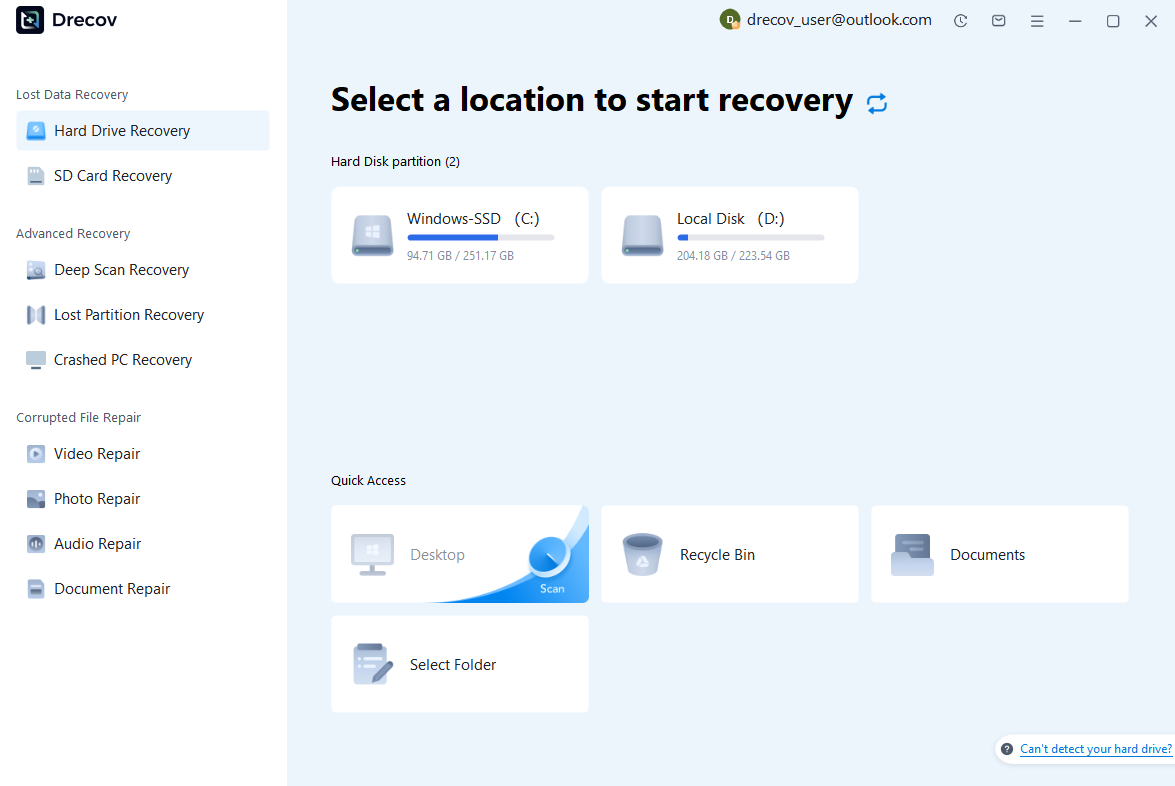
Step 1: Connect the Drive / USB)
Connect your device (SD card, HDD/SSD, or USB drive) to your computer and launch PandaOffice Drecov. Select the target device and start the scan. The software will perform a quick scan and deep scan to detect lost or deleted data.
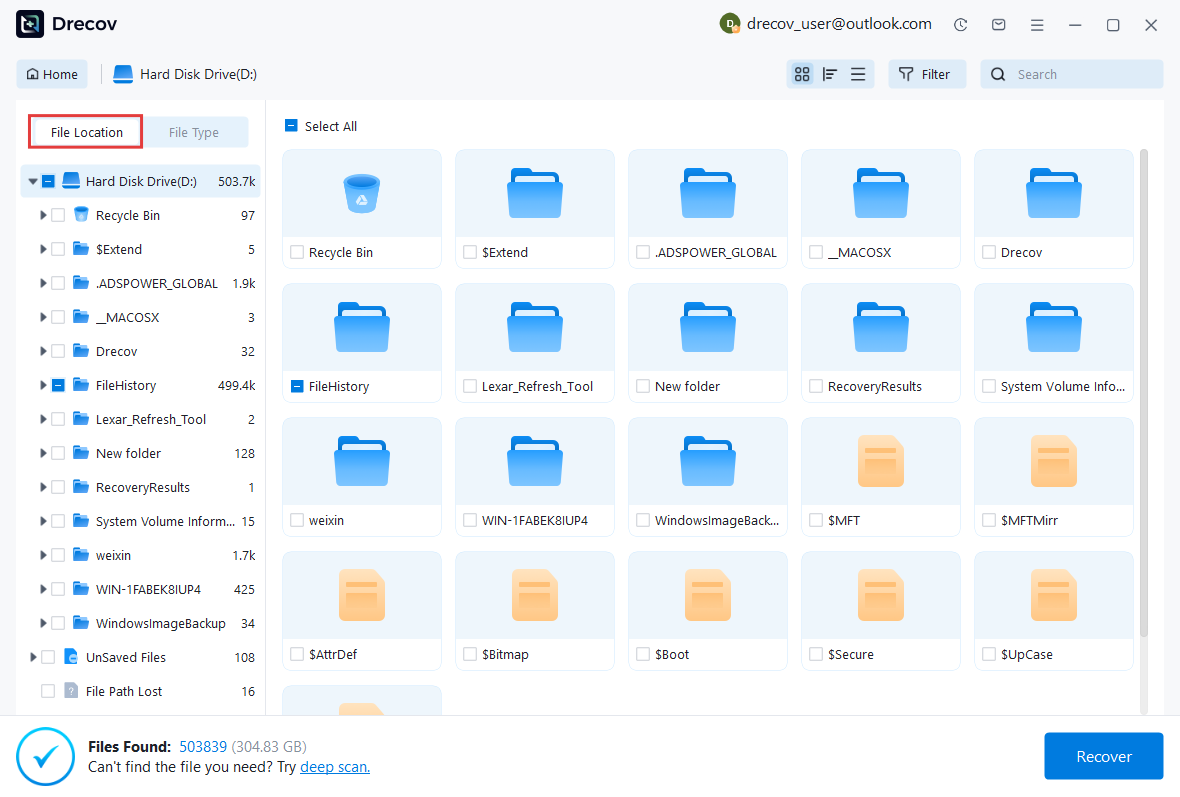
Step 2: Locate and Preview Lost Files
After scanning, browse the detected files and use the preview feature to check recoverable data. You can preview documents (Word, Excel, PDF), photos, and videos to ensure file integrity before recovery.
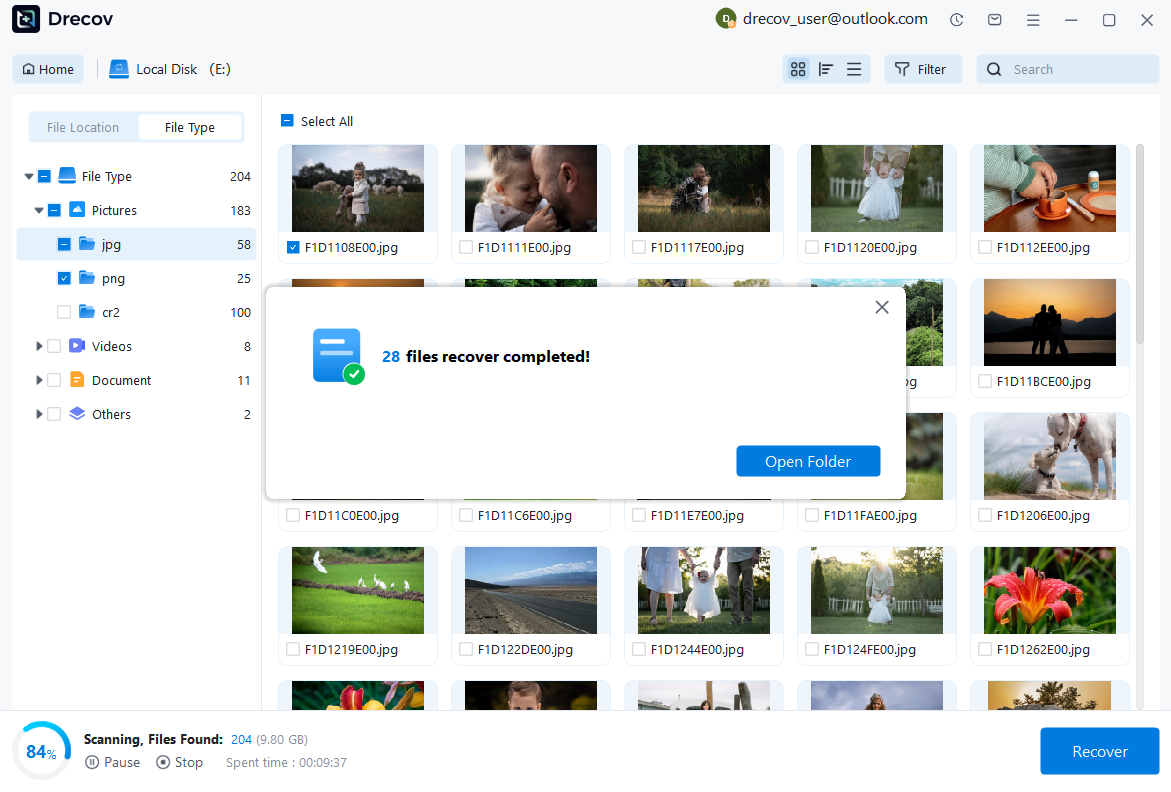
Step 3: Recover and Save to a New Location
Select the files you want to restore and click recover. Save all recovered data to a different drive or location (not the original device) to avoid overwriting lost data.
Why Choose PandaOffice Drecov Recovery Software?
PandaOffice Drecov offers a fast, secure, and user-friendly solution for recovering lost files across multiple scenarios. Whether you need email recovery, ZIP File Recovery, format data recovery, or help to recover deleted drafts Outlook, the software provides reliable recovery performance for both personal and business users.
PandaOffice Drecov supports recovery from formatted hard drives, SSDs, USB drives, SD cards, and external storage devices. Its advanced scanning engine can locate deleted archives, damaged ZIP files, lost Outlook drafts, and accidentally removed documents with high accuracy. For users searching for how to find deleted messages in Teams, PandaOffice Drecov can also help recover exported chat files, attachments, and related local cache data when available.
After recovery, test the file again. If the audio stream was damaged because of storage issues, a recovered version may play normally.
This method is particularly useful when only a few files exhibit audio problems while VLC works correctly with all other media.
This method can help users recover files from floppy disk storage after accidental deletion, formatting, or logical corruption.
Common recoverable data types include:
- Photos
- Videos
- Office documents
- Archives
- Emails
- Audio files
Test Environment
- Windows 11 Pro
- 1TB NVMe SSD
- 32GB RAM
- NTFS File System
Recovering critical files before performing advanced repairs helps reduce the risk of permanent data loss.
How to Prevent Future Page Fault in Nonpaged Area Errors
Keep Windows and Drivers Updated
Regular updates provide security patches, performance improvements, and compatibility fixes. Outdated software components often create conflicts that eventually lead to BSOD events.
Best practices include:
- Installing monthly Windows updates
- Updating graphics drivers
- Updating chipset drivers
- Keeping SSD firmware current
- Checking manufacturer support pages regularly
Maintaining updated software reduces the likelihood of memory-access violations and hardware communication problems.
Monitor Hard Drive Health
Storage failure is a common contributor to system crashes. Periodic disk health checks can identify problems before they become severe.
Useful maintenance activities include:
- Running CHKDSK periodically
- Monitoring SMART status
- Reviewing system logs
- Replacing aging drives proactively
Users who ignore storage warnings may eventually experience file corruption and recurring blue screens.
Test RAM Regularly
Memory modules can deteriorate over time due to age, heat, or manufacturing defects.
Consider:
- Running Windows Memory Diagnostic quarterly
- Using advanced memory testing tools
- Checking for overheating
- Reseating RAM modules after hardware upgrades
Early detection helps prevent unexpected crashes and instability.
Avoid Unverified Software
Programs downloaded from unknown sources can introduce system instability by modifying critical files or installing incompatible drivers.
To reduce risk:
- Download software from trusted vendors
- Verify digital signatures
- Keep antivirus protection active
- Avoid unofficial driver packages
Safe software practices contribute significantly to long-term system reliability.
Frequently Asked Questions
Is Page Fault in Nonpaged Area a Hardware or Software Problem?
The error can originate from either hardware or software. Common hardware causes include defective RAM and failing storage devices. Software-related causes often involve corrupted system files, incompatible drivers, or problematic security applications.
Because multiple factors may contribute simultaneously, comprehensive troubleshooting is recommended.
Can Faulty RAM Cause This Error?
Yes. Faulty memory modules are among the most common causes of this blue screen issue.
Symptoms frequently include:
- Random freezes
- Application crashes
- Boot failures
- Repeated BSOD events
Running Windows Memory Diagnostic or replacing suspect RAM can often resolve the problem.
Does Reinstalling Windows Fix the Problem?
A clean Windows installation can repair software corruption, damaged system files, and registry issues. However, reinstalling Windows will not fix defective hardware.
Before performing a clean installation, users should:
- Back up important data.
- Test RAM.
- Check disk health.
- Update drivers.
These steps help avoid unnecessary reinstallations.
Can Data Be Recovered After a BSOD?
In many cases, yes. Files lost due to crashes, corruption, or partition issues can often be recovered using professional recovery software before extensive repair procedures are performed.
The success rate depends on:
- The extent of file overwriting
- Drive health
- File system condition
- Recovery timing
Stopping unnecessary disk activity improves recovery chances.
Final Thoughts
Key Takeaways for Resolving the Error
The page fault in nonpaged area blue screen remains one of the most frustrating Windows errors because it can stem from both hardware and software issues. Users may encounter messages such as windows page fault in nonpaged area, stop code fault in nonpaged area, or non page fault in nonpaged area, but the underlying causes typically fall into several identifiable categories.
A structured troubleshooting approach should begin with:
- Disconnecting external devices.
- Testing RAM health.
- Checking disk integrity.
- Updating drivers.
- Repairing Windows system files.
- Reviewing antivirus conflicts.
- Verifying paging file settings.
When crashes have already resulted in missing files, recovering important data before major repairs is strongly recommended.
By maintaining healthy hardware, installing updates regularly, monitoring storage devices, and performing routine diagnostics, users can significantly reduce the likelihood of encountering future BSOD incidents and keep Windows running reliably for years to come.






