







Overview of Recovering Deleted Photos from a Laptop
Why deleted photos are not always permanently lost
Losing photos from a laptop can feel final, especially when they disappear from folders or even the Recycle Bin. However, in many cases, deletion does not immediately erase the actual image data from the storage device. Instead, the system marks that space as available for new data, which means recovery is still possible if action is taken quickly.
When you attempt to recover deleted photos from laptop, you have the best chance of success if you act before new data overwrites the original storage blocks. If you haven’t saved new files to the affected location, you can often recover the deleted photos because the data may still remain on the disk.
Modern operating systems like Windows and macOS are designed this way for performance efficiency, not permanent deletion. This creates a recovery window that users can take advantage of.
⚠️ Warning: Avoid saving new files, installing software, or downloading updates after deletion, as these actions may overwrite recoverable photo data.
Common scenarios leading to photo deletion on laptops
Photo loss on laptops usually happens due to several common situations. Accidental deletion is the most frequent cause, often occurring during file cleanup or folder organization. Users may also remove images while freeing up storage space without realizing the importance of those files.
Another common scenario involves system errors or crashes that lead to corrupted file structures. Malware or virus attacks can also delete or hide image files. In some cases, photos disappear after formatting a drive or reinstalling the operating system.
Understanding these scenarios helps users determine the best recovery approach when trying to recover deleted photos from laptop free or through advanced tools.
Additionally, syncing issues with cloud services may cause photos to appear missing locally even though they still exist online.
Understanding Whether You Can Recover Deleted Photos from Laptop
File deletion behavior in Windows and macOS
When a photo is deleted on Windows, it is usually moved to the Recycle Bin rather than being erased immediately. On macOS, deleted files are moved to the Trash folder. These temporary storage locations allow users to restore files easily within a certain period.
Once the Recycle Bin or Trash is emptied, the system does not immediately remove the file data. Instead, it marks the space as reusable. This is why users often ask can we recover deleted photos from laptop even after deletion from the bin.
The same principle applies to SSDs and HDDs, although SSDs may use TRIM technology, which can reduce recovery chances by clearing data blocks more aggressively.
Factors that influence photo recovery success
Several key factors determine whether recovery is possible. The first is time: the sooner recovery is attempted, the higher the success rate. The second is storage activity—heavy usage after deletion reduces the chances of restoration.
The type of storage device also matters. Traditional HDDs usually allow better recovery results compared to modern SSDs. File type and fragmentation can also influence whether deleted photos can be reconstructed successfully.
If users want to know how do i recover deleted photos from my laptop, understanding these factors is essential before choosing a recovery method.
Effective Methods to Recover Deleted Photos from Laptop
Method 1: Restore from Recycle Bin or Trash
Best for: Recently deleted photos
Test Environment
- Windows 11 Pro
- macOS Sonoma
- NTFS / APFS file systems
The simplest way to recover deleted images is by checking the Recycle Bin (Windows) or Trash (Mac). Most deleted files remain here temporarily before permanent deletion.
Steps:
- Open Recycle Bin or Trash.
- Search for deleted photos.
- Right-click the file.
- Select Restore or Put Back.
This method is fast and requires no technical knowledge, making it the first step in any recovery attempt.
Method 2: Recover from cloud backup services
Best for: Synced photos stored online
Test Environment
- OneDrive
- Google Drive
- iCloud Drive
- Dropbox
Cloud storage services automatically sync photos if enabled. Even if files are deleted locally, copies may still exist online.
Users should log into their cloud account and check folders such as:
- Recently Deleted
- Trash
- Archive
Downloading missing photos from the cloud is often the easiest way to recover deleted files without additional tools.
Method 3: Use File History or system backup tools
Best for: Windows backup users
Test Environment
- Windows 10
- Windows 11
- File History enabled
- External backup drive
File History automatically saves previous versions of files stored in key folders.
To restore:
- Open the folder where photos were stored.
- Right-click and choose “Restore previous versions.”
- Select a backup version.
- Restore the images.
This method is effective for users who regularly back up their system.
Method 4: Recover deleted photos from laptop free using built-in tools
Best for: Users without third-party software
Test Environment
- Windows Recovery Tools
- macOS Time Machine
- Local backup snapshots
Many laptops include built-in recovery options that allow users to restore deleted files without installing additional software.
Windows users can use “Previous Versions,” while Mac users can use Time Machine snapshots.
These tools are useful for users looking to recover deleted photos from laptop free, especially when backups are already enabled.
Method 5: Use PandaOffice Drecov recovery software
Best for: Permanent deletion cases
Test Environment
- Windows 11
- SSD + HDD mixed storage
- USB external drives
- FAT32 / NTFS / exFAT
When built-in methods fail, professional recovery software becomes necessary.
PandaOffice Drecov performs deep scans across storage devices to locate lost image files, even after formatting or permanent deletion.
Steps:
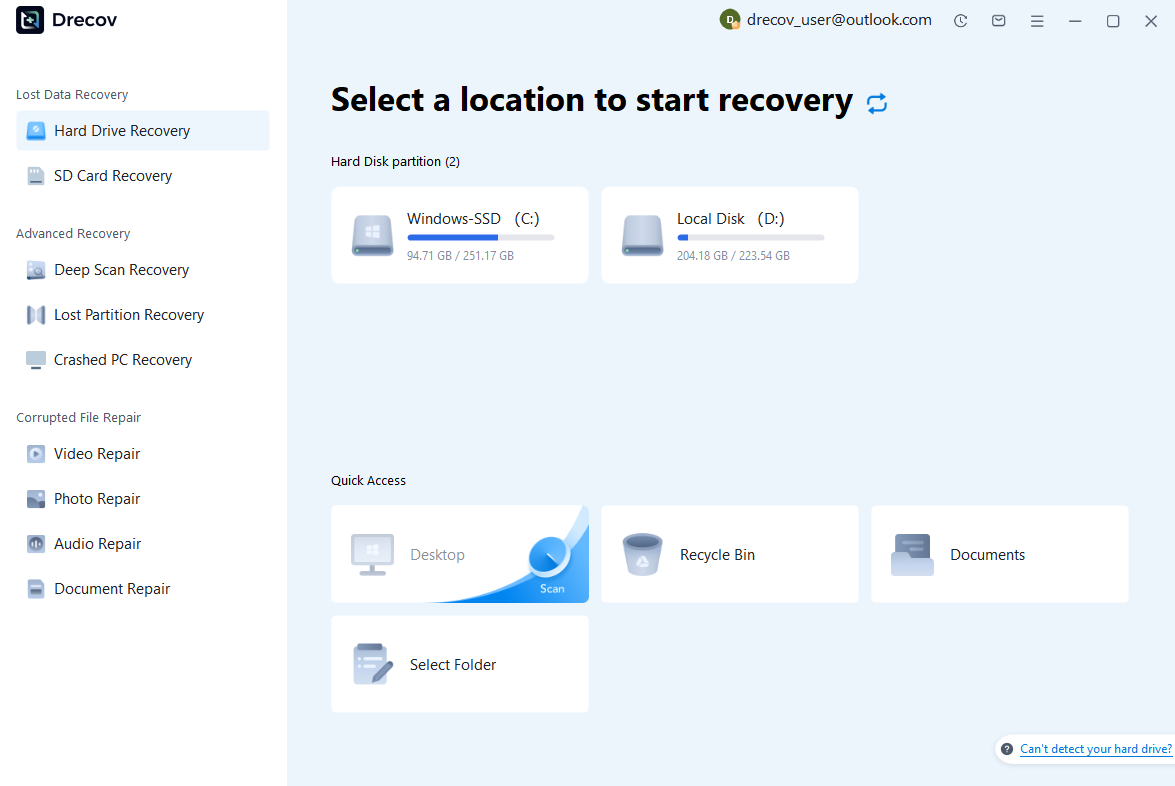
Step 1: Connect the Drive / USB)
Connect your device (SD card, HDD/SSD, or USB drive) to your computer and launch PandaOffice Drecov. Select the target device and start the scan. The software will perform a quick scan and deep scan to detect lost or deleted data.
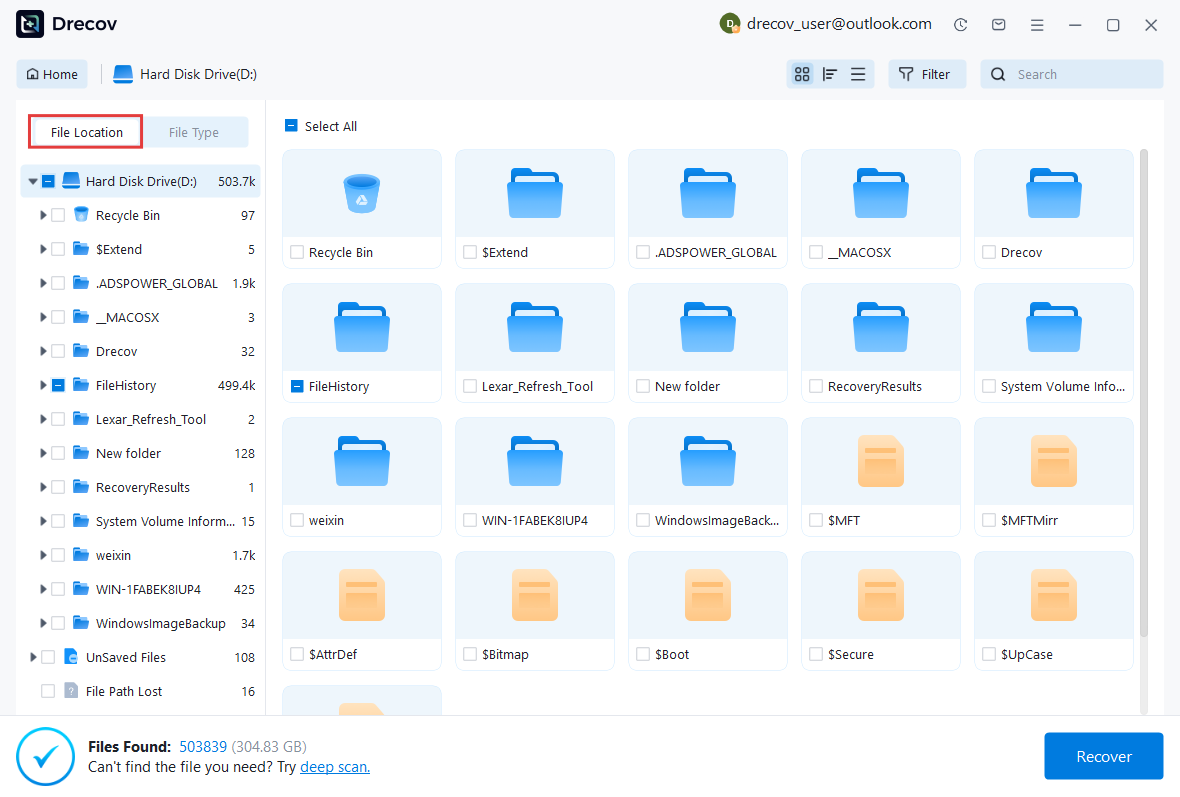
Step 2: Locate and Preview Lost Files
After scanning, browse the detected files and use the preview feature to check recoverable data. You can preview documents (Word, Excel, PDF), photos, and videos to ensure file integrity before recovery.
Step 3: Recover and Save to a New Location
Select the files you want to restore and click recover. Save all recovered data to a different drive or location (not the original device) to avoid overwriting lost data.

Why Choose PandaOffice Drecov Recovery Software?
PandaOffice Drecov offers a fast, secure, and user-friendly solution for recovering lost files across multiple scenarios. Whether you need email recovery, ZIP File Recovery, format data recovery, or help to recover deleted drafts Outlook, the software provides reliable recovery performance for both personal and business users.
PandaOffice Drecov supports recovery from formatted hard drives, SSDs, USB drives, SD cards, and external storage devices. Its advanced scanning engine can locate deleted archives, damaged ZIP files, lost Outlook drafts, and accidentally removed documents with high accuracy. For users searching for how to find deleted messages in Teams, PandaOffice Drecov can also help recover exported chat files, attachments, and related local cache data when available.
After recovery, test the file again. If the audio stream was damaged because of storage issues, a recovered version may play normally.
This method is particularly useful when only a few files exhibit audio problems while VLC works correctly with all other media.
This method can help users recover files from floppy disk storage after accidental deletion, formatting, or logical corruption.
This method is especially useful for users asking how do i recover deleted photos from my laptop after serious data loss.
⚠️ Warning: Do not install recovery software on the same drive where photos were deleted.
Method 6: Restore previous versions of folders
Best for: Files overwritten or modified accidentally
Test Environment
- Windows 11 Pro
- NTFS file system
- File History or System Protection enabled
- Local disk (C: / D:)
Windows includes a built-in feature called “Previous Versions,” which allows users to roll back folders to earlier states. This is useful when photos were deleted from a folder but system restore points or File History snapshots still exist.
Steps:
- Navigate to the folder where photos were originally stored.
- Right-click the folder.
- Select Properties.
- Open the Previous Versions tab.
- Choose a version before deletion.
- Click Restore or open to preview.
This method is particularly useful when users want to recover deleted photos from laptop free without installing additional software.
It works best when system protection or backup features were enabled beforehand.
⚠️ Warning: Restoring previous versions may overwrite current folder contents. Always preview before restoring.
Method 7: Retrieve photos from external drives or SD backups
Best for: Photos previously copied or exported
Test Environment
- USB external hard drive (1TB–2TB)
- SanDisk SD cards
- Windows 11 File Explorer
- macOS Finder
Many users unknowingly create backups when transferring photos from cameras, phones, or editing software. These copies often remain on external drives even after deletion from the laptop.
To recover:
- Connect external drive or SD card.
- Search using file extensions like JPG, PNG, HEIC, or RAW.
- Use Windows search filters (date, size, type).
- Copy recovered files back to the laptop.
This method is often overlooked but highly effective when attempting to recover deleted photos from laptop without specialized tools.
It is also useful for photographers who frequently transfer images between devices.
⚠️ Warning: Avoid modifying files on the external drive until recovery is complete.
Method 8: Seek professional data recovery services
Best for: Physically damaged or corrupted drives
Test Environment
- Damaged HDD (clicking sound)
- Water-damaged laptops
- Failed SSD controllers
- Clean-room recovery environment
When software methods fail, professional recovery services may be the only solution. These services use specialized hardware and clean-room environments to recover data directly from damaged storage devices.
They are capable of handling:
- Severe hardware failure
- Corrupted partitions
- Non-booting systems
- Physically damaged drives
Before choosing a service, check:
- Free diagnosis availability
- No-recovery-no-fee policy
- Estimated turnaround time
- Data privacy guarantees
This is the last resort for users wondering can we recover deleted photos from laptop when the device is no longer accessible.
⚠️ Warning: Do not attempt repeated power-ons on a failing hard drive, as it may worsen physical damage.
Tips to Improve Success When Recovering Deleted Photos
Stop writing new data immediately
Once photos are deleted, the most important action is to stop using the affected drive. Installing programs, downloading files, or even browsing can overwrite recoverable data.
This is especially critical for SSDs, where background processes may quickly clear deleted blocks.
Check all backup locations carefully
Before assuming permanent loss, always check:
- Cloud storage (Google Drive, OneDrive, iCloud)
- External drives
- USB flash drives
- Old laptops or PCs
- Email attachments
- Shared folders
Many users discover that copies already exist elsewhere when trying to recover deleted photos from laptop free.
Avoid formatting or reinstalling the system
Formatting or reinstalling Windows/macOS may seem like a fix, but it can significantly reduce recovery chances.
While some data may still be recoverable after formatting, the success rate drops sharply if new files are written afterward.
Frequently Asked Questions
Can we recover deleted photos from laptop after emptying Recycle Bin?
Yes, it is often still possible. Even after emptying the Recycle Bin, deleted files are not immediately erased from storage. You can try cloud backups, File History, or recovery software. However, success depends on whether new data has overwritten the original files.
How do I recover deleted photos from my laptop quickly?
The fastest way is to check the Recycle Bin or Trash first. If the photos are not there, check cloud storage services or backup folders. If those fail, use recovery software that performs a quick scan of your storage drive.
Is free recovery software effective for deleted photos?
Free recovery tools can be effective for recently deleted files or simple recovery cases. However, advanced recovery situations such as formatted drives or corrupted partitions may require more powerful tools. Always ensure the software supports deep scanning features.
Conclusion and Key Takeaways
Losing important photos on a laptop can be stressful, but in many cases, recovery is still possible. Whether the deletion happened accidentally, due to system errors, or after formatting, multiple recovery options exist depending on your situation.
Start with simple methods such as Recycle Bin, Trash, or cloud backups. Then move on to system tools like File History or Previous Versions. If these fail, professional recovery software or services may still help restore your data.
When trying to recover deleted photos from laptop, speed is critical. Avoid using the affected drive, check all possible backup sources, and choose the appropriate recovery method based on the severity of data loss.
By following the steps outlined in this guide, users can significantly improve their chances of successfully restoring lost memories and important images.





