







Overview of CR2 File Format and What CR2 File Means
What is CR2 file and why Canon uses it
A CR2 file is a RAW image format created by Canon digital cameras. When users ask what is CR2 file, they are referring to a high-quality unprocessed image format that stores all sensor data captured during a photo shoot. Unlike compressed formats such as JPEG, a CR2 file preserves maximum image detail, giving photographers more flexibility during editing.
Canon introduced the CR2 file format to replace the earlier CRW format, offering improved metadata handling and better compatibility with modern editing software. The CR2 format is widely used in professional photography because it captures more dynamic range and color information than standard image formats.
When you capture images in CR2 format, the camera does not apply heavy processing. Instead, it records raw sensor data, allowing photographers to adjust exposure, white balance, and sharpness during post-production without degrading image quality.
Basic structure of CR2 file format in digital photography
The CR2 file format contains multiple layers of data, including image sensor output, camera settings, and metadata such as ISO, shutter speed, and lens information. This structure makes CR2 files significantly larger than standard image formats.
Unlike compressed images, CR2 files retain full pixel data, which makes them ideal for professional editing workflows. However, they also require specialized software to view and process.
A typical CR2 file includes:
- RAW sensor data
- Embedded JPEG preview
- EXIF metadata
- Camera configuration data
Understanding this structure helps users better manage CR2 files and avoid compatibility issues when transferring or editing images.
⚠️ Warning: CR2 files cannot be opened directly on all devices without compatible software.
Importance and Characteristics of CR2 Format in Photography
Advantages of CR2 file format for professional photographers
The CR2 format offers several advantages for photography professionals. First, it provides superior image quality due to its uncompressed nature. Second, it allows extensive post-processing flexibility without losing detail.
Photographers often prefer CR2 files because they can recover highlights and shadows more effectively than compressed formats. This is especially important in landscape, portrait, and studio photography.
Another advantage is that CR2 files preserve color depth and tonal accuracy, which is critical for commercial editing workflows.
Differences between CR2 files and JPEG images
CR2 files differ significantly from JPEG images in terms of quality and processing. JPEG is a compressed format that removes some image data to reduce file size. In contrast, CR2 files store all raw sensor information.
Key differences include:
- CR2 files are uncompressed or lightly compressed
- JPEG images are ready-to-use but less flexible
- CR2 requires editing software
- JPEG can be opened on almost all devices
Because of these differences, professionals often shoot in CR2 format and later convert images into JPEG for sharing or publishing.
Common devices that generate CR2 files
CR2 files are primarily generated by Canon DSLR and mirrorless cameras. Popular models include Canon EOS series cameras, which are widely used in professional photography.
Devices that produce CR2 files include:
- Canon EOS 5D series
- Canon EOS 6D series
- Canon EOS Rebel series
- Canon mirrorless R series
Each device stores images in CR2 format when RAW mode is enabled, making it a standard choice for high-quality photography workflows.
How to Open, Convert, and Manage CR2 Files
Method 1: Open CR2 files using Canon software
Best for: Native compatibility viewing
Test Environment
- Canon Digital Photo Professional (DPP)
- Windows 11
- Canon EOS RAW images
Canon provides official software called Digital Photo Professional that supports CR2 files directly.
Steps:
- Install Canon DPP software.
- Import CR2 files.
- View or edit images.
- Export in JPEG or TIFF format.
This method ensures full compatibility with CR2 file format without quality loss.
Method 2: View CR2 files on Windows and Mac
Best for: Quick preview access
Test Environment
- Windows 11 Photos App
- macOS Preview Tool
- Installed RAW codec support
Modern operating systems may require codec installation to view CR2 files.
Once installed, users can:
- Open CR2 files directly in file explorer
- Preview thumbnails
- Perform basic viewing operations
However, editing capabilities remain limited compared to professional tools.
Method 3: Convert CR2 format to JPG or PNG
Best for: Sharing and compatibility
Test Environment
- Adobe Lightroom
- Online CR2 converters
- Windows/Mac systems
Since CR2 files are large and not widely supported, conversion is often necessary.
Conversion steps:
- Import CR2 files into editing software.
- Adjust image settings if needed.
- Export as JPG or PNG.
This process makes CR2 files easier to share and use across platforms.
Method 4: Edit CR2 files using Adobe Lightroom or Photoshop
Best for: Professional photo editing
Test Environment
- Adobe Lightroom Classic
- Adobe Photoshop 2025
- Windows 11 / macOS Sonoma
Professional tools like Lightroom and Photoshop provide full support for CR2 files.
These tools allow users to:
- Adjust exposure and color balance
- Recover highlights and shadows
- Apply advanced filters
- Export high-quality images
Editing CR2 files preserves maximum detail during post-processing.
Method 5: Recover lost or corrupted CR2 files using PandaOffice Drecov
Best for: Deleted or damaged CR2 files
Test Environment
- Windows 11 Pro
- SD card from Canon DSLR
- External hard drive
- FAT32 / exFAT storage
When CR2 files are deleted or corrupted, recovery software becomes essential.
PandaOffice Drecov can scan storage devices deeply to locate lost CR2 files, even after formatting or accidental deletion.
Steps:
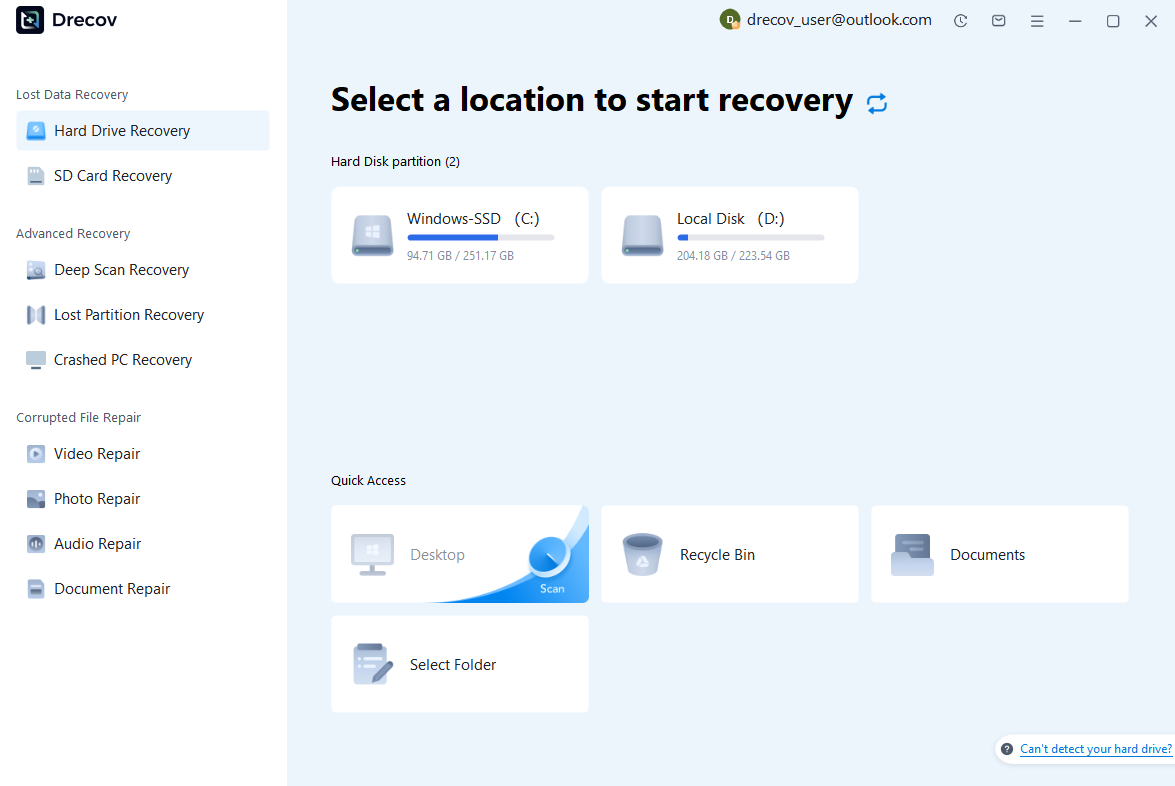
Step 1: Connect the Drive / USB)
Connect your device (SD card, HDD/SSD, or USB drive) to your computer and launch PandaOffice Drecov. Select the target device and start the scan. The software will perform a quick scan and deep scan to detect lost or deleted data.
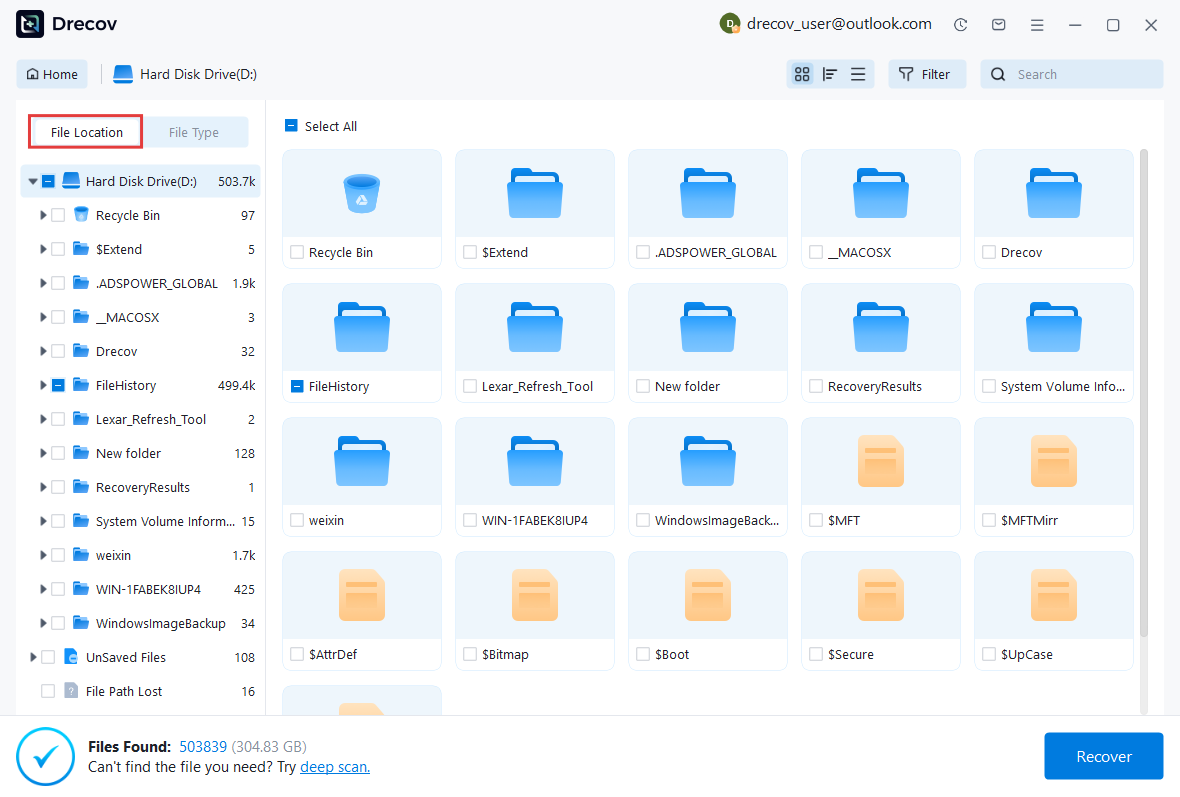
Step 2: Locate and Preview Lost Files
After scanning, browse the detected files and use the preview feature to check recoverable data. You can preview documents (Word, Excel, PDF), photos, and videos to ensure file integrity before recovery.
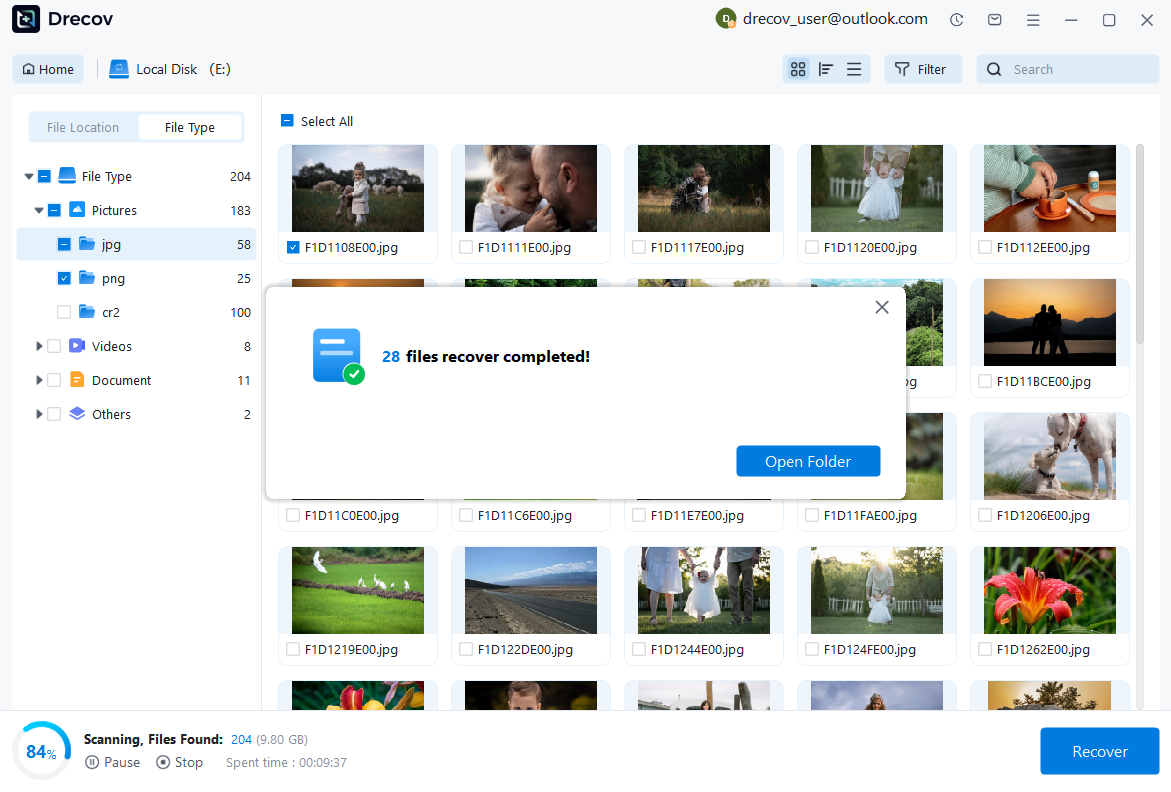
Step 3: Recover and Save to a New Location
Select the files you want to restore and click recover. Save all recovered data to a different drive or location (not the original device) to avoid overwriting lost data.
Why Choose PandaOffice Drecov Recovery Software?
PandaOffice Drecov offers a fast, secure, and user-friendly solution for recovering lost files across multiple scenarios. Whether you need email recovery, ZIP File Recovery, format data recovery, or help to recover deleted drafts Outlook, the software provides reliable recovery performance for both personal and business users.
PandaOffice Drecov supports recovery from formatted hard drives, SSDs, USB drives, SD cards, and external storage devices. Its advanced scanning engine can locate deleted archives, damaged ZIP files, lost Outlook drafts, and accidentally removed documents with high accuracy. For users searching for how to find deleted messages in Teams, PandaOffice Drecov can also help recover exported chat files, attachments, and related local cache data when available.
After recovery, test the file again. If the audio stream was damaged because of storage issues, a recovered version may play normally.
This method is particularly useful when only a few files exhibit audio problems while VLC works correctly with all other media.
It can help users recover files from floppy disk storage after accidental deletion, formatting, or logical corruption.
This method is highly effective for restoring valuable CR2 files from damaged storage.
⚠️ Warning: Avoid saving recovered files on the same drive being scanned.
Method 6: Transfer CR2 files from camera SD cards safely
Best for: Preventing file corruption during transfer
Test Environment
- Canon EOS DSLR camera
- SanDisk Extreme Pro SD card (64GB–256GB)
- Windows 11 File Explorer
- macOS Finder
- USB 3.0 card reader
Transferring CR2 files correctly from an SD card is critical because improper handling can lead to file corruption or missing images. Many issues with CR2 format files occur during unstable connections or unsafe ejection.
Safe transfer steps:
- Turn off the camera before removing the SD card.
- Insert the SD card into a card reader.
- Connect to a computer via USB 3.0 or higher.
- Copy the entire DCIM folder instead of individual files.
- Paste files into a dedicated folder on your computer.
- Safely eject the SD card before removal.
Copying the full folder structure ensures metadata consistency for CR2 file format and reduces corruption risks.
⚠️ Warning: Never remove the SD card while files are being transferred, as it may permanently damage CR2 files.
Common Issues and Problems with CR2 Files
CR2 file corruption causes
Best for: Understanding file damage scenarios
Test Environment
- Damaged SD cards
- Interrupted file transfers
- Low battery camera shutdowns
- Windows/macOS file system errors
CR2 file corruption can occur for several reasons. One of the most common causes is sudden interruption during writing or transfer. If a camera shuts down due to low battery while saving images, incomplete CR2 files may be created.
Other causes include:
- Bad sectors on SD cards
- Removing storage devices during transfer
- Virus or malware infections
- File system corruption (FAT32/exFAT errors)
Corrupted CR2 format files may fail to open or appear as blank thumbnails. In some cases, partial image data may still be recoverable using specialized tools.
Why CR2 files fail to open
Best for: Troubleshooting viewing issues
Test Environment
- Windows Photos App
- Adobe Lightroom
- macOS Preview
- Missing RAW codec environments
Users often report issues where CR2 files cannot be opened. This usually happens due to missing codec support or outdated software.
Common reasons include:
- No RAW support installed on the system
- Incompatible software versions
- Damaged CR2 file headers
- Unsupported camera model
To resolve this, users should update their software or install RAW image support packages. In many cases, simply switching to a professional viewer restores access to CR2 files.
Storage and SD card errors affecting CR2 format
Best for: Preventing data loss on memory cards
Test Environment
- ExFAT-formatted SD cards
- Canon DSLR camera systems
- Disk error-checking tools
- Windows CHKDSK utility
SD card errors are another major reason CR2 files become inaccessible. These issues often arise from improper formatting, frequent usage, or aging storage media.
Symptoms include:
- Missing image files
- Read/write errors
- Slow camera response
- File system warnings
Regularly formatting SD cards in-camera (not on a computer) helps maintain stability for CR2 file format storage.
FAQs About CR2 File Format
What is CR2 file used for?
CR2 files are used to store high-quality RAW images captured by Canon cameras. They preserve all sensor data, allowing photographers to perform advanced editing without losing image quality. The CR2 format is widely used in professional photography workflows.
Can CR2 files be converted without quality loss?
Yes, CR2 files can be converted into formats like TIFF or high-quality JPEG with minimal quality loss if proper software is used. However, once converted to compressed formats, some raw data from the original CR2 file is no longer editable.
What cr2 file means for photographers?
When users ask what cr2 file means, it refers to a Canon RAW image file that contains unprocessed photo data. It is designed for professional editing and provides greater flexibility than standard image formats like JPEG.
Conclusion and Key Takeaways
The CR2 file format plays a vital role in professional photography by preserving raw, uncompressed image data captured by Canon cameras. Understanding how CR2 files work helps photographers manage, edit, and recover their images more effectively.
From opening and converting images to handling corrupted files, each method discussed in this guide provides a practical way to work with CR2 files in different scenarios. Whether you’re using Canon software, Adobe tools, or recovery solutions like PandaOffice Drecov, the key is to choose the right approach based on your situation.
CR2 files offer exceptional image quality and editing flexibility, but they also require proper handling and compatible software. By following safe transfer practices and maintaining reliable backups, users can avoid most common issues associated with CR2 format storage.
Ultimately, understanding what is CR2 file and how it behaves ensures better control over your photography workflow and reduces the risk of losing valuable image data.





