







Changing a file type in Windows 11 might sound like a technical task, but once you understand how it works, it becomes surprisingly simple. Whether you’re trying to convert a .TXT file into .HTML, rename a .JPG to .PNG, or fix a file that won’t open properly, knowing how to change file type Windows 11 can save you time and frustration.
In this guide, you’ll learn everything—from basic file extension changes to advanced conversion methods—explained in a clear, practical, and human-friendly way.
What Is a File Type in Windows 11?
Before jumping into the steps, let’s get clear on what a file type actually is. Every file on your computer has an extension—those few letters at the end of a file name like .txt, .jpg, .mp4, or .pdf. This extension tells Windows what kind of file it is and which program should open it.
For example:
- .txt → Text file
- .jpg → Image file
- .mp4 → Video file
- .pdf → Document file
Think of file extensions like labels on folders. Without them, your computer wouldn’t know how to handle the file. Here’s the catch: changing a file type doesn’t always change the file’s actual format. Sometimes you’re just renaming it, not converting it. That distinction matters—and we’ll cover both cases in this guide.
Why You Might Need to Change File Type
There are plenty of real-world situations where you’d need to how to change file type Windows 11. Maybe you downloaded a file that won’t open because it has the wrong extension. Or you’re a developer trying to turn a .txt file into a .html file. Sometimes, you just want to make a file compatible with a specific application.
Other common scenarios include:
- Fixing incorrectly named files
- Making files compatible with software
- Preparing files for upload or sharing
- Converting media formats
Understanding your goal helps you decide the best method to use.
How to show file extensions windows 11
By default, Windows 11 hides file extensions to keep the interface clean. However, if you want to know how to change file type Windows 11, you first need to be able to see those extensions. You cannot change what you cannot see. Follow these precise steps to reveal the hidden labels of your data.
- Step 1: Open File Explorer by clicking the folder icon on your taskbar or pressing Win + E.
- Step 2: Locate the View button in the top horizontal menu bar.
- Step 3: Hover your mouse over the Show option at the bottom of the dropdown menu.
- Step 4: Click on File name extensions. Once selected, a checkmark will appear next to it.
- Step 5: Look at your files again. You will now see suffixes like “.docx” or “.png” at the end of every filename.
Now that you have visibility, you have the power to manually alter how Windows identifies these files. This is the foundational step for any manual renaming process.
Method 1: Change File Extension in File Explorer
This is the simplest way to how to change file type Windows 11. This method is essentially a manual “rename” of the extension itself.
Step-by-Step Instructions
- Open File Explorer and navigate to your file.
- Right-click the file and choose Rename (or click the rename icon, or press F2).
- Highlight the part of the name after the dot (e.g., change “report.txt” to “report.html”).
- Press Enter.
- A warning box will appear stating: “If you change a file name extension, the file might become unusable. Are you sure you want to change it?” Click Yes.
Warning: Use this method only when you are sure the internal data structure is compatible with the new extension (like changing .txt to .bat).
Undo file name change windows 11
We all make mistakes. Perhaps you accidentally renamed a system file or changed an extension that rendered a document unreadable. Fortunately, Windows 11 tracks these actions in the short term, allowing for a quick reversal. If you find yourself needing to undo file name change windows 11, speed is your best friend.
- Step 1: Immediately after making the mistake, press the hotkey Ctrl + Z. This is the universal “Undo” command and works perfectly in File Explorer.
- Step 2: If you have already closed the window, right-click any empty space within the folder where the change occurred.
- Step 3: Select Undo Rename from the context menu.
- Step 4: If you cannot undo it automatically, you must manually rename the file back to its original extension. For example, if you changed “photo.jpg” to “photo.png” and it broke, simply rename it back to “.jpg”.
Consistency is vital here. If you forget the original extension, you might need to check the file’s “Properties” or use a data recovery tool if the file has become corrupted due to repeated incorrect naming.
Method 2: Use “Save As” to Change File Type
If you want a safer and more reliable way to how to change file type Windows 11, use the Save As feature in supported applications. This method performs an actual conversion of the data structure.
- Step 1: Open the file in its original program (e.g., Open a .docx in Microsoft Word).
- Step 2: Click File in the top-left corner and select Save As.
- Step 3: Click Browse to choose a location.
- Step 4: In the “Save as type” dropdown menu, select a different format (e.g., .pdf or .txt).
- Step 5: Click Save.
This method ensures the file remains functional because the software “re-writes” the data to fit the new format requirements.
File extension changed but won’t open
What happens when you successfully change the extension, but the file refuses to cooperate? You might encounter a “File format not supported” or “The file is corrupted” error. This usually indicates that the internal coding of the file does not match the extension you gave it. When your file extension changed but won’t open, it is a sign that a simple rename wasn’t enough.
- Step 1: Check the file signature. Every file has a “magic number” at the start of its binary code that defines what it is. If you renamed a .zip to a .jpg, an image viewer will try to read zip code as image pixels and fail.
- Step 2: Try using the “Open With” feature. Right-click the file, select Open With, and choose Choose another app. Try the original program that created the file.
- Step 3: Use a dedicated file conversion website like CloudConvert or Zamzar. These sites analyze the file content and convert it properly.
- Step 4: If the file was part of a larger database or encrypted, changing the extension might have triggered a security lock. You may need to restore the original name to regain access.
If the file remains stubborn and you’ve lost the original working copy, you may be facing data corruption. This is where professional-grade software becomes necessary to “peek” into the file and recover the underlying data.
Method 3: Use Command Prompt (Advanced)
For power users who need to how to change file type Windows 11 for a specific file quickly, the Command Line Interface (CLI) is unbeatable.
- Step 1: Press Win + S, type cmd, and select Run as Administrator.
- Step 2: Use the
cdcommand to navigate to the folder. For example:cd C:\Users\Documents\Project. - Step 3: Type the rename command:
ren original_file.txt new_file.html - Step 4: Press Enter.
This method is precise and bypasses some of the GUI confirmations, making it a favorite for developers.
PandaOffice Drecov data recovery software
In some instances, playing with file extensions leads to a worst-case scenario: the file becomes corrupted, or you accidentally delete the original while trying to convert it. When manual fixes fail, PandaOffice Drecov data recovery software provides a professional safety net. This tool is designed to scan your drive’s sectors to find files based on their headers, regardless of what the extension currently says.
⚠ Warning: Install it on a drive different from the one where your data was lost to prevent overwriting.
If you have accidentally ruined a file by changing its type or lost a document during a failed batch rename, follow these steps to get your data back.
Step 1: Select the Location
Launch the software. You will see a list of drives and common locations like Desktop or Recycle Bin. Select the folder where you were performing the file type changes.

Step 2: Run the Scan
Click the Scan button. PandaOffice Drecov will perform a Deep Scan, looking for the underlying “fingerprints” of your files (like the specific headers for .jpg or .xlsx).
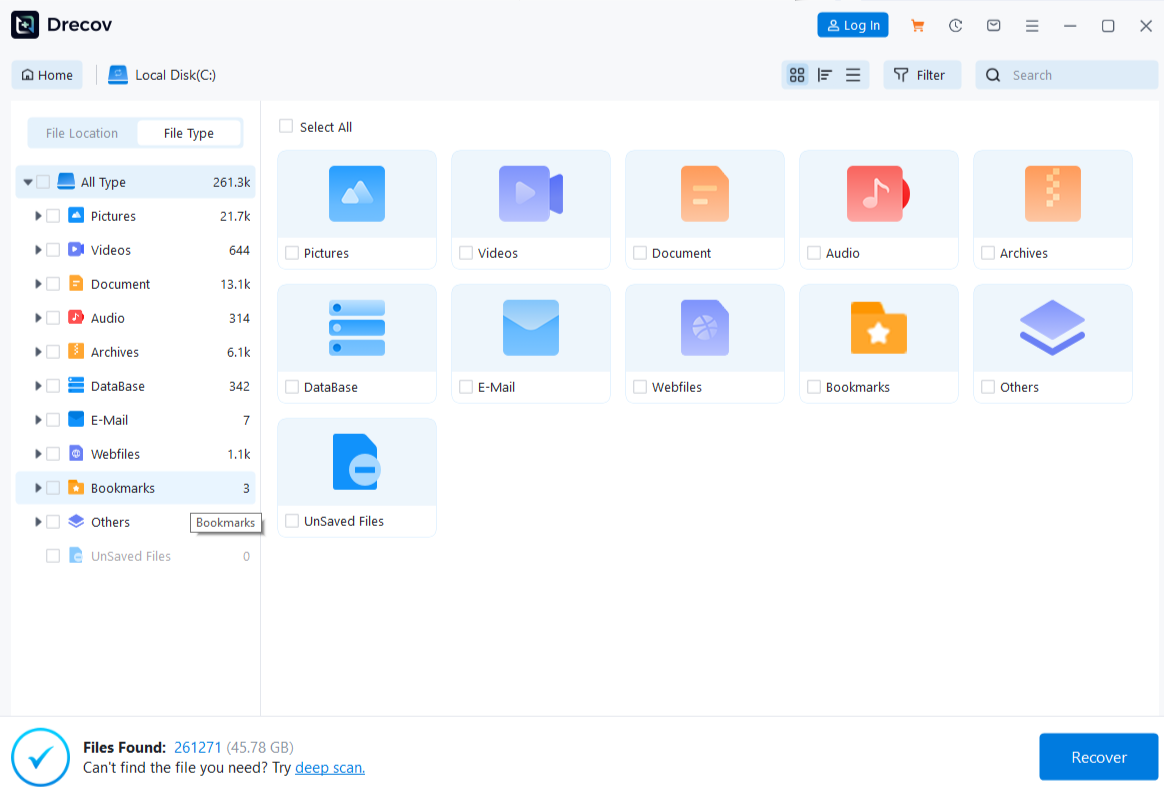
Step 3: Filter and Preview
Once the scan is complete, use the sidebar to filter by “File Type.” Even if you renamed a file to something weird, the software will categorize it by its actual data structure. You can click on files to preview them and ensure they are intact.
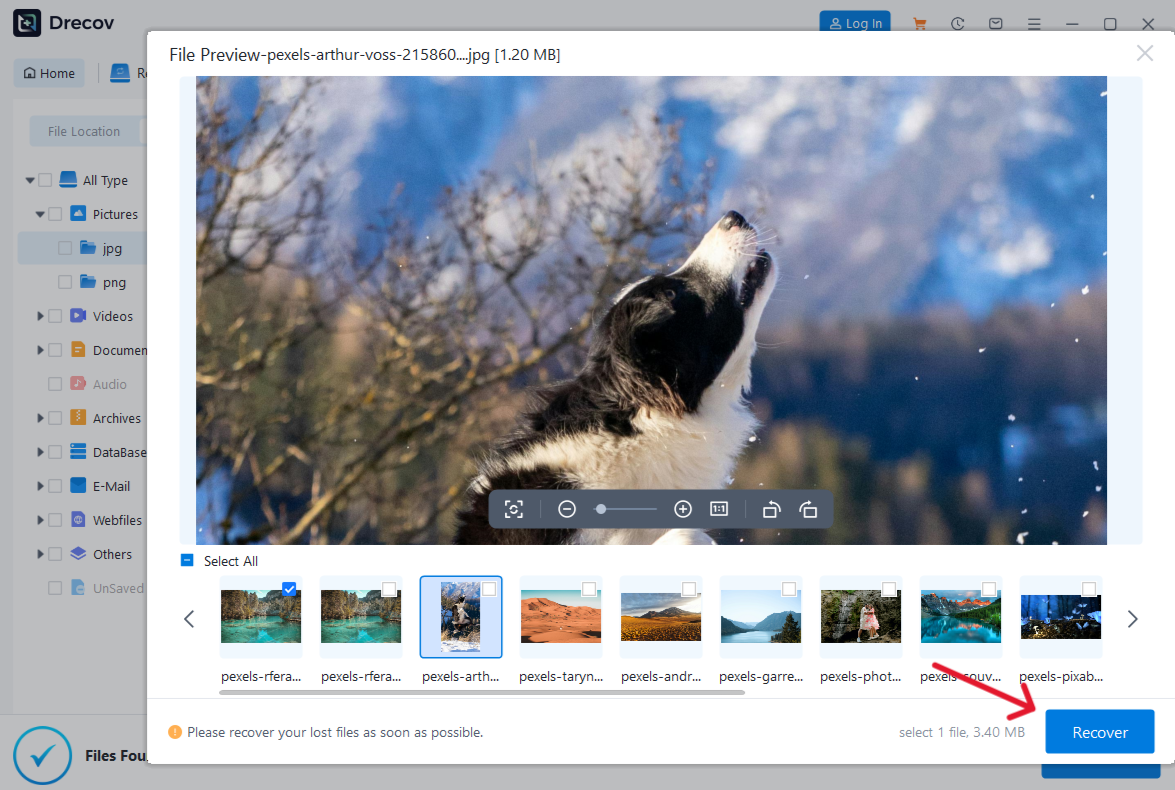
Step 4: Recover
Select the files you need and click Recover. Choose a safe destination (like an external USB drive) to save the recovered files.
Key Operation Point: Always check the “Deep Scan” results if the “Quick Scan” doesn’t find your file. Data remains on the disk even if the file system is confused by an extension change.
After successfully restoring your data, you might want to clean up your system settings. Check out these helpful guides for further Windows 11 optimization:
- Learn how to manage cloud storage
- Adjust user permissions for better file control
- Keep your desktop clean and organized
Difference Between Renaming and Converting File Types
This is where many users get confused. Let’s break it down clearly.
| Action | What It Does | Result |
| Renaming | Changes file extension only | May not work properly; just a “label” change. |
| Converting | Changes file format structure | Fully functional file; internal data is rewritten. |
Think of it like changing a book cover versus rewriting the book into a different language. Renaming only changes the label, while converting changes the content to be understood by different software.
Best Practices for Changing File Types
To avoid problems and the need for emergency recovery, follow these simple tips:
- Always keep a backup: Before you learn how to change file type Windows 11, copy the original file to a “Backup” folder.
- Verify the Source: Ensure the file isn’t “Read-only” by checking its properties (Right-click > Properties).
- Use Specialized Tools: For audio and video, use software like VLC Media Player or Handbrake rather than just renaming.
- Check Registry Settings: For system-wide file associations, ensure your Windows Registry isn’t blocking specific extensions.
Conclusion
Learning how to change file type Windows 11 is a fundamental digital literacy skill. Whether you are performing a quick rename through File Explorer, using the “Save As” function for a clean conversion, or utilizing PandaOffice Drecov data recovery software to fix a mistake, you now have the toolkit to handle any file format challenge.
The key takeaway? Always choose the right method based on your goal. If you just need to fix a file name, renaming works. If you need compatibility, conversion is the way to go. And if things go wrong, don’t panic—the data is likely still there, waiting to be recovered.






