







Losing hours of hard work due to a sudden power outage, a system crash, or an accidental click of the “Don’t Save” button is a tech nightmare we all face. Fortunately, learning how to restore unsaved word document files is entirely possible with the right approach. When Microsoft Word’s native features fail, specialized tools step in to bridge the gap. In this comprehensive guide, we will explore every reliable method to bring back your lost progress. Furthermore, we will introduce PandaOffice Drecov data recovery software, a powerful, professional utility designed to rescue your files when standard methods fall short.
Understanding the Basics of How to Restore Unsaved Word Document
When you accidentally close an unsaved word document, Microsoft Word does not immediately erase the data from your drive. Instead, the application relies on temporary buffers and automated backup systems.
Why Files Go Missing
- Accidental Closure: Clicking “Don’t Save” when exiting a file.
- System Crashes: Sudden Blue Screen of Death (BSOD) errors or power failures.
- File Corruption: Sudden interruptions that compromise the document’s integrity.
However, these built-in safety nets are temporary. If your system overwrites the storage sector where the temporary cache was held, manual recovery becomes nearly impossible. This is where professional recovery tools become essential.
Introducing PandaOffice Drecov Data Recovery Software
If standard Windows tools fail, PandaOffice Drecov data recovery software provides an enterprise-grade solution for everyday users. It scans your storage drive deep at the sector level to locate deleted fragments of your unsaved word document. Consequently, even if you have cleared your cache or experienced a severe system crash, Drecov can rebuild and restore unsaved document files with a high success rate.
⚠ Warning: Install it on a drive different from the one where your data was lost to prevent overwriting.
Solutions to Restore Unsaved Word Document Issues
Depending on how your file was lost, choose the appropriate technical level below to restore unsaved document files.
Method 1: Word’s AutoRecover Feature
Microsoft Word features a built-in safety net known as AutoRecover. It periodically saves copies of your work in the background.
- Open a fresh, blank Microsoft Word document.
- Click on the File tab in the top-left corner.
- Select Info from the sidebar menu.
- Click the Manage Document button, then select Recover Unsaved Documents from the dropdown.
- A dialog box will appear displaying a list of your temporary files. Select your missing unsaved word document and click Open.
- Immediately click Save As to secure your file to a permanent location.
Method 2: The Automated Expert Approach Using PandaOffice Drecov
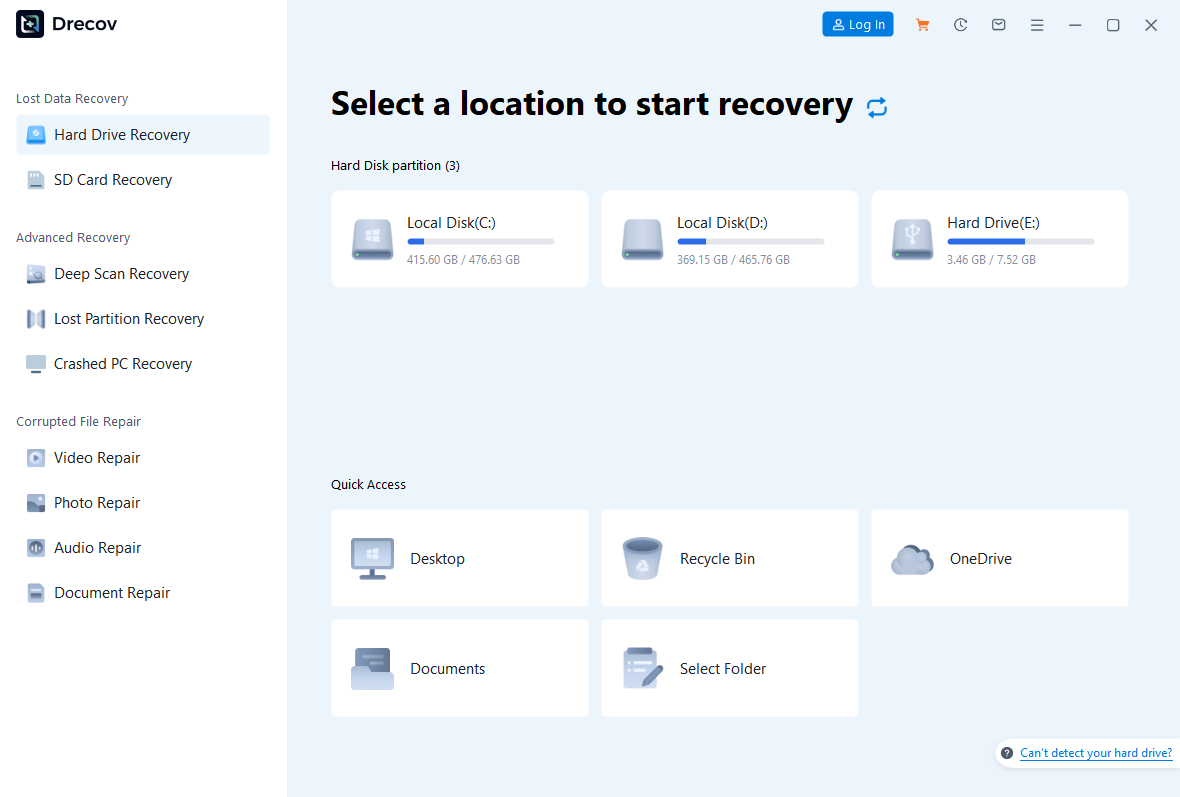
When Microsoft Word’s internal caches are overwritten or corrupted, specialized software is your best line of defense. Follow these steps to utilize PandaOffice Drecov data recovery software:
⚠ Warning: Install it on a drive different from the one where your data was lost to prevent overwriting.
- 1. Launch the application and select the local drive or specific folder where your document was last active.
- 2. Click the Scan button to initiate a deep-sector scan of your system.
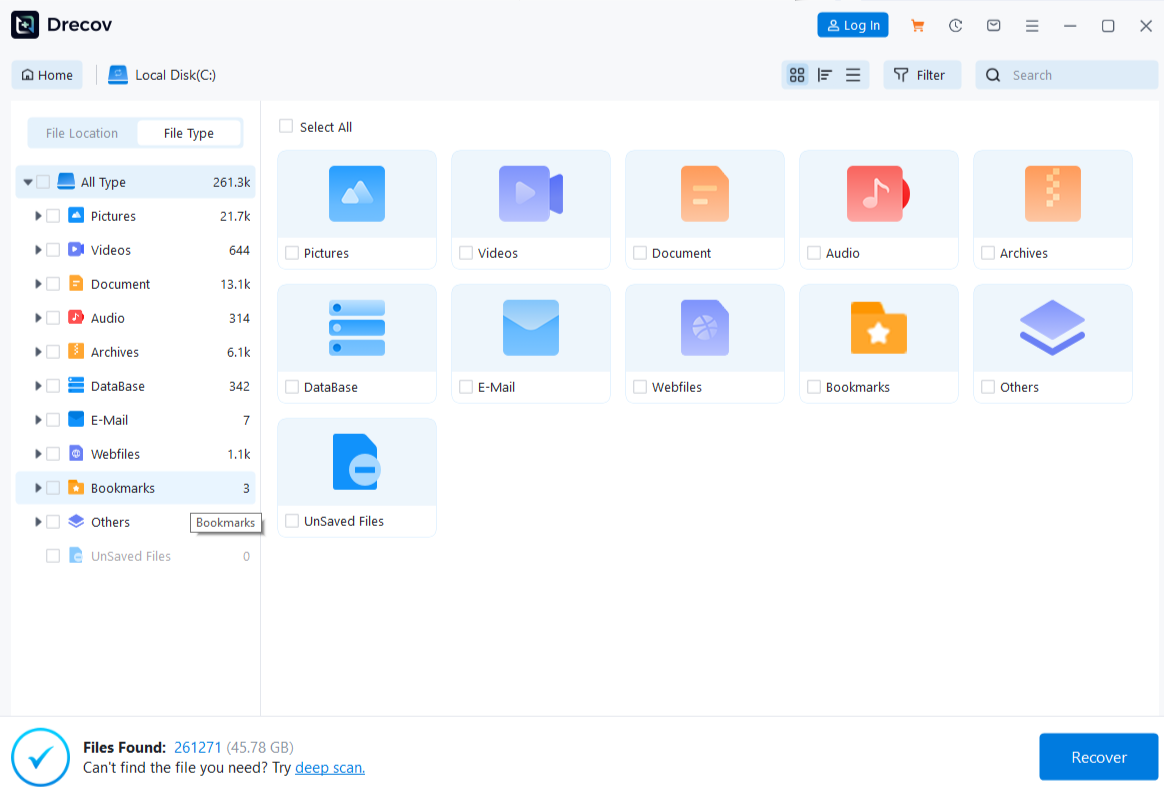
- 3. Use the built-in file filter to search specifically for
.docxor.docfile extensions.

- 4. Preview the recovered files within the dashboard to confirm their contents.
- 5. Click Recover and save the restored file to a secure location, such as an external hard drive or a secure USB setup. For more advanced file recovery strategies, you can also review our guide on how to reinstall Windows 10 from USB to fix systemic errors.
Method 3: Checking Temporary Files
Windows frequently saves temporary iterations of active files across the local system drive.
- Press the shortcut hotkey Windows Key + R to open the Run dialog box.
- Type
%localappdata%\Microsoft\Office\UnsavedFilesinto the field and press Enter. - Look for files with the
.tmpextension or names beginning with a tilde (~). - Copy these files to your desktop, right-click them, select Rename, and change the extension manually to
.docx.
For deeply buried files, you can manually navigate the exact application data paths used by modern Office suites (Word 2016 / 2019 / 2021 / Microsoft 365).
- Open File Explorer by pressing Windows Key + E.
- Navigate precisely to the following directory path:
C:\Users\<YourUsername>\AppData\Roaming\Microsoft\Word\(Note: Ensure that “Hidden items” is checked under the View tab in File Explorer). - Look for files matching your lost project’s name that end with the
.asd(AutoRecover storage) extension. - Double-click the
.asdfile and select Microsoft Word to open and re-save it. If you suspect your files were accidentally deleted entirely from your system, check our comprehensive guide on how to locate the Windows 10 Recycle Bin.
Alternative or Complementary Methods
If manual system navigation feels too tedious, you can weigh your choices between native operating system features and third-party tools.
| Method | Recovery Success Rate | Technical Difficulty | Best Suited For… |
| PandaOffice Drecov | Very High (98%) | Beginner | Severe crashes, formatted drives, and deleted caches. |
AutoRecover (.asd) | Medium | Beginner | Standard app crashes where Word successfully saved a state. |
| Windows Temp Directory | Low to Medium | Intermediate | Power outages where temporary fragments remain un-cleared. |
| System Restore Points | Low | Advanced | Complete operating system rollbacks (risks losing recent data). |
In addition, always remember to check your system Recycle Bin before assuming a file is permanently gone. If you have already cleared it, you can consult our detailed walkthrough on how to recover files after you empty the Recycle Bin.
Tips & Best Practices to Secure Your Progress
Proactive file management is the most effective defense against sudden data loss. Implement these best practices to ensure you never lose a document again:
- Shorten AutoRecover Intervals: By default, Word saves AutoRecover information every 10 minutes. Go to File > Options > Save, and change this interval to 1 or 2 minutes.
- Leverage OneDrive AutoSave: If you possess a Microsoft 365 subscription, save your documents directly to OneDrive. This activates real-time, cloud-based saving.
- Utilize Manual Hotkeys: Develop the muscle memory to hit Ctrl + S frequently while typing.
- Avoid Overwriting Data: The moment you realize an unsaved word document is missing, minimize your web browsing and avoid downloading heavy files to prevent overwriting the temporary storage sectors.
- For additional storage insights and technical troubleshooting guides, browse through the official Microsoft Support Portal to keep your workspace secure and fully optimized.
Frequently Asked Questions
Can I recover a Word document if I clicked “Don’t Save”?
Yes. When you click “Don’t Save,” Windows often retains an AutoRecover version (.asd file) or a temporary fragment (.tmp) in your AppData directory. If those automated local files are missing, PandaOffice Drecov data recovery software can perform a deep scan to restore the file.
Where are unsaved Word documents stored on Windows 10/11?
Typically, unsaved files are stored within the following paths:
C:\Users\<Username>\AppData\Local\Microsoft\Office\UnsavedFilesC:\Users\<Username>\AppData\Roaming\Microsoft\Word\
How long do temporary files stay on my computer?
Temporary files remain accessible until your operating system requires that storage space or runs an automated disk cleanup. Consequently, you must act fast to successfully restore unsaved document assets before they are overwritten.
Is it safe to use third-party tools to restore unsaved word document files?
Yes, provided you use reputable software. Trusted programs like PandaOffice Drecov data recovery software read your drive using a secure, non-destructive process, ensuring your original system files remain completely untouched.
Conclusion
Mastering how to restore unsaved word document files can save you from immense frustration and lost productivity. Whether you resolve the issue using Microsoft Word’s native AutoRecover options, search your local temporary folders, or deploy PandaOffice Drecov data recovery software, multiple paths exist to retrieve your missing work.






