







In today’s fast-paced digital world, managing your online data efficiently is crucial. One of the most valuable assets you have in your browser is your collection of bookmarks. They are the links you save for quick access to websites, articles, or resources that matter to you. Google Chrome, being one of the most widely used browsers, provides a simple way to export bookmarks.html in Chrome for safekeeping.
This guide will walk you through everything you need to know about exporting bookmarks.html in Chrome, including step-by-step instructions, troubleshooting tips, and advanced data recovery techniques when things go missing.
Why Export Bookmarks.html in Chrome?
Exporting bookmarks from Chrome is essential for several reasons:
- Backup Purposes: Your bookmarks are valuable. Losing them due to a sudden system crash, a corrupt browser profile, or accidental deletion can be frustrating. Exporting ensures you have a backup safely stored on your local drive or cloud storage.
- Switching Browsers: If you plan to use another browser like Mozilla Firefox, Microsoft Edge, or Apple Safari, exporting bookmarks as an
.htmlfile makes transferring your curated links seamless. - Device Migration: When moving to a new computer, exporting bookmarks allows you to maintain absolute continuity in your workflows and daily browsing habits.
- Organized Data Management: Having an external copy of your bookmarks allows you to manage, categorize, clean up, and edit them outside the browser environment.
What is Bookmarks.html?
A bookmarks.html file is a standard HTML (HyperText Markup Language) file that stores all the bookmarks saved in your Chrome browser. Each bookmark is recorded with its specific URL, custom title, time added, and corresponding folder structure. Because it utilizes a standard web format, it is universally compatible with almost all modern web browsers. This universal nature makes it the ideal format for cross-platform backup, synchronization, and data migration.
Direct Method: Native Way to Export Bookmarks.html in Chrome
Exporting your bookmarks natively through Google Chrome is straightforward and takes less than a minute. Follow these clear steps to secure your data manually.
Step 1: Open Google Chrome
Launch the Google Chrome browser on your desktop computer. Ensure that you are currently using the profile that contains the specific bookmarks you wish to save.
Step 2: Access the Bookmark Manager
You can quickly open the built-in bookmark manager tool using a couple of different paths. Choose the one that feels easiest for you:
- Keyboard Shortcut: Press Ctrl + Shift + O on Windows or Cmd + Option + B on a Mac. This action instantly opens the bookmark configuration tab.
- Menu Path: Click the three-dot customization menu in the upper-right corner of the Chrome window. Move your mouse cursor down to hover over Bookmarks and lists, and then select Bookmark manager from the sub-menu.
Step 3: Trigger the Export Process
Once the Bookmark Manager tab fills your screen, look for the secondary three-dot menu icon located inside the blue manager header bar (right beneath the main Chrome search bar, next to the “Search bookmarks” field). Click this icon to reveal the management action options.
Step 4: Save the Exported File
Select Export bookmarks from the drop-down selection menu. A system dialogue window will pop up automatically, asking you to choose a target storage directory on your hard drive.
By default, the browser names this file bookmarks_month_day_year.html (for instance, bookmarks_5_20_26.html). You can rename this file to whatever you prefer, but you must ensure the file extension remains strictly .html. Choose your preferred destination folder—like your Desktop or an external backup drive—and click the Save button.
Advanced Level: Locate and Copy the Native Local Database File
Sometimes, browser issues might prevent you from opening the interface normally, making it impossible to click through the menus to export bookmarks.html in Chrome. Fortunately, Chrome automatically updates an internal, raw data file on your local storage drive every single time you modify a bookmark.
If your browser fails to launch or freezes when loading pages, you can manually extract this hidden database file as a direct backup solution.
Step 1: Reveal Hidden System Files
Because operating systems hide application data folders to protect critical files from accidental modification, you must toggle visibility settings first.
- On Windows: Open any File Explorer window, click the View tab at the top menu, hover over Show, and verify that Hidden items has a checkmark next to it.
- On macOS: Open Finder, press your user home directory, and press the hotkey combination Cmd + Shift + Period (.) to immediately reveal all hidden folders.
Close Google Chrome completely to avoid file lock conflicts. Next, copy the matching file path below, open your system’s execution dialogue window (Windows Key + R on Windows), paste the string, and press Enter.
- Windows 10 & Windows 11 Path:
%LOCALAPPDATA%\Google\Chrome\User Data\Default(Note: If you utilize multiple profiles, the final folder name might be designated asProfile 1orProfile 2instead ofDefault.) - macOS Path:
~/Library/Application Support/Google/Chrome/Default
Step 3: Extract the Bookmarks Database Files
Scroll through the folder contents until you locate two specific files named exactly:
BookmarksBookmarks.bak
The file named Bookmarks holds your real-time current link data, while Bookmarks.bak functions as an automated backup generated by Chrome right before the browser was most recently launched. Copy both of these files and paste them safely into a secure backup directory on an external storage drive.
Step 4: Convert Raw Files to HTML Format
Because these native database files are structured in JSON format rather than a standard web format, you cannot directly import them into other browsers as an HTML checklist.
To convert them, you can open an official online tool like the Chrome Bookmarks Recovery Tool or use an offline text editor to format the text into a compliant template. Alternatively, you can simply drop these files back into a fresh, working installation path of Chrome on a new machine to restore the native interface, allowing you to easily export bookmarks.html in Chrome using the native method later.
How to Manage Chrome Bookmarks for Optimal Performance
Learning how to systematically manage Chrome bookmarks keeps your digital workspace tidy and running smoothly. If you accumulate thousands of unorganized links over several years, it can bloat your local user profile, occasionally triggering data corruption or causing your browser to stall during startup indexing.
Create a Logical Folder Hierarchy
Avoid saving dozens of miscellaneous links directly to the root bookmark bar. Instead, right-click any open space on the top bar, select Add folder, and categorize links by specific themes, such as “Financial Accounts,” “Work Projects,” “Travel Options,” or “Daily Reading.”
Prune Outdated Connections Periodically
Websites change domain extensions, pages get deleted, and useful content moves frequently. Set aside a few minutes twice a year to look over your collections. Delete dead links or broken 404 error URLs so your directory stays fast and genuinely useful.
Use the Bookmarks Side Panel
Google Chrome features an accessible sidebar panel that makes real-time folder sorting highly efficient. Click the Side panel icon in the upper right corner of your browser window (located right next to your profile avatar) and select Bookmarks from the drop-down selection menu. This side view lets you drag, drop, sort, and edit titles while keeping your main browsing window fully open.
Set Up a Proactive Chrome Bookmarks Backup Strategy
Relying exclusively on manual exports leaves you vulnerable to sudden data gaps if a drive fails between your scheduled export sessions. Implementing a multi-layered Chrome bookmarks backup strategy ensures you never lose a critical URL, even during catastrophic operating system crashes.
Activate Google Cloud Sync Services
The simplest way to automate your protection is by leveraging Google’s native cloud storage infrastructure.
- Click your Profile icon in the top right corner of Chrome.
- Select Turn on sync… and log in with your primary Google account credentials.
- Navigate into your settings page (
chrome://settings/syncSetup) and ensure the toggle for Bookmarks is switched on.
This saves your browser layout securely to the cloud, allowing it to instantly replicate your setup onto any phone, tablet, or secondary laptop the moment you log in. For more information on how Google manages your synced cloud browser profiles, you can consult the official Google Chrome Help Documentation.
Automated Local Scripting Backups
If you prefer keeping your information strictly private without uploading your data to third-party cloud servers, you can create a simple automated batch script on Windows to copy your local data daily. Open Notepad, paste the copy command below, and save the document as BackupBookmarks.bat:
DOS
@echo off
xcopy "%LOCALAPPDATA%\Google\Chrome\User Data\Default\Bookmarks" "D:\LocalBackups\Chrome\" /Y /I
You can use the native Windows Task Scheduler application to run this lightweight batch file automatically every evening at a set time. This gives you a robust archive system completely independent of manual browser clicks.
Technical Disaster Recovery: Restore Lost Chrome Bookmarks via Software
When a hard drive fails unexpectedly, standard file extraction methods stop working. This also happens during virus attacks or accidental profile deletion. Perhaps you forgot to set up cloud syncing beforehand. Or maybe you did not export bookmarks.html in Chrome recently. In these scenarios, deep data carving software becomes necessary to piece your files back together.
When a file gets deleted, your computer does not instantly wipe the binary data. It simply marks that space as available for overwriting. The operating system also hides the file path pointer from your file manager. Specialist data recovery applications can scan those hidden sectors to rebuild the lost file framework. However, you must minimize computer activity first.
This is where deploying a professional utilities suite like PandaOffice Drecov data recovery software becomes highly beneficial. This specific software engine uses deep signature matching algorithms. It looks for raw header patterns of lost database fragments and old HTML files. Ultimately, this helps you recover documents that seemed permanently lost.
⚠ Warning: Never download or install data recovery utilities directly onto the exact same drive partition where your lost files were originally located! For instance, if your Chrome profile sat on your standard C: drive, install the recovery software onto an external hard drive or an independent secondary partition like D:. This precaution prevents the software installation file from accidentally overwriting the deleted sectors containing your hidden bookmark history.
Comprehensive Recovery Process with PandaOffice Drecov
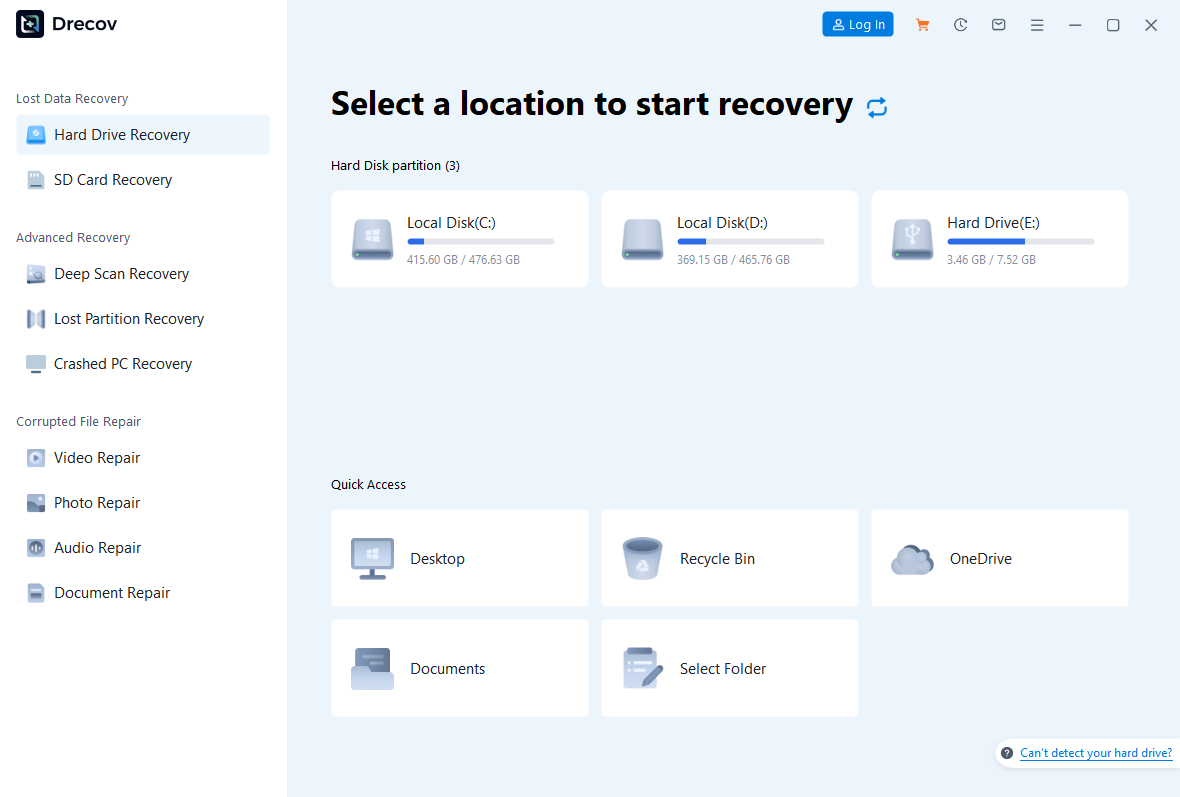
Step 1: Choose the Scanner Location
Launch the recovery tool to view the primary storage selection dashboard. If you are uncertain where the file corruption originated, simply choose your primary local storage volume (typically labeled Local Disk C:) and click the Scan button to begin the deep data carving process.
Step 2: Monitor the Deep Sector Scan
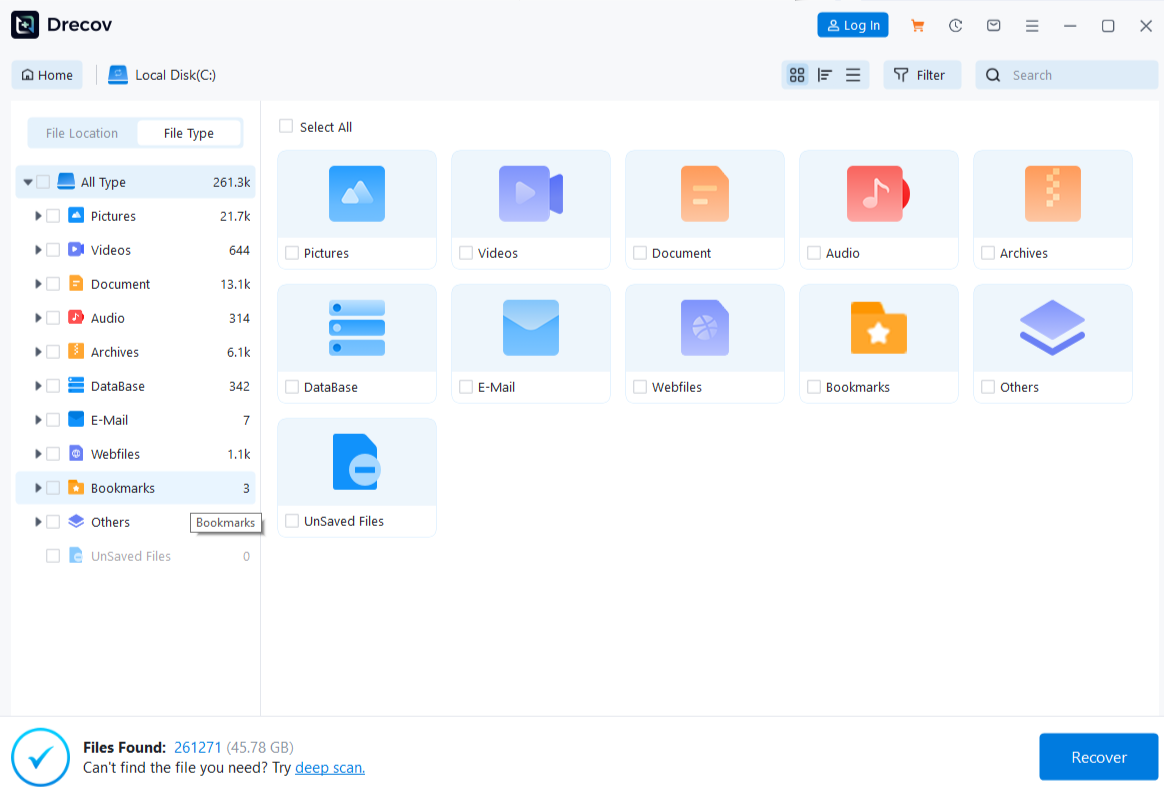
The scanning interface will show a real-time progress indicator along with an estimated time to completion. The utility first runs a quick index scan, followed immediately by an intensive deep search that reads the raw binary sequences of your drive.
While this scan is actively running, avoid launching heavy applications, downloading web files, or playing video games. Keeping your system idle minimizes drive read/write cycles, maximizing the likelihood of a successful data extraction.
Step 3: Filter and Find Your Target Browser Files
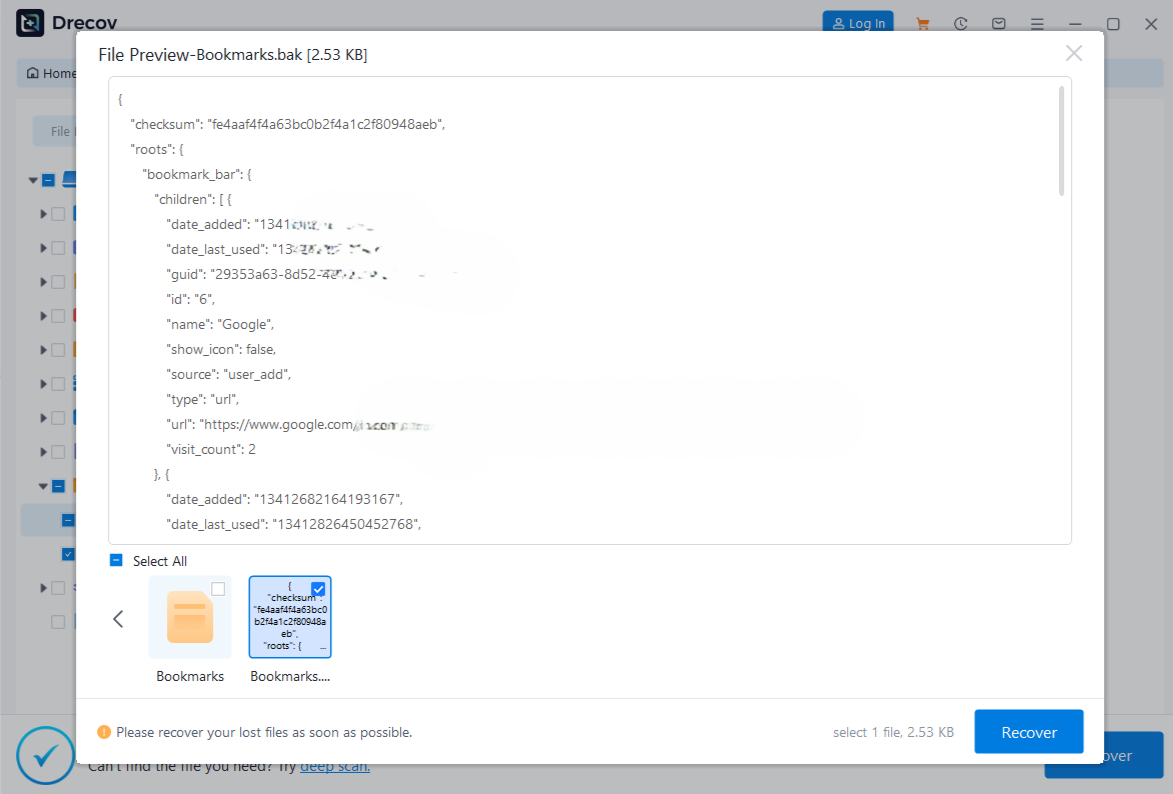
Once the scan wraps up, you do not need to manually sift through millions of unrelated system files. Use the built-in search tool in the top right corner of the results dashboard:
- Type
Bookmarksinto the filter box to find old local database instances. - Type
.htmlinto the filter box if you are attempting to salvage a manually exported file that was accidentally deleted later.
Examine the file timestamps and structural indicators provided in the results panel to pinpoint the specific archive version containing your data.
Step 4: Securely Restore Your salvaged Files
Check the selection boxes next to the browser items you want to bring back. Click the Recover button to open the final directory destination prompt.
Choose a safe external drive location—such as a connected USB flash drive or an external storage enclosure—to complete the saving process. Once the tool finishes writing the restored data, open the target folder to verify that your recovered Bookmarks or bookmarks.html file is intact and ready to be reintegrated into Chrome.
Reintegrating Your Restored Browser Data
Once you have successfully recovered your files using the steps above, you can easily restore your data back into a functioning web browser.
If you recovered a standard bookmarks.html file, simply use Chrome’s native import wizard to bring your folder tree back in a single action. If you recovered a raw, extensionless Bookmarks database file instead, close Chrome completely, navigate back to your local application path (%LOCALAPPDATA%\Google\Chrome\User Data\Default), and overwrite the existing blank Bookmarks file with your recovered version. The next time you open Chrome, your full folder tree will reappear exactly as it was before the incident.
For users who also work across multiple browser environments and need to track down lost configurations across different platforms, understanding where alternative browsers cache their setup directories is highly useful. You can check out this guide on where Firefox bookmarks are stored on your PC to locate those files manually.
Additionally, if you frequently save multimedia resources online alongside your standard web links, you may want to review our comprehensive 2026 guide on downloading video from Firefox to help optimize your offline media archive.
If you run into any formatting issues or profiles that won’t load during the file migration process, you can find extra troubleshooting steps and repair options in this detailed tutorial on how to get your Google Chrome bookmarks back.
Summary of Bookmark Management and Recovery Methods
| Method Type | Technical Complexity | Primary Use Case | Key Prerequisite |
| Native Chrome Export Wizard | Very Low | Routine data backups, system migrations, or browser platform switching. | Working browser interface access. |
| Local File Path Copying | Medium | Backing up data when the browser interface is frozen, unresponsive, or won’t launch. | Operating system admin privileges. |
| Cloud Sync Integration | Low | Seamless real-time updates across multiple mobile and desktop devices. | A valid Google Account login. |
| PandaOffice Drecov Scanning | High Capability | Restoring data after accidental deletion, hard drive formatting, or system crashes. | Immediate cessation of disk writes. |
Export bookmarks.html in chrome FAQs
Can I export bookmarks from Google Chrome on an Android or iOS phone?
No, the mobile versions of Google Chrome do not currently support a native export feature to generate a standalone .html backup file directly on your mobile device. To export your data, you must turn on account syncing within your mobile app’s settings menu. This securely mirrors your data to your Google account, allowing you to access a desktop computer, open Chrome, and complete the native export process from there.
Why is my exported bookmarks.html file completely blank when I open it?
A blank export file typically indicates file corruption within your active browser profile, or that you are currently logged into a secondary, empty user profile within Chrome. Double-check your active profile avatar icon in the top right corner of the browser window to confirm you are using the correct account. If the account is correct but the file remains blank, close Chrome and use the advanced folder path methods discussed above to extract the auto-saved Bookmarks.bak backup file instead.
Is it safe to manually edit the contents of a bookmarks.html file using a text editor?
Yes, because it uses standard web markdown code, you can safely modify the file using standard text editing applications like Notepad, VS Code, or TextEdit. However, you must be careful not to delete or modify the critical structural tags—such as <NETSCAPE-Bookmark-file-1>, <DT>, <p>, or <A HREF="...">. If any of these syntax markers are accidentally removed, other web browsers may fail to parse the file properly during the import process.
Conclusion
Taking a few moments to understand how to export bookmarks.html in Chrome is one of the easiest ways to safeguard your digital footprint. Whether you choose to use manual browser exports, automatic local backups, or cloud synchronization, consistency is key.
Should unexpected data corruption or hardware failure occur, stop using the affected drive immediately and leverage specialized utilities like PandaOffice Drecov data recovery software to safely retrieve your missing database files. Keeping a reliable backup routine ensures that your favorite websites, reference links, and professional research projects remain safe, organized, and accessible for years to come.






