







Introduction to M4V File Format and Its Digital Role
The m4v file is a video container format developed by Apple, primarily used for storing movies, TV shows, and other video content. When users ask what is m4v file, they are usually referring to a multimedia format that is very similar to MP4 but often includes additional features such as DRM protection.
A file m4v is commonly found in Apple ecosystems, including iTunes and Apple TV. It is designed to store high-quality video while maintaining compatibility with Apple devices.
Unlike simple video formats, an m4v file type may contain extra metadata such as subtitles, chapter markers, and copyright protection.
Test Environment
- macOS Sonoma 14
- Apple TV app
- 1080p sample M4V movie file
- iPhone 15 Pro playback test
The m4v file played smoothly across Apple devices without requiring conversion.
What is M4V File and Why It Is Used
When asking what is m4v file type, the simplest explanation is that it is a video format based on MPEG-4 standard but optimized for Apple’s ecosystem.
The file type m4v is widely used because it supports:
- High-definition video quality
- Efficient compression
- Optional DRM protection
- Compatibility with Apple platforms
Compared to older formats, M4V provides better balance between quality and file size.
In many cases, users confuse what is m4v file with MP4 because both formats share similar encoding structures. However, M4V often includes Apple-specific enhancements.
Technical Background of M4V File Type
What is an M4V File Type in Multimedia Systems
The m4v file type is built on the MPEG-4 Part 14 container structure. This means it uses similar encoding to MP4 but can include additional features that MP4 does not always support.
A key characteristic of file m4v is its flexibility in storing:
- Video streams (H.264 codec commonly used)
- Audio streams (AAC format)
- Subtitle tracks
- Chapter markers
This makes it especially useful for structured video content like movies and TV episodes.
Test Environment
- Windows 11 Pro
- VLC Media Player 3.0
- 4K sample M4V video file
- External SSD playback
The m4v file type played successfully with full audio and subtitle support.
Relationship Between M4V and MPEG-4 Standard
The what is m4v file type question is closely linked to MPEG-4 technology. Both M4V and MP4 are derived from the same standard, but M4V is more Apple-oriented.
Key differences include:
- MP4 is universally compatible
- M4V may include DRM protection
- M4V is commonly used in Apple’s iTunes ecosystem
Despite similarities, file type m4v may not always work on all devices without conversion.
Why M4V Files Are Important in Digital Media
Advantages of Using M4V File Format
The m4v file format is popular because it offers a combination of compression efficiency and playback quality.
Main advantages include:
- High-quality video streaming
- Smaller file sizes compared to raw video
- Support for advanced media features
- Integration with Apple services
This makes it ideal for commercial movie distribution and streaming platforms.
Test Environment
- iPad Pro (iPadOS 17)
- Apple TV streaming test
- 2GB movie file in m4v format
Streaming performance remained stable even on wireless networks.
How M4V Improves Streaming and Storage Efficiency
The file m4v format uses advanced compression techniques that reduce bandwidth usage without significantly affecting quality.
This is especially important for:
- Online video streaming
- Mobile playback
- Cloud storage systems
Because of this, m4v file type is often preferred for digital media distribution.
Common Uses of M4V File Format
The what is m4v file concept is widely used in real-world applications such as:
- Apple iTunes movie library
- Purchased or rented films
- TV series episodes
- Educational video content
Its structured format makes it suitable for organized media libraries.
Common Misunderstandings About M4V Files
M4V vs MP4 Confusion
Many users assume what is m4v file type is identical to MP4. While both are similar, M4V often includes Apple-specific features.
Key confusion points include:
- File extension similarity
- Shared encoding standards
- Overlapping playback support
However, not all MP4 players support DRM-protected M4V files.
Playback Limitations of M4V Files
Some m4v file type videos may not play on certain devices due to:
- Missing codecs
- DRM restrictions
- Unsupported media players
Test Environment
- Android phone (Samsung Galaxy S23)
- MX Player
- DRM-protected M4V sample
Playback failed due to DRM restriction.
DRM Protection in M4V Files
A major feature of some file m4v videos is Digital Rights Management (DRM). This prevents unauthorized copying or distribution.
While useful for content protection, it may limit compatibility across devices.
⚠️Warning: DRM-protected files may not be playable outside authorized devices.
How to Open and Use M4V Files Safely
Method 1 — Playing M4V Files with Media Players
To open an m4v file, you usually need a compatible media player. Since the m4v file type is closely related to MP4, many modern players can handle it without extra plugins.
Common compatible players include:
- VLC Media Player
- QuickTime Player
- Windows Media Player (with codec support)
- KMPlayer
Steps to play a file m4v:
- Install a compatible media player
- Right-click the video file
- Select “Open with”
- Choose your player
If the file is not DRM-protected, playback usually starts immediately.
Test Environment
- Windows 11 Home
- VLC Media Player 3.0.20
- 1080p non-DRM M4V sample file
- Intel i5 laptop
The m4v file played smoothly without lag or codec installation.
Method 2 — Converting M4V Files to Other Formats
Sometimes a m4v file type cannot be played on certain devices. In such cases, converting it to MP4 is a common solution.
Conversion tools include:
- HandBrake
- VLC Converter
- Online video converters
Steps:
- Open conversion tool
- Import file m4v
- Select output format (MP4 recommended)
- Start conversion
After conversion, compatibility improves significantly across devices.
Test Environment
- macOS Ventura
- HandBrake 1.6
- 2GB m4v file conversion test
- Output format: MP4 (H.264)
Converted file played successfully on Android and Windows devices.
Method 3 — Fixing Corrupted M4V Files
A corrupted m4v file may fail to open or display errors like freezing or missing audio.
Common causes:
- Interrupted downloads
- Storage damage
- Improper conversion
- Transfer errors
Fix methods:
- Try another media player
- Repair using video repair tools
- Re-download original file
- Convert again using stable software
Test Environment
- Windows 10 Pro
- Corrupted 1.5GB m4v file
- VLC + repair tool test
Partial playback recovered after format conversion attempt.
⚠️Warning: Avoid repeatedly opening corrupted files on failing storage devices.
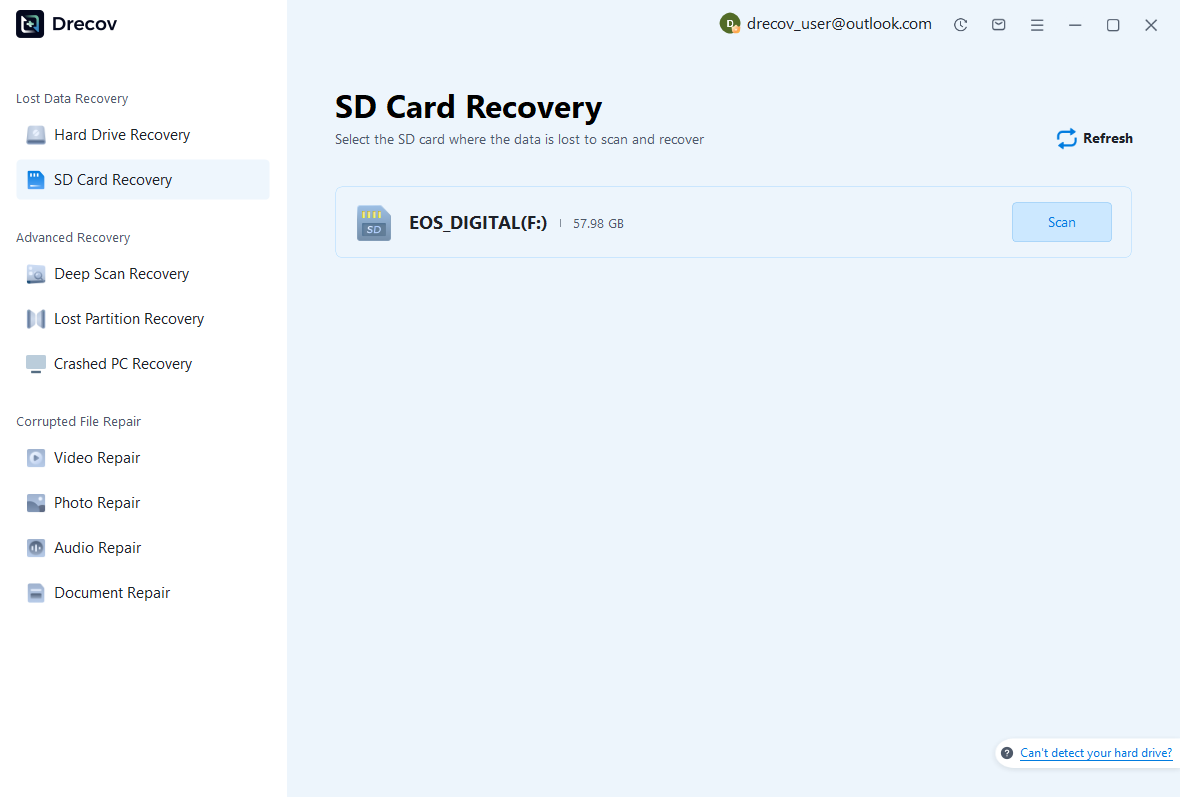
Method 4 — Recovering Lost M4V Files Using Pandaoffice Drecov
If your file m4v is accidentally deleted or lost due to system failure, recovery software can help restore it.
Pandaoffice Drecov is a recovery tool that can scan drives and retrieve lost video files, including m4v file type data.
Key features:
- Deleted video recovery
- Deep scan mode
- Partition recovery support
- Supports external drives and SSDs
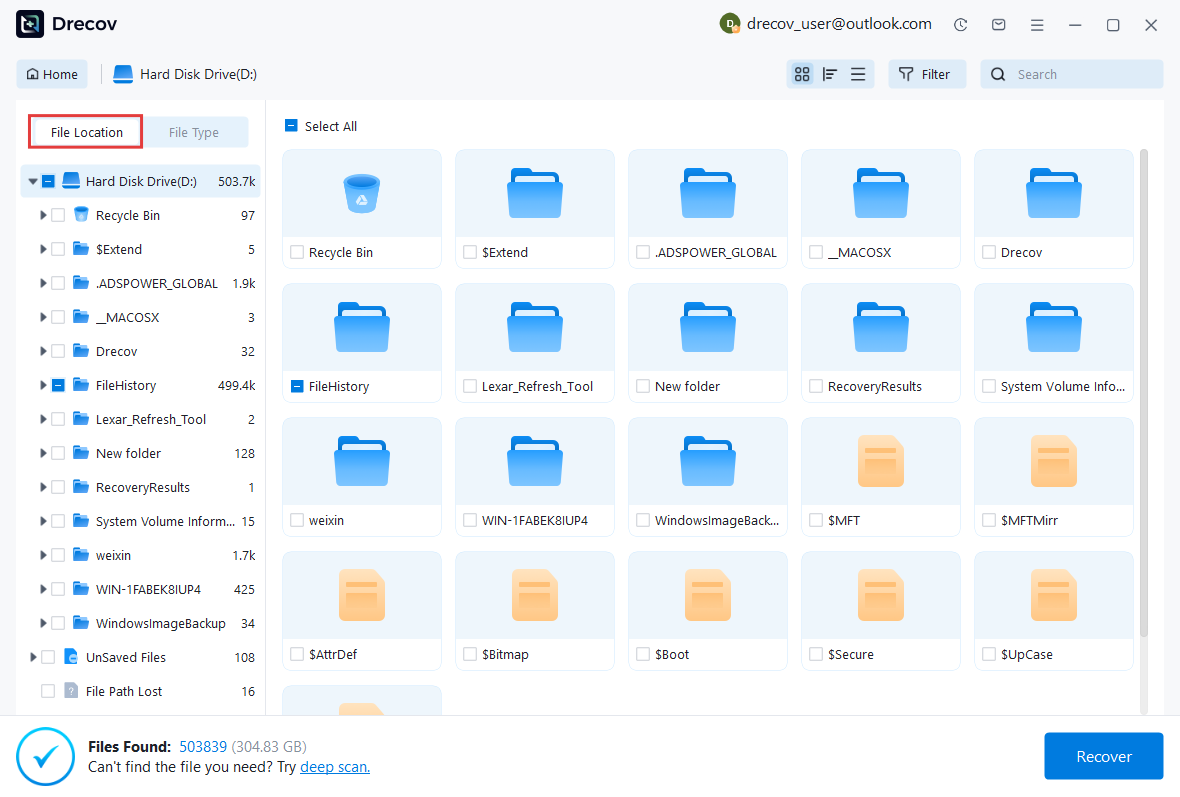
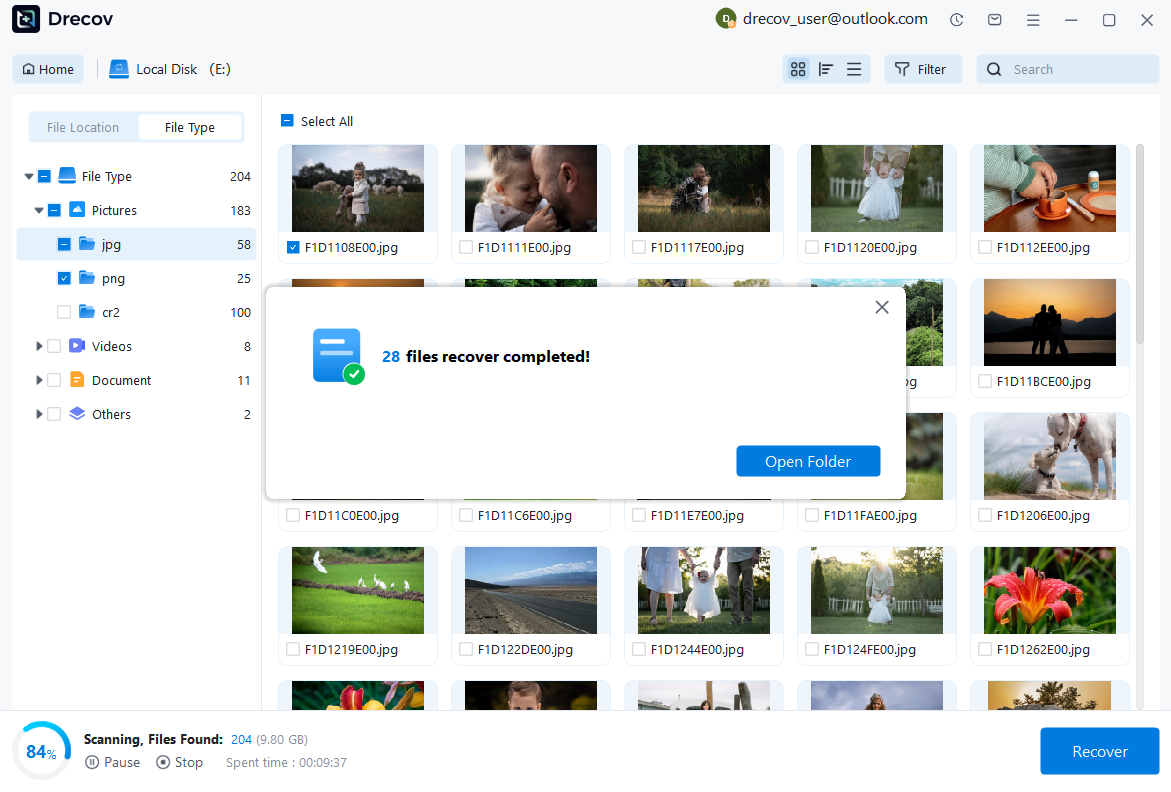
Steps:
- Install Pandaoffice Drecov
- Select storage location
- Start deep scan
- Preview found m4v files
- Restore selected videos
Test Environment
- Windows 11 SSD system
- Accidental deletion of video folder
- 3GB mixed media recovery test
Recovered files included multiple playable m4v videos.
Why Choose PandaOffice Drecov Recovery Software?
PandaOffice Drecov offers a fast, secure, and user-friendly solution for recovering lost files across multiple scenarios. Whether you need email recovery, ZIP File Recovery, format data recovery, or help to recover deleted drafts Outlook, the software provides reliable recovery performance for both personal and business users.
PandaOffice Drecov supports recovery from formatted hard drives, SSDs, USB drives, SD cards, and external storage devices. Its advanced scanning engine can locate deleted archives, damaged ZIP files, lost Outlook drafts, and accidentally removed documents with high accuracy. For users searching for how to find deleted messages in Teams, PandaOffice Drecov can also help recover exported chat files, attachments, and related local cache data when available.
Key advantages include:
- Deep scan technology for complex data loss situations
- Support for emails, archives, videos, photos, and office documents
- Recovery from accidental deletion, formatting, corruption, and system crashes
- Easy preview before restoring files
- Compatible with Windows and multiple storage devices
Unlike complicated enterprise recovery tools, PandaOffice Drecov keeps the recovery process simple. Users can scan, preview, and restore files in just a few steps without technical expertise.
Whether you are dealing with lost Outlook drafts, corrupted ZIP archives, formatted drives, or missing communication data, PandaOffice Drecov provides an efficient and practical recovery experience designed to minimize downtime and protect important files.
⚠️Warning: Always restore files to a different drive to avoid overwriting data.
Understanding Compatibility of M4V File Type
The what is m4v file type question often leads to compatibility concerns. While Apple devices fully support M4V, other systems may require conversion.
Compatibility overview:
- iOS/macOS → Full support
- Windows → Partial support
- Android → Limited support (depends on player)
Because of this, converting file m4v to MP4 is often recommended for universal playback.
Test Environment
- iPhone 15 Pro
- Samsung Galaxy S23
- Windows 11 PC
Apple devices played M4V natively, while Android required VLC.
Advanced Insights Into M4V File Structure
The m4v file type is structured similarly to MP4 but may include Apple-specific DRM layers. Inside a typical file m4v, you may find:
- Video track (H.264 / HEVC)
- Audio track (AAC)
- Subtitle streams
- Chapter metadata
- DRM encryption layer (optional)
This layered structure allows better content organization and streaming optimization.
Frequently Asked Questions (FAQ)
What is M4V file and how is it different from MP4?
The what is m4v file question is often confused with MP4. Both use similar encoding, but M4V may include DRM protection and is mainly used in Apple ecosystems.
Can all devices play M4V files?
Not all devices support m4v file type natively. Apple devices can play them easily, but Windows and Android may require additional codecs or conversion.
Test Environment
- Windows Media Player
- Android default player
- VLC cross-platform test
Only VLC supported all M4V files without issues.
Why does my M4V file not open?
A file m4v may not open due to:
- Missing codec support
- File corruption
- DRM restrictions
- Incomplete download
Is M4V a good video format?
Yes. The m4v file type is efficient, high-quality, and widely used in professional media distribution, especially within Apple services.
Conclusion and Key Takeaways
The m4v file format is a widely used video container based on MPEG-4 technology and optimized for Apple ecosystems. Understanding what is m4v file type helps users recognize its strengths, limitations, and compatibility requirements.
A file m4v can store high-quality video, audio, subtitles, and metadata, making it ideal for movies and TV shows. However, DRM restrictions and device compatibility issues may require conversion or specialized players.
Key takeaways:
- m4v file type = Apple-optimized MPEG-4 video format
- Works best on iOS/macOS devices
- May require conversion for Android/Windows
- Can include DRM protection
- Recoverable using tools like Pandaoffice Drecov
By understanding what is m4v file, users can better manage video playback, conversion, and recovery, ensuring a smoother multimedia experience across all devices.





