







Understanding NVMe SSD Data Recovery
What Makes an NVMe SSD Different From Traditional SSDs
An nvme ssd is designed for high-speed performance and low latency compared to SATA-based drives. NVMe stands for Non-Volatile Memory Express, a protocol created specifically for flash storage. Because of this architecture, an ssd nvme device can process multiple commands simultaneously and achieve significantly faster read and write speeds.
Unlike older hard drives that rely on spinning disks, an nvme ssd drive stores information on NAND flash memory chips. This design improves boot times, gaming performance, and professional workloads such as video editing or virtualization. Many users consider it the best nvme ssd solution for modern computers because of its efficiency and responsiveness.
However, data loss can still happen despite the advanced technology. Users may accidentally delete files, format partitions, or encounter firmware corruption. Recovering files from a modern SSD is often more complicated than traditional HDD recovery because NVMe drives frequently use the TRIM command to optimize storage performance.
⚠️Warning: Continuing to use the drive after data loss may overwrite recoverable files permanently.
Understanding how recovery works is the first step toward protecting important information stored on an NVMe device.
Common Situations That Lead to Data Loss
Data loss on an nvme ssd drive can happen unexpectedly in daily use. One of the most common causes is accidental deletion. Many users remove files and later realize they still need them, only to discover the recycle bin has already been emptied.
Formatting errors are another major issue. During Windows installation or disk management operations, users sometimes select the wrong partition and erase valuable data. Because an ssd nvme operates very quickly, formatting processes are completed in seconds, leaving little time to react.
Hardware-related problems also contribute to failures. Overheating, unstable power supplies, and motherboard compatibility issues may prevent the system from recognizing the SSD. In some cases, firmware corruption can make the drive inaccessible even when no physical damage exists.
Malware infections are another concern. Ransomware attacks can encrypt files stored on an nvme ssd, while malicious software may damage partition tables or file systems.
Test Environment:
- Windows 11 Pro 64-bit
- PCIe Gen4 NVMe SSD
- 1TB storage capacity
- Intel Core i7 processor
- 32GB RAM
These situations demonstrate why preparing a recovery strategy is important before permanent data loss occurs.
Why NVMe SSD Recovery Can Be Challenging
Traditional hard drives store deleted data differently than SSDs. When a file is removed from a standard HDD, the operating system often marks the space as available while the actual data remains until overwritten. This gives recovery software more opportunities to restore files.
With NVMe SSD data recovery, the situation is more complex due to TRIM technology. TRIM automatically clears unused blocks to improve speed and prolong SSD lifespan. Once TRIM processes deleted sectors, restoring data becomes much harder.
Another challenge involves encryption and advanced firmware management. Many modern nvme ssd drive models include built-in security functions that complicate direct recovery attempts. Additionally, firmware corruption can prevent the operating system from detecting the device properly.
Physical repairs are also more difficult because NVMe drives contain compact circuit designs and delicate memory chips. Improper handling can permanently damage the hardware.
⚠️Warning: Do not initialize or reformat an unrecognized NVMe drive before attempting recovery.
Because of these technical factors, users should stop writing new data immediately after file loss and begin recovery as soon as possible.
Main Causes of Data Loss on an NVMe SSD
Accidental Deletion and Formatting
Human error remains one of the leading reasons for file loss. Many people accidentally delete folders while organizing documents or clearing storage space. Emptying the recycle bin without checking its contents can also lead to serious problems.
Formatting mistakes are equally common. During system installation or partition resizing, users sometimes erase the wrong drive. Since an nvme ssd processes commands rapidly, formatted data may disappear almost instantly.
Quick formatting does not always destroy all information immediately, but the chance of recovery decreases if the drive continues operating afterward. Installing programs or downloading files to the same partition may overwrite deleted sectors.
Test Environment:
- Windows 10 Home
- 512GB PCIe Gen3 SSD
- NTFS file system
- Laptop platform
In these situations, disconnecting the drive or shutting down the system quickly can improve recovery success rates.
Firmware Corruption and Power Failure
Firmware acts as the internal control system for an ssd nvme device. If firmware becomes corrupted during updates or due to unexpected shutdowns, the SSD may stop responding properly.
Power interruptions are particularly dangerous during write operations. Sudden outages can damage file structures, corrupt partitions, or interrupt firmware processes. Some users notice their computer freezing before the SSD disappears entirely from BIOS settings.
Electrical instability can also shorten the lifespan of NAND memory chips. Low-quality power supplies and repeated improper shutdowns increase the risk of data corruption.
Test Environment:
- Desktop PC with PCIe Gen4 storage
- Windows 11
- 2TB NVMe SSD
- 850W PSU
⚠️Warning: Never disconnect power during firmware updates or disk repair operations.
Using an uninterruptible power supply (UPS) can significantly reduce these risks.
Physical Damage and Overheating
Although SSDs contain no moving parts, they are still vulnerable to physical damage. Excessive heat is a major concern for high-performance NVMe storage devices. Without proper cooling, temperatures may exceed safe operating limits.
Overheating can lead to:
- Random disconnections
- Slow performance
- Firmware instability
- Permanent NAND damage
Laptop users are especially vulnerable because compact systems often have limited airflow. Dust buildup inside desktop computers may also block cooling components.
Physical damage may occur from water exposure, motherboard failure, or improper installation. Bent connectors and static electricity can destroy sensitive circuits on the SSD.
Test Environment:
- Gaming laptop
- 1TB NVMe SSD
- Heavy gaming workload
- Average SSD temperature: 82°C
Maintaining proper airflow and monitoring SSD temperatures are essential for long-term reliability.
Virus Attacks and File System Errors
Malware attacks continue to threaten personal and business data. Viruses can delete files, encrypt storage partitions, or corrupt boot sectors on an nvme ssd drive.
File system corruption may also result from software crashes or improper shutdowns. When this happens, Windows may display errors such as:
- “Drive not accessible”
- “File directory corrupted”
- “You need to format the disk”
These errors often indicate damaged metadata rather than complete hardware failure.
Test Environment:
- Windows 11 workstation
- 1TB PCIe Gen4 SSD
- Malware simulation environment
Regular antivirus scans and safe browsing habits can reduce the risk of infection-related data loss.
How to Perform NVMe SSD Data Recovery
Method 1 – Recover Files Using Pandaoffice Drecov
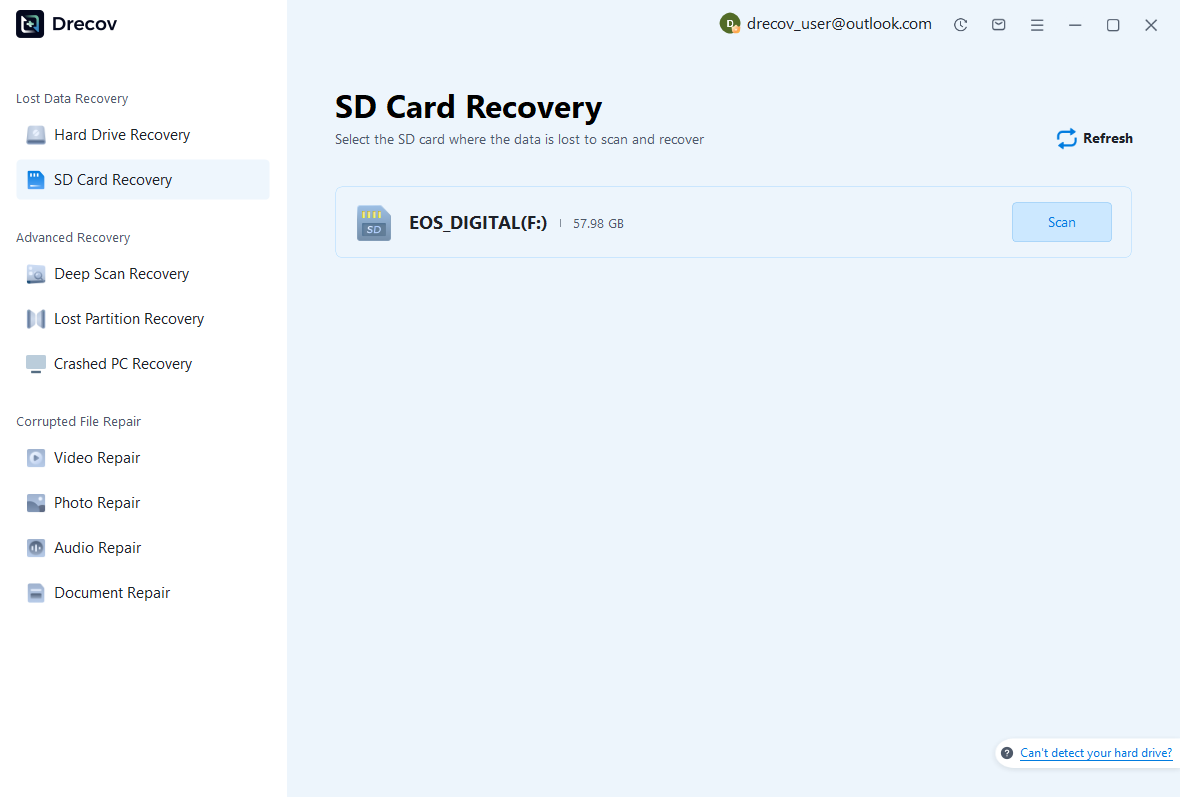
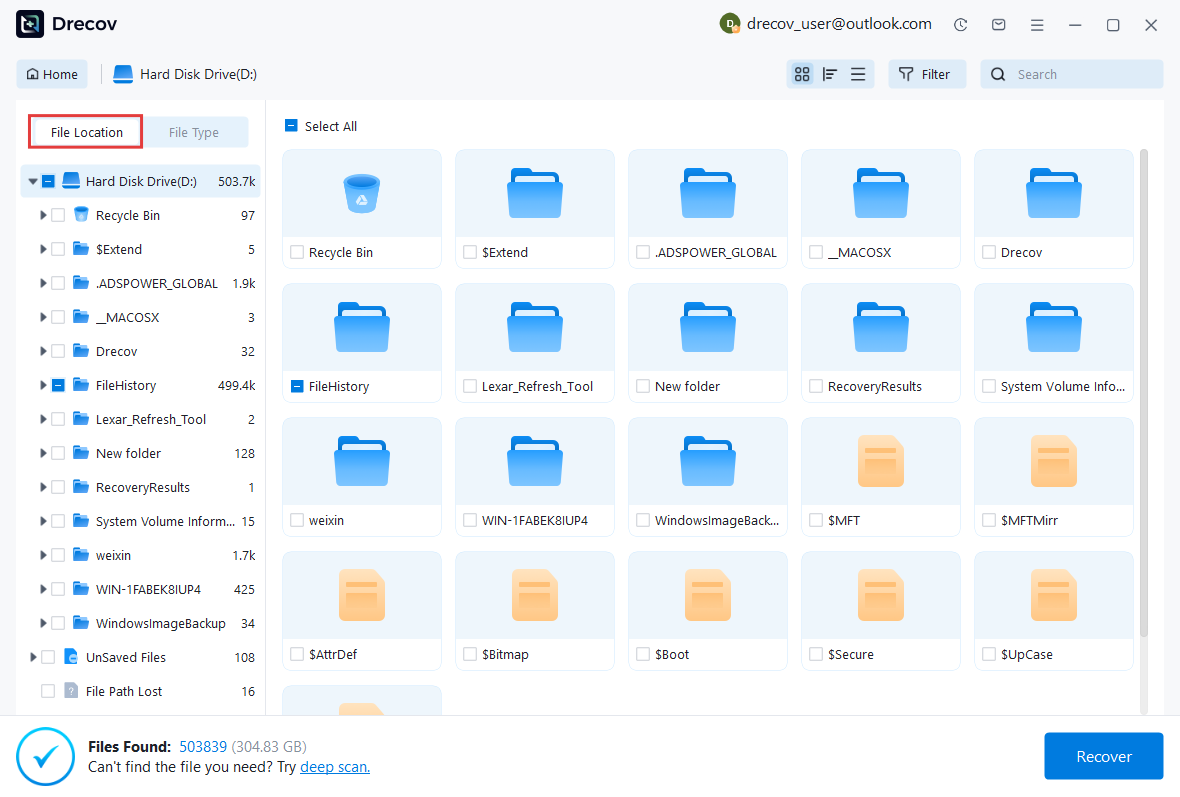
One of the simplest ways to perform NVMe SSD data recovery is by using professional recovery software. Pandaoffice Drecov can scan inaccessible or deleted files from supported SSD devices and recover various file types.
The recovery process usually involves:
- Installing the software on a separate drive
- Selecting the affected nvme ssd
- Running a deep scan
- Previewing recoverable files
- Saving recovered data to another storage device
This method is particularly useful for accidental deletion, formatted partitions, or corrupted file systems.
Test Environment:
- Windows 11 Pro
- PCIe Gen4 2TB SSD
- 32GB RAM
- NTFS partition
The software can identify photos, videos, office files, and archives even after formatting in some cases. Users should avoid installing recovery software directly onto the affected SSD because this may overwrite recoverable sectors.

Why Choose PandaOffice Drecov Recovery Software?
PandaOffice Drecov offers a fast, secure, and user-friendly solution for recovering lost files across multiple scenarios. Whether you need email recovery, ZIP File Recovery, format data recovery, or help to recover deleted drafts Outlook, the software provides reliable recovery performance for both personal and business users.
PandaOffice Drecov supports recovery from formatted hard drives, SSDs, USB drives, SD cards, and external storage devices. Its advanced scanning engine can locate deleted archives, damaged ZIP files, lost Outlook drafts, and accidentally removed documents with high accuracy. For users searching for how to find deleted messages in Teams, PandaOffice Drecov can also help recover exported chat files, attachments, and related local cache data when available.
Key advantages include:
- Deep scan technology for complex data loss situations
- Support for emails, archives, videos, photos, and office documents
- Recovery from accidental deletion, formatting, corruption, and system crashes
- Easy preview before restoring files
- Compatible with Windows and multiple storage devices
Unlike complicated enterprise recovery tools, PandaOffice Drecov keeps the recovery process simple. Users can scan, preview, and restore files in just a few steps without technical expertise.
Whether you are dealing with lost Outlook drafts, corrupted ZIP archives, formatted drives, or missing communication data, PandaOffice Drecov provides an efficient and practical recovery experience designed to minimize downtime and protect important files.
⚠️Warning: Always save recovered files to a different storage location.
Using a reliable recovery tool early increases the possibility of restoring important information successfully.
Method 2 – Restore Data From Backup
If backups are available, restoring files is usually the safest and fastest solution. Windows File History, cloud synchronization, and external backup drives can help recover lost data without scanning the SSD.
To restore files in Windows:
- Open Control Panel
- Select File History
- Browse previous versions
- Restore the required files
Cloud services such as OneDrive or Google Drive may also contain synchronized copies of deleted documents.
Test Environment:
- Windows 10 Pro
- External backup HDD
- NVMe SSD primary storage
Backups protect against hardware failure, malware attacks, and accidental formatting. Many users overlook backup planning until data loss occurs, which makes prevention strategies extremely important.
Automated backup schedules are highly recommended for professional workloads and gaming systems with large data collections.
Method 3 – Recover Lost Partitions Through CMD
Command Prompt utilities can sometimes repair damaged partition information on an nvme ssd drive. This method may help when partitions disappear due to corruption rather than physical failure.
Users can try DiskPart:
- Open Command Prompt as administrator
- Type
diskpart - Enter
list disk - Select the affected SSD
- Use repair commands carefully
CHKDSK may also repair file system issues:chkdsk X: /f /r
Test Environment:
- Windows 11
- 1TB PCIe NVMe SSD
- Corrupted partition table scenario
These commands may restore access to damaged volumes without requiring advanced software.
⚠️Warning: Incorrect DiskPart commands can erase partitions permanently.
Because command-line tools modify disk structures directly, inexperienced users should proceed carefully.
Method 4 – Repair Corrupted NVMe SSD Drive Errors
Sometimes the SSD itself remains healthy, but Windows cannot read the file system correctly. Updating drivers and firmware may restore accessibility.
Users can try:
- Updating motherboard chipset drivers
- Installing the latest NVMe controller drivers
- Updating SSD firmware
- Reseating the SSD physically
- Checking BIOS detection
If overheating caused instability, adding heatsinks or improving airflow may resolve recurring issues.
Test Environment:
- PCIe Gen4 desktop setup
- Windows 11
- 2TB gaming SSD
Firmware updates often improve compatibility and stability, especially for newly released hardware.
When the SSD becomes completely undetectable in BIOS, professional hardware repair services may be required.
Best Practices to Protect an NVMe SSD Drive
Monitor SSD Health Regularly
Monitoring SSD health can identify early warning signs before total failure occurs. Most manufacturers provide monitoring software capable of displaying temperature, remaining lifespan, and error statistics.
Users should pay attention to:
- High operating temperatures
- Sudden speed drops
- Read/write errors
- SMART warnings
An ssd nvme operating at consistently high temperatures may fail prematurely. Monitoring tools allow users to respond before critical damage develops.
Test Environment:
- Windows desktop
- PCIe Gen4 SSD
- Manufacturer monitoring software
Regular health checks are especially important for gaming PCs and workstations performing heavy storage operations.
Avoid Sudden Power Loss
Unexpected shutdowns are dangerous for flash storage devices. When power fails during write operations, important metadata can become corrupted.
Using a UPS is strongly recommended for desktop computers. Laptop users should maintain healthy batteries and avoid forcing shutdowns whenever possible.
Proper shutdown procedures help maintain firmware integrity and reduce corruption risks on an nvme ssd drive.
Test Environment:
- Desktop workstation
- UPS battery backup
- Windows 11
Power stability plays a major role in long-term SSD reliability.
Maintain Proper Cooling for SSD NVMe Devices
High-performance NVMe drives can generate significant heat during gaming, rendering, or file transfers. Sustained temperatures above safe limits may throttle performance or damage NAND memory.
Cooling solutions include:
- Motherboard heatsinks
- Improved case airflow
- Thermal pads
- Dedicated SSD cooling accessories
Test Environment:
- Gaming desktop
- PCIe Gen5 SSD
- Liquid cooling system
Maintaining lower temperatures helps extend lifespan and preserve stable operation for high-speed storage devices.
Create Automated Backups
Backups remain the most effective defense against permanent data loss. Users should create automatic backup schedules for documents, media, and project files.
Recommended backup options:
- External drives
- NAS systems
- Cloud storage
- System image backups
Even the best nvme ssd can fail unexpectedly due to hardware defects or firmware corruption.
Test Environment:
- Windows 11
- NAS backup system
- 1TB NVMe SSD
Automated backup systems reduce the risk of human error and improve recovery readiness.
Frequently Asked Questions About NVMe SSD Recovery
Can Data Be Recovered From a Dead NVMe SSD?
In some cases, yes. If the failure involves firmware corruption or controller problems, professional recovery labs may still extract data directly from NAND chips. However, recovery success depends on the severity of damage.
When the SSD experiences electrical failure, immediate power removal is recommended to prevent further damage.
Does TRIM Affect NVMe SSD Data Recovery?
Yes. TRIM improves SSD performance by clearing deleted data blocks, but this process also reduces the likelihood of successful file restoration.
If TRIM has already processed deleted sectors, recovery software may not find usable data.
What Is the Best NVMe SSD for Reliability?
Reliability depends on firmware quality, NAND type, cooling, and workload usage. Enterprise-grade drives generally offer better endurance than budget consumer models.
Users should choose reputable manufacturers and maintain proper cooling for optimal longevity.
Final Thoughts on Recovering Files From NVMe SSDs
Key Takeaways for Successful Recovery
Modern NVMe technology delivers exceptional speed and responsiveness, but data loss can still occur because of deletion, formatting, firmware issues, malware, or hardware failure.
Successful NVMe SSD data recovery often depends on quick action. Stopping drive activity immediately after data loss improves the chances of restoring files before overwriting occurs.
Professional recovery software, backups, firmware maintenance, and proper cooling all play important roles in protecting important data stored on an nvme ssd drive.
While no storage device is completely immune to failure, good backup habits and preventive maintenance can significantly reduce risks and help users recover faster when unexpected problems arise.






