







Mastering the art of system startup is a fundamental skill for anyone looking to repair a PC, install a new operating system, or recover lost data. Whether you are facing a “Blue Screen of Death” or simply want to try a new Linux distribution, knowing how to boot from a USB drive is your golden ticket to system control. In this extensive guide, we will explore every technical layer—from basic BIOS settings to advanced data recovery techniques using professional tools like PandaOffice Drecov.
What Does Booting from a USB Drive Mean?
Booting from a USB drive simply means starting your computer using software stored on a USB device instead of the internal hard drive or SSD. Think of your computer like a house and the operating system as the main entrance—normally, it uses the front door (your internal drive). Booting from USB is like entering through a side door with a completely different setup waiting inside.
When your computer powers on, it looks for instructions on where to load the operating system. By default, it chooses the internal drive. But when you boot from USB, you’re overriding that default behavior and telling your system to prioritize the USB device instead. This process is controlled through firmware systems like BIOS or UEFI, which act as the traffic controller during startup.
Why Booting from USB Is Important
Booting from USB is incredibly useful, especially when your main system fails or when you want to install a new operating system. It gives you flexibility and control over your computer in ways that a standard startup simply cannot. If your Windows installation becomes corrupted, a bootable USB is often the only way to access recovery environment tools.
Common Use Cases
Here are a few real-world situations where booting from USB becomes essential:
- Installing or reinstalling an operating system: Using the Windows Media Creation Tool to refresh your PC.
- Running antivirus or recovery tools: Scanning for malware outside of the infected OS environment.
- Testing Linux without installing it: Using a “Live” USB to explore Ubuntu or Fedora.
- Updating firmware or BIOS: Some motherboard manufacturers require a USB flash drive to flash the latest BIOS version.
- Data Recovery: When a computer won’t start, booting from a specialized recovery USB allows you to rescue files before formatting.
Requirements Before You Start
Before jumping into the process, you need a few things ready. Skipping this step is like trying to bake a cake without ingredients—you’ll end up frustrated. You should ensure your USB drive has at least 8GB of space and that any existing data on it is backed up, as the creation process will wipe the drive.
Bootable USB Explained
Not every USB drive can boot a computer. It must be a bootable USB, meaning it contains special files and a bootloader that your system can recognize during startup. Simply copying files onto a USB won’t work—you need to create it using tools like Rufus or official media creation tools. A properly prepared USB drive includes partition structures and boot files that make it readable by BIOS or UEFI firmware. Without this, your computer won’t even recognize it as a boot option.
System Compatibility (BIOS vs UEFI)
Modern computers use UEFI (Unified Extensible Firmware Interface), while older systems (pre-2012) rely on BIOS (Basic Input/Output System). UEFI is faster, more secure, and supports advanced features like Secure Boot.
The catch is that your USB must match your system’s boot mode. If your PC is set to UEFI, your USB should support UEFI booting (usually formatted as FAT32). If you are using an older machine, you might need to enable Legacy Boot or CSM (Compatibility Support Module).
How do I boot from USB?
If you are asking yourself, “how do I boot from USB?” the answer usually lies in the “Boot Menu.” This is the fastest method because it doesn’t require changing permanent system settings.
Step 1 – Insert the USB Drive
Plug your bootable USB into your computer. It’s best to use a direct port on the motherboard (usually at the back for desktops) rather than a USB hub, as this ensures better detection reliability. Ensure the computer is completely powered off before starting.
Step 2 – Access Boot Menu
Restart your computer and immediately press the boot menu key repeatedly. Timing matters here—if you miss it, your system will boot normally and you’ll have to try again.
Common Boot Menu Keys by Manufacturer:
- | Brand | Key(s) |
- | :— | :— |
- | HP | F9 or Esc |
- | Dell | F12 |
- | Lenovo | F12 or Fn + F12 (or the Novo button) |
- | ASUS | F8 or Esc |
- | Acer | F12 or F2 |
- | MSI | F11 |
Step 3 – Select USB Device
Once the boot menu appears, you’ll see a list of available devices. Use the arrow keys to look for your USB drive—it may be labeled as USB HDD, Removable Device, or UEFI: [USB Brand Name]. Select it and press Enter. If everything is set up correctly, your system will start from the USB drive.
Create a Windows 11 Bootable USB
To perform a clean installation or a deep system repair, you must first create a Windows 11 bootable USB. This is a standard procedure for IT professionals and home users alike.
- Step 1: Download the Windows 11 Installation Media from the official Microsoft website.
- Step 2: Run the
.exefile and accept the license terms. - Step 3: Select “Create installation media (USB flash drive, DVD, or ISO file) for another PC” and click Next.
- Step 4: Choose your language and edition.
- Step 5: Select USB flash drive and pick your drive from the list.
- Step 6: Wait for the process to complete. The tool will download the files and format the USB to be bootable.
How to Boot from USB Using BIOS/UEFI Settings
If the temporary boot menu method doesn’t work, you can manually change the boot order in the BIOS/UEFI firmware settings. This makes the USB the permanent first choice for as long as it is plugged in.
Entering BIOS or UEFI
Restart your PC and press the BIOS key (often F2, DEL, or F10). Alternatively, if you can still get into Windows, go to Settings > System > Recovery > Advanced Startup > Restart Now. Then, select Troubleshoot > Advanced Options > UEFI Firmware Settings.
Changing Boot Order
Inside the BIOS/UEFI interface, navigate to the Boot or Startup tab. Here, you’ll see a list of devices in order of priority. Use the + or - keys (or follow the on-screen instructions) to move your USB device to the top of the list. This tells your computer to check the USB first before attempting to load the Windows Boot Manager on your internal drive.
Saving and Restarting
Navigate to the Exit tab, select Save Changes and Exit (usually the F10 key), and confirm. Your system will restart and attempt to boot from the USB automatically.
Using PandaOffice Drecov for Data Recovery
When your system fails to boot and you need to rescue files, PandaOffice Drecov is a premier professional solution. It is designed to handle complex data loss scenarios, including corrupted partitions and unbootable systems.
⚠ Warning: Install it on a drive different from the one where your data was lost to prevent overwriting.
How to Recover Data via USB with PandaOffice Drecov
- Step 1: Create the Recovery Media. On a working computer, install the PandaOffice Drecov software. Select the “Bootable Media” option to turn your USB drive into a powerful recovery tool.
- Step 2: Boot the Target PC. Insert the Drecov USB into the crashed computer. Follow the steps mentioned earlier to boot from the USB drive.
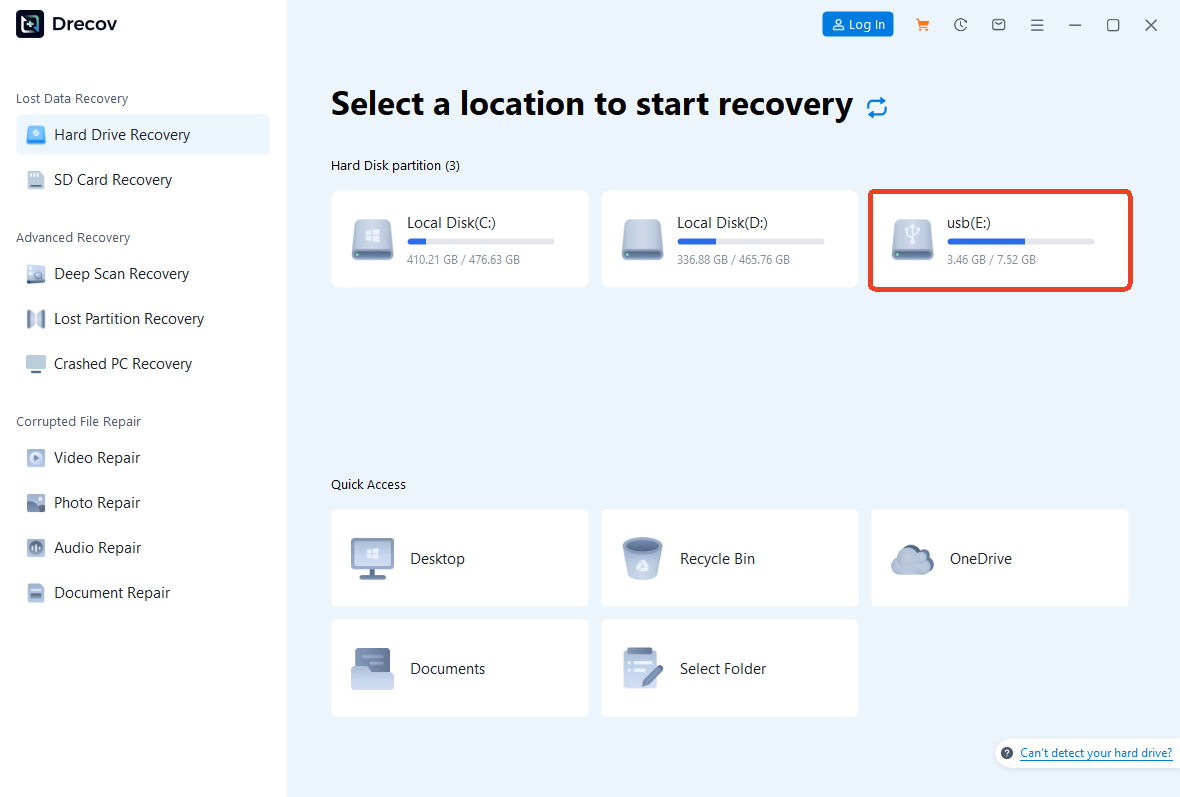
- Step 3: Scan for Lost Files. Once the Drecov environment loads, select the drive or partition where your data was stored. Click Scan to begin the deep analysis.
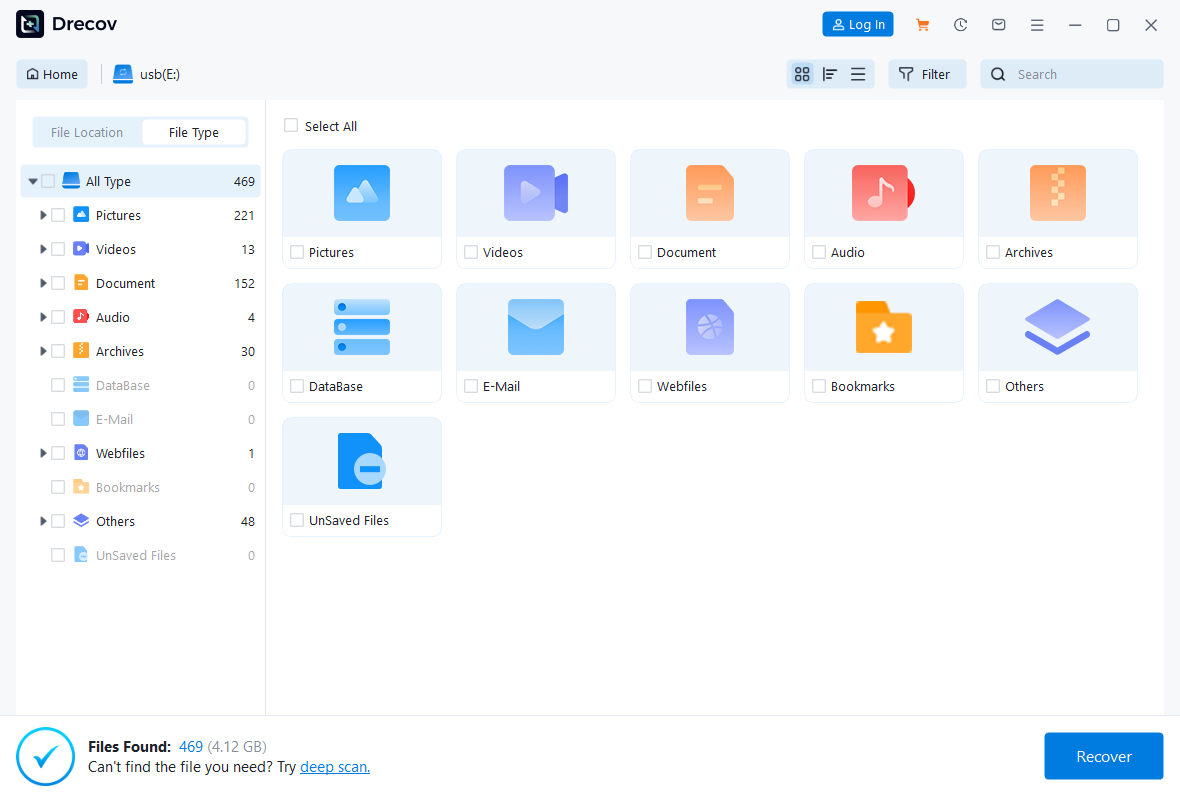
- Step 4: Preview and Recover. After the scan, browse the found files. Drecov allows you to preview images and documents before recovery.

- Step 5: Save to a Safe Location. Select the files you want to keep and click Recover.
Warning: Always save recovered files to an external drive or a different USB, never back onto the same corrupted drive you are scanning.
If you encounter hardware-level issues, check out our USB ports not working ultimate troubleshooting guide. If your goal was a fresh start, learn how to reinstall Windows 10 from USB to fix errors. And for those who accidentally wiped their drive during this process, here is our guide on how to recover deleted files from a USB drive.
Booting from USB on Mac
Apple computers handle USB booting differently than PCs, depending on the processor type.
Intel Macs
- Insert the USB drive.
- Restart the Mac and immediately press and hold the Option (⌥) key.
- When the Startup Manager icons appear, select the USB drive and press Enter.
Apple Silicon Macs (M1, M2, M3)
- Shut down the Mac completely.
- Press and hold the Power button until “Loading startup options” appears.
- Select the Options icon, then choose your USB drive from the list.
BIOS vs UEFI: What’s the Difference?
Understanding the firmware is key to troubleshooting why a USB won’t boot.
| Feature | BIOS (Legacy) | UEFI (Modern) |
| Speed | Slower (Serial initialization) | Faster (Parallel initialization) |
| Interface | Text-based (Blue/Grey) | Graphical (Supports mouse) |
| Security | Minimal | Supports Secure Boot |
| Drive Support | MBR (Max 2TB) | GPT (Supports >2TB) |
Troubleshooting USB Boot Issues
Even if you follow all steps, things can still go wrong. Let’s break down common issues.
USB Not Showing Up
If your USB doesn’t appear in the boot menu:
- Try a different USB port (preferably USB 2.0 for older machines).
- Recreate the bootable USB using a different tool like Rufus.
- Ensure USB Boot is enabled in the BIOS security settings.
Secure Boot Problems
Secure Boot is a security standard developed by the PC industry to help make sure that a device boots using only software that is trusted by the Original Equipment Manufacturer (OEM). However, it often blocks third-party bootable USBs (like Linux or older recovery tools). Disabling Secure Boot in the BIOS/UEFI settings often solves the problem immediately.
Incorrect Bootable Media
If your USB was created as “GPT/UEFI” but you are trying to boot an old “MBR/BIOS” computer, it will fail. Ensure the partition scheme matches the target hardware.
Tips for Successful USB Booting
To ensure a smooth experience, follow these professional best practices:
- Always back up your data before making changes to boot orders or partitions.
- Use high-quality USB 3.0/3.1 drives for faster load times and better reliability.
- Check for “Fast Boot” settings in Windows. Sometimes “Fast Startup” prevents the computer from “truly” shutting down, making it hard to catch the BIOS key. Perform a “Restart” instead of a “Shut down” to ensure a full hardware reset.
- Disconnect other peripherals like external hard drives or printers during the boot process to avoid confusion in the boot menu.
Boot from a USB Drive FAQs
1. Why won’t my computer boot from USB?
It’s usually due to an incorrect boot order in BIOS, a USB drive that wasn’t made “bootable” correctly, or Secure Boot blocking the device.
2. What key do I press to boot from USB?
It varies, but F12, F2, DEL, and ESC are the most common. Check your splash screen during startup for the “Boot Menu” or “Setup” prompt.
3. Can I boot from USB without BIOS access?
Yes, in Windows 10 and 11, you can use the Advanced Startup options to trigger a USB boot without manually tapping a key during startup.
4. Does booting from USB delete my files?
No. Simply booting into a USB environment doesn’t touch your internal data. However, if you use that USB to format your drive or install a new OS, your files will be deleted.
5. What format should a bootable USB be?
For modern UEFI systems, FAT32 is the standard. For older BIOS systems or specific large installers, NTFS might be used, but FAT32 has the highest compatibility.
Conclusion
Booting from a USB drive might seem intimidating at first, but once you break it down, it’s a logical process. By understanding how your hardware interacts with the USB device and using the right tools like PandaOffice Drecov, you can handle almost any system emergency. Whether you are performing a clean install or rescuing precious family photos from a crashed laptop, the ability to boot from external media is one of the most powerful skills a computer user can have.






