







Navigating the world of external storage can often feel like deciphering a complex code, especially when you are jumping between different operating systems. If you have ever plugged a thumb drive into your MacBook only to find it won’t work on your smart TV or a Windows PC, you’ve likely encountered a file system mismatch. Learning how to format usb to fat32 on mac is one of the most essential skills for any user who values flexibility and device interoperability.
In this extensive guide, we will explore the technical nuances of the FAT32 file system, provide detailed walkthroughs for various formatting methods on macOS and Windows, and—perhaps most importantly—discuss how to protect your files using professional tools like PandaOffice Drecov. Whether you are a creative professional or a casual user, mastering the art of the format ensures your data remains accessible wherever you go.
Understanding FAT32 File System
What Is FAT32 and Why It Matters
If you’ve ever tried to use a USB drive across multiple devices—say, switching between a Mac, Windows PC, gaming console, or even a smart TV—you’ve likely run into compatibility issues. That’s exactly where FAT32 steps in like a universal translator. FAT32 (File Allocation Table 32) is one of the oldest yet most widely supported file systems, making it incredibly useful even today.
Think of FAT32 as a common language that almost every device understands. Whether you’re plugging your USB into a MacBook, a Windows laptop, or even a PlayStation, FAT32 ensures smooth communication. It doesn’t come with fancy modern features, but what it lacks in sophistication, it makes up for in reliability and compatibility.
On macOS, knowing how to format usb to fat32 on mac is often necessary when you want maximum flexibility. Unlike Apple’s default formats like APFS or Mac OS Extended, FAT32 ensures your drive won’t be “rejected” by other systems. This makes it ideal for sharing files, transferring media, or using the drive with embedded systems like routers or car stereos.
Advantages and Limitations of FAT32
Like any tool, FAT32 comes with strengths and weaknesses. On the plus side, its biggest advantage is universal compatibility. Almost every operating system and device supports FAT32 without requiring extra drivers or software. It’s lightweight, efficient, and simple to use.
However, there’s a catch. FAT32 has a maximum file size limit of 4GB per file. That means you can’t store large files like high-resolution movies or big software packages on it. Additionally, it lacks modern features like file permissions, encryption, and journaling, which are available in newer file systems. If you are wondering how to format usb to fat32 on mac for a 128GB drive, you can certainly do it, but you still won’t be able to put a single 5GB file on that drive.
Why You Might Need FAT32 on Mac
Cross-Platform Compatibility Explained
Let’s say you’re working on a Mac but need to share files with someone using Windows. Or maybe you’re transferring files to a gaming console or a camera. Not all devices can read Apple-specific file systems, which can create frustrating roadblocks.
FAT32 eliminates those barriers. It acts like a bridge connecting different ecosystems. You don’t have to worry about whether the receiving device will recognize your USB drive—it just works. That’s why the process of how to format usb to fat32 on mac remains relevant despite the format being decades old.
For example, many gaming consoles still require USB drives to be formatted in FAT32 for firmware updates or media playback. Similarly, some smart TVs and car infotainment systems only recognize FAT32 drives. In these cases, formatting your USB on a Mac becomes essential.
Common Use Cases for FAT32 USB Drives
You might be wondering, “When exactly should I use FAT32?” The answer depends on your needs, but here are some common scenarios:
- Sharing files between Mac and Windows computers.
- Using USB drives with gaming consoles like PlayStation or Xbox.
- Transferring media files to TVs or projectors.
- Updating firmware on devices like routers or cameras.
In all these cases, FAT32 acts as a reliable middle ground. It’s not the most advanced option, but it’s often the safest choice when compatibility matters more than features.
Things to Know Before Formatting
Backup Your Data First
Before you jump into the steps for how to format usb to fat32 on mac, there’s one golden rule you should never ignore: back up your data. Formatting erases everything on the drive—no exceptions. It’s like wiping a whiteboard clean, so anything you haven’t saved elsewhere will be gone permanently.
Take a few minutes to copy important files to your Mac or another storage device. It might feel like an extra step, but it can save you from a major headache later. While tools like PandaOffice Drecov can help if you make a mistake, prevention is always the best strategy.
File Size Limitations
As mentioned, the 4GB limit is a hard ceiling. If you are a video editor working with 4K footage, FAT32 might not be the right choice. Before you learn how to format usb on mac, verify that your typical use case involves files smaller than 4GB. If you need to move larger files, you should look into exFAT, which offers similar compatibility but without the file size restriction.
Method 1 – Format USB to FAT32 Using Disk Utility
Step-by-Step Guide Using Disk Utility
The easiest way to learn how to format usb to fat32 on mac is by using Disk Utility, a built-in tool that comes with macOS. It’s user-friendly and doesn’t require any technical expertise.
- Step 1: Insert your USB drive into your Mac’s USB port.
- Step 2: Open Disk Utility. You can find it by pressing
Command + Spaceand typing “Disk Utility,” or by navigating to Applications > Utilities. - Step 3: Select your USB drive from the sidebar on the left. Warning: Ensure you select the actual drive and not just a partition to ensure the scheme is applied correctly.
- Step 4: Click the Erase button located at the top of the window.
- Step 5: Choose a name for your USB drive in the name field.
- Step 6: Select MS-DOS (FAT) from the Format dropdown menu.
- Step 7: Choose Master Boot Record (MBR) as the Scheme.
- Step 8: Click Erase to begin the formatting process.
Within seconds, your USB drive will be formatted to FAT32 and ready to use. This is the most common answer for users searching for how to format usb on mac.
Choosing the Correct Format Option
Here’s where many users get confused. On macOS, FAT32 is labeled as MS-DOS (FAT). Don’t let the name throw you off—it’s the same thing for the purposes of a USB drive. Selecting the correct scheme (MBR) is also important, especially if you plan to use the USB with non-Mac devices. Choosing a “GUID Partition Map” can sometimes cause older Windows machines or stereos to fail to read the drive.
Method 2 – Format USB to FAT32 Using Terminal
Step-by-Step Terminal Commands
If you prefer a more advanced approach or if Disk Utility is acting up, you can use Terminal to learn how to format usb to fat32 on mac. This method gives you more control but requires careful execution.
- Step 1: Open Terminal from Applications > Utilities.
- Step 2: Type the following command to see all connected drives:
diskutil list. - Step 3: Identify your USB drive. Look for the size and name to identify the correct identifier, such as
/dev/disk2. Warning: Be extremely careful here; selecting the wrong disk ID could erase your Mac’s hard drive. - Step 4: Run the following command:
diskutil eraseDisk FAT32 USB_NAME MBRFormat /dev/diskX(ReplaceUSB_NAMEwith your preferred name anddiskXwith your specific disk number, e.g.,/dev/disk2). - Step 5: Press Enter and wait for the process to complete.
Verifying the USB Format
After the Terminal finishes its task, you can verify the file system by selecting the USB drive in Finder, right-clicking, and choosing Get Info. It should show MS-DOS (FAT32) as the format. This confirms you have successfully mastered how to format usb to fat32 on mac using the command line.
Alternative: Formatting USB on Windows
Sometimes you might have access to a Windows PC and find it easier to format there. Windows also provides multiple ways to achieve a FAT32 format, though it famously restricts formatting drives larger than 32GB to FAT32 through the standard GUI.
Using File Explorer (For Drives 32GB or Smaller)
- Step 1: Plug the USB into your Windows PC.
- Step 2: Open This PC and right-click your USB drive.
- Step 3: Select Format.
- Step 4: Choose FAT32 from the File System dropdown.
- Step 5: Click Start.
Using Command Prompt (For Larger Drives)
If your drive is 64GB or 128GB, Windows won’t show FAT32 in the dropdown. You must use the command line:
- Step 1: Open Command Prompt as Administrator.
- Step 2: Type
format /FS:FAT32 X:(ReplaceXwith your drive letter). - Step 3: Press Enter. Note that this can take a long time for large drives.
Data Recovery: Using PandaOffice Drecov
What happens if you follow the guide on how to format usb to fat32 but realize you forgot to back up your photos? This is where professional data recovery software becomes a lifesaver. PandaOffice Drecov is a powerful tool designed to retrieve lost files from formatted, corrupted, or inaccessible drives.
⚠ Warning: Install it on a drive different from the one where your data was lost to prevent overwriting.
How to Recover Data with PandaOffice Drecov
- Step 1: Connect the Drive. Plug in the USB drive you just formatted.
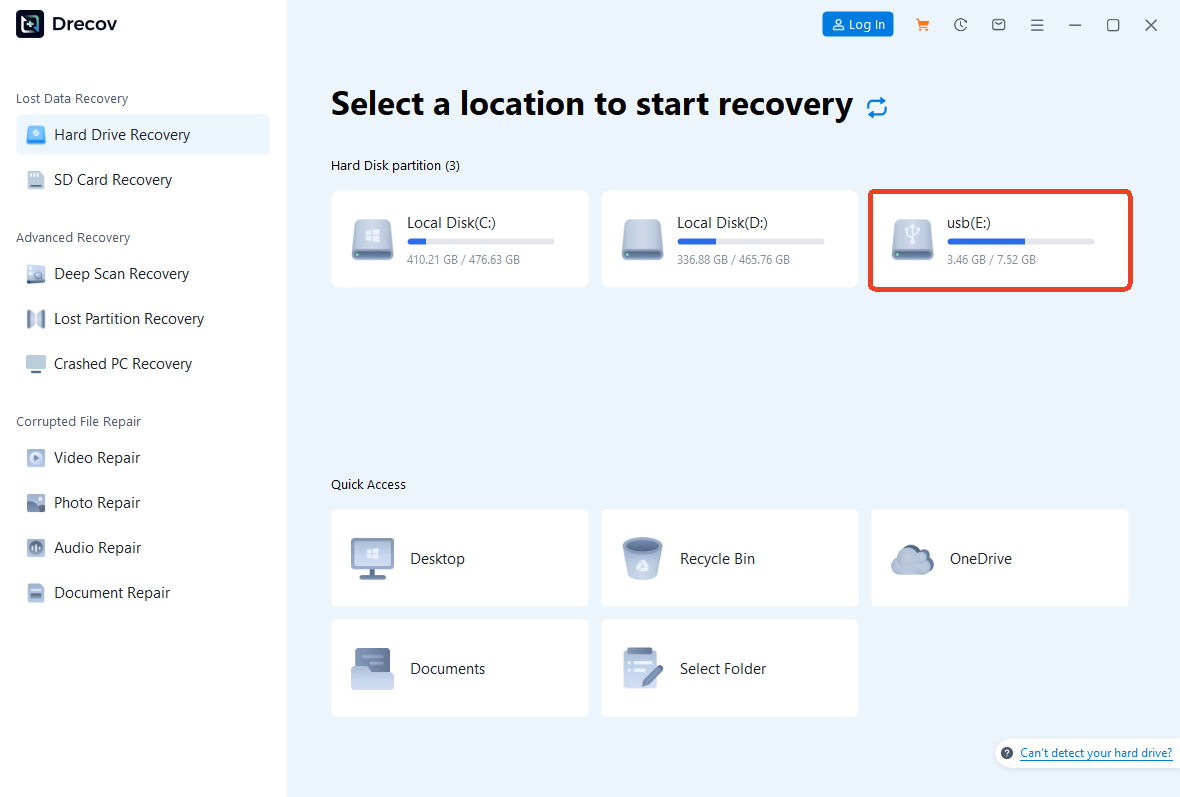
- Step 2: Select the Location. Launch PandaOffice Drecov and select the formatted USB drive from the list of available storage devices.
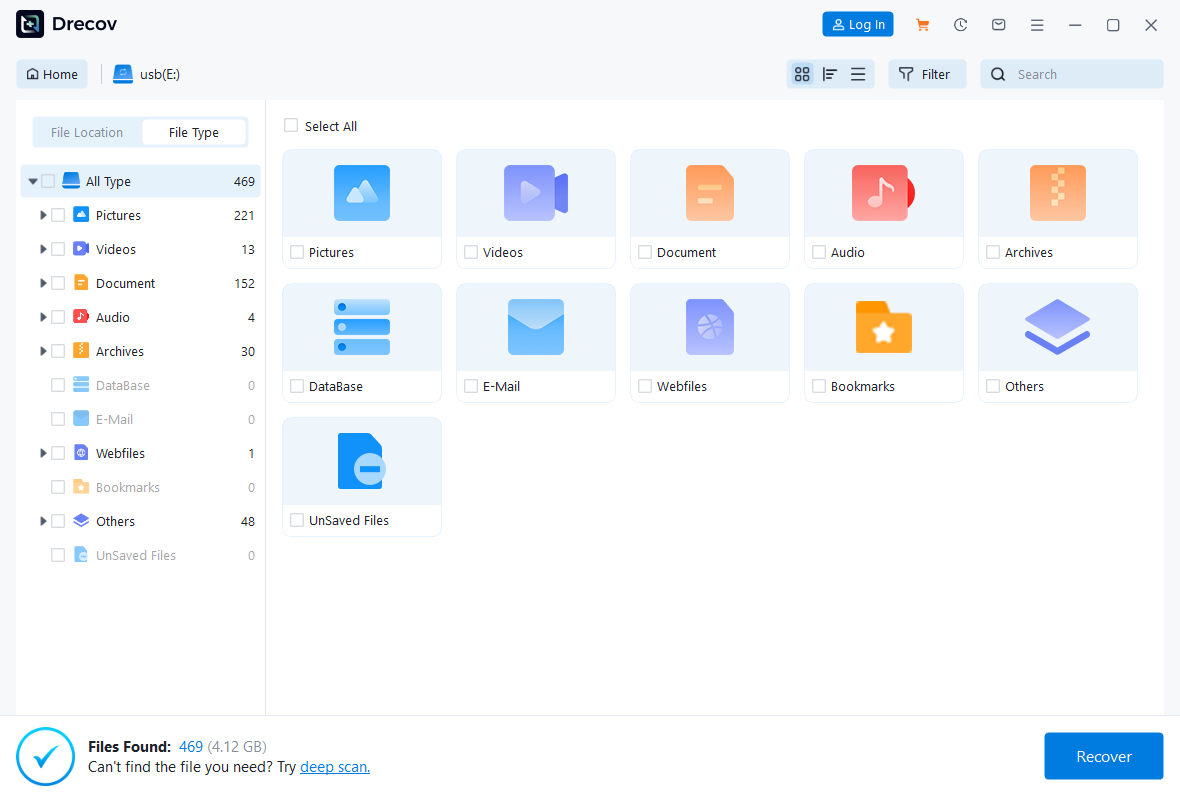
- Step 3: Scan for Files. Click the Scan button. The software will perform a deep scan to find traces of your old files even after a format.

- Step 4: Preview and Recover. Once the scan is complete, browse the files. Drecov allows you to preview images and documents before recovery. Select the files you want and click Recover to save them to your Mac’s internal drive (never save them back to the same USB during recovery).
Warning Prompt: If you realize you’ve lost data, stop using the USB immediately. Every new file you save to the drive increases the risk of overwriting the data you are trying to recover.
After completing these recovery steps, you may find these guides helpful for other devices:
- Recover data from formatted SD card
- Format a hard drive on Windows 11
- Fast ways to format USB to FAT32
Troubleshooting Common Issues
USB Not Showing Up
Sometimes your USB drive might not appear in Disk Utility. This can happen due to connection issues or hardware problems.
- Check the physical connection: Try switching USB ports or using a different adapter/hub.
- Restart your Mac: Occasionally, the background process
diskarbitrationdhangs and needs a refresh. - Check System Information: Go to About This Mac > System Report > USB to see if the hardware is detected at all. If it’s not there, the drive might be physically dead.
Format Option Not Available
If you don’t see the FAT32 (MS-DOS) option, it could be due to the partition scheme. Ensure that when you click “Erase,” you set the Scheme to Master Boot Record. If the “Scheme” dropdown isn’t visible, go to the View menu in Disk Utility and select Show All Devices. Then, select the top-level drive entry rather than the volume underneath it. This is a crucial step in the how to format usb on mac workflow.
FAT32 vs Other File Systems
Choosing the right format depends on your hardware ecosystem. Here is a quick comparison to help you decide if you should stick with the how to format usb to fat32 on mac path or try something else.
FAT32 vs exFAT vs NTFS Comparison
| Feature | FAT32 | exFAT | NTFS |
| Compatibility | Very High (Universal) | High (Modern OS) | Limited on Mac (Read-only) |
| Max File Size | 4GB | Unlimited | Unlimited |
| Mac Support | Native Read/Write | Native Read/Write | Read-only (Needs 3rd party) |
| Best Use | Universal devices | Large files/Modern OS | Windows systems |
Tips to Maintain USB Performance
Safe Ejection and Usage Tips
Treat your USB drive like a delicate tool rather than a disposable gadget. Always eject it properly by dragging the icon to the Trash or clicking the eject symbol in Finder before unplugging. This prevents “cached” data from being lost and avoids file system corruption.
Avoid removing the drive while files are being transferred. Also, keep it away from extreme temperatures and physical damage. If you frequently move the drive between Mac and Windows, performing a quick “First Aid” in Disk Utility once a month can help catch minor directory errors before they become major problems.
Format USB to Fat32 FAQs
1. Can I format a USB larger than 32GB to FAT32 on Mac?
Yes, unlike Windows’ built-in GUI, macOS allows formatting drives larger than 32GB to FAT32 using both Disk Utility and Terminal without any artificial limits.
2. Is FAT32 safe for long-term storage?
It’s safe but not ideal. FAT32 lacks “journaling,” meaning if the power cuts out during a write, the file system is more likely to become corrupted compared to APFS or NTFS.
3. Why can’t I copy large files to FAT32 USB?
This is due to the inherent architectural limits of the file system. Even if you have 100GB of free space, a single file larger than 4GB cannot be written to a FAT32 partition.
4. What’s the best alternative to FAT32?
exFAT is the best alternative if you need to store large files while maintaining compatibility between Mac and Windows.
5. Will formatting remove viruses from a USB drive?
Yes, formatting wipes all data, including most malware and viruses stored on the partition. It is a standard procedure for cleaning an infected external drive.
Conclusion
Formatting a USB drive to FAT32 on a Mac is surprisingly simple once you know where to look. Whether you use Disk Utility for a quick setup or Terminal for more granular control, the process takes only a few minutes and unlocks a world of compatibility. The real key lies in understanding why you’re choosing FAT32 in the first place—it’s the “universal remote” of storage.
Always remember the importance of data safety. Before you execute any format command, ensure your files are backed up. If accidents happen, tools like PandaOffice Drecov are there to bridge the gap between loss and recovery. By following the steps outlined in this guide, you can confidently manage your external storage and ensure your data is always exactly where you need it to be.





