







In the modern digital landscape, portability is king. Whether you are a student moving a presentation from a home laptop to a classroom computer, or a professional carrying sensitive project files between offices, knowing how to download a file to a usb stick is a fundamental skill. However, beyond the simple act of moving data, there lies a complex world of file systems, hardware compatibility, and the ever-present risk of data loss.
This comprehensive guide explores every facet of file transfers. We will move from the simplest methods to advanced techniques, ensuring you never lose a byte of information. Along the way, we will also address what happens when things go wrong—and how tools like PandaOffice Drecov can save your digital life.
Understanding the Basics of USB Storage
Before we dive into the steps of how to download a file to a usb stick, we must understand the hardware. A USB stick, also known as a flash drive or thumb drive, uses flash memory to store data. Unlike a traditional hard drive, it has no moving parts, making it durable and fast.
When you prepare to learn how to download to a usb flash drive, you must ensure your drive is “mounted” correctly. This means the operating system recognizes the hardware and assigns it a drive letter (like D: or E:). If your computer does not see the drive, you cannot begin the download process.
Method 1: The Direct Download
The most common question users ask is how to download a file to a usb stick directly from the internet. Most web browsers (Chrome, Firefox, Edge) default to saving files in a “Downloads” folder on your internal hard drive. However, you can change this.
How to Download onto a USB Stick via Browser Settings
- Insert your USB stick into an available port on your computer.
- Open your web browser (e.g., Google Chrome).
- Navigate to Settings. In Chrome, click the three dots in the top right corner and select “Settings.”
- Find the Downloads section. On the left sidebar, click on “Downloads.”
- Change the Location. Click the “Change” button next to “Location.”
- Select your USB Drive. A window will pop up. Find your USB stick in the list (often under “This PC”), select it, and click “Select Folder.”
- Download your file. Now, any file you download from the web will go straight to your USB stick.
Key Point: Always remember to change this setting back to your default folder after you are done, or your future downloads might fail if the USB stick is unplugged!
Method 2: The “Drag and Drop” Technique
If the file is already on your computer and you want to know how to download a file to a usb stick by moving it from your desktop, this is the easiest way.
- Plug in the USB drive. Wait for the notification that the device is ready.
- Open File Explorer. Press
Win + Eon your keyboard to open a new window. - Locate your file. Navigate to the folder where your file currently lives.
- Locate your USB drive. In the left-hand sidebar of File Explorer, find your USB drive.
- Drag the file. Click and hold the file you want to move, then drag it over to the USB drive icon in the sidebar.
- Release the mouse. The computer will begin copying the file.
Method 3: Using the “Send To” Shortcut
Windows offers a hidden gem for those wondering how to download to a usb flash drive without opening multiple windows.
- Connect your device.
- Right-click the file you wish to transfer.
- Hover over “Send to”. A sub-menu will appear.
- Select your USB Drive. It will usually be listed at the bottom of this menu.
- Wait for completion. A small progress bar will show the transfer status.
Advanced Concepts: File Systems and Formatting
When you learn how to download a file to a usb stick, you might encounter an error saying “File is too large for the destination file system,” even if you have plenty of space. This usually happens because of the FAT32 limitation.
The FAT32 vs. NTFS Dilemma
- FAT32: Great for compatibility (works on TVs, cars, and old PCs) but cannot hold a single file larger than 4GB.
- NTFS: Best for Windows users; supports massive files.
- exFAT: The “Goldilocks” system; works on both Mac and PC and supports large files.
If you need to handle large video files, you should learn how to format USB to FAT32 or other systems to ensure your downloads never fail.
Data Safety: Why Downloads Fail
While learning how to download onto a usb stick, many users accidentally unplug their drive while the “Write” light is still blinking. This is a recipe for disaster.
The Importance of “Safe Eject”
When you transfer a file, the operating system often uses “write caching.” It tells you the transfer is done, but it is actually still finishing the physical write process in the background. If you yank the drive out:
- The file system can become corrupted.
- The USB stick might become unreadable.
- You might lose every file previously stored on the device.
Always right-click the USB icon in your system tray (near the clock) and select “Eject” before physically removing the drive.
When Disaster Strikes: Using PandaOffice Drecov
Sometimes, despite your best efforts in learning how to download a file to a usb stick, things go wrong. You might accidentally delete a file, or the drive might prompt you to “Format” it before use. This is where PandaOffice Drecov becomes essential. PandaOffice Drecov is a professional-grade data recovery tool designed for everyday users. It bypasses the standard file system to find “ghost” data that hasn’t been overwritten yet.
⚠ Warning: Install it on a drive different from the one where your data was lost to prevent overwriting.
How to Recover Files with PandaOffice Drecov
If you lost a file while trying to figure out how to download to a usb flash drive, follow these steps:
- 1. Connect the USB: Plug the problematic drive into your PC.
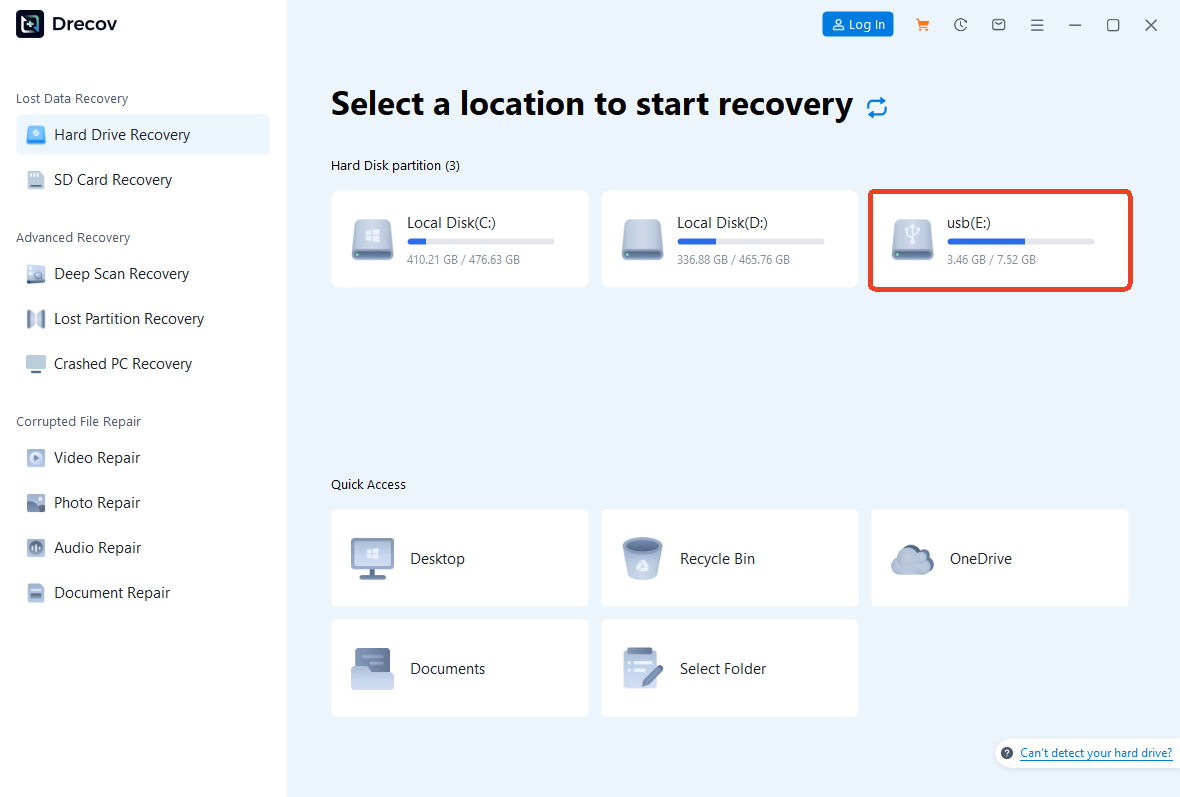
- 2. Select the Drive: Launch the software. You will see a list of available drives. Select your USB stick.
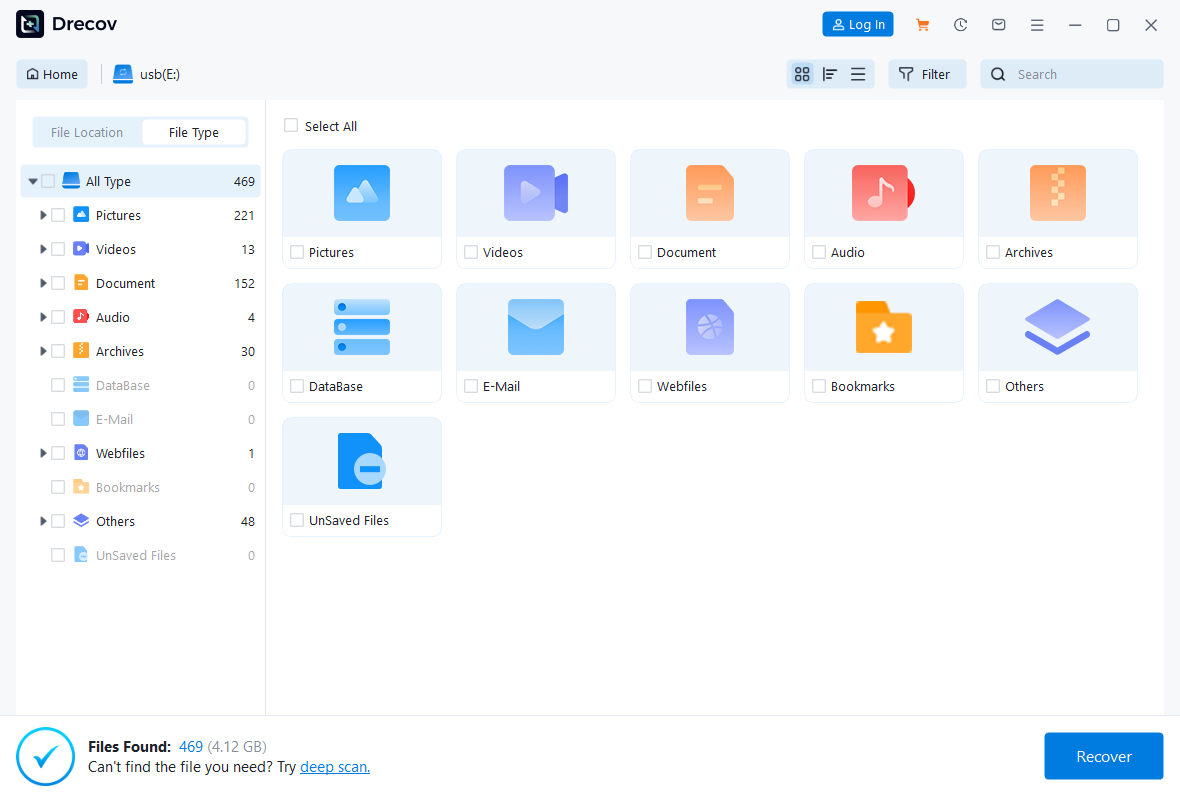
- 3. Scan for Files: Click the “Scan” button. The software will perform a deep dive into the memory cells.

- 4. Preview and Recover: Once the scan finishes, you can see a list of recoverable files. Check the ones you need and click “Recover.”
Warning: Never save the recovered files back onto the same USB stick during the recovery process. Save them to your desktop first to prevent overwriting the very data you are trying to save!
For a more detailed walkthrough, you can view the complete guide to recovering deleted files from USB.
How to Download a File to a USB Stick on macOS
Apple users have a slightly different workflow. If you are using a MacBook or iMac, here is how to download onto a usb stick:
- Plug in the USB. It will appear as an icon on your Desktop.
- Open Finder. Navigate to your file.
- Copy and Paste. You can use the shortcuts
Command + C(Copy) andCommand + V(Paste) into the USB window. - Drag to Trash to Eject. On Mac, you “eject” by dragging the USB icon into the Trash (which turns into an Eject symbol).
Common Errors and Troubleshooting
Even if you know how to download a file to a usb stick perfectly, hardware issues can occur.
“The Disk is Write-Protected”
Some USB sticks have a physical switch on the side. If this is toggled, you cannot download or save anything to it. Check for a tiny sliding lock.
“USB Device Not Recognized”
This often indicates a driver issue or a damaged port. Try these steps:
- Unplug the drive and try a different USB port.
- Restart your computer.
- Use the Device Manager to “Uninstall” the USB root hub and let Windows reinstall it automatically.
If these steps fail and you find your data is missing, check out these professional tips on how to recover deleted files from a USB drive.
Security Best Practices
When you are learning how to download a file to a usb stick, you should also consider security. USB drives are the number one way viruses spread between offline computers.
- Scan for Viruses: Always run an antivirus scan on a USB stick before opening files from it.
- Encryption: If you are downloading sensitive documents, use BitLocker (Windows) or FileVault (Mac) to password-protect the drive.
- Avoid Public Computers: Be extremely careful when downloading files to your USB stick at libraries or internet cafes, as these machines are often targets for “keyloggers.”
Quick Recap Table
| Method | Best For | Difficulty |
| Browser Change | Direct web downloads | Intermediate |
| Drag & Drop | Local files on PC | Very Easy |
| Send To Menu | Quick transfers | Easy |
| PandaOffice Drecov | Lost/Deleted data | Advanced Recovery |
Download a file to a USB Stick FAQs
1. Why does my computer say the file is too large when I try to download to a USB flash drive?
This is almost always due to the FAT32 file system limitation. Even if your USB stick has 64GB of free space, FAT32 cannot handle any single file larger than 4GB. To fix this, you must format the drive to NTFS or exFAT. You can learn more about this process in our guide on how to format USB to FAT32 or other systems.
2. Can I download a file to a USB stick directly from a smartphone?
Yes, but you need an OTG (On-The-Go) adapter. Once you plug the USB stick into your phone’s charging port via the adapter, you can use a “File Manager” app to move downloaded PDFs, photos, or documents directly onto the drive. This is a great way to free up space on your mobile device.
3. Is it safe to download files directly from the internet to a USB stick?
While it is convenient, it carries a small risk. If your internet connection drops or the browser crashes during the write process, it can cause “file system errors” on the USB. For very large files (over 2GB), it is often safer to download the file to your computer’s desktop first, then move it to the USB stick using the Drag and Drop method.
4. I followed the steps on how to download onto a USB stick, but now the file is gone. What happened?
If the file vanished, it likely wasn’t finished “writing” when the drive was unplugged, or the drive has a failing memory chip. Before giving up, use a tool like PandaOffice Drecov to scan the drive. Often, the data is still physically there, but the “index” that tells the computer where the file is has been corrupted. You can follow this complete guide to recovering deleted files from USB to get it back.
5. How do I make my USB stick “Read-Only” after downloading files to it?
If you want to share a file but prevent others from deleting it or adding viruses to your drive, some USB sticks have a physical Write-Protect switch. If yours doesn’t, you can right-click the folder on the USB, select Properties, and check the “Read-only” box. While this isn’t a foolproof security measure, it prevents accidental deletions.
Conclusion
Mastering how to download a file to a usb stick is about more than just clicking a button; it is about managing your digital assets with care. By understanding the browser settings, the file systems, and the safety protocols like “Safe Eject,” you ensure that your data remains intact and portable.
Should the worst happen and your files vanish, remember that tools like PandaOffice Drecov are designed to bridge the gap between technical failure and data security.
Check the download before removing the USB drive
A download is complete only after the browser reports completion and the file opens from the USB drive. Files ending in .crdownload, .part, or a similar temporary suffix may still be incomplete. Keep the original download tab available until the transfer finishes; if the connection drops, resume or restart the download rather than renaming the temporary file and assuming it is usable.
If a large file fails despite enough total free space, check the USB file system. FAT32 cannot store a single file of 4 GiB or larger. Back up existing files before considering another format, and confirm that the destination device supports that format. A download link for an ordinary PDF, ZIP, or video file is different from an app’s protected offline content: streaming-service downloads may remain encrypted and playable only inside the authorized app. Moving their cache files to USB does not make a portable movie. Finish by safely ejecting the drive and reopening a representative file after reconnecting it.
Further guidance: Google Chrome: download files; Microsoft: file systems






