







When USB devices keep disconnecting and reconnecting, do not start by formatting a drive or scanning it repeatedly. First note which device drops, whether its light or motor changes, and whether the problem follows a cable, port, hub, or computer. A storage device that vanishes mid-copy can lose access to important files. Stabilize the connection before attempting recovery; if it clicks, heats abnormally, or cannot stay detected, stop direct DIY scans.
Find out whether one device or the whole USB path is failing
Unplug nonessential USB equipment and observe what remains. If one flash drive drops while a keyboard and mouse stay connected, focus on that drive and its connection. If several unrelated devices drop together, the computer’s hub, port, power delivery, controller, or Windows configuration becomes more plausible. Write down the pattern rather than changing several settings at once. A short log of the time, port, and device can reveal whether the issue happens only after sleep or under heavy file copying.
Try one known-good port directly on the computer, not through a dock or unpowered hub. On a desktop, a rear motherboard port can help distinguish a front-panel connection from the computer itself. On a laptop, test another built-in port if available. For an external drive with a detachable cable, use a known-good compatible cable. Do not repeatedly unplug a drive that is struggling to read; the goal is one controlled comparison, not dozens of retries.
Observe the physical signs. A loose connector that moves inside the socket, a burning smell, clicking from a hard drive, or a device that appears with wildly changing capacity is a stop signal. Driver reinstalls and file-system commands do not repair those faults. If important data is involved, preserve the current state and consider imaging or professional recovery rather than experimenting with every software fix you find.
Use a two-computer comparison to narrow the cause
After a safe connection test, try the same device on another computer if the device remains physically stable. If it fails in the same way on both computers, suspect the device, its cable, or its own power supply. If it works normally elsewhere, turn back to the original computer’s USB port, hub, power plan, or drivers. This comparison does not prove a single root cause, but it prevents you from treating a failing flash drive as a Windows setting problem.
For an external storage device, compare behavior while idle and while copying a small, unimportant file. A drop only under load can point to inadequate power or a connection that fails when current demand rises. Do not use irreplaceable files as test material. If the drive is stable just long enough to browse, copy the most valuable files to another healthy device first. A full scan can wait until the storage connection is dependable.
Check the cable and any external power adapter against the device’s specifications. Avoid forcing a plug that does not fit and avoid improvised adapters. If a powered hub changes the behavior, note the result but do not call it a permanent repair before the device passes a longer, non-destructive read test. Likewise, a successful brief connection does not certify that the storage medium itself is healthy.
Check Windows only after the connection is stable
Look at Device Manager without erasing the drive
Right-click Start and open Device Manager. Expand Universal Serial Bus controllers and the relevant device category. Watch whether the entry disappears and returns when the connection drops. A warning icon or code may steer you toward a driver or controller issue. Record the exact device name and error before changing it. A storage volume may also disappear from Disk Management, but do not click Initialize or Format merely because Windows offers those options.
Compare sleep and power behavior
If drops happen mainly after sleep or after the device has been idle, power management becomes a reasonable branch. In Device Manager, a USB Root Hub or Generic USB Hub may expose a Power Management tab. Where present, test the option that lets Windows turn off the device to save power, then restart and observe the result. Not every hub exposes that tab. Microsoft documented one selective-suspend reconnect condition on older Windows versions; that does not mean selective suspend explains every modern USB problem.
Change one setting at a time and keep a note of its original value. If disabling a power-saving option does not help, restore it rather than leaving several unrelated changes behind. The existing article on USB selective suspend goes deeper into that one Windows setting; this article stays focused on finding which part of the connection path fails.
Update the relevant driver, not every driver on the PC
Check Windows Update and the computer or device maker’s official support page for a relevant USB or chipset driver. Confirm the exact model first. A driver update is appropriate when the fault follows the computer and hardware tests are stable; it is not a cure for clicking storage. After a change, use the same port and the same harmless test as before so the comparison means something. If the device drops again, stop stacking fixes and return to the evidence.
Protect files before attempting recovery or repair
A USB connection loop is dangerous for data because a transfer can stop partway through, and repeated reconnects tempt you to rerun operations on an unstable source. Stop saving new files to the device. If it becomes consistently readable after a cable or port change, copy important files to a healthy destination and open a sample of the copies. Do not run CHKDSK, initialize the drive, or format it first when those files still matter. Those actions can modify the source; they do not diagnose a loose connector.
Drecov is Windows data-recovery software for stable, recognized local devices, including USB storage. Its useful role here is to locate missing or inaccessible files after the connection issue has been isolated. Quick Scan can check the original USB location; Deep Scan is an option when Quick Scan misses files and the device remains stable. Filtering and preview help identify candidates before restoring them to another healthy drive. Drecov does not repair a port, replace a bad cable, cure an electrical fault, or make a repeatedly disconnecting drive safe to scan.
⚠ Warning: Install it on a drive different from the one where your data was lost to prevent overwriting.
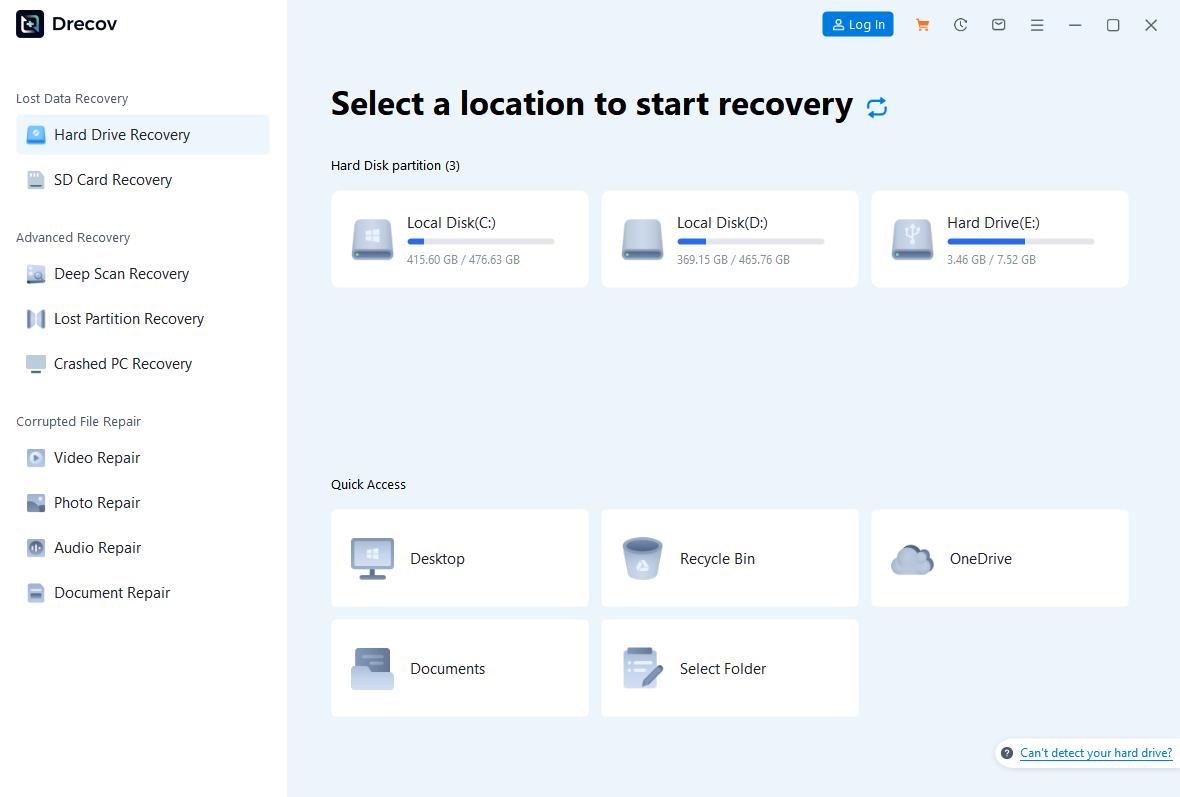
Step 1: Select the original stable USB source
Prepare a healthy drive with space for the recovered files. Install Drecov on the PC or another location, not on the affected USB drive. Open Drecov and select the USB device where the missing files originally lived. Confirm its displayed capacity and identity before scanning. If the device vanishes during selection, stop; repeated direct scans are not appropriate. The USB data recovery page explains the wider range of stable USB loss situations.
Step 2: Scan only while recognition remains reliable
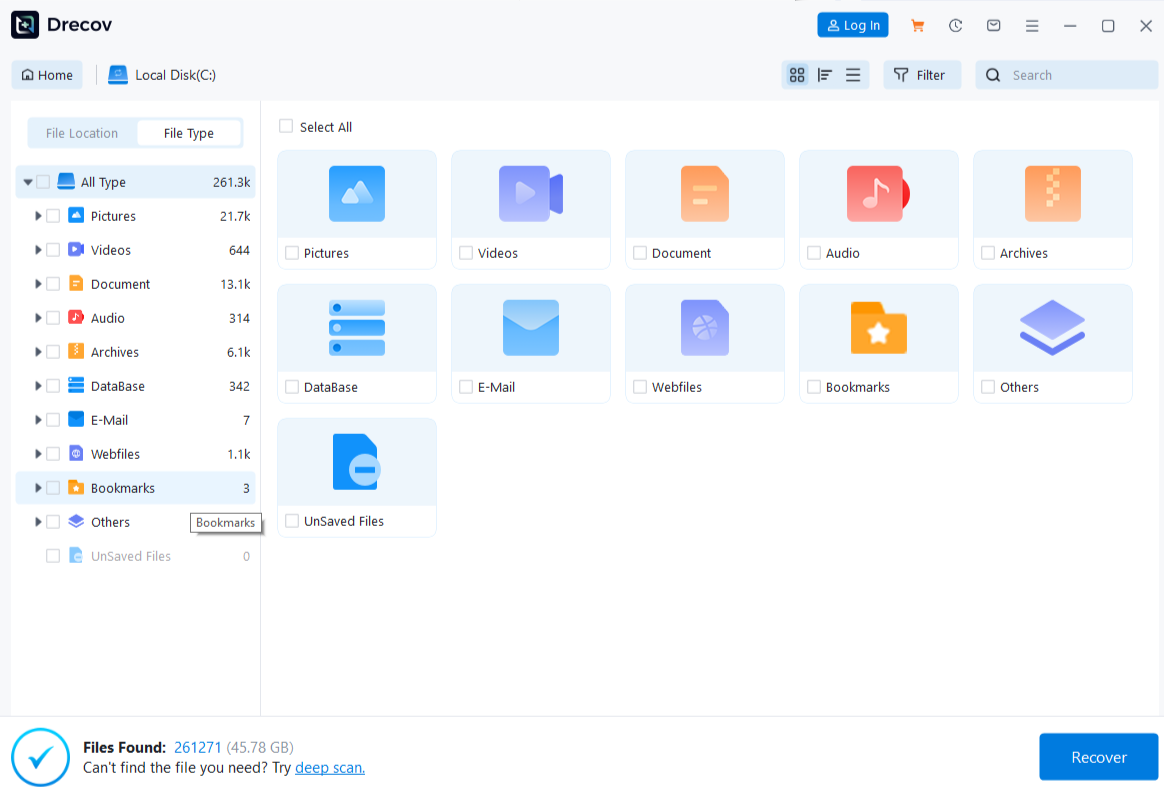
Run Quick Scan and look for the expected folder or file types. If the files are absent and the USB device stays connected without new errors, run Deep Scan. Use the available search, path, or type filters to narrow the results. Preview representative files where supported. A preview can show that a sample opens; it cannot guarantee that a long video, archive, or every page of a document is intact.
Step 3: Recover to another drive and verify
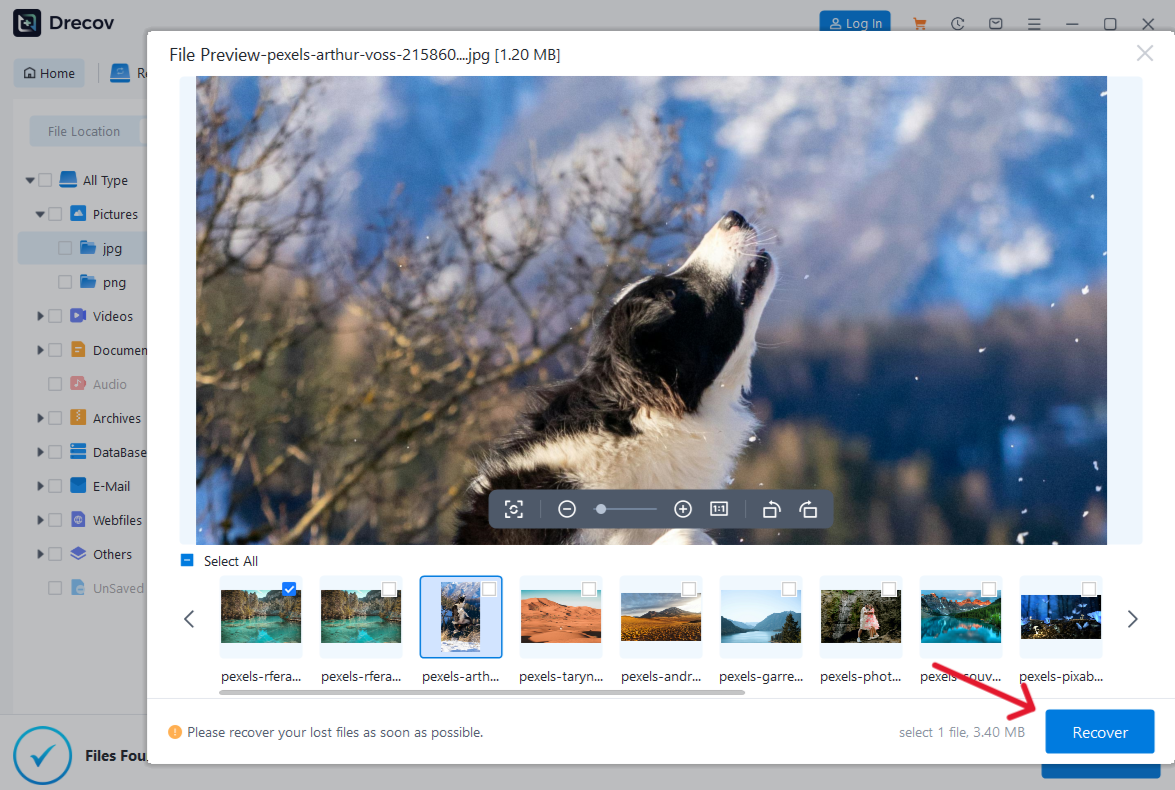
Choose the healthy destination, never the source USB device. If recovered output is not at the path you expected, check the Drecov folder or Recovery folder on that destination. Open a selection of documents, photos, or archives and confirm the content you need. Only after that should you consider file-system repair or reformatting the original USB device. If the source resumes dropping at any point, stop and consider an image or specialist service.
⚠ Warning: Install it on a drive different from the one where your data was lost to prevent overwriting.
Retest the original setup without putting files at risk
Once the important files are safe, reproduce the symptom with an unimportant test file and a known-good cable. Keep the original port, then change only the cable; keep the cable, then change only the port. This sequence tells you more than several simultaneous changes. If a hub was involved, compare direct connection with hub connection. If the drive fails only through that hub, review the hub’s power and compatibility rather than blaming the drive’s file system.
Test after sleep and after a restart if those transitions previously caused drops. A device that seems fixed for one minute but fails after sleep is not resolved. If several ports on the same computer fail with multiple known-good devices, a computer-side controller or power issue may require manufacturer support. If one storage device fails everywhere, retire it after the data is secure; repairing the file system cannot make unreliable electronics trustworthy.
The Drecov homepage is a recovery starting point when the USB source is stable and local files are still missing. It is not a substitute for a connection test. Keep that distinction in mind when deciding whether your next action is software recovery, hardware service, or simply replacing a bad cable.
FAQs
Why does the USB connection sound repeat?
Windows is detecting a device, losing it, and detecting it again. The sound describes the symptom, not the cause. Compare devices, ports, cables, and computers to find which element the failure follows.
Should I disable USB selective suspend immediately?
No. First rule out a loose or underpowered connection. Power settings are worth testing when the drops follow idle or sleep, and the device is otherwise stable.
Can I copy files while the drive reconnects?
Stop repeated transfers. A partial copy may look complete by name. Stabilize the connection, copy to healthy storage, and open representative files to verify them.
Will CHKDSK stop USB disconnects?
It does not fix a cable, port, or power fault. Because it can modify file-system structures, protect important files before considering it for a stable drive with a separate logical error.
When should I seek professional help?
Stop DIY scans if the storage device clicks, disappears repeatedly on known-good connections, reports severe read errors, or contains irreplaceable data that cannot be copied safely.
Conclusion
When USB devices keep disconnecting and reconnecting, isolate the failing part of the connection before changing Windows settings. Protect files first if the device is storage, and do not keep scanning a source that will not stay connected. Once a USB drive is stable and recognizable, Drecov can search its original location and recover missing files to another healthy drive. The practical test of success is both a reliable connection and verified copies of the data you care about.
⚠ Warning: Install it on a drive different from the one where your data was lost to prevent overwriting.