







A GPT protected partition should not be removed merely because its files are inaccessible. Windows may display the label “GPT Protective Partition” when it cannot interpret the disk as expected. Preserve the disk’s current state, record any recent connection changes, and secure needed files before considering conversion, initialization, or cleanup.
The word “protective” can be misleading. It describes a compatibility mechanism associated with GPT, not a promise that your files are safe. Nor does it mean that a password will unlock the disk. The next action depends on how the drive reached this state and whether it remains physically stable.
gpt protected partition: safe diagnosis
A GPT disk includes a protective MBR intended to keep older MBR-only tools from treating its space as unused. Microsoft explains this relationship in its Windows and GPT FAQ. The protection is about how disk layout is represented, not file encryption or a recovery feature.
Do not confuse the label with a normal partition
A protective entry is not the same thing as a user folder, a Windows recovery partition, or a drive letter. Deleting what looks like an unwanted entry can remove information needed to interpret existing data. A disabled option in Disk Management does not make an alternative destructive tool appropriate.
Likewise, GPT and MBR describe partition layouts rather than the file content itself. The GPT versus MBR explanation covers that broader distinction. Here, the immediate task is to preserve an existing disk, not choose a new layout for an empty one.
The display alone cannot identify the cause
Possible contexts include an unsupported environment, a changed USB enclosure, inconsistent layout information, or an unsuitable tool interpreting the disk. Do not select one explanation simply because it appears in an online example. A useful diagnosis needs the previous working setup, current capacity, and exact changes that preceded the problem.
Reconstruct the Last Working Connection
Record identity before disconnecting anything
Write down the disk model, approximate capacity, current connection, and its number in Disk Management. Capture the displayed layout without changing it. Disconnect unrelated removable drives if doing so is safe. This reduces the chance of later applying an operation to the wrong disk, but does not make a risky command harmless.
Ask what changed between the two states
Did the disk move from an enclosure to a direct connection? Was it attached to a different computer or operating environment? Some bridges expose storage differently, including sector presentation. This is a reason to investigate the original hardware path, not proof that every enclosure causes the problem.
If the original arrangement is available and physically sound, returning to it may restore ordinary access. Copy important files immediately if access returns. Avoid changing several variables at once; otherwise you cannot tell which change mattered. Never keep reconnecting a disk that clicks, drops out, or produces severe read errors.
Use capacity as a stop signal
An unexpected capacity deserves attention before any scan. Compare the reported size with the disk’s identity and previous state. Persistent wrong size, repeated disconnects, and severe reading failures argue against routine software recovery. Seek specialist advice about imaging or physical recovery instead of treating the protective label as the only problem.
Extract Needed Files Before Repairing the Layout
PandaOffice Drecov recovers Windows data from compatible stable storage, including hard drives, SSDs, external disks, USB drives, and memory cards. Its read-only recovery mode can search for documents, photos, videos, audio, email, and archives. Quick Scan, Deep Scan, filtering, and preview support file selection. Lost Partition Recovery is relevant when the previous partition is missing.
⚠ Warning: Install it on a drive different from the one where your data was lost to prevent overwriting.
This is file extraction, not GPT-table repair. Drecov cannot fix physical damage, bypass encryption, or promise reconstruction of the original disk layout. A previewable file does not mean the partition table is healthy. The useful outcome is a verified copy on another device before any source-modifying decision.
Preparation: protect the source and provision the destination
Stop writes to the affected disk. Check existing backups, including any needed encryption credentials, on a separate system or destination. Do not install recovery software on the affected source. Prepare another healthy device with enough room for exports. For an unstable disk, stop direct scans and arrange an appropriate imaging or professional workflow.
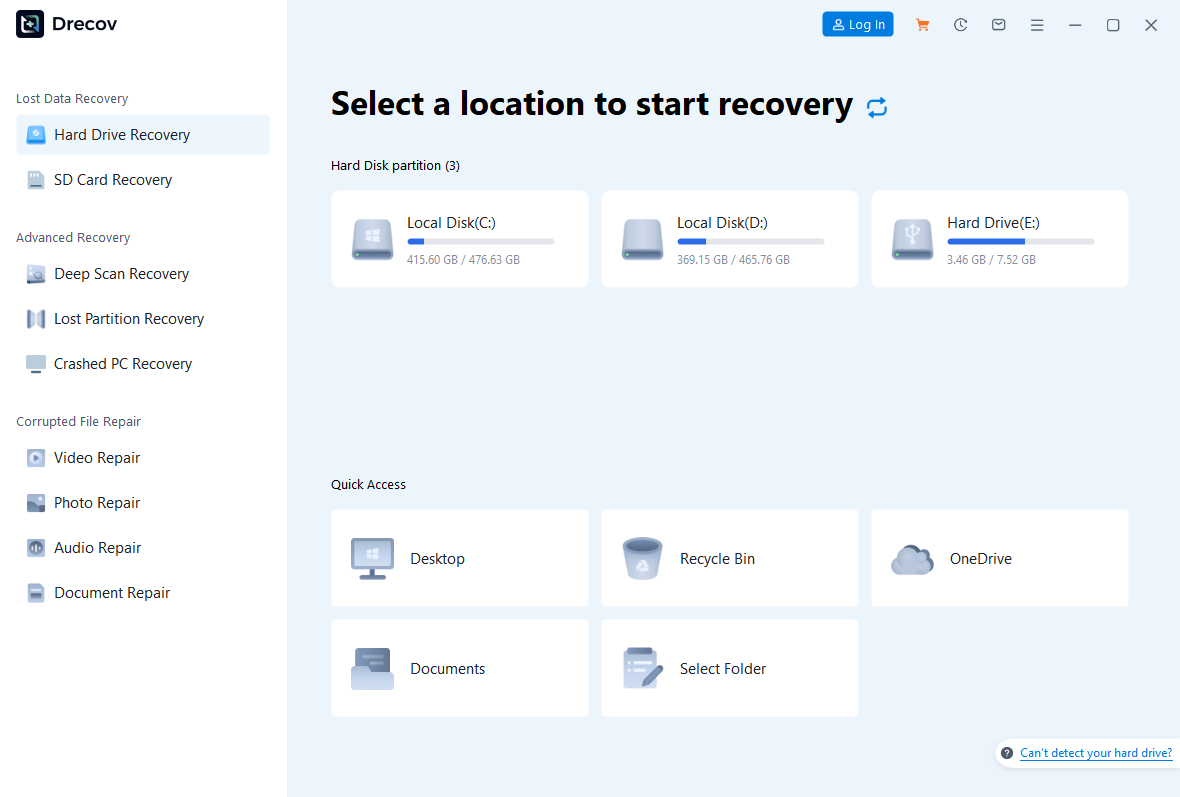
Step 1: Open Drecov and identify the affected original disk
Match the detected storage to your recorded model and capacity. Select the original loss location where available. When the former partition is absent, consider Lost Partition Recovery on the correctly identified disk. Do not initialize or format it to make a letter appear; that changes the evidence you are trying to preserve.
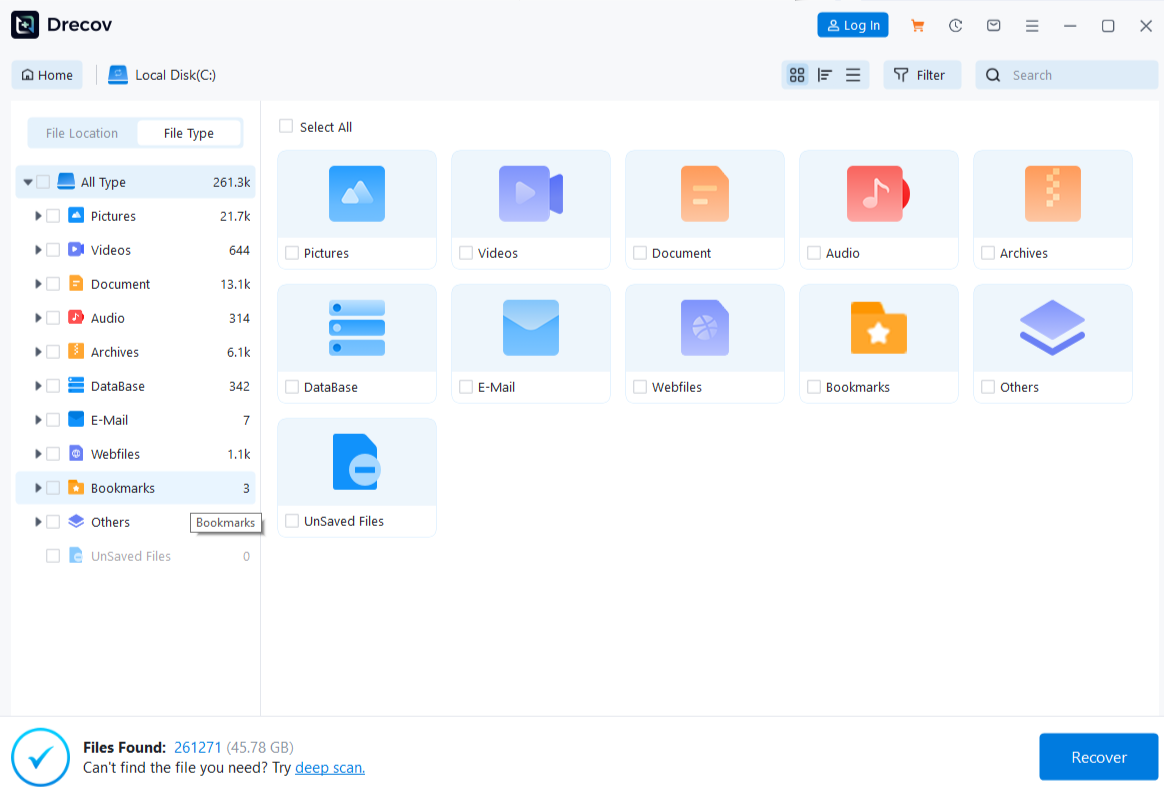
Step 2: Start Quick Scan and look for the former file groups
Use Quick Scan to examine available results. Look for distinctive project folders, document names, or photo groups from the old volume. A recognizable name is not enough to certify its contents. Stop if the connection becomes unreliable rather than assuming every scan error is merely a partition issue.
Step 3: Extend the search with Deep Scan only when appropriate
This check is especially useful for gpt protected partition. When required files are absent and the disk remains stable, use Deep Scan. This expands the search without turning software into a hardware repair tool. Repeated scans are not a remedy for growing read failures. Important data on a deteriorating disk warrants specialist assessment, not an escalating sequence of software attempts.
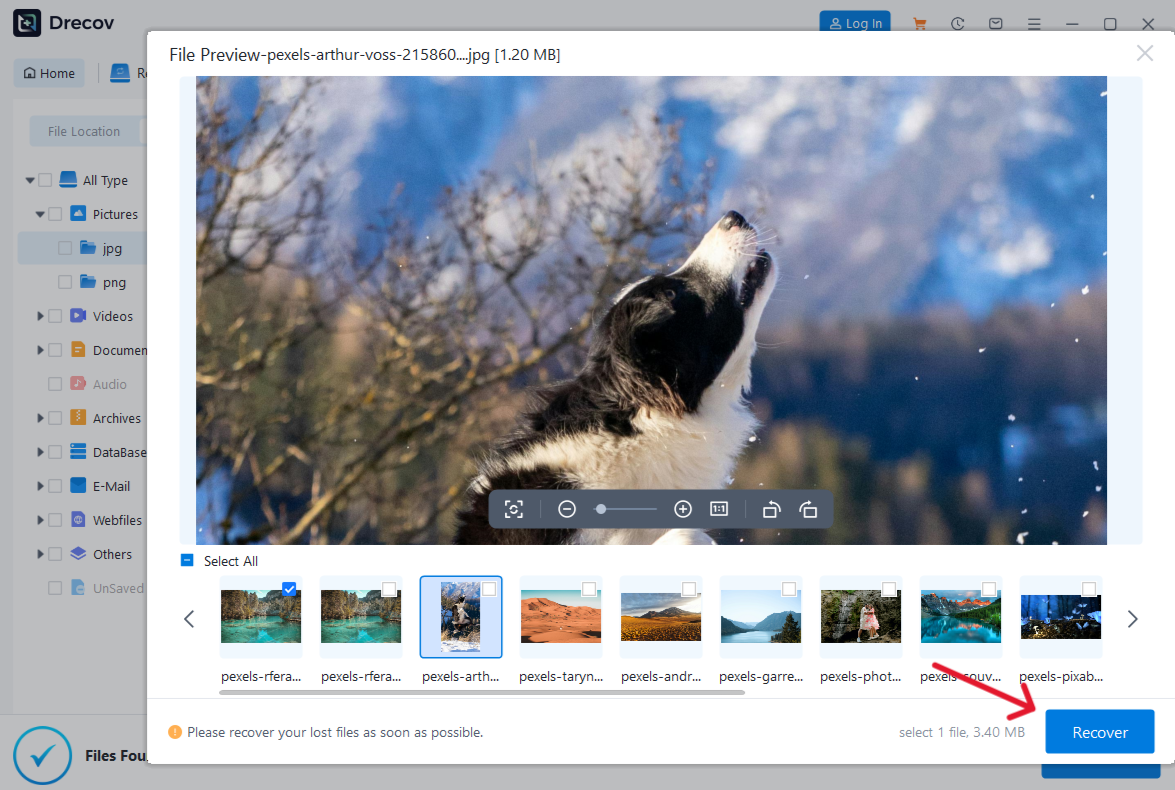
Step 4: Filter candidates and inspect representative content
Narrow results using available names, locations, or file types. Preview samples from the folders that matter most. One readable picture cannot validate an entire archive, and a document preview may not expose every missing element. Encrypted content still requires the appropriate access credentials; recovery software is not an encryption bypass.
Step 5: Export to a separate device and verify the result
Recover selected files to the prepared healthy storage, never the source disk. Check Drecov Folder or Recovery Folder if the exports are not where expected. Open actual recovered files in their normal applications and inspect different dates and types. Confirm essential content before touching partition metadata, formatting, or reinstalling anything.
⚠ Warning: Install it on a drive different from the one where your data was lost to prevent overwriting.
If the former volume is absent rather than merely protected, the separate explanation of recovering files from lost partitions provides additional context. Do not treat a recovered file list as permission to rewrite the original partition table.
Choose the Next Action From the Evidence
- Access returns in the old enclosure: copy and verify the data before changing the connection again.
- The disk is stable but the partition is unavailable: pursue recovery or a qualified layout assessment before modifications.
- The capacity is wrong or the disk disconnects: stop routine scanning and investigate the hardware path.
- No files are needed and the disk is healthy: rebuilding may be considered only after confirming its identity and accepting complete loss.
A partition error is not permission for blind cleanup
Do not follow a command sequence that begins with DiskPart clean on a disk containing required files. Initialization, partition deletion, and conversion can destroy useful layout information. Guidance for an invalid partition table likewise separates data protection from rebuilding. Similar symptoms do not make the repair commands interchangeable.
Do not toggle attributes at random
GPT attributes influence how partitions are treated. Changing them without identifying the actual partition type can create new mounting problems. A protective display does not establish that an attribute is wrong. Avoid copying a numeric attribute value from an unrelated machine, especially on a boot disk or a disk with special partitions.
Before Reuse, Prove That the Data Is Elsewhere
A recovery session is not complete when the progress bar finishes. Create a short checklist of essential folders and compare it against the exports. Open a selection of small and large files. For archives, check that the needed contents can actually be extracted to the healthy destination.
Keep the original disk unchanged until this verification is satisfactory. If crucial material remains absent, rebuilding removes options rather than solving the missing-file problem. When reuse eventually becomes appropriate, select a layout supported by the intended environment and maintain a separate backup. A disk with physical warning signs should not return to important service.
Questions About GPT Protective Partitions
Is a GPT protected partition encrypted?
Not necessarily. The protective layout entry is unrelated to encryption. A separate encryption system may still protect the files and require its own credentials.
Will assigning a drive letter fix it?
A letter only names an accessible volume. It does not repair inconsistent partition metadata or make an unsupported filesystem readable. First establish what Windows has actually detected.
Should I convert the disk to MBR?
Not as a first response. Conversion changes the storage layout and may be destructive depending on the method. Preserve needed files and diagnose the original context first.
Can Lost Partition Recovery rebuild the GPT?
Drecov supports recovering files from lost partitions. That is different from guaranteeing reconstruction of partition tables or repairing the disk’s boot structures.
What if the disk starts clicking during a scan?
Stop the attempt. New physical symptoms change the situation from ordinary logical troubleshooting to a potential hardware failure requiring a safer assessment.
Conclusion
The protective label is a reason to investigate, not erase. Preserve the original connection history, check stability, and use Drecov for file recovery only when the disk is suitable. Verified files on another healthy device give you a safer basis for deciding whether the original layout should be repaired or rebuilt.
⚠ Warning: Install it on a drive different from the one where your data was lost to prevent overwriting.






