






If Windows reports “Unknown USB Device (Set Address Failed),” the connection failed while the USB device was being identified. Start by finding which peripheral triggered the message, then test one direct port and a known-good cable or connection. If that peripheral is a storage drive with irreplaceable files, avoid repeated unplugging and do not format it. A set-address failure occurs before Windows can reliably read a file system, so CHKDSK and file-recovery software cannot fix that failure itself. The next action depends on whether the same device works on another port or computer.
Unknown USB Device (Set Address Failed): Why It Appears
USB devices do not become usable simply because a connector fits. The host must detect the connection, reset the port, assign an address, and request information that identifies the device. Microsoft’s USB troubleshooting case study lists a failed Set Address request among the events that can leave Windows with an unknown USB device. For a reader, the important point is timing: the PC has not established a dependable path to the attached peripheral.
This does not tell you that every USB port is damaged or that the stored files have been erased. A worn cable, unpowered hub, damaged connector, host controller problem, or failing device can interrupt the handshake. Even a normal-looking status LED proves only that some power is reaching the accessory. It does not prove that data communication succeeded. Windows may show a yellow warning icon while File Explorer shows no usable storage volume at all.
Do not confuse this message with “Device Descriptor Request Failed,” a missing drive letter, or a RAW volume. All can produce a missing drive icon, but they occur at different points and need different decisions. A missing letter concerns a volume Windows already recognizes. Set Address Failed means the device may not have progressed far enough for a letter or file system to matter.
Set Address Failed: Identify the Accessory Before Changing Settings
Open Device Manager by right-clicking Start and choosing Device Manager. Expand Universal Serial Bus controllers and locate the unknown entry. Open Properties, read the full Device status text, and note any error code. Then disconnect one nonessential accessory at a time, watching which entry disappears. If an external keyboard or mouse is involved, keep an alternative input method ready before disconnecting it. For a computer with several identical USB storage devices, record each model and avoid guessing from the order of entries.
Check the timing as well. Did the warning begin after moving the device to a front-panel port, using a new cable, connecting a dock, or waking the computer? A recent change gives you a controlled comparison. Do not unplug a drive repeatedly just to reproduce the notification. If it contains the only copy of important files, two or three careful observations can be enough to justify stopping home tests and asking for hardware-aware help.
Some Device Manager entries represent internal USB-connected hardware such as a webcam, Bluetooth adapter, or card reader. If the error remains with all external accessories removed, an internal device or the host controller may be involved. This matters because a data-recovery workflow meant for a USB flash drive would be irrelevant to a webcam. Determine the device class before applying storage advice.
Unknown USB Device (Set Address Failed): Compare Port and Cable
Begin with the least disruptive test: remove the hub or dock and connect the suspect peripheral directly to a known-working port. If the device uses a detachable cable, try one compatible cable known to transfer data. Charging-only cables and loose connectors can mislead the test. Avoid forcing a connector that does not seat normally. The goal is to change one part of the path at a time, not to mix cable, port, power source, and computer changes in a single trial.
It works directly but fails through a hub
The hub, its power supply, its cable, or the load from other devices is now the stronger suspect. Try the hub with another low-power device and inspect whether a powered model has its correct adapter attached. Do not use a long copy session through a hub that intermittently drops storage. Copy readable data using the stable direct connection first. Then replace or troubleshoot the hub separately.
It fails on one port but works on another
Inspect the failing port for visible damage without inserting metal objects. Test a harmless known-good accessory there. If that accessory also fails, the host-side port or controller path deserves attention. If only the original peripheral fails on that port, connection tolerance or power demand may differ. Record the result rather than declaring the port permanently broken after one test.
It fails on two computers with a suitable cable
The peripheral itself becomes more suspect, although a shared bad cable can still explain both failures. For storage with unique files, stop prolonged tests and seek a specialist assessment. A controller-level USB fault may require hardware work or imaging equipment. Formatting, changing a drive letter, and reinstalling random recovery programs cannot make a device complete its initial USB handshake.
What to do after the physical comparison
When the device works reliably on another computer, return to the affected Windows PC. Save important files from the working connection first if the accessory is storage. Then review Device Manager’s status code and Windows Update. Microsoft’s Device Manager code reference distinguishes driver problems by code; do not assume every unknown-device entry has the same driver failure. Use the PC or controller manufacturer’s supported updates when a host driver is actually implicated.
For a confirmed host-side issue, you can shut down, remove the peripheral, restart Windows, and connect it directly after login. This simple reset is safer than changing firmware settings or uninstalling every USB controller. If the error remains and a specific unknown device entry can be identified, Device Manager may allow you to uninstall that entry and then use Action > Scan for hardware changes. Do this only for the verified device, not for an entire class of controllers on a machine whose keyboard and mouse depend on USB. If Windows still reports the same error, stop repeating this step and examine the manufacturer guidance for that hardware.
If the failure appears only after sleep
Power management can also affect a path that fails after sleep but works after a fresh boot. Record whether the accessory succeeds immediately after startup and fails only on wake. Check the PC maker’s power and USB guidance before changing global USB power settings. A one-time success does not establish a fix; reconnect after a normal restart and repeat a small read or ordinary use test. If the error returns, retain the observed pattern and escalate instead of piling on unrelated changes.
Once the device has passed enumeration but later drops out during normal use, you are dealing with a different symptom. The USB disconnection checklist helps isolate that later-stage failure. Keep the two observations separate: an unknown-device entry at connection time and a mounted drive that disappears during a transfer do not justify the same repair sequence.
If it is a USB drive, protect files once it becomes readable
When the USB storage finally appears with the expected model and capacity, open File Explorer and copy irreplaceable folders to another healthy physical drive. Test several destination files, including a large one. A completed copy dialogue cannot guarantee an interrupted video or archive is sound. If the drive disconnects again during that small copy, do not launch a long full-disk scan. A professional may assess whether a controlled image is possible before the remaining readable time is lost.
If the device is now stable but Windows asks to format it, cancel the prompt. Check its state in Disk Management without initializing it or creating a new partition. A correctly sized RAW or unallocated disk is a different branch from an unenumerated USB device. The guide to a flash drive missing after a transfer explains how those visible disk states change the next move. Do not run CHKDSK on a disk that will not stay connected or before preserving needed files; repair can modify source structures.
If the accessory is not storage—a headset, printer, webcam, controller, or phone in a special connection mode—do not treat it as a deleted-file case. Use its maker’s connection instructions after the port test. File recovery cannot repair the USB enumeration protocol or a defective port. This boundary prevents a common mistake: applying the right tool to the wrong layer of the problem.
Use Drecov only for a separate, confirmed file-loss problem
PandaOffice Drecov is Windows data-recovery software, not a USB driver or electrical repair utility. Its read-only recovery workflow can search a stable, recognizable USB storage device when local files are deleted or a logical volume problem leaves them inaccessible. Quick Scan, Deep Scan, filters, preview, and recovery to another healthy device help you inspect candidates without writing the recovered data back onto the source. Lost Partition Recovery can search for files associated with a missing partition, but it does not repair the USB controller or guarantee overwritten data. If the same device still says Set Address Failed and no real disk appears, do not start this workflow.
⚠ Warning: Install it on a drive different from the one where your data was lost to prevent overwriting.
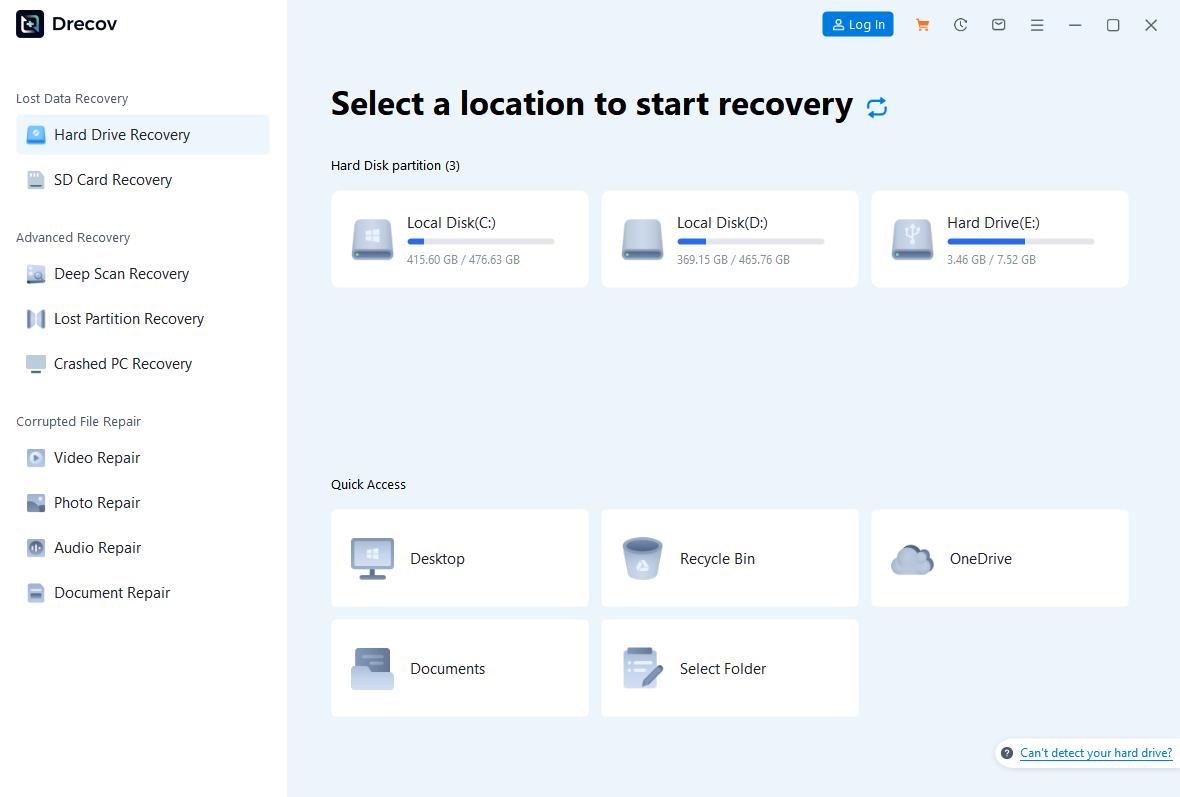
Step 1: Open Drecov and choose the original storage
Prepare another healthy physical drive for the output. Do not install Drecov on the USB device that lost files. After the source enumerates consistently and shows a plausible capacity, open Drecov and select that original device or its old partition. If the partition itself vanished while the physical device remains stable, select the relevant Lost Partition Recovery mode instead of recreating a partition.
Step 2: Run Quick Scan before a deeper search
Start Quick Scan and inspect previous folders and recognizable filenames. This first pass may be enough for a recent logical deletion. A file listed by name is only a candidate. If the source begins to drop out, stop immediately; repeated attempts are not a substitute for a stable connection.
Step 3: Narrow and preview results
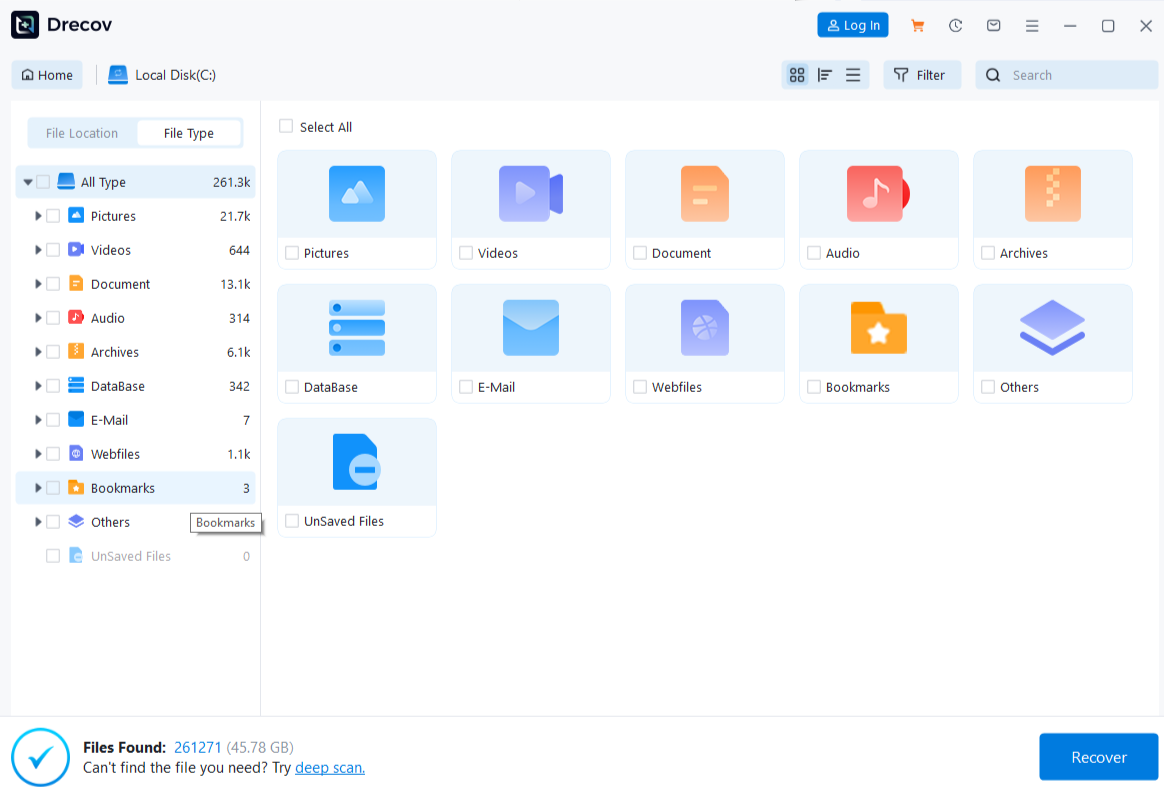
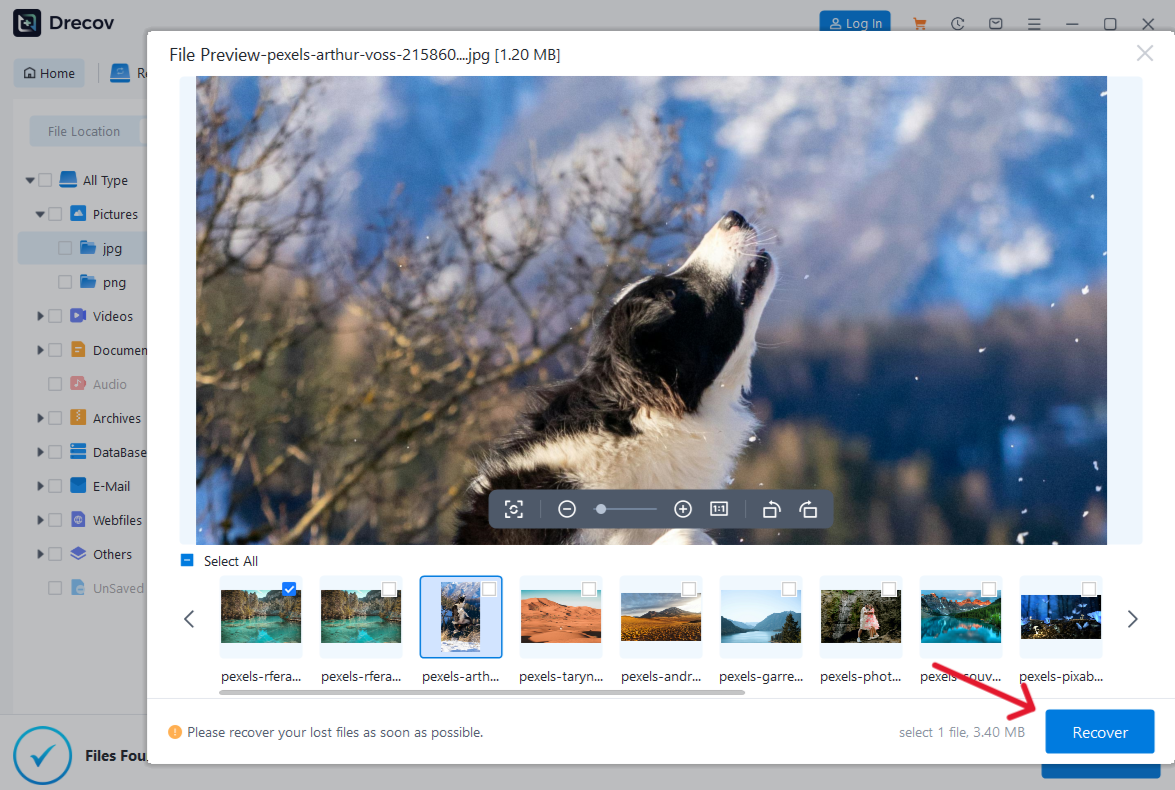
When Quick Scan misses the important files and the device remains stable, run Deep Scan. Filter by type, old path, or filename where available. Preview representative supported photos, documents, or videos. A thumbnail does not prove every page or video frame is intact, so inspect several examples before selecting a large set.
Step 4: Recover elsewhere, then verify
Save selected files to the prepared healthy drive, never back to the affected USB device. If the output is not at the expected path, check Drecov Folder or Recovery Folder at your chosen destination. Open recovered files in their normal applications. Only after verifying what matters should you decide whether the original USB device is trustworthy enough to reuse; a repaired file view does not establish reliable hardware.
⚠ Warning: Install it on a drive different from the one where your data was lost to prevent overwriting.
FAQs
Does Set Address Failed mean my flash drive was formatted?
No. The message describes a failure during USB identification. It does not tell you whether the file system was changed. You can judge that only after the drive becomes reliably readable.
Should I reinstall every USB controller driver?
No. First identify the affected device and compare a direct port, cable, and another host. Broad driver removal can disrupt working input devices and may not address a defective accessory.
Can CHKDSK fix the Set Address request?
No. CHKDSK works on an accessible file system. A device that fails USB enumeration has not provided Windows with a suitable storage volume to check.
What if a different cable fixes the connection?
Copy important files while the device is stable, then repeat a small read test after reconnecting. Replace the suspect cable and avoid relying on an intermittent connection for your only backup.
When should I stop testing the drive myself?
Stop when it repeatedly disappears, reports implausible capacity, overheats, or contains irreplaceable data and fails on a known-good connection. A specialist can assess hardware and imaging options.
Conclusion
An Unknown USB Device (Set Address Failed) warning concerns device identification. File recovery becomes relevant only after stable storage detection returns. Unknown USB Device (Set Address Failed) points to an early connection failure, not automatically to damaged files. Identify the peripheral, compare one direct port and known-good cable, and use another computer only as a controlled check. Protect readable storage immediately and stop if the device is unstable. Drecov becomes relevant only after a USB drive is reliably recognized and a separate file-loss problem remains; it can search that stable source and save recovered candidates elsewhere, but it cannot fix the failed address request.
⚠ Warning: Install it on a drive different from the one where your data was lost to prevent overwriting.