







The Windows search bar is one of those features people barely think about until it suddenly stops working. The can’t type in windows search bar problem is surprisingly common across different versions of Windows. Whether you use Windows 10 or Windows 11, search-related glitches can appear after updates, corrupted system files, background process failures, indexing problems, or software conflicts. For many users, the issue seems random. The search bar may work normally after startup and suddenly stop later. Sometimes it becomes completely unresponsive, while other times typing works partially but results never load correctly.
The good news is that most Windows search bar issues can be fixed without reinstalling the operating system. In many cases, simple solutions like restarting Windows Explorer or rebuilding the search index restore functionality within minutes. Think of the Windows search bar like a digital receptionist inside your computer. If the receptionist becomes overwhelmed, frozen, or disconnected from the system, communication breaks down until the service is restarted properly.
Why the Windows Search Bar Stops Working
One moment you are quickly opening apps, finding documents, launching settings, and searching files within seconds. The next moment, you click the search bar and nothing happens. Your keyboard refuses to type, the cursor disappears, or the search panel freezes completely. It feels like trying to unlock your front door only to discover the key no longer fits.
The Windows search feature relies on several background services, system files, and indexing processes working together smoothly. If even one component fails, search functionality can break.
Common Causes of Search Bar Problems
| Cause | Description |
| Corrupted system files | Damaged Windows components |
| Search service failure | Windows Search stops responding |
| Windows updates | Bugs after updates |
| Indexing problems | Search database corruption |
| Explorer crashes | User interface malfunction |
| Third-party conflicts | Antivirus or software interference |
| High CPU usage | System performance overload |
Understanding the cause makes troubleshooting much easier. When you can’t type in windows search bar, it often points to a service called ctfmon.exe failing to trigger, which handles text input for non-traditional Windows interfaces.
Initial Troubleshooting: Windows Search Bar Not Responding to Keyboard
When you find the windows search bar not responding to keyboard inputs, the frustration can peak quickly. You might be able to click icons, but the cursor simply won’t appear in the search field. This specific symptom often suggests that the text input service is stuck.
Restart Your Computer First
Before attempting advanced fixes, restart your PC. It sounds simple, but restarting clears temporary glitches, restarts frozen services, reloads Windows components, and resets background processes. Many search bar problems disappear after a proper reboot. Think of restarting your computer like resetting a traffic system after a power outage. Sometimes everything simply needs a fresh start.
Restart Windows Explorer
Windows Explorer controls much of the desktop interface, including the taskbar and search bar. If Explorer crashes or freezes, the search feature may stop responding.
How to Restart Windows Explorer
- Step 1: Open Task Manager by pressing Ctrl + Shift + Esc.
- Step 2: Under the Processes tab, locate Windows Explorer.
- Step 3: Right-click it and choose Restart.
Your screen may flicker briefly while Windows reloads the interface. After restarting, test if the can’t type in windows search bar issue persists.
Advanced System Fixes for Search Functionality
If a simple restart doesn’t work, we need to look deeper into the Windows services. These services run in the background and ensure that your keyboard inputs reach the search interface.
Restart Windows Search Service
The Windows Search service powers indexing and search functionality. If the service stops running, typing may fail completely.
Steps to Restart Windows Search
- Step 1: Press Windows + R to open the Run dialog.
- Step 2: Type
services.mscand press Enter. - Step 3: Scroll down and find Windows Search.
- Step 4: Right-click it and choose Restart. Ensure the Startup type is set to Automatic.
Run the Windows Search Troubleshooter
Windows includes built-in troubleshooting tools designed specifically for search issues. Navigate to Settings > System > Troubleshoot > Other troubleshooters. Find Search and Indexing, run the tool, and select the checkbox that says “Can’t start a search or see results.” This tool can repair common search-related errors automatically by resetting permissions.
Protecting Your Data: How to Backup Files When Windows Start Menu is Frozen
Sometimes, the inability to type in the search bar is a symptom of a larger system hang. If you find your windows start menu is frozen alongside the search bar, it might indicate significant system instability. In such scenarios, your primary concern should be data safety before you attempt deeper registry edits or system resets. Knowing how to backup files when windows start menu is frozen is a critical skill for any user.
Method 1: Using File Explorer Shortcuts
Even if the Start Menu is dead, you can usually still access your files.
- Step 1: Press Windows + E to open File Explorer directly.
- Step 2: Plug in an external hard drive or USB flash drive.
- Step 3: Navigate to
C:\Users\[YourUsername]. - Step 4: Copy your Documents, Photos, and Desktop folders and paste them into the external drive.
Method 2: Using Command Prompt in Recovery Mode
If the entire UI is unresponsive, you can backup files via the Command Prompt.
- Step 1: Hold Shift while clicking Restart (if the power button in the start menu works) or use the physical reset button to trigger the Advanced Startup menu.
- Step 2: Select Troubleshoot > Advanced Options > Command Prompt.
- Step 3: Use the
xcopycommand to move files to an external drive. For example:xcopy C:\Users\Name\Documents D:\Backup /E /H /C.
For more detailed information on Windows system behaviors, you can visit the Official Microsoft Support Page.
Emergency Recovery: PandaOffice Drecov Data Recovery Software
In some cases, the reason you can’t type in windows search bar is due to a failing hard drive or severe file system corruption. If your attempts to fix the search bar result in a system crash or if you realize files have gone missing during the process, you need a professional recovery solution. This is where PandaOffice Drecov data recovery software becomes an essential tool in your arsenal.
Why Choose PandaOffice Drecov?
PandaOffice Drecov is designed to handle complex data loss scenarios, ranging from accidental deletion to partition loss. When your system starts acting up—like the search bar failing—it can sometimes lead to “Blue Screen of Death” (BSOD) errors that put your data at risk.
⚠ Warning: Install it on a drive different from the one where your data was lost to prevent overwriting.
Step-by-Step Data Recovery with PandaOffice Drecov
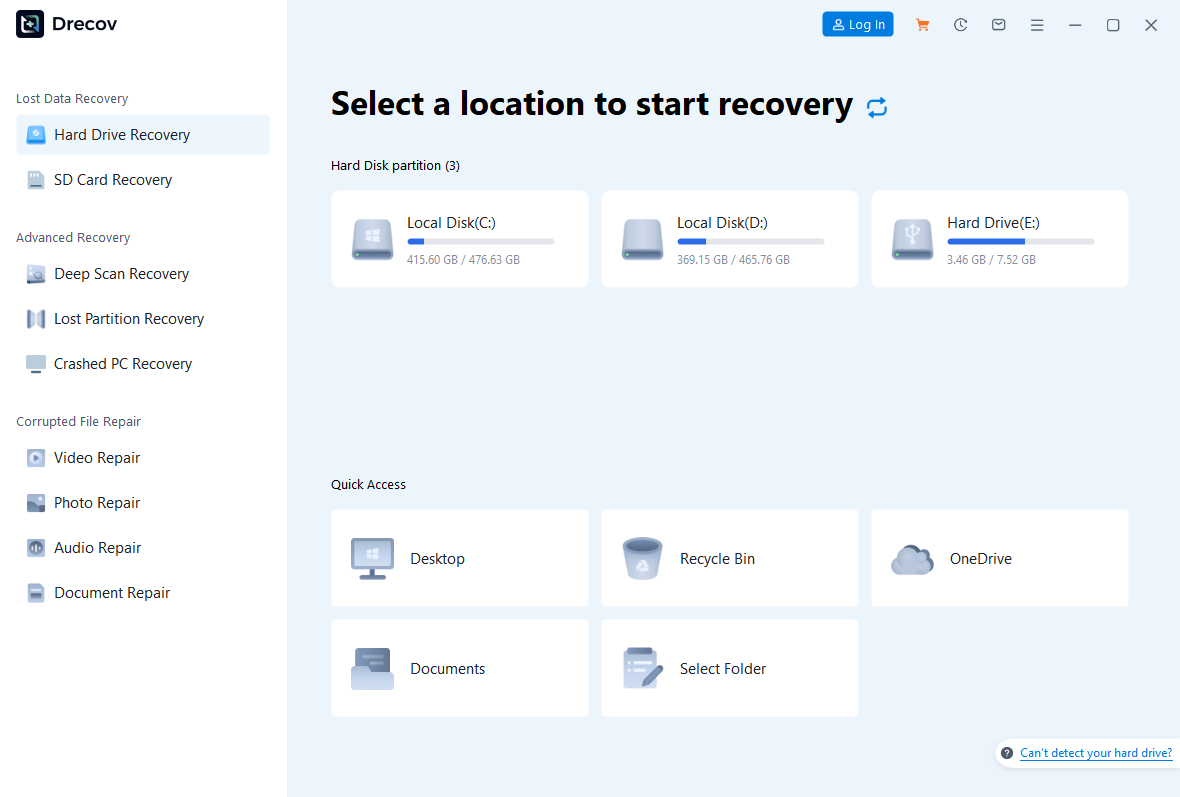
- Step 1: Select the Target Location. Launch the program. On the main interface, you will see a list of drives and partitions. Select the drive (usually C: for system files) where your missing data was stored and click Scan.
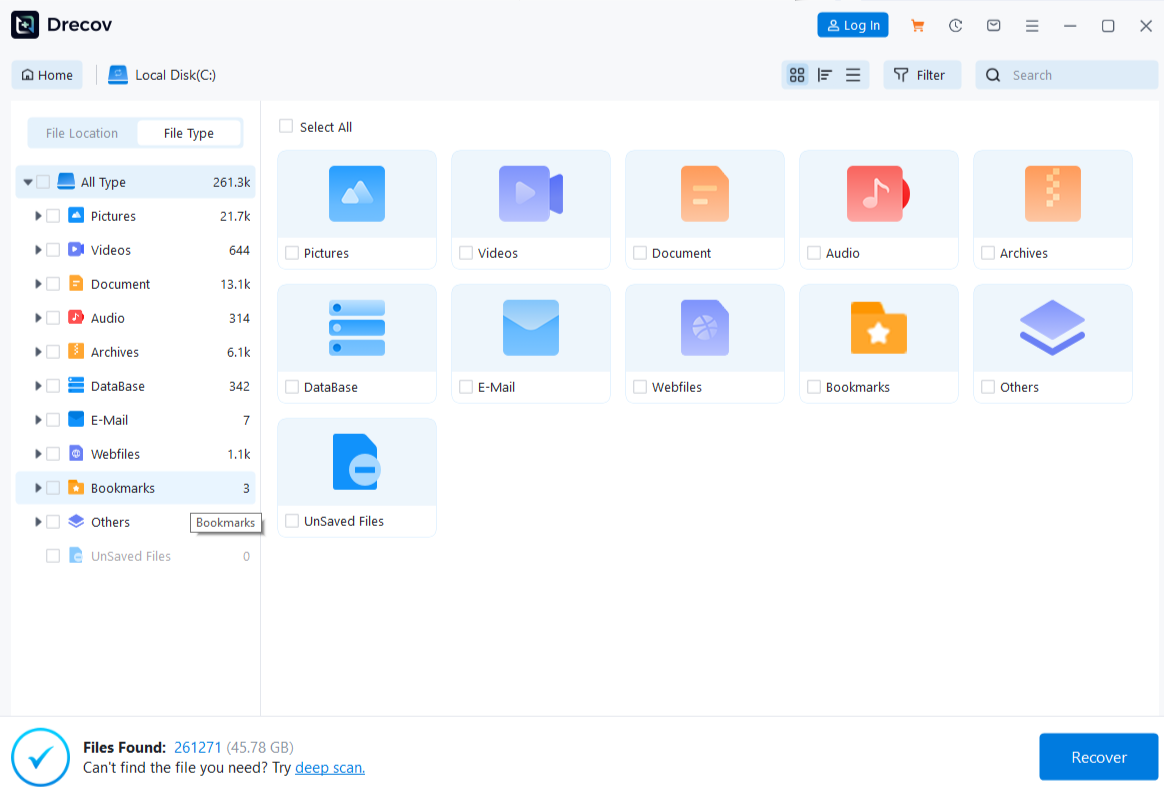
- Step 2: Scan for Lost Files. The software will perform a Quick Scan followed by a Deep Scan. The Deep Scan is highly effective at finding files even after a system crash or if the file directory is corrupted.
- Step 3: Preview and Filter. Once the scan is complete, use the filter options to find specific file types (e.g., .docx, .jpg, .pdf).
- Key point: You can preview images and documents before recovering them to ensure they are intact.
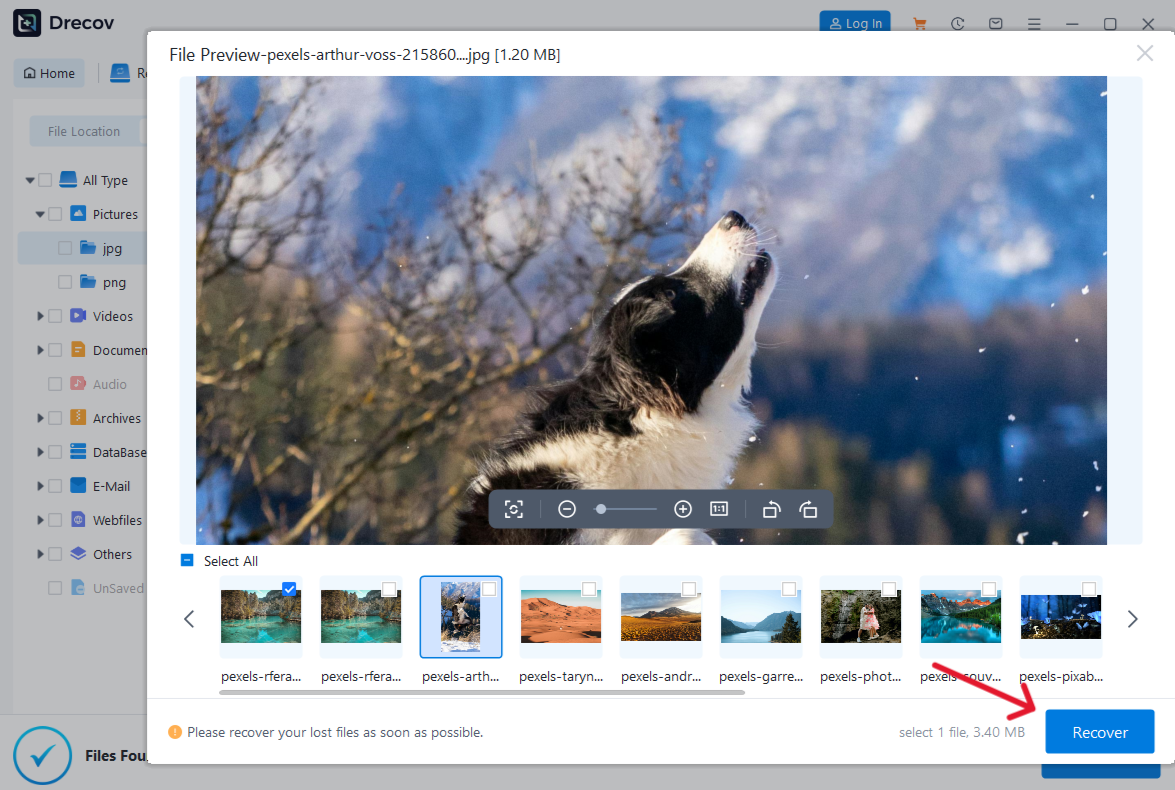
- Step 4: Recover and Save. Select the files you want to retrieve and click Recover. Always choose a secondary storage device, such as an external SSD or a different partition, to save the recovered data.
After securing your data, you might be interested in other Windows maintenance tips. For instance, if you’re cleaning up your browser after a recovery, you should know where are Firefox bookmarks stored on your PC.
Advanced Technical Fixes for the Search Bar
If the basic troubleshooters failed and your data is safely backed up, it is time to move to more technical solutions. These methods address the core system files and registration of the Windows Search app.
Fix Corrupted System Files
Damaged Windows system files frequently cause search bar failures. Windows includes repair tools that scan and restore corrupted files automatically.
Run SFC Scan
- Step 1: Right-click the Start button and select Terminal (Admin) or Command Prompt (Admin).
- Step 2: Type
sfc /scannowand press Enter. - Step 3: Wait for the scan to complete. It will attempt to fix any integrity violations.
Use DISM Repair Tool
If SFC cannot fix the issue, use the Deployment Image Servicing and Management (DISM) tool.
- Step 1: In the same Admin Command Prompt, type:
DISM /Online /Cleanup-Image /RestoreHealth. - Step 2: Press Enter. This tool downloads healthy system files from Windows Update servers to replace corrupted ones. Think of SFC as patching cracks in a wall while DISM replaces damaged bricks entirely.
Rebuild the Search Index
The Windows search index acts like a giant digital library catalog. If the catalog becomes corrupted, you might find you can’t type in windows search bar because the system doesn’t know where to look.
How to Rebuild the Index
- Step 1: Open the Control Panel and set “View by” to Small Icons.
- Step 2: Click on Indexing Options.
- Step 3: Click the Advanced button.
- Step 4: Under the Index Settings tab, click Rebuild.
- Step 5: Click OK on the confirmation box. Note that this may take several hours depending on your drive speed.
Once your search is back to normal, you might find other annoying Windows quirks. For example, if you find your Windows Save As default location stuck on OneDrive, there are specific registry fixes for that as well.
Registering the Windows Search App via PowerShell
Sometimes the app package itself becomes unregistered from the Windows kernel. This happens frequently after a major version update.
The Re-registration Process
- Step 1: Right-click the Start button and select Windows PowerShell (Admin).
- Step 2: Copy and paste the following command:
Get-AppXPackage -AllUsers -Name Microsoft.Windows.Search | Foreach {Add-AppxPackage -DisableDevelopmentMode -Register "$($_.InstallLocation)\AppXManifest.xml"} - Step 3: Press Enter. If you see red text, don’t panic; ensure no other search windows are open and try again.
- Step 4: Restart your computer.
This command essentially “reinstalls” the search bar interface without affecting your personal data. It is one of the most effective ways to solve the can’t type in windows search bar error when it’s caused by a UI glitch.
Checking for External Factors and Hardware
Sometimes the solution isn’t in the software. External factors can interfere with how Windows perceives keyboard input.
The “Ctfmon.exe” Manual Trigger
The process ctfmon.exe controls the Alternative User Input and the Language Bar. If it isn’t running, the search bar won’t accept keyboard input.
- Step 1: Press Windows + R.
- Step 2: Type
C:\Windows\System32\ctfmon.exeand press Enter. - Step 3: Test the search bar. If this works, you may need to add this task to your Startup folder.
Check for Windows Updates
Microsoft frequently releases updates that fix search-related bugs. Go to Settings > Windows Update and install all available updates. Search issues often appear after incomplete updates, so keeping Windows current improves stability. If a recent update caused the problem, you can also use the Uninstall Updates feature found in the Update History menu.
Perform a Clean Boot
Third-party software, especially custom themes or older antivirus programs, sometimes conflicts with Windows search. A clean boot starts Windows with minimal background programs.
- Step 1: Press Windows + R, type
msconfig, and go to the Services tab. - Step 2: Check Hide all Microsoft services and then click Disable all.
- Step 3: Go to the Startup tab and open Task Manager to disable startup items.
- Step 4: Restart. If you can now type in the search bar, one of those disabled programs was the culprit.
Preventing Future Search Bar and System Failures
To avoid dealing with the can’t type in windows search bar headache again, implement these best practices for system health:
- Avoid Forced Shutdowns: Always shut down your PC through the menu. Abrupt power loss is the leading cause of indexing database corruption.
- Monitor Disk Health: Use tools to check the S.M.A.R.T. status of your SSD or HDD. A failing drive often shows its first symptoms through small UI glitches like a frozen search bar.
- Regular Backups: Use the built-in Windows Backup or third-party imaging software. If things get too messy, you might need to reinstall Windows 10 from USB to fix errors and start fresh.
- Keep PandaOffice Drecov Handy: Having a reliable recovery tool installed ensures that if a system fix goes wrong, your documents are never truly lost.
| Preventive Tip | Benefit |
| Run Antivirus Scans | Removes malware that hijacks search |
| Restart PC Regularly | Refreshes memory and background services |
| Check Storage Space | Windows Search needs free space to build its index |
Conclusion
The can’t type in windows search bar issue can feel incredibly frustrating because the search feature has become one of the most important navigation tools in modern Windows systems. Whether the problem comes from frozen services, corrupted indexes, damaged system files, failed updates, or software conflicts, the good news is that most search bar problems are completely fixable without advanced technical knowledge.
By following this guide—from simple Explorer restarts to using PandaOffice Drecov data recovery software to protect your files—you can navigate any Windows search failure with confidence. The Windows search bar acts like the control center of your computer experience. Once it stops working, even simple tasks suddenly become slower and more frustrating. However, with the right troubleshooting steps, you can restore your productivity and keep your system running smoothly.






