







In the modern digital landscape, the ability to data cleaning automate using chatgpt has become a game-changer for professionals handling large datasets. This innovative approach allows users to transform messy, unorganized information into polished assets within seconds. By learning how to data cleaning automate using chatgpt, you can significantly reduce the time spent on manual spreadsheet entry and error correction. Many industries are now adopting these AI-driven workflows to ensure their data remains accurate and actionable. This guide will provide everything you need to master data cleaning automate using chatgpt while maintaining the highest standards of data integrity.
This complete guide explains how to data cleaning automate using chatgpt, including real-world examples, practical workflows, AI prompts, scripting methods, spreadsheet automation, advantages, limitations, and best practices for achieving cleaner and more reliable datasets.
What Is Data Cleaning?
Data cleaning is the process of detecting and correcting inaccurate, incomplete, duplicated, or inconsistent data. The goal is to improve:
- Data quality
- Accuracy
- Reliability
- Consistency
Clean data allows businesses and analysts to make better decisions. Without cleaning, even powerful analytics tools can produce misleading results. Imagine building a house on a weak foundation. No matter how beautiful the structure looks, unreliable data eventually creates unstable conclusions.
Why Data Cleaning Matters
Poor data quality costs businesses enormous amounts of time and money. Every year, organizations lose millions because of “dirty data” that leads to incorrect shipping addresses, failed marketing emails, or skewed financial reports.
Common Data Problems
| Problem | Example |
| Duplicate records | Same customer entered twice |
| Missing values | Blank email addresses |
| Formatting inconsistencies | Different date formats (01/01/26 vs Jan 1, 2026) |
| Typographical errors | Misspelled names |
| Invalid entries | Wrong phone numbers or symbols in numeric fields |
| Extra spaces | Leading or trailing spaces in text fields |
Even small errors can create major reporting issues. For example:
- Duplicate leads distort marketing analytics.
- Incorrect customer emails hurt communication.
- Inconsistent product names damage inventory tracking.
Data cleaning is not optional anymore. It is essential for anyone who wants to use information effectively.
How ChatGPT Helps Automate Data Cleaning
ChatGPT does not directly clean databases automatically on its own by “reaching into” your files, but it dramatically accelerates the cleaning process by acting as a master translator between your needs and the technical tools. You can data cleaning automate using chatgpt by:
- Writing formulas: Creating complex Excel or Google Sheets formulas.
- Generating scripts: Writing Python or R code for large datasets.
- Detecting patterns: Identifying errors in a sample of your data.
- Suggesting corrections: Recommending the best way to handle missing values.
- Automating repetitive tasks: Creating macros or scripts that run with one click.
Data Cleaning Automation Risks and Data Loss
While the ability to data cleaning automate using chatgpt provides incredible speed, it is not without hazards. Users must remain aware of data cleaning automation risks and data loss during the process. If an AI generates a script that you run without testing, it might accidentally delete rows that looked like duplicates but were actually unique transactions.
To mitigate these risks:
- Always work on a copy: Never run an automated script on your only copy of the data.
- Audit the code: Ask ChatGPT to explain what each line of a generated script does before you execute it.
- Start small: Test the automation on a sample of 10-20 rows before applying it to 10,000.
- Check for hallucinations: Sometimes AI might suggest a library or a function that doesn’t exist; always verify the output.
If you find yourself in a situation where an automated script has gone wrong and you’ve lost critical files, you need a professional recovery solution. This is where specialized software becomes your safety net.
PandaOffice Drecov Data Recovery Software
When automation leads to accidental deletion or file corruption, PandaOffice Drecov data recovery software is the premier choice for restoring your valuable information. Whether you accidentally formatted a drive while trying to clean data or a script deleted essential system files, Drecov is designed to handle complex recovery scenarios with ease.
⚠ Warning: Install it on a drive different from the one where your data was lost to prevent overwriting.
Why Choose PandaOffice Drecov?
PandaOffice Drecov stands out because of its high success rate and user-friendly interface. It supports a wide range of file types, including the Excel files (.xlsx), CSVs, and SQL database files that are most common in data cleaning workflows.
How to Use PandaOffice Drecov to Recover Lost Data
If you experience data loss during your automation journey, follow these steps to retrieve your files using the tool:
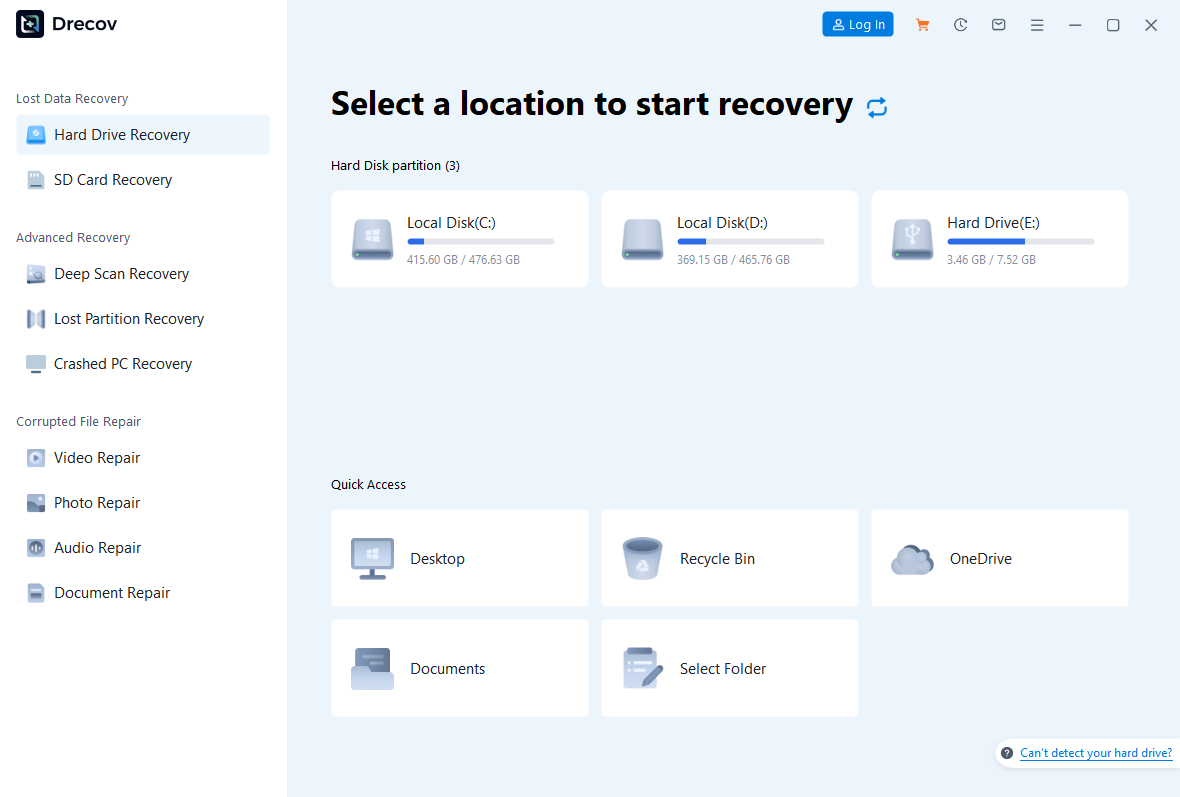
- Step 1: Select the Location. Open the software and select the specific drive, partition, or folder where your cleaned data was stored before it was lost.
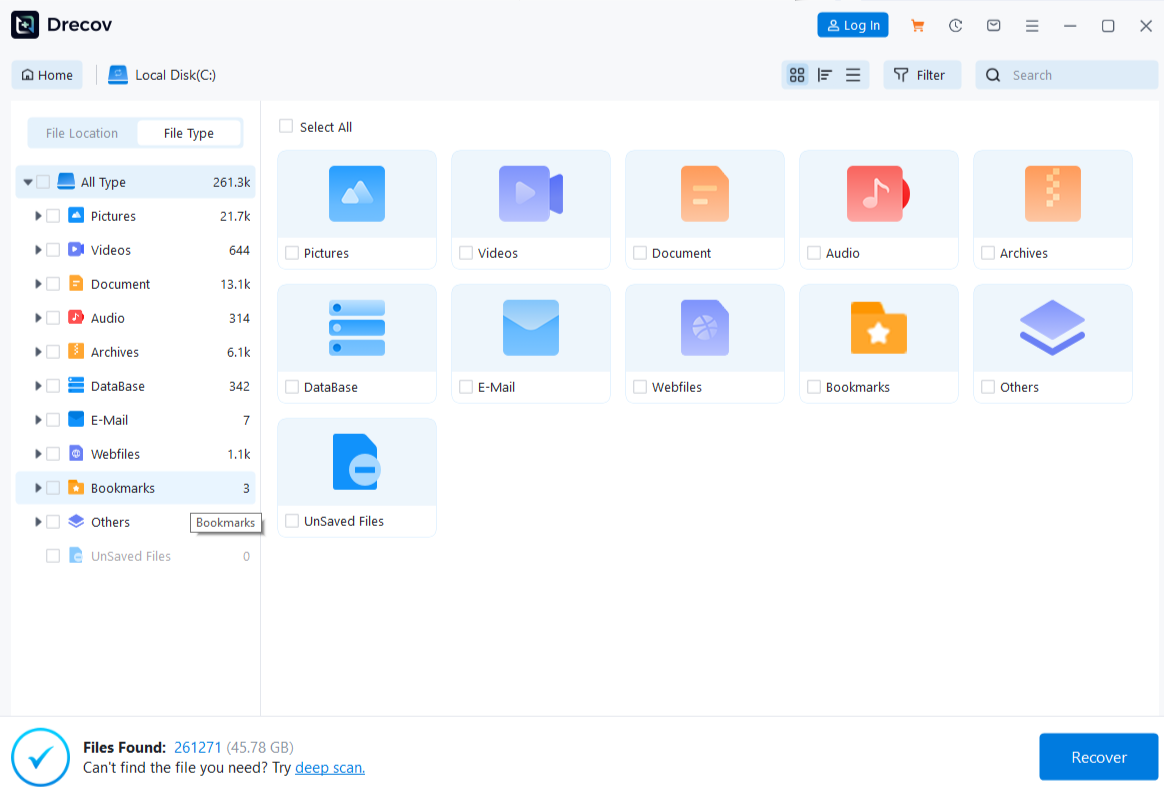
- Step 2: Scan for Files. Click the “Scan” button. The software will perform a Quick Scan followed by a Deep Scan to locate every recoverable fragment.
- Step 3: Preview and Filter. Use the built-in preview feature to look at spreadsheets or documents. This ensures you are recovering the correct version of the file.
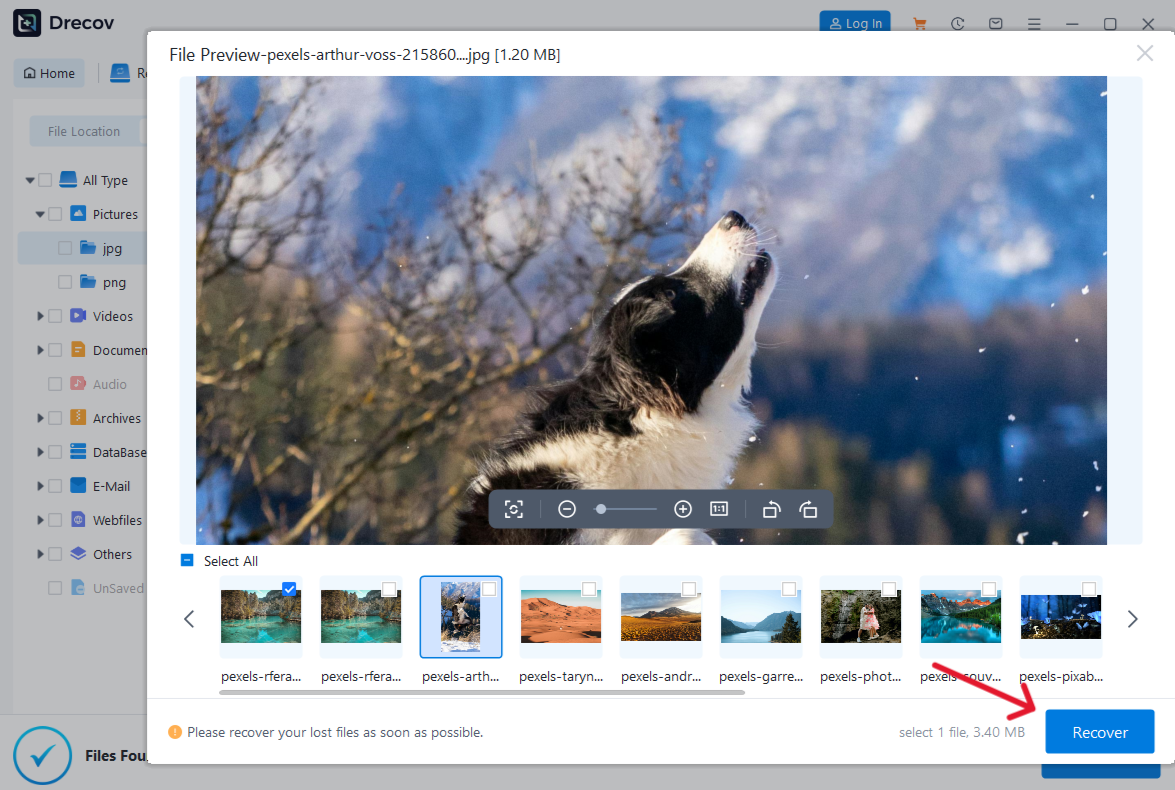
- Step 4: Recover. Select the files you want to save and click “Recover.” Choose a safe destination (like an external hard drive or cloud storage) to save the recovered data.
Warning Prompt: Never save recovered files back to the same partition where they were lost. This can cause permanent data corruption.
After recovering your files, you might want to learn more about system management to prevent future issues. Check out these helpful guides:
- Where is Recycle Bin in Windows 10
- How to Create a Windows 10 Recovery Disk
- How to Remove OneDrive from Windows 11
Detailed Methods to Data Cleaning Automate Using ChatGPT
Now that we understand the safety measures, let’s look at the specific technical ways to implement automation.
1. Using ChatGPT with Excel and Google Sheets
Excel remains the most popular tool for data management. You can data cleaning automate using chatgpt by asking it to generate “Mega-formulas” or VBA scripts.
- Step 1: Identify the problem. For example, you have names in Column A that have irregular spacing like ” John Doe “.
- Step 2: Prompt ChatGPT. Use a prompt like: “Write an Excel formula to remove leading, trailing, and double spaces from cell A1 and capitalize the first letter of each word.”
- Step 3: Apply the Formula. ChatGPT will likely provide
=PROPER(TRIM(A1)). Paste this into your sheet. - Step 4: Use VBA for Bulk Actions. For larger tasks, ask: “Write a VBA macro for Excel that loops through all sheets and deletes every row that is completely blank.”
2. Cleaning Data with Python
Python is the gold standard for data science. Even if you don’t know how to code, you can data cleaning automate using chatgpt by having it write the script for you.
- Step 1: Install Python. Ensure you have Python and the Pandas library installed (
pip install pandas). - Step 2: Describe your dataset. Tell ChatGPT: “I have a CSV file named ‘sales_data.csv’. It has columns: Date, Price, and Customer_Email. The Date column is messy, Price has ‘NaN’ values, and Email has duplicates. Write a Python script to fix these.”
- Step 3: Run the Script. ChatGPT will provide code using
pd.to_datetime(),df.fillna(), anddf.drop_duplicates(). - Step 4: Review. Run the script in a tool like Jupyter Notebook or VS Code.
3. Automating SQL Data Cleaning
If your data lives in a database, you can use ChatGPT to write complex SQL queries that would otherwise take hours to figure out.
- Step 1: Share the Schema. Tell ChatGPT your table names and column names.
- Step 2: Request a Query. Example: “Write a SQL script for PostgreSQL that finds all users who haven’t logged in for 6 months and formats their ‘phone_number’ column to the standard (XXX) XXX-XXXX format.”
- Step 3: Execute. Copy the query into your SQL editor (like pgAdmin or MySQL Workbench) and run it.
Common Data Cleaning Tasks ChatGPT Can Automate
| Task | AI Prompt Strategy | Result |
| Remove Duplicates | “Identify and remove duplicate entries based on the ‘Email’ column.” | Clean list of unique users. |
| Standardize Dates | “Convert all date formats to YYYY-MM-DD.” | Uniform timeline for analysis. |
| Clean Text | “Remove all special characters and emojis from the ‘Comments’ column.” | Simplified text for sentiment analysis. |
| Fill Missing Values | “Fill missing ‘Age’ values with the median age of the group.” | No more gaps in your statistics. |
| Regex Validation | “Provide a regex to validate international phone numbers.” | High-quality contact lists. |
Standardizing Data Formats via Automation
Inconsistent data is a nightmare for automation. When you data cleaning automate using chatgpt, you can ensure that every piece of information follows the same rule.
For example, if you have currency data where some rows use “$” and others use “USD”, ChatGPT can write a script to detect the currency symbol, remove it, convert the string to a float, and put it in a standardized column. This is much faster than using “Find and Replace” hundreds of times.
Regular Expressions (Regex) for Data Cleaning
Regex is a sequence of characters that specifies a search pattern. It is incredibly powerful but very difficult to write manually. ChatGPT is an expert at Regex.
- Example: You need to extract only the zip codes from a column of full addresses.
- Prompt: “Give me a regex pattern to extract a 5-digit US zip code from a string of text.”
- Result:
\b\d{5}\b - Implementation: You can use this pattern in Python, Excel (via Power Query), or Google Sheets to isolate the data you need instantly.
Benefits of Automating Data Cleaning with ChatGPT
The decision to data cleaning automate using chatgpt offers several competitive advantages:
- Speed: What used to take a full workday now takes 15 minutes.
- Scalability: Once you have a cleaning script, you can use it for 100 rows or 1,000,000 rows with the same effort.
- Accuracy: Automation removes the “human fatigue” factor. AI doesn’t get tired and miss a typo in row 4,502.
- Learning: By reading the formulas and scripts ChatGPT generates, you actually learn how to perform these tasks manually over time.
Limitations of ChatGPT for Data Cleaning
While we advocate to data cleaning automate using chatgpt, it is important to understand what it cannot do:
- Lack of Context: ChatGPT doesn’t know your business. It might think “NA” is a missing value, but in your data, “NA” might stand for “North America.”
- Data Size: You cannot upload a 2GB file directly into a standard ChatGPT prompt. You must use it to write the code that handles the large file locally on your computer.
- Privacy: If you are working with sensitive government or medical data, you should never paste that data into the chat. Instead, paste dummy data with the same structure to get the code you need.
Best Practices for AI Data Cleaning
To make the most of your automation, follow these professional tips:
- Be Specific: Instead of saying “Clean my data,” say “Standardize the date format in Column B to DD/MM/YYYY and remove rows where the ‘Total’ is less than zero.”
- Use Markdown: When asking for code, ask ChatGPT to format it in a code block for easy copying.
- Chain Your Prompts: Don’t try to clean everything at once. Start with duplicates, then move to formatting, then to missing values.
- Version Control: Save your scripts. If you find a script that works perfectly for your weekly reports, save it in a text file so you don’t have to ask ChatGPT to rewrite it every week.
Real-World Use Cases
How are professionals actually using this today?
- Ecommerce Managers: They use ChatGPT to clean up product descriptions from multiple suppliers, ensuring all titles follow a specific character limit and capitalization style.
- HR Professionals: When receiving hundreds of resumes, they use AI-generated scripts to extract contact information into a clean spreadsheet.
- Financial Analysts: They automate the reconciliation of bank statements by using Python scripts to match transaction IDs across different platforms.
Future of AI in Data Cleaning
As we move toward 2026 and beyond, the ability to data cleaning automate using chatgpt will become even more integrated. We are already seeing “Copilot” features inside Excel that allow you to clean data using natural language without even leaving the app. The barrier between “having a problem” and “having a solution” is disappearing.
However, the need for data recovery will always remain. As long as humans (and AI) are manipulating data, there will be accidents. Tools like PandaOffice Drecov data recovery software will continue to be essential components of a professional data toolkit.
Conclusion
Data cleaning has traditionally been one of the most time-consuming and repetitive parts of working with information. From duplicate records and formatting inconsistencies to missing values and corrupted entries, messy datasets create enormous challenges for businesses, analysts, and researchers. Fortunately, the ability to data cleaning automate using chatgpt is transforming the way people approach data preparation.
The key to successful data cleaning automation is combining AI speed with human oversight. Always remember the data cleaning automation risks and data loss possibilities, and keep a reliable tool like PandaOffice Drecov ready just in case. ChatGPT works best as an intelligent assistant that accelerates repetitive tasks while users maintain final control over validation and decision-making. As AI technology continues evolving, automated data cleaning will become an increasingly essential part of modern data workflows.






