







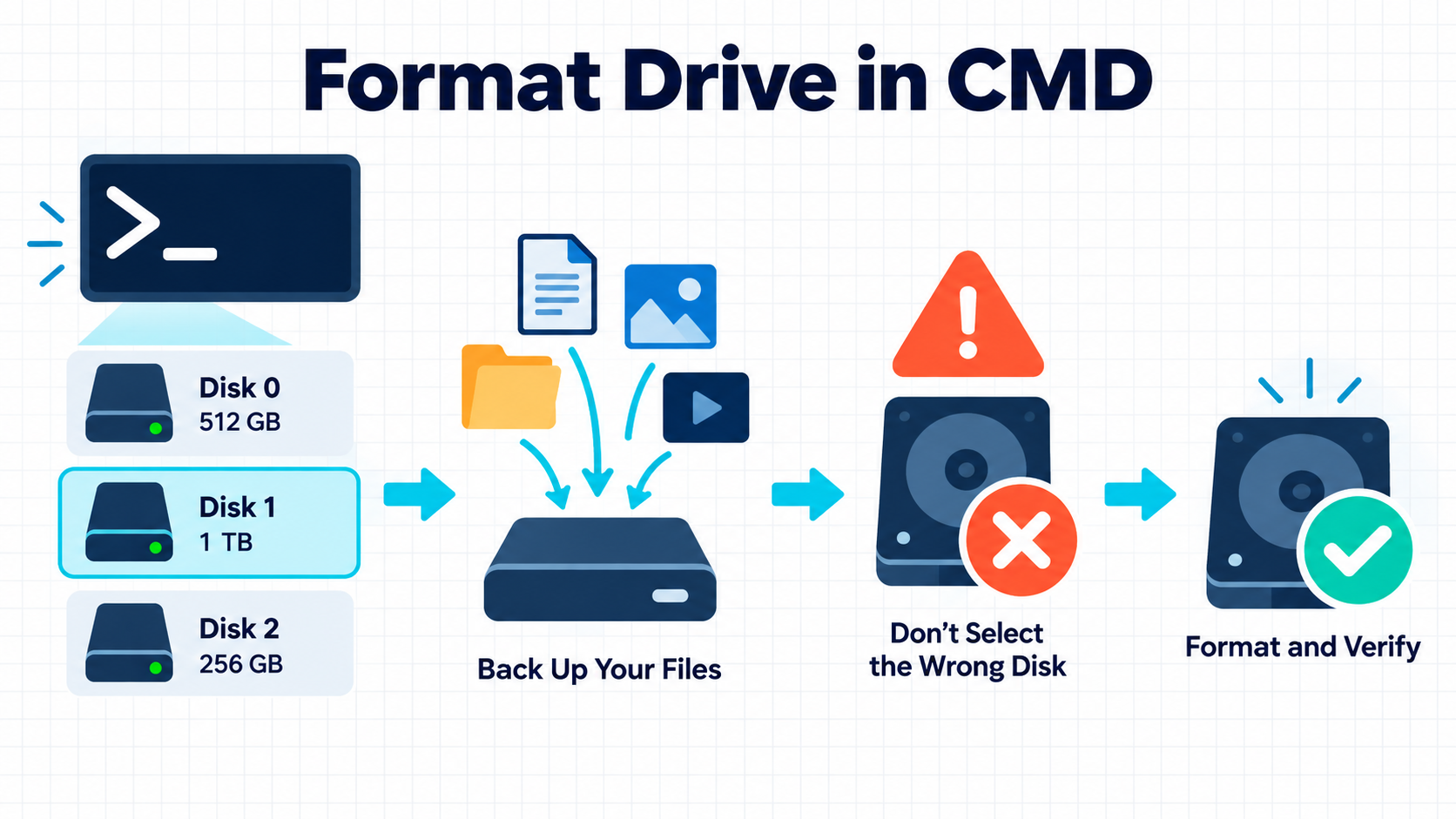
format drive in CMD: Formatting creates or replaces file-system structures. It does not serve as a backup and can make missing files harder to recover. Confirm the exact physical device, copy readable data, and recover anything missing before erasing.
Quick Answer
Formatting creates or replaces file-system structures. It does not serve as a backup and can make missing files harder to recover. Confirm the exact physical device, copy readable data, and recover anything missing before erasing. The safe order is identify, back up, recover, verify, and only then format. Choose a file system for the devices and file sizes you actually use, not because a dialog suggests a default.
What Formatting Changes
A format prepares a volume for a chosen file system. Quick format mainly replaces metadata, while a full format can write across more of the volume and may eliminate additional recovery opportunities. Neither repairs mechanical damage.
Protect Files Before Formatting
Stop downloads, synchronization, repairs, initialization, and unnecessary writes to the source. Record its model, capacity, partitions, encryption state, and exact error. Use another healthy physical disk for backup and recovery output.
Free System Recovery Options to Try First
Method 1: File History or Previous Versions
File History and Previous Versions are free Windows features. They help only if a backup or usable shadow copy existed before the loss.
- Stop using the affected drive and connect a different healthy destination disk.
- Open Control Panel > System and Security > File History > Restore personal files; alternatively inspect the original folder’s Properties > Previous Versions.
- Choose a version dated before the loss or format attempt.
- Preview a representative file when possible.
- Restore to another folder or physical disk instead of overwriting the source.
- Open several restored files and make a second backup.
Method 2: Windows Backup or Time Machine
A Windows Backup or macOS Time Machine set may contain the needed files. Restore selected files elsewhere before changing the affected source.
- Connect the known backup drive without formatting or repairing the affected source.
- Open Backup and Restore in Windows, or enter Time Machine on macOS.
- Select a backup date from before the files disappeared.
- Browse to the exact folders and select critical files first.
- Restore to a separate healthy location.
- Verify dates, sizes, and contents before any format operation.
Topic-Specific Safe Formatting Steps: format drive in CMD
- Open Disk Management first and record the target volume letter, label, size, and physical disk.
- Back up or recover files before opening an elevated Command Prompt.
- Use volume-listing tools and re-check the letter immediately before formatting.
- Use the format command with the verified letter, chosen file system, label, and quick option only when appropriate.
- Read the confirmation prompt and cancel if any identifier differs.
- After completion, run a small copy/read test and preserve the backup.
A format prepares a volume for a chosen file system. Quick format mainly replaces metadata, while a full format can write across more of the volume and may eliminate additional recovery opportunities. Neither repairs mechanical damage. Stop downloads, synchronization, repairs, initialization, and unnecessary writes to the source. Record its model, capacity, partitions, encryption state, and exact error. Use another healthy physical disk for backup and recovery output.
Recover Missing Files Before Formatting
If files are missing, recover them before formatting. Install the recovery program on a healthy volume and never save restored data back to the source. PandaOffice Drecov.
Recover Files with Drecov
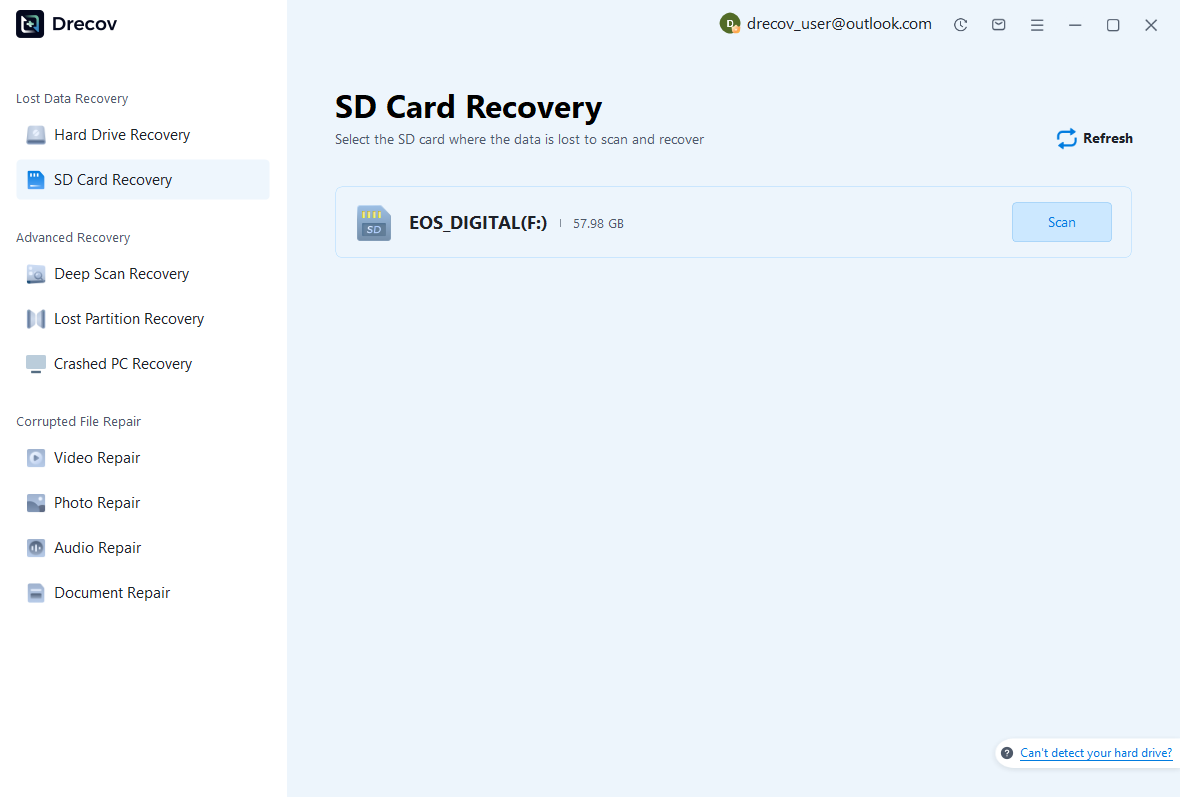
Step 1: Select the source
Open Drecov from a healthy Windows drive. Select the affected disk only after confirming its model and capacity.
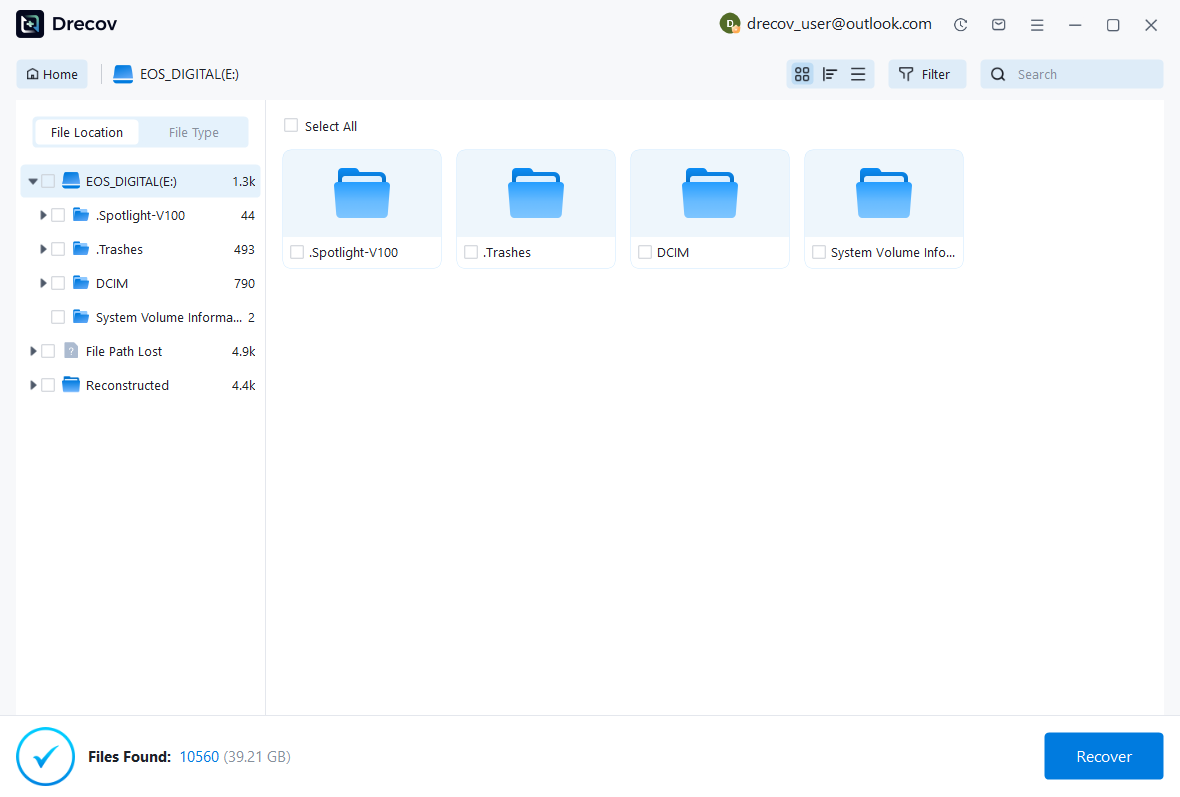
Step 2: Scan and filter
Run the initial scan, continue with Deep Scan when necessary and stable, then filter by path, type, name, size, or date.
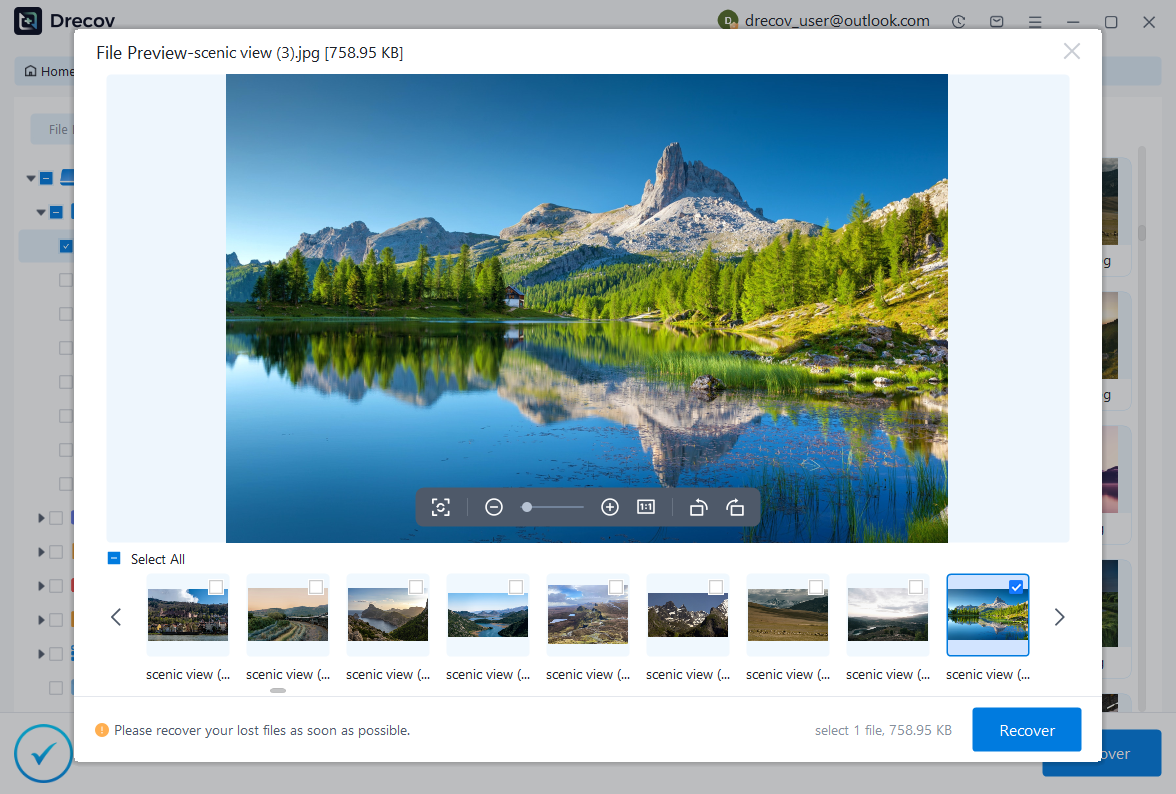
Step 3: Preview and save elsewhere
Preview supported files, choose what you need, and recover to a different physical disk. Verify several files before formatting.
Mistakes to Avoid
- Formatting when the operating system merely asks for it
- Selecting a disk by letter alone without checking capacity
- Running repair commands before copying or recovering files
- Saving recovered files to the original source
- Using full format when quick format meets a verified need
- Continuing software scans on a clicking or disconnecting drive
Frequently Asked Questions
Does formatting permanently erase every file?
It replaces file-system information and may overwrite data. Recovery can sometimes work after a quick format, but there is no guarantee and continued writing reduces the chance.
Can formatting repair physical damage?
No. Clicking, instability, wrong capacity, or overheating requires hardware-aware diagnosis.
Where should recovered files be saved?
To a different healthy physical disk with enough free space.
Related Guides and Official Reference
How to Format a Disk in Windows Safely. Official platform documentation.
Final Verdict
Format a Drive in CMD: Identify the Correct Disk First. The safe order is identify, back up, recover, verify, and only then format. Choose a file system for the devices and file sizes you actually use, not because a dialog suggests a default. If files are missing, recover them before formatting. Install the recovery program on a healthy volume and never save restored data back to the source.





