







To learn how to clear scratch disk Photoshop space safely, first identify the volume Photoshop is actually using and protect the open PSD or PSB project. Close other applications, save a new project copy on a healthy drive, and free ordinary storage before touching Photoshop Temp files. A scratch disk is working space, not a substitute for saved artwork, so deleting it cannot recover a missing project. This guide explains “how to clear scratch disk photoshop” with practical checks that protect important files before system or storage changes.
Find the Volume Photoshop Is Actually Filling
Photoshop can use one or more local volumes as scratch space when RAM is insufficient. The full message may reflect low free space, an enormous document, a nearly full system drive, or a different scratch-volume selection than the user expects. protecting damaged image originals For this specific issue, consult the official documentation.
| Scratch-space evidence | Space meaning | Storage response |
|---|---|---|
| Photoshop opens and the project is saved | The app still has a safe editing path | Save a versioned copy, then inspect scratch settings |
| The error appears at launch | The selected scratch volume is already too full | Use the startup shortcut to select another healthy volume |
| One document triggers the warning | Canvas, history, layers, or filters demand exceptional temporary space | Reduce the document deliberately after saving a copy |
| Photoshop Temp remains after a crash | A stale temporary file may occupy space | Close Photoshop fully before removing only confirmed stale temp data |
| PSD or linked asset was deleted | This is file loss, not scratch cleanup | Stop writes and recover the original location |
| The drive is slow, disconnecting, or reporting errors | The storage itself may be unstable | Stop cleanup and scanning; image or seek professional help |
Use a Space Budget Instead of Random Deletion
Photoshop opens and the project is saved
The app still has a safe editing path The safest next move is save a versioned copy, then inspect scratch settings. Record the exact space result before proceeding, because a changed message can hide the original cause without correcting it. If the space test affects project access or drive stability, stop cleanup and return to data protection.
The error appears at launch
The selected scratch volume is already too full The safest next move is use the startup shortcut to select another healthy volume. Record the exact space result before proceeding, because a changed message can hide the original cause without correcting it. If the space test affects project access or drive stability, stop cleanup and return to data protection.
One document triggers the warning
Canvas, history, layers, or filters demand exceptional temporary space The safest next move is reduce the document deliberately after saving a copy. Record the exact space result before proceeding, because a changed message can hide the original cause without correcting it. If the space test affects project access or drive stability, stop cleanup and return to data protection.
Photoshop Temp remains after a crash
A stale temporary file may occupy space The safest next move is close photoshop fully before removing only confirmed stale temp data. Record the exact space result before proceeding, because a changed message can hide the original cause without correcting it. If the space test affects project access or drive stability, stop cleanup and return to data protection.
PSD or linked asset was deleted
This is file loss, not scratch cleanup The safest next move is stop writes and recover the original location. Record the exact space result before proceeding, because a changed message can hide the original cause without correcting it. If the space test affects project access or drive stability, stop cleanup and return to data protection.
The drive is slow, disconnecting, or reporting errors
The storage itself may be unstable The safest next move is stop cleanup and scanning; image or seek professional help. Record the exact space result before proceeding, because a changed message can hide the original cause without correcting it. If the space test affects project access or drive stability, stop cleanup and return to data protection.
Preserve the Project Before Purging or Cleaning
Save the current document under a new name on another healthy device, confirm linked assets, and check cloud or version-history copies. Purge commands can remove undo states and clipboard data, while broad cleanup can delete the wrong project or recovery file. recovering recently deleted project files
Recover Artwork Deleted During Scratch-Disk Cleanup
Drecov is appropriate only when a local PSD, PSB, image asset, document, archive, or other project file was deleted or became inaccessible on stable Windows storage; it does not clear Photoshop’s scratch allocation. PandaOffice Drecov handles Windows data recovery across PCs, HDDs, SSDs, external disks, USB drives, SD cards, and memory cards. The read-only recovery mode combines Quick Scan, Deep Scan, filters, preview, and Lost Partition Recovery for photos, videos, documents, emails, audio, and archives. In this case it protects accessible or missing files before deleting stale temporary data, purging history, changing scratch volumes, resetting preferences, or performing more cleanup. It cannot increase free space, repair Photoshop, reconstruct unsaved edits, clear live temporary allocations, or repair a failing drive, repair physical damage, eliminate malware, guarantee overwritten data, or replace the actual system or application fix.
⚠ Warning: Install it on a drive different from the one where your data was lost to prevent overwriting.
Stop Writes and Assess the Source
If the source that held the deleted artwork clicks, disconnects, freezes, or reports serious read errors, stop creating previews and repeated scans. Preserve an image or use professional recovery. Review an existing backup without changing the scratch-disk source. Do not keep scanning an artwork drive that clicks, drops offline, freezes the PC, changes capacity, or reports severe read errors. Preserve unstable artwork storage with a controlled image or professional recovery assistance.
Prepare a Healthy Destination
Connect another separate physical destination drive with enough space for the recovered artwork assets. Run Drecov from a separate Windows installation and never install it on the partition that contains the lost data. Keep the scratch-disk source unchanged while the destination is checked for free space and normal write access.
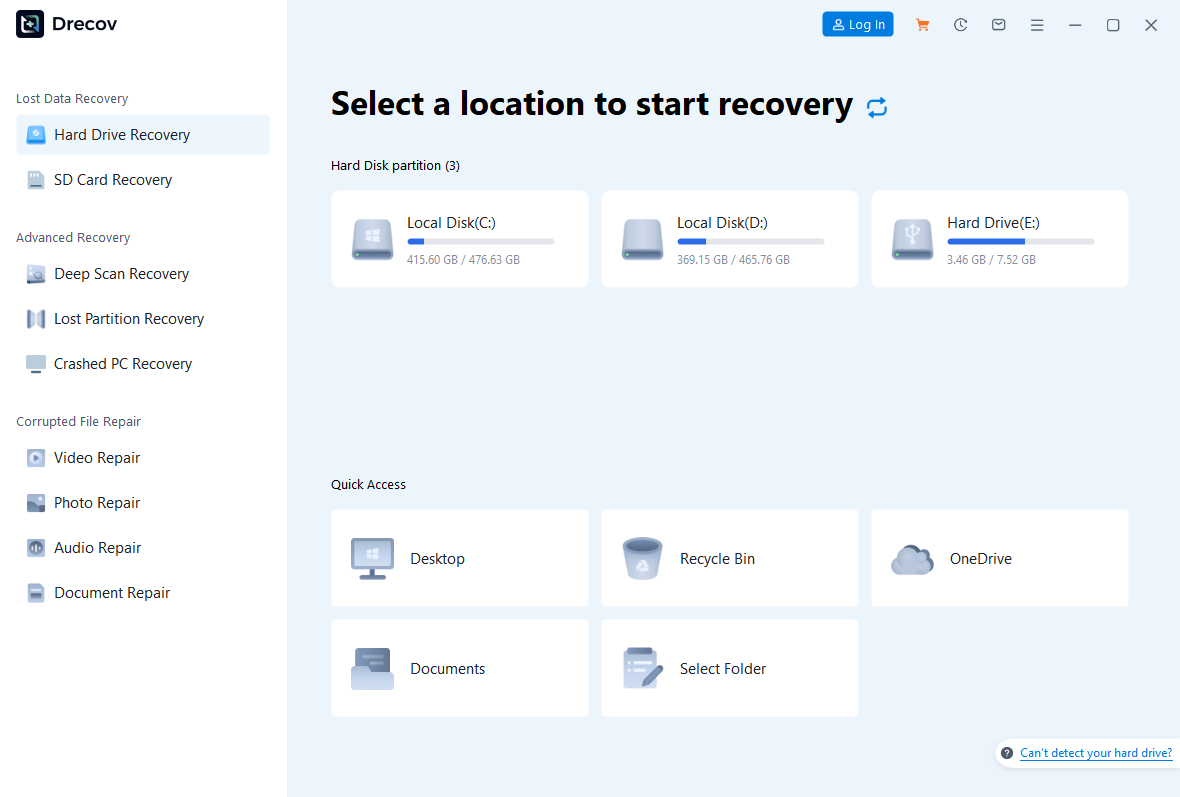
Step 1: Open Drecov and Select the stable drive and original folder where the deleted PSD, PSB, linked asset, or project archive existed
Open PandaOffice Drecov and choose the stable drive and original folder where the deleted PSD, PSB, linked asset, or project archive existed. Verify the artwork drive, project path, capacity, and deletion location before starting recovery. If the original Windows installation cannot boot, connect the stable scratch-disk source disk to another working Windows computer rather than installing anything onto it.
Step 2: Run Quick Scan, Then Escalate Carefully
Start Quick Scan when a PSD, PSB, or linked artwork asset was deleted during cleanup. If the missing artwork is absent and the medium remains stable, continue with Deep Scan. A missing artwork volume calls for Lost Partition Recovery before initialization, formatting, or recreating the volume.
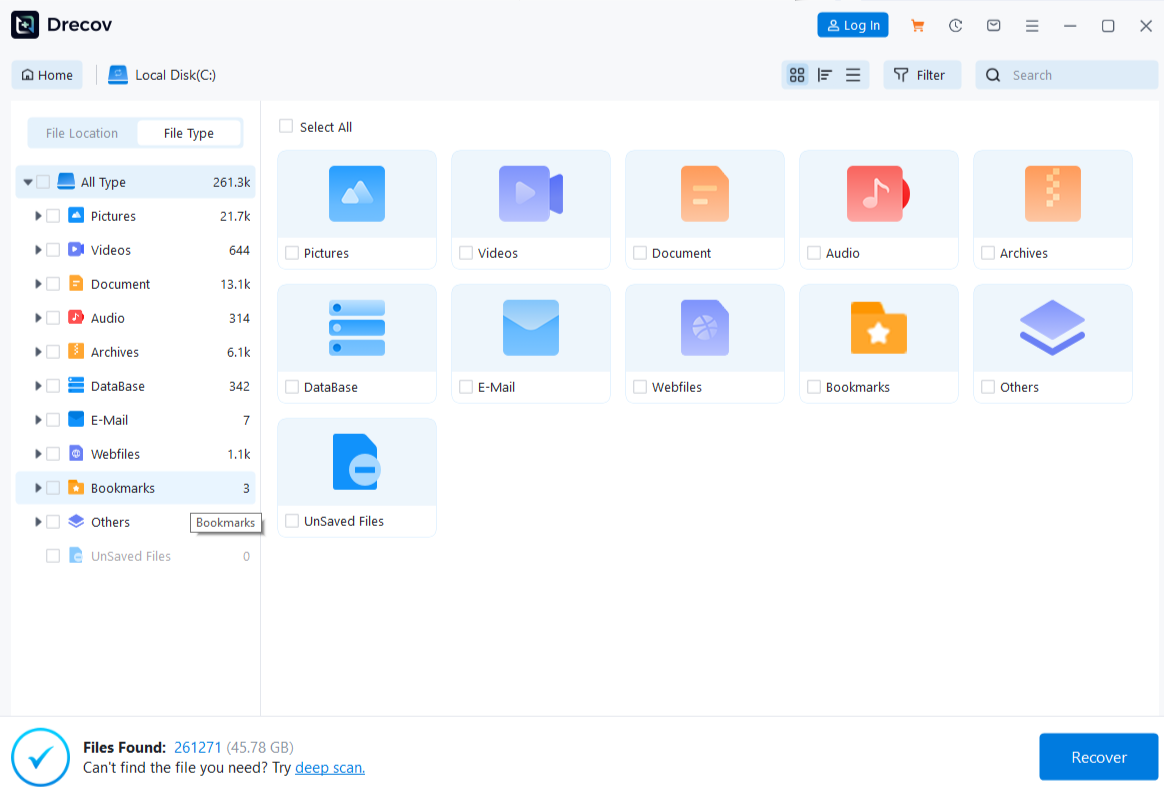
Step 3: Filter, Locate, and Preview Representative Results
Filter by PSD, PSB, TIFF, JPEG, PNG, RAW, PDF, filename, former project path, and deletion time. Include linked assets and exports needed to rebuild the job. Preview several representative supported artwork assets before selecting the full set. A preview can confirm visible pixels in a sample, but not every PSD layer, smart object, linked asset, or project byte.

Recover Away From the Source and Verify
Save selected artwork assets to the prepared separate destination drive, never back to the scratch-disk source. If the restored PSD or asset is not in the chosen path, check Drecov Folder and Recovery Folder. Open recovered copies in Photoshop, inspect layers and smart objects, test linked assets, zoom across the canvas, save under a new name, close, and reopen. Only after sampling and validating the recovery should you proceed with deleting stale temporary data, purging history, changing scratch volumes, resetting preferences, or performing more cleanup.
Clear Space With the Least Destructive Option First
Free Ordinary Storage Outside Photoshop
Empty only reviewed trash, move large personal files to another healthy device, and remove dispensable downloads. Keep project folders and application-recovery data out of bulk deletion. Define the required space result before this action and test the original symptom afterward. If scratch usage does not improve, return to the space measurements and select the next relevant storage action.
Remove Stale Photoshop Temp Files
Exit Photoshop and confirm no Adobe process is using the file. Delete only clearly identified stale Photoshop Temp data on the active scratch volume, never an open project’s sole copy. Define the required space result before this action and test the original symptom afterward. If scratch usage does not improve, return to the space measurements and select the next relevant storage action.
Choose a Different Scratch Volume
In Preferences, select a fast healthy local volume with substantial free space. If Photoshop will not open, use Adobe’s documented startup-key method to choose the volume. Define the required space result before this action and test the original symptom afterward. If scratch usage does not improve, return to the space measurements and select the next relevant storage action.
Purge Only When Undo Loss Is Acceptable
Purge clipboard or history only after saving a verified project copy. This can free working memory but permanently removes those in-session states. Define the required space result before this action and test the original symptom afterward. If scratch usage does not improve, return to the space measurements and select the next relevant storage action.
Reduce a Document Intentionally
Flattening, rasterizing, shrinking dimensions, or reducing history can alter editability or quality. Duplicate the file and apply only changes the project can tolerate. Define the required space result before this action and test the original symptom afterward. If scratch usage does not improve, return to the space measurements and select the next relevant storage action.
Confirm the Fix Under a Real Editing Load
Reopen the preserved project, repeat the operation that produced the warning, and monitor free space on the configured scratch volume. Save, close, and reopen the project before deleting backup copies. choosing a separate recovery destination
- Deleting every large file labeled temp while Photoshop is open
- Assuming the C drive is always the selected scratch disk
- Purging history before saving a recoverable project copy
- Recovering deleted files back to the same source volume
- Treating a disconnecting drive as an ordinary low-space problem
How to clear scratch disk photoshop FAQs
Can I delete Photoshop Temp files?
Only after Photoshop is fully closed and the files are confirmed stale; active temp data may belong to current work.
Why is the message shown when another drive has space?
Photoshop may be configured to use a different volume, or the operation may require more temporary capacity than expected.
Does clearing the scratch disk delete my PSD?
Normal scratch cleanup should not target saved projects, but careless manual deletion can remove them.
Can Drecov clear a scratch disk?
No. It recovers deleted local files from stable storage; normal storage management clears scratch space.
Should I change the scratch volume?
Yes when another healthy local volume has adequate space and performance, after preserving the current project.
When troubleshooting “how to clear scratch disk photoshop”, begin with the least invasive step and verify recovered files before attempting repairs.
Conclusion
Knowing how to clear a scratch disk in Photoshop means protecting the project first, identifying the active volume, and freeing space in a controlled order. Save a verified copy, remove ordinary clutter or confirmed stale temp data, then adjust scratch settings if needed. If cleanup deleted a local PSD or asset, Drecov can recover it from stable storage to another healthy device, but it cannot recreate unsaved edits or fix a failing drive.






