







Understanding exFAT and NTFS File Systems
What Is NTFS and How Does It Work?
When formatting a storage device in Windows, one of the most common options you’ll encounter is NTFS. Short for New Technology File System, NTFS was introduced by Microsoft as a replacement for older file systems such as FAT16 and FAT32.
NTFS was designed with modern computing needs in mind. It supports advanced security controls, large storage volumes, file compression, encryption, disk quotas, and journaling capabilities that help protect data integrity.
Unlike older file systems, NTFS keeps track of changes through a transaction log. If a computer unexpectedly loses power or crashes, the file system can often recover more gracefully than simpler alternatives.
Today, NTFS remains the default file system for Windows operating systems. Most internal hard drives and SSDs used in Windows computers rely on NTFS because it offers excellent reliability and supports modern hardware capacities.
For users researching ntfs vs exfat, understanding NTFS is important because it prioritizes security, stability, and advanced file management rather than maximum compatibility across devices.
As storage capacities continue to increase, NTFS remains a preferred choice for desktop PCs, workstations, and servers where data protection is a high priority.
What Is exFAT and Why Was It Created?
exFAT stands for Extended File Allocation Table. Microsoft developed this file system to overcome many limitations associated with FAT32 while maintaining broad compatibility across different platforms.
One major drawback of FAT32 is its inability to store individual files larger than 4GB. This limitation became increasingly problematic as high-definition videos, virtual machine images, and large software packages became common.
exFAT was created to address these challenges.
Compared to NTFS, exFAT uses a simpler structure that requires less overhead when handling removable media. This design makes it especially suitable for:
- USB flash drives
- SD cards
- Portable SSDs
- External hard drives
- Digital cameras
- Gaming consoles
Because exFAT is supported by Windows, macOS, many Linux distributions, and numerous consumer electronics devices, it has become one of the most versatile file systems available.
When evaluating exfat or ntfs, portability is often the biggest advantage offered by exFAT.
Users who frequently move storage devices between different operating systems typically choose exFAT because it avoids many compatibility restrictions associated with NTFS.
Why Choosing the Right File System Matters
Many people format a drive without considering how the selected file system may affect future usage.
The file system determines how data is organized, stored, secured, and accessed. Choosing the wrong format can lead to unnecessary limitations or compatibility problems.
For example, a portable SSD used between Windows and Mac computers may function much better with exFAT. Conversely, a Windows backup drive benefits significantly from NTFS features such as permissions and journaling.
The ongoing debate surrounding file system ntfs vs exfat exists because both formats serve different purposes.
Factors that influence the decision include:
- Operating system compatibility
- File size requirements
- Security needs
- Performance expectations
- Device type
- Long-term reliability
Understanding these differences before formatting a drive can prevent future headaches and help ensure the storage device meets your specific requirements.
⚠️ Warning: Formatting a drive erases existing data unless precautions are taken beforehand.
Key Differences Between exFAT and NTFS
Compatibility Across Windows, macOS, Linux, and Devices
Compatibility is one of the most significant distinctions in the difference between exfat and ntfs.
NTFS was developed primarily for Windows environments. While modern operating systems can often read NTFS partitions, full write support varies.
Windows offers complete NTFS functionality by default.
macOS can read NTFS volumes natively but typically cannot write to them without additional software or configuration changes.
Linux distributions generally support NTFS through built-in drivers or packages, although setup may vary depending on the distribution.
exFAT takes a more universal approach.
Most modern operating systems support exFAT out of the box, making it highly suitable for removable media shared between different devices.
Commonly supported platforms include:
- Windows
- macOS
- Linux
- Android
- Smart TVs
- Gaming consoles
- Cameras
- Multimedia devices
This broad support explains why exFAT has become a standard choice for external storage devices.
When discussing ntfs and exfat, compatibility often becomes the deciding factor for many users.
File Size and Partition Limits
Storage capacity limits are another area where both file systems outperform FAT32.
NTFS supports extremely large files and partitions, making it suitable for enterprise environments and modern storage devices.
Likewise, exFAT was designed to eliminate the 4GB file-size limitation that constrained FAT32.
For practical purposes, both file systems can handle:
- High-resolution video files
- Large backup archives
- Virtual machine disks
- Professional media projects
- Large databases
In everyday usage, most consumers will never reach the theoretical limits of either format.
However, NTFS generally offers more advanced management capabilities when working with extremely large storage environments.
As a result, discussions surrounding what is the difference between ntfs and exfat typically focus less on size limitations and more on compatibility and security features.
Security Features and Access Controls
Security is one area where NTFS clearly holds an advantage.
NTFS supports advanced permission systems that allow administrators to control access to files and folders.
Features include:
- File ownership controls
- User permissions
- Encryption support
- Disk quotas
- Auditing capabilities
These features are essential in business environments where multiple users access the same system.
exFAT takes a simpler approach.
Its design prioritizes portability and broad device compatibility rather than advanced security management.
As a result, exFAT lacks many enterprise-level protections available in NTFS.
If protecting sensitive information is a priority, NTFS is often the better choice.
This distinction frequently influences users evaluating ntfs versus exfat for business and professional workloads.
Reliability, Journaling, and Data Integrity
One of NTFS’s strongest features is journaling.
Journaling records pending changes before they are fully written to disk. If a system crashes during a write operation, the file system can use the journal to recover more effectively.
This capability reduces the risk of corruption and helps maintain file system consistency.
exFAT does not use journaling.
While this simplifies the file system and improves compatibility, it also means there is less protection against unexpected interruptions.
For removable devices that are frequently disconnected, proper ejection procedures become especially important.
⚠️ Warning: Removing an exFAT drive during active file transfers can increase the risk of file corruption.
For long-term storage reliability, NTFS generally provides stronger safeguards.
This difference is often highlighted when comparing exfat versus ntfs for professional environments.
exFAT vs NTFS Performance in Real-World Usage
Performance comparisons can be complicated because results vary depending on hardware, workloads, and operating systems.
When discussing exfat vs ntfs performance, there is no universal winner.
NTFS typically performs very well on internal drives where advanced features can take full advantage of system resources.
Tasks that benefit from NTFS include:
- Large-scale backups
- System files
- Enterprise workloads
- Multi-user environments
exFAT often performs efficiently on removable storage due to its lightweight structure.
Portable drives used for:
- Media transfers
- Cross-platform sharing
- Camera storage
- Flash memory devices
may experience lower overhead with exFAT.
The performance difference is usually modest for average users.
In most cases, selecting the appropriate file system based on usage requirements is more important than focusing solely on benchmark results.
NTFS vs exFAT in Different Usage Scenarios
External Hard Drives and Portable SSDs
External storage devices are among the most common places where users must decide between NTFS and exFAT.
The ideal choice depends on how the drive will be used.
If the drive remains connected primarily to Windows systems, NTFS is often the preferred option. Users benefit from improved security, journaling, and better integration with Windows features.
However, portability changes the equation.
Many people connect portable SSDs to multiple devices, including Macs, Linux computers, and gaming systems. In these situations, exFAT usually offers a smoother experience.
The decision between ntfs or exfat often comes down to whether compatibility or advanced functionality matters more.
A photographer moving files between Windows and Mac workstations will likely prefer exFAT, while a Windows-only backup drive is better suited to NTFS.
USB Flash Drives and Memory Cards
USB drives and memory cards are frequently used across different devices.
Because of this, exFAT has become a common recommendation.
Its broad support allows a single flash drive to function across multiple operating systems without requiring reformatting.
Memory cards used in cameras and drones also commonly rely on exFAT because modern media files regularly exceed the 4GB limit associated with FAT32.
NTFS can still be used on USB drives, particularly when they serve as Windows-only storage devices.
However, compatibility issues may arise when connecting NTFS-formatted media to non-Windows hardware.
For portable storage, many users evaluating exfat ntfs comparisons ultimately select exFAT due to convenience and flexibility.
Gaming Consoles and Multimedia Devices
Gaming consoles, smart TVs, media players, and streaming devices often support exFAT more consistently than NTFS.
Large game files, 4K videos, and multimedia libraries benefit from exFAT’s ability to store large files while maintaining broad compatibility.
Different manufacturers implement storage support differently, but exFAT has become widely accepted across consumer electronics.
For users frequently transferring media between devices, exFAT often provides the least restrictive experience.
The debate around ntfs v exfat therefore extends beyond computers and includes a growing ecosystem of entertainment hardware.
Backup Drives and Long-Term Storage
When choosing a file system for backups, reliability often becomes more important than compatibility.
Backup drives are designed to store valuable information for extended periods, including:
- Personal documents
- Family photos
- Business records
- System images
- Project archives
Because these files may remain untouched for months or years, file system stability becomes a critical consideration.
NTFS provides several features that make it attractive for backup storage. Its journaling mechanism helps maintain file system consistency and reduce the likelihood of corruption after unexpected shutdowns. NTFS also supports file permissions and security settings that can help protect sensitive information.
By comparison, exFAT focuses on simplicity and portability. While it handles large files efficiently and works across multiple operating systems, it lacks some of the fault-tolerance mechanisms found in NTFS.
For a backup drive that remains connected primarily to Windows systems, NTFS is usually the safer option. However, if the backup drive must be shared regularly between Windows and macOS computers, exFAT may offer a more convenient solution.
Ultimately, selecting exfat or ntfs for backup storage depends on how frequently the drive moves between platforms and how important advanced protection features are to your workflow.
NTFS vs exFAT on Linux Systems
Linux users often encounter unique considerations when selecting a file system.
Historically, Linux support for NTFS required additional drivers. Modern distributions have improved significantly, and many now provide reliable NTFS access through built-in components.
When evaluating ntfs vs exfat on linux, both file systems are generally usable, but they serve different purposes.
NTFS may be preferable when:
- Sharing files with Windows systems
- Maintaining Windows-compatible backups
- Accessing internal Windows drives
exFAT may be preferable when:
- Using USB flash drives
- Sharing files across multiple operating systems
- Working with cameras or portable devices
- Moving data between Linux and macOS
Most popular Linux distributions now include native or near-native support for exFAT, making it particularly attractive for removable media.
For Linux users who frequently transfer files between multiple operating systems, exFAT often delivers a simpler experience with fewer permission-related complications.
However, users maintaining dedicated Linux workstations may choose entirely different file systems such as ext4, XFS, or Btrfs for internal storage.
⚠️ Warning: Always verify your Linux distribution’s file-system support before formatting a drive intended for cross-platform use.
How to Convert, Format, or Recover Drives Using NTFS or exFAT
Method 1. Format a Drive as NTFS in Windows
Test Environment
- Windows 11 Pro 24H2
- Samsung 1TB SSD
- USB 3.2 External Enclosure
Formatting a drive as NTFS is straightforward and requires no third-party tools.
Steps:
- Connect the storage device.
- Open File Explorer.
- Locate the drive.
- Right-click the drive and choose Format.
- Select NTFS from the File System menu.
- Choose Quick Format if desired.
- Click Start.
After formatting, the drive becomes ready for Windows-focused workloads.
NTFS is particularly suitable for:
- Backup drives
- Internal SSDs
- Windows system storage
- Large media libraries
- Professional workstations
Users selecting ntfs or exfat for a Windows-only environment will often find NTFS provides the best balance of reliability and advanced functionality.
⚠️ Warning: Formatting permanently removes existing files unless backups are created beforehand.
Method 2. Format a Drive as exFAT for Cross-Platform Use
Test Environment
- Windows 11 Home
- SanDisk 512GB Portable SSD
- MacBook Pro and Windows Laptop
If a drive will be used on multiple operating systems, exFAT is often the most practical choice.
To format a drive as exFAT:
- Connect the storage device.
- Open File Explorer.
- Right-click the target drive.
- Select Format.
- Choose exFAT as the file system.
- Leave Allocation Unit Size on default settings.
- Click Start.
Once completed, the drive can typically be accessed by:
- Windows computers
- macOS devices
- Many Linux systems
- Cameras
- Smart TVs
- Gaming consoles
This flexibility is why many users researching which is better ntfs or exfat ultimately choose exFAT for portable storage.
The ability to move a drive between devices without worrying about compatibility often outweighs the additional features provided by NTFS.
Method 3. Convert FAT32 to NTFS Without Data Loss
Test Environment
- Windows 10 Pro
- Kingston USB Drive
- 128GB Capacity
In some situations, users want NTFS functionality without erasing existing files.
Windows includes a built-in conversion utility that can transform FAT32 volumes into NTFS.
Steps:
- Open Command Prompt as Administrator.
- Type:
convert X: /fs:ntfs
- Replace X with the drive letter.
- Press Enter.
- Wait for the conversion process to finish.
The system converts the file system while preserving existing data in most cases.
Benefits of conversion include:
- Support for larger files
- Enhanced security options
- Improved reliability
- Better compatibility with Windows features
Although conversion is generally safe, creating a backup beforehand remains highly recommended.
This method can be useful when upgrading older storage devices that still rely on FAT32.
Method 4. Recover Files After Formatting with PandaOffice Drecov
Test Environment
- Windows 11 Pro
- 2TB External HDD
- exFAT and NTFS Partitions
Accidental formatting remains one of the most common causes of data loss.
Whether a drive was formatted as NTFS or exFAT, recovery may still be possible if new data has not overwritten the original files.
PandaOffice Drecov can help recover lost content from formatted drives.
Basic recovery workflow:
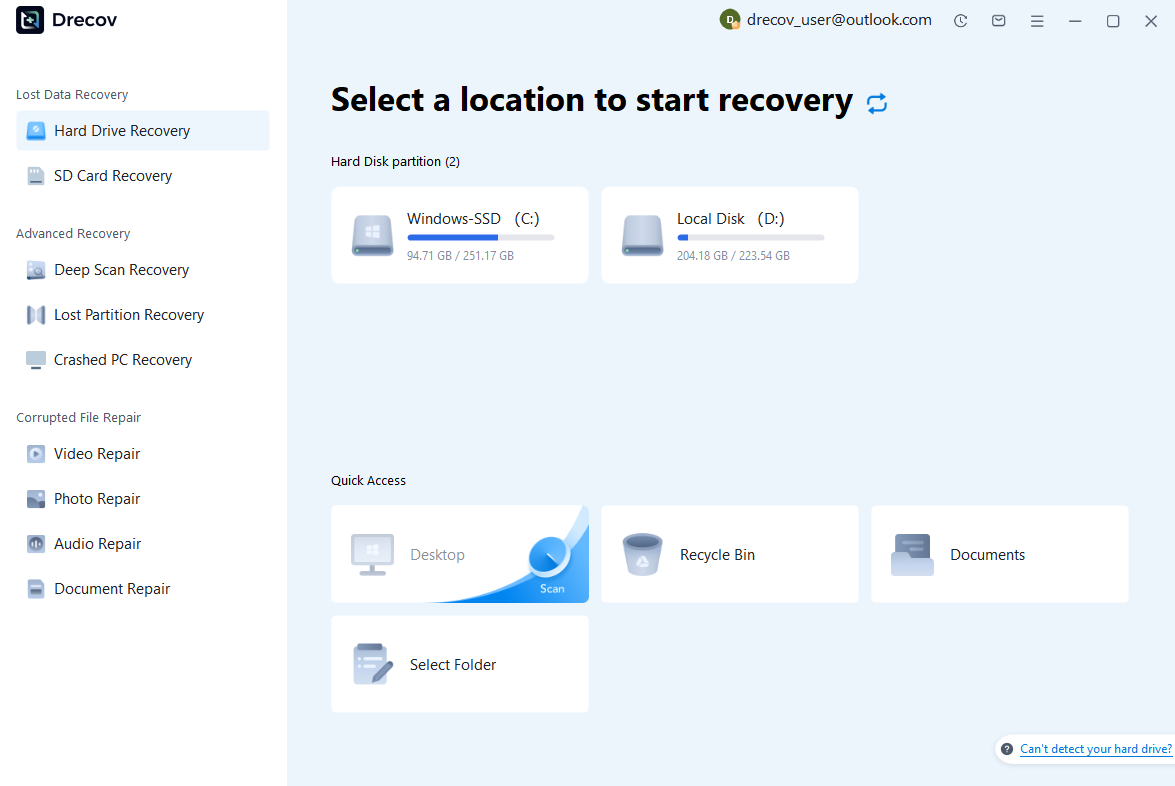
Step 1: Scan the Storage Device (SD Card / Hard Drive / USB)
Connect your device (SD card, HDD/SSD, or USB drive) to your computer and launch PandaOffice Drecov. Select the target device and start the scan. The software will perform a quick scan and deep scan to detect lost or deleted data.
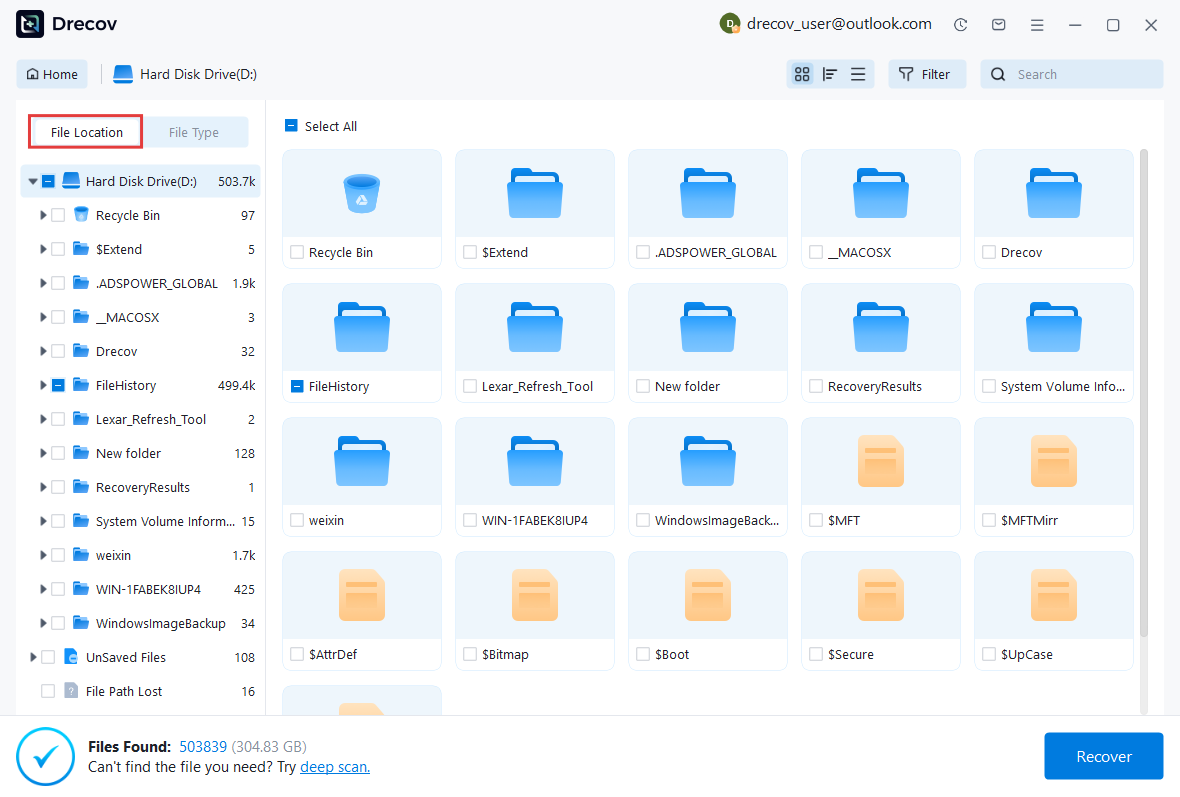
Step 2: Locate and Preview Lost Files
After scanning, browse the detected files and use the preview feature to check recoverable data. You can preview documents (Word, Excel, PDF), photos, and videos to ensure file integrity before recovery.
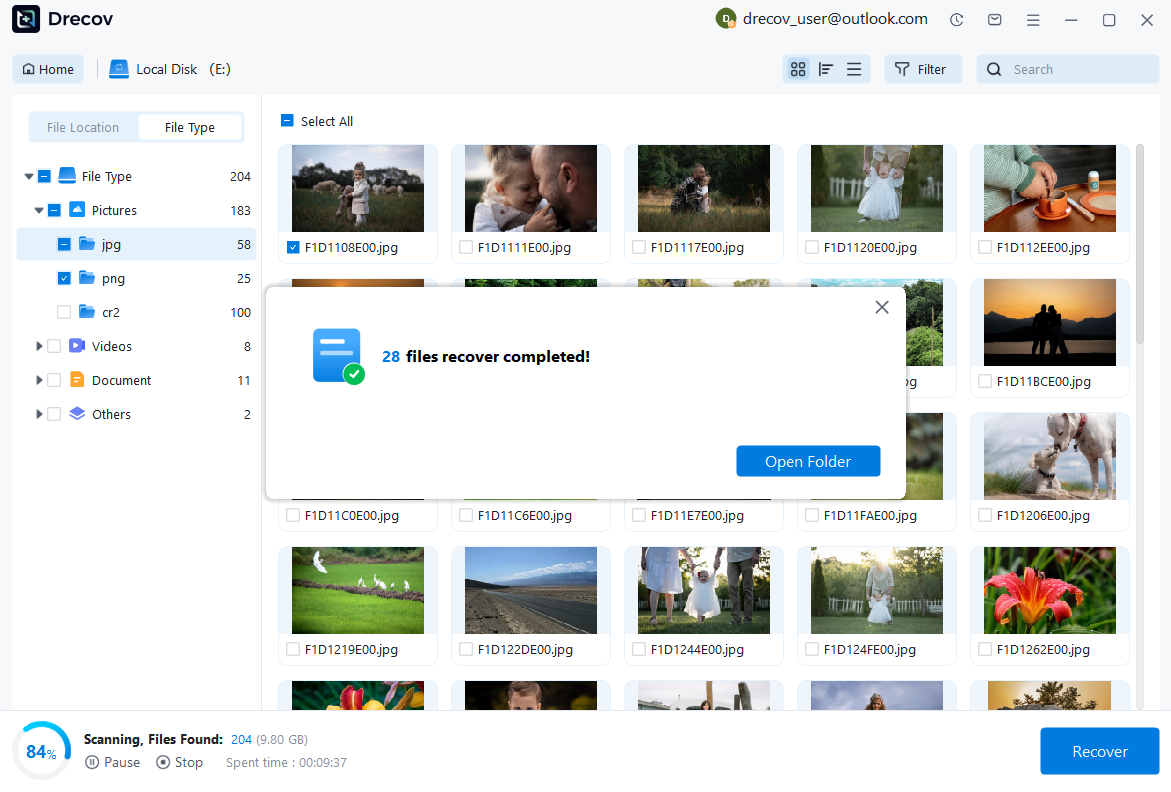
Step 3: Recover and Save to a New Location
Select the files you want to restore and click recover. Save all recovered data to a different drive or location (not the original device) to avoid overwriting lost data.
Why Choose PandaOffice Drecov Recovery Software?
PandaOffice Drecov offers a fast, secure, and user-friendly solution for recovering lost files across multiple scenarios. Whether you need email recovery, ZIP File Recovery, format data recovery, or help to recover deleted drafts Outlook, the software provides reliable recovery performance for both personal and business users.
PandaOffice Drecov supports recovery from formatted hard drives, SSDs, USB drives, SD cards, and external storage devices. Its advanced scanning engine can locate deleted archives, damaged ZIP files, lost Outlook drafts, and accidentally removed documents with high accuracy. For users searching for how to find deleted messages in Teams, PandaOffice Drecov can also help recover exported chat files, attachments, and related local cache data when available.
Key advantages include:
- Deep scan technology for complex data loss situations
- Support for emails, archives, videos, photos, and office documents
- Recovery from accidental deletion, formatting, corruption, and system crashes
- Easy preview before restoring files
- Compatible with Windows and multiple storage devices
Unlike complicated enterprise recovery tools, PandaOffice Drecov keeps the recovery process simple. Users can scan, preview, and restore files in just a few steps without technical expertise.
Whether you are dealing with lost Outlook drafts, corrupted ZIP archives, formatted drives, or missing communication data, PandaOffice Drecov provides an efficient and practical recovery experience designed to minimize downtime and protect important files.
⚠️ Warning: Stop using the formatted drive immediately after discovering data loss to maximize recovery success.
Frequently Asked Questions About exFAT and NTFS
Is exFAT Better Than NTFS for External Drives?
The answer depends on how the drive will be used.
Many users ask, is exfat better than ntfs for external storage.
If the drive needs to work across Windows, macOS, Linux, and consumer devices, exFAT is often the better choice.
If the drive remains connected primarily to Windows systems and stores important data, NTFS may provide stronger protection and additional management features.
Neither format is universally superior; each excels in different situations.
Which Is Better NTFS or exFAT for USB Flash Drives?
When discussing which is better ntfs or exfat, USB flash drives are one of the most common examples.
For general-purpose flash drives:
- exFAT offers broader compatibility.
- exFAT supports large files.
- exFAT works on more devices.
NTFS may be preferable if:
- The drive stays within Windows environments.
- Security permissions are required.
- File encryption is important.
For most consumers, exFAT remains the more versatile choice.
What Is the Difference Between NTFS and exFAT?
Many users search what is the difference between ntfs and exfat before formatting a new drive.
The primary differences include:
| Feature | NTFS | exFAT |
|---|---|---|
| Windows Support | Excellent | Excellent |
| macOS Write Support | Limited | Native |
| Security Features | Advanced | Basic |
| Journaling | Yes | No |
| External Device Compatibility | Moderate | Excellent |
| Removable Media Usage | Good | Excellent |
In simple terms, NTFS emphasizes security and reliability, while exFAT prioritizes portability and compatibility.
Can macOS Write to NTFS Drives?
By default, macOS can usually read NTFS volumes but does not provide full native write support.
Users often need:
- Third-party drivers
- Specialized utilities
- Manual configuration changes
By contrast, exFAT provides full read-and-write functionality across both Windows and macOS without additional software.
This compatibility advantage contributes significantly to the popularity of exFAT for portable storage devices.
Should I Choose NTFS or exFAT for Large Files?
Both file systems support files far larger than the FAT32 4GB limitation.
For storing large files such as:
- 4K videos
- RAW photo archives
- Virtual machines
- Backup images
either format is technically suitable.
The better choice depends on the intended environment.
If the files remain within Windows systems, NTFS may offer stronger protection.
If the files travel between multiple operating systems, exFAT often delivers a smoother experience.
Final Verdict: NTFS or exFAT?
Choosing the Best File System Based on Your Needs
The debate over exfat vs ntfs continues because neither file system is designed to replace the other completely.
NTFS remains the preferred option for:
- Windows internal drives
- System partitions
- Professional workstations
- Long-term backups
- Security-focused environments
exFAT excels in scenarios involving:
- USB flash drives
- Portable SSDs
- Memory cards
- Cross-platform file sharing
- Consumer electronics
When comparing exfat versus ntfs, the decision should be based on usage requirements rather than assuming one format is universally superior.
If compatibility across devices is the highest priority, exFAT is often the better choice. If reliability, security, and advanced Windows features matter most, NTFS remains difficult to beat.
By understanding the strengths and limitations of both file systems, users can make informed decisions that improve storage performance, compatibility, and long-term data management.





