







In the modern digital landscape, our lives are intrinsically linked to our computers. Whether you are a professional photographer with thousands of high-resolution images or a student finishing a critical thesis, data is the lifeblood of your daily routine. However, a common question often arises among users who find their files missing or misplaced: are files directly on windows or are they hidden within complex cloud architectures?
Understanding where your data resides is the first step toward effective management and, more importantly, successful recovery. This article explores the nuances of Windows file storage, the mechanics of how data is deleted, and the professional methods you can use to bring “lost” files back from the brink.
Understanding Windows File Architecture: Are Files Directly on Windows?
To solve any problem, you must first understand the environment. Many users mistakenly believe that as soon as they save a document, it becomes a permanent part of the physical hard drive in a way that can never be altered. In reality, Windows uses a complex File Allocation Table (FAT) or New Technology File System (NTFS) to keep track of where bits and bytes are stored.
Where Your Data Actually Lives
When we ask, “are files directly on windows,” we are essentially asking about the logical path of the data. Usually, your files reside in specific directories like C:\Users\[YourName]\Documents. However, with the integration of OneDrive and other cloud services, the answer has become more nuanced.
Often, what you see in your File Explorer is a “pointer” or a shortcut to a file that might actually be stored in the cloud. This distinction is vital for data recovery. If a file is “online-only,” it isn’t technically “on Windows” in a physical sense on your hard drive. If it is a local file, it occupies physical sectors on your SSD or HDD.
The Lifecycle of a Deleted File
When you delete a file, Windows does not immediately shred the data. Instead, it marks the space occupied by that file as “available.” This is a crucial concept in data recovery. As long as new data does not overwrite that specific physical sector, the original file is often recoverable.
Level 1: Basic Recovery – The Recycle Bin and Shadow Copies
Before jumping into advanced software, always start with the built-in safety nets provided by the operating system. If you are wondering if your files are directly on windows still after an accidental deletion, the Recycle Bin is your first stop.
Method 1: Utilizing the Recycle Bin
The Recycle Bin is a temporary holding area for deleted files. It is the most “user-friendly” layer of data protection.
- Step 1: Locate the Recycle Bin icon on your desktop. If you cannot find it, you can search for it in the Windows Start menu.
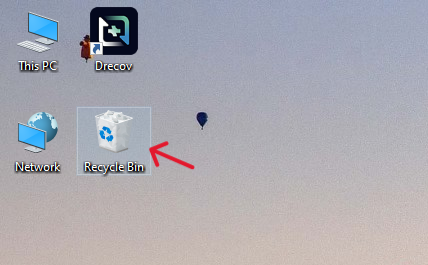
- Step 2: Double-click to open it and browse through the list of deleted items. You can sort by “Date Deleted” to find recent files quickly.
- Step 3: Right-click the desired file and select Restore. The file will return to its original folder.
Method 2: Using File History
Windows File History is a powerful feature that takes snapshots of your folders at regular intervals. If you had this enabled, you can “roll back” a folder to a previous state.
- Step 1: Open the folder where the file used to be located.
- Step 2: Click the Home tab in the File Explorer ribbon and select History.
- Step 3: Use the arrows at the bottom to navigate through different versions of the folder.
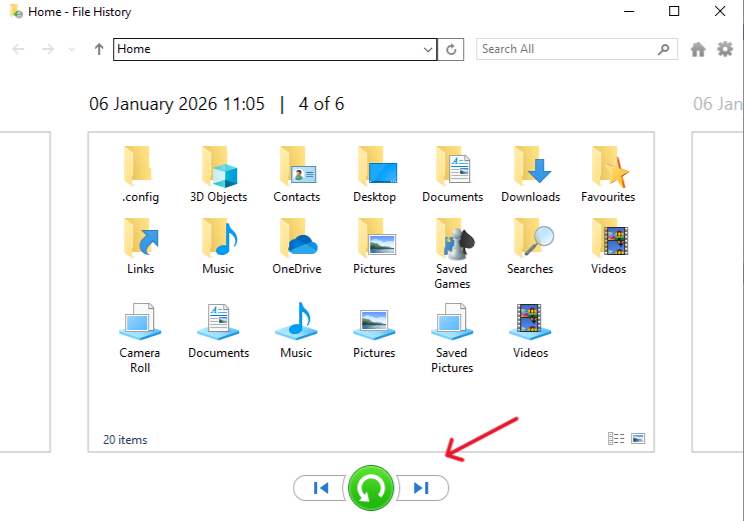
- Step 4: Once you find the version containing your missing file, click the green Restore button.
Level 2: Professional Recovery with PandaOffice Drecov
When basic methods fail—perhaps you emptied the Recycle Bin or the file was “permanently” deleted using Shift + Delete—you need a professional-grade tool. This is where PandaOffice Drecov excels. It bypasses the operating system’s logical layer to scan the physical sectors of your drive.
Why Choose PandaOffice Drecov?
PandaOffice Drecov is designed to bridge the gap between complex forensic data recovery and an intuitive user experience. It handles various file systems, including NTFS, FAT32, and exFAT, ensuring that regardless of how your files are directly on windows formatted, they can be found.
⚠ Warning: Never install the recovery software on the same drive or partition where the lost files were located. Doing so may overwrite the very data you are trying to save.
Step-by-Step Guide to Using PandaOffice Drecov
Follow these steps carefully to maximize your chances of a successful recovery.
Step 1: Select the Scanning Location
Launch the application. You will be presented with a list of available drives and locations. Select the partition (usually the C: drive) where you suspect the files were stored. Click the Scan button to begin the process.

Step 2: Deep Scan and Real-Time Preview
PandaOffice Drecov will perform a “Quick Scan” followed by a “Deep Scan.” The Deep Scan looks for file signatures across the entire disk surface.

- Key Point: You can use the filter sidebar to sort by file type (e.g., .jpg, .docx, .pdf).
- Key Point: Use the Preview feature to verify the integrity of a file before committing to the recovery process.
Step 3: Execute Recovery
Check the boxes next to the files you wish to retrieve. Click the Recover button.
Warning: When prompted for a destination, choose an external USB drive or a different internal hard drive.
Level 3: Advanced System Fixes and Registry Management
Sometimes, files aren’t deleted; they are simply “hidden” or the system path has been corrupted. This level requires a bit more technical comfort.
Checking Attribute Settings via Command Prompt
If your files are directly on windows but not visible, they might have been marked as hidden or system files by a virus or a system error.
- Step 1: Press
Windows + Xand select Command Prompt (Admin) or PowerShell (Admin). - Step 2: Type the following command:
attrib -h -r -s /s /d G:\*.*(ReplaceG:with the drive letter of your choice). - Step 3: Press Enter. This command removes the “Hidden,” “Read-only,” and “System” attributes from all files on that drive.
The Role of the Windows Registry
In rare cases, specific registry keys govern how Windows handles file visibility and the Desktop path.
- Path:
HKEY_CURRENT_USER\Software\Microsoft\Windows\CurrentVersion\Explorer\User Shell Folders - Warning: Editing the Registry is risky. Always create a backup before making changes. Ensure the “Desktop” and “Personal” keys point to the correct local paths if you find that your files have disappeared following a system update.
Managing the Cloud: OneDrive and Windows Integration
A major reason people ask are files directly on windows is the aggressive integration of Microsoft OneDrive. While cloud backup is helpful, it can sometimes “kidnap” your local files, moving them from your physical drive to a virtualized space.
If you find that your “Save As” dialog is behaving strangely or your files are only appearing when you have an internet connection, you may need to adjust your sync settings. For more information on handling these specific Windows quirks, check out these helpful resources:
- Fixing Windows “Save As” default location stuck on OneDrive
- How to find the Recycle Bin in Windows 10/11
- Step-by-step guide to uninstalling OneDrive
Best Practices for Preventing Data Loss
While tools like PandaOffice Drecov are highly effective, the best recovery strategy is a proactive defense.
- The 3-2-1 Backup Rule: Keep 3 copies of your data, on 2 different media types, with 1 copy off-site (cloud or a different building).
- Regular Maintenance: Use the Official Microsoft Support site to keep your OS updated and run the “Check Disk” utility (
chkdsk) periodically to identify failing hardware early. - Immediate Action: If you realize a file is missing, stop using the computer immediately. Every minute of use increases the risk of Windows writing temporary files over your deleted data.
Are Files Directly on Window FAQs
1. If I move a file to an external drive, are files directly on Windows still?
Technically, no. When you move a file (using the “Cut” command or dragging to a different drive letter), Windows copies the data to the destination and then deletes the reference from the source. The file is no longer physically stored on your internal Windows drive. However, the metadata “footprint” might remain in your “Recent Files” list until cleared, which is why you might still see the file name in your quick access menu even if the data is gone.
2. Does “Storage Sense” affect whether files are directly on Windows?
Yes, significantly. Storage Sense is a Windows feature designed to automatically free up space. If enabled, it can take locally stored files that you haven’t opened in a while and change them to “Online-only” status in OneDrive. In this case, the files are directly on Windows no longer; they are moved to the cloud, leaving only a tiny placeholder on your disk. You can toggle this in Settings > System > Storage.
3. Why do some files reappear after I delete them?
This usually happens because of cloud synchronization conflicts. If you delete a file while offline, and another device updates that same file, the cloud service might “push” the file back to your machine once you reconnect. This creates the illusion that the files are stuck on Windows. To prevent this, ensure your sync status is “Up to date” before performing bulk deletions.
4. Can PandaOffice Drecov recover files if the drive was formatted?
In many cases, yes. When you perform a “Quick Format,” Windows replaces the file system’s index (the map) but doesn’t wipe the actual data sectors. Because the files are directly on Windows hardware until overwritten, PandaOffice Drecov can perform a signature scan to identify and reconstruct files even without the original folder structure.
5. How do “Libraries” in Windows differ from actual folder locations?
Windows Libraries (like “Pictures” or “Videos”) are virtual containers. They aggregate files from various locations into one view. While it looks like the files are directly on Windows in one spot, they might actually be scattered across different partitions or even network drives. Right-clicking a Library and selecting Properties will show you the true physical paths where your data is stored.
Conclusion
Navigating the question of whether files are directly on windows requires a mix of basic OS knowledge and professional recovery tools. By starting with the Recycle Bin, moving to File History, and finally utilizing the deep-scanning power of PandaOffice Drecov, you can handle almost any data loss scenario with confidence.
Remember, data recovery is a race against time and new data writes. By keeping your tools ready and your backups current, you ensure that your digital life remains intact, no matter what technical hurdles come your way.






