







The safest answer to how to open CR3 files is to use software that supports the Canon camera that created them. Start with a copied file in a compatible version of Canon Digital Photo Professional. An empty thumbnail in Windows does not, by itself, mean the photo is damaged. Keep the original extension and avoid running a repair tool simply because your usual viewer cannot display it.
How to open cr3 files: safe diagnosis
CR3 identifies a Canon RAW image format. The file holds information that suitable software interprets into a visible photograph. That differs from opening a broadly supported JPEG. Two cameras can create files with the same extension while requiring different software support. The camera model therefore belongs in your diagnosis alongside the filename.
A folder thumbnail is only one viewing route. Explorer, an editing application, and the camera itself may use different decoding support. Seeing a picture on the camera while a desktop program rejects the file suggests a compatibility question. It does not establish that every part of the original is intact. Conversely, a missing thumbnail is not proof that the image data has disappeared.
Collect three details before changing anything
Record the camera model, the program that failed, and whether every image from that session behaves alike. Check that the copied file has a plausible size rather than zero bytes. Keep the card untouched while comparing these details. A session-wide problem after changing cameras points toward support; one unusually small file among working images deserves a transfer check.
Open a copied CR3 with camera-compatible software
Canon lists CR3 in its DPP supported image formats, with compatibility tied to the originating cameras. Use Canon’s support resources for your model when selecting the software. Do not assume an installation that handled an older camera will decode every newer RAW file.
Choose the actual original, not a shortcut
Copy one photograph into a clearly named test folder on a healthy drive. Open that folder from within the compatible application and select the CR3 itself. A cloud placeholder, shortcut, or catalog entry may point elsewhere. Confirm the file is locally available before treating an opening error as an image problem.
Allow the application to finish reading the image. Inspect the full photograph and zoom into several areas. Compare the dimensions and camera information with what you expect from that session. A small embedded preview may appear even when full decoding fails, so a thumbnail alone is not a complete test.
Use the result to choose the next branch
If the copy opens normally, leave the original alone and adjust the viewing workflow. Another application may need an update or explicit support for that camera. If the copied file still fails, try a second known-good CR3 from the same camera. This comparison is more informative than installing several unrelated utilities without knowing which variable changed.
Separate a viewing limitation from a bad transfer
Work from observable differences rather than the wording of one error. A viewer can report an unsupported or unreadable file without identifying the underlying cause. The following checks keep the investigation small and avoid unnecessary writes to the card.
- All new-camera files fail, older files work: confirm camera support in the software.
- The camera displays the picture, but one copied file fails: compare its size and make another copy if the card remains stable.
- Only a cloud copy fails: confirm the original finished downloading.
- The card disconnects or produces repeated read errors: stop repeated copying and seek an imaging or professional recovery route.
- The photograph is absent from the folder: follow a missing-file investigation, not a codec fix.
Do not rename CR3 to JPG
Changing the suffix does not turn RAW data into a JPEG. It can make the situation harder to follow because applications then receive a misleading filename. Restore the correct extension on a working copy if it was changed accidentally. Use a proper export operation when you need another image format.
When intact copies fail in compatible software, investigate possible damage separately. The distinctions in protecting corrupted image originals help avoid replacing the only source with a failed repair attempt. Keep any repaired result as an additional file, not as proof that the untouched original is no longer useful.
Export for sharing without throwing away the RAW file
Once the CR3 opens correctly, export a separate image for its intended destination. A JPEG is convenient for many everyday viewers and websites. Other editing workflows may call for a different output. Your choice should reflect what happens next, rather than an assumption that the largest file is always best.
Give exported copies a separate folder or recognizable naming pattern. Open a sample in the application your recipient will use. Check orientation, color appearance, dimensions, and visible detail. The export may look different because of processing choices, not because the original was damaged. Keep the CR3 if future editing matters.
Some workflows store adjustments or organizational information outside the photo. Preserve associated files and catalog backups when moving a session. Do not merge unfamiliar folders by replacing identically named files. For the broader output decision, see choosing an image format for its next use. That decision comes after successful opening, not instead of it.
When the original CR3 photos are actually missing
Check the camera card, import destination, Recycle Bin, and existing backups before scanning. A moved folder or incomplete import needs a different response from deletion. The broader deleted-photo recovery methods can help identify an available copy. Do not take new photographs on the affected card while searching.
Where Drecov fits this situation
PandaOffice Drecov is Windows data recovery software for sources including memory cards, USB drives, HDDs, SSDs, and external drives. Its photo recovery workflow uses read-only recovery mode, Quick Scan, Deep Scan, filtering, and supported previews. Lost Partition Recovery is relevant when a source partition is missing; it is not partition-table repair.
⚠ Warning: Install it on a drive different from the one where your data was lost to prevent overwriting.
The purpose here is to find deleted photo files, not to add a RAW decoder to Windows. A found CR3 still needs compatible software for full inspection. Drecov cannot guarantee recovery after overwrite, fix physical card damage, or preview every camera’s RAW variant. Stop if the card becomes unstable. Prepare another healthy destination and do not install recovery software on the source partition.
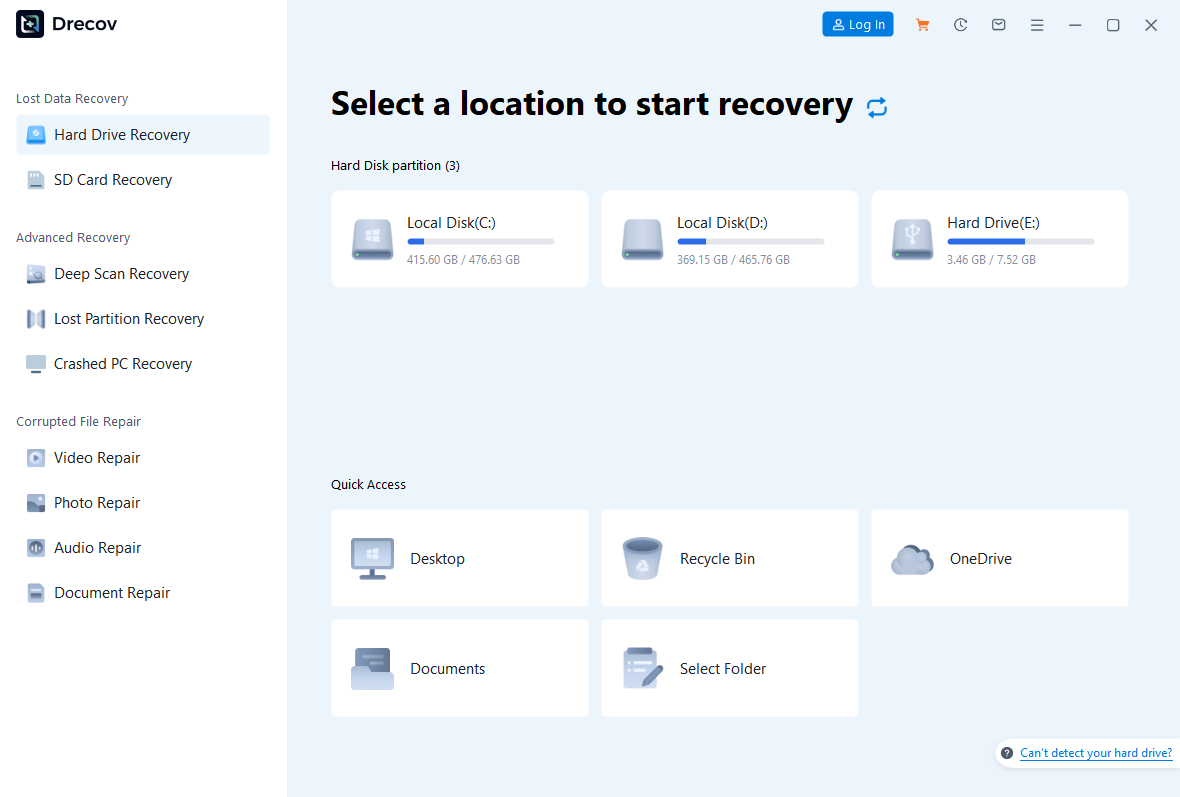
Step 1: Open Drecov and select the photo source
This check is especially useful for how to open cr3 files. Connect the stable card through a reliable reader, then open Drecov. Choose the original card or drive that held the missing session. Identify it by capacity and location, not merely by the most familiar drive letter. Selecting the empty import folder will not scan a photograph that never reached that drive.
Step 2: Check Quick Scan for the missing session
It helps diagnose how to open cr3 files without changing the source data. Run Quick Scan and look for the original folder or recognizable filenames. Compare results with the photographs you still have. A recovered-looking entry is only a candidate until you inspect it. Avoid counting several listed versions as several distinct missing photographs.
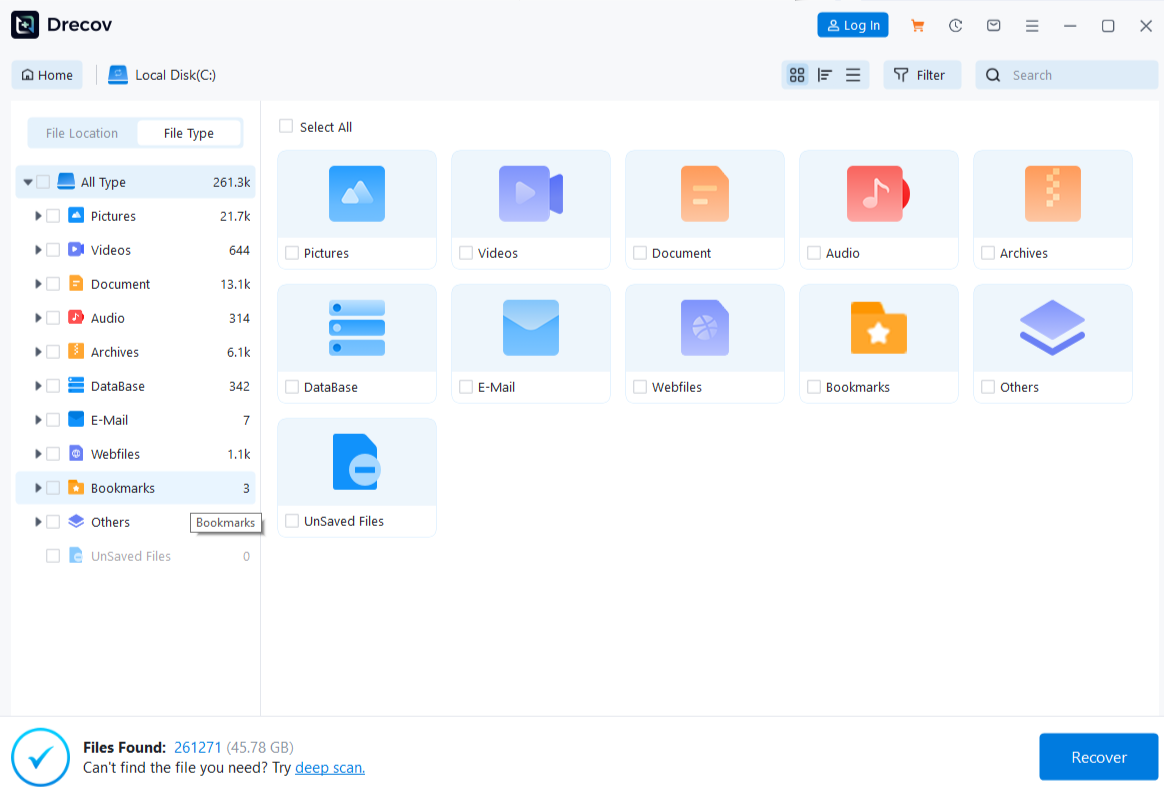
Step 3: Use Deep Scan only on stable media
When Quick Scan misses the photographs and the card stays reliably connected, use Deep Scan. Stop further scanning if disconnects or serious read errors appear. A longer scan is not a remedy for a failing card. For valuable material, ask a specialist about preserving an image before more attempts.
Step 4: Narrow the results and inspect candidates
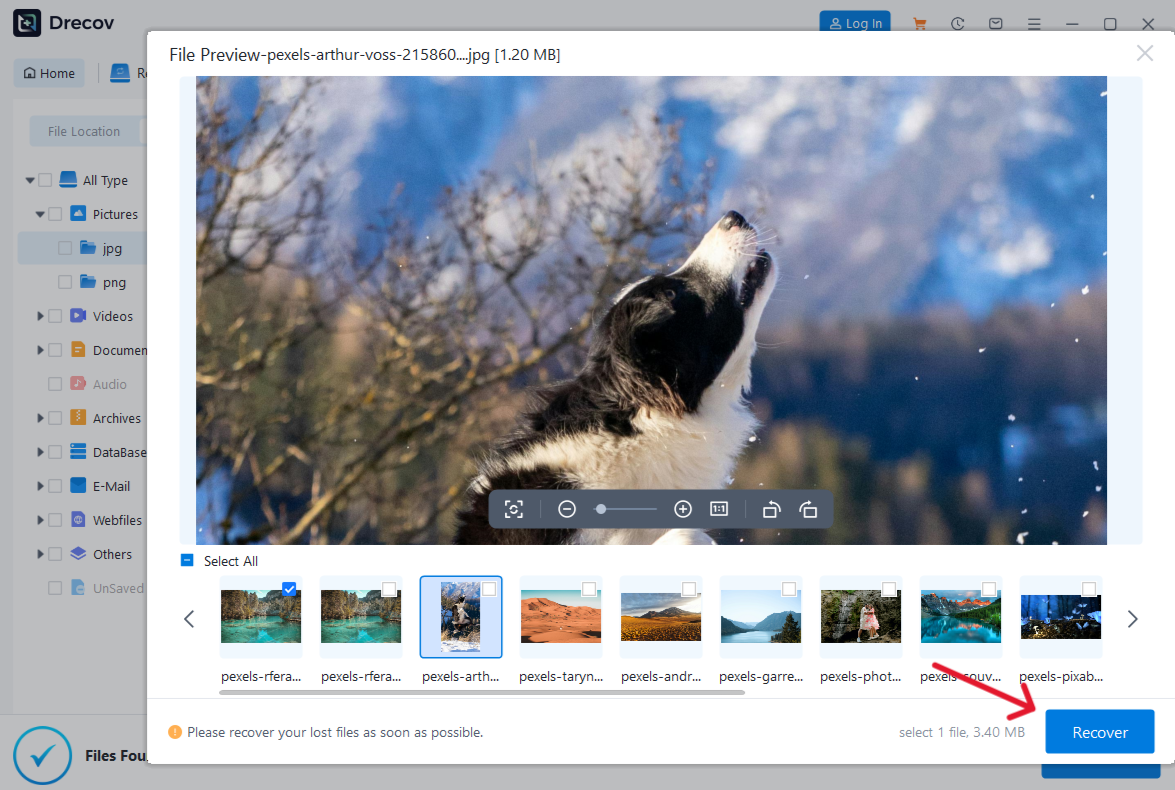
Use available photo-type, filename, and location filters to isolate the session. Preview representative supported files, but do not reject every CR3 solely because preview is unavailable. A preview confirms only what it can display. Keep promising originals for a full opening test in compatible Canon software.
Step 5: Recover to a different healthy drive
Save selected files into a new folder on another device. Never recover them back to the camera card or affected source. Separate candidate versions so that equal filenames do not overwrite one another. Preserve a record of which card and scan produced each group.
⚠ Warning: Install it on a drive different from the one where your data was lost to prevent overwriting.
Step 6: Validate the recovered photographs
Check the Drecov Folder or Recovery Folder if the output is not where expected. Open samples in the compatible RAW application and inspect full-size detail. Confirm that important parts of the session are represented. Only after verification should you consider reusing or formatting the card; replace unreliable media rather than trusting it again.
How to open cr3 files FAQs
Can I open a CR3 without converting it?
Yes, camera-compatible RAW software can display the original. Conversion is useful when a destination requires another format. Keep that exported copy separate so you retain the original for later processing.
Why does one CR3 work while another does not?
Check the originating camera, transfer completeness, and file size. Identical extensions do not guarantee identical decoder requirements. Comparing files from the same camera helps separate compatibility from a single damaged copy.
Does a visible thumbnail prove the photo is complete?
No. A preview can show less information than a full RAW decode. Open the original, inspect several areas at useful magnification, and verify dimensions before relying on it.
Should I format a card that Windows cannot open?
Not when needed photographs remain on it. Formatting changes storage structures and is not an opening method. Preserve recoverable data first, with specialist help when the card cannot remain stable.
Will Drecov make an unsupported CR3 display correctly?
No. File recovery and format decoding solve different problems. Use Drecov for a genuine missing-file branch, then validate recovered originals with software that supports the camera.
Conclusion
Opening a CR3 starts with camera compatibility, a protected original, and a meaningful full-image test. Export only after the file opens correctly. If the original is missing, Drecov can support a separate recovery workflow on stable Windows-accessible media. Recover elsewhere and verify the photographs before changing the card.
⚠ Warning: Install it on a drive different from the one where your data was lost to prevent overwriting.





