







In the rapidly evolving landscape of modern development, automation tools like OpenClaw serve as the backbone for accelerating complex workflows and eliminating repetitive manual tasks. However, this high-velocity efficiency often introduces hidden vulnerabilities. One of the most disruptive challenges reported by developers and power users is OpenClaw file loss. This issue does more than just interrupt a project; it can erase weeks of critical progress, destroy configuration hierarchies, and result in costly downtime.
Cause scripts execute at millisecond speeds and AI integrations process high-level instructions instantly, entire directories may vanish before a user even realizes a command was initiated. Therefore, gaining a comprehensive understanding of why OpenClaw file loss happens—and mastering the precise techniques to recover deleted files OpenClaw systems might have purged—is an essential skill for any digital professional.
What Exactly Is OpenClaw File Loss?
Technically speaking, OpenClaw file loss refers to any unintended disappearance, unauthorized deletion, or structural corruption of data within an environment managed by the OpenClaw framework. This phenomenon is frequently discussed in tech communities, such as in this Reddit thread regarding OpenClaw file loss automation errors, where users share their experiences with disappearing project files.
- Recursive Directory Removal: Entire project trees being wiped due to path errors.
- File Overwriting: Existing scripts or assets being replaced by empty or corrupted versions during automated updates.
- Shadow Deletion: Files being moved to hidden temporary directories that are later purged by system cleanup tasks.
- Metadata Corruption: Situations where the file remains on the disk, but the OpenClaw environment can no longer reference its location.
The primary difficulty with OpenClaw file loss lies in its “silent” execution. Since many operations trigger via headless scripts or autonomous AI agents, there is rarely a “Confirm Delete” dialog box. Consequently, a user might only identify the OpenClaw file loss hours later when a build fails or a critical dependency returns a “404 Not Found” error.
Causes of File Loss OpenClaw Users Should Not Ignore
To build a robust defense, one must first analyze the specific causes of file loss OpenClaw environments frequently encounter. By identifying these triggers early, you can implement safeguards to prevent OpenClaw file loss before it starts.
1. Misconfigured or Dangerous Commands
The most frequent catalyst for OpenClaw file loss is the execution of poorly defined shell commands. Automation scripts often use recursive flags that, if pointed at the wrong parent directory, act like a digital wildfire. For instance, a simple typo in a cleanup script:
rm -rf ./workspace/*
If the environment variable for the path is null or incorrectly mapped, this command might target the root directory instead of a specific subfolder. This type of OpenClaw file loss is instantaneous and bypasses the system’s standard safety nets.
2. AI-Driven Automation Errors
As AI agents become more integrated into OpenClaw, the risk of “hallucinated” file operations increases. An AI might interpret a vague instruction like “optimize project space” as a directive to delete all non-essential assets. These autonomous decisions are one of the leading causes of file loss OpenClaw users struggle to predict.
3. Version Control and Git Mismanagement
While tools like Git are designed for protection, certain high-level commands can trigger permanent OpenClaw file loss. Commands such as git reset --hard or git clean -fd are powerful tools that effectively bypass the Recycle Bin. If these are integrated into an OpenClaw automation loop without proper checks, they can strip a local environment of all uncommitted work in seconds.
4. System-Level Failures and NTFS Issues
Sometimes, OpenClaw file loss is the result of the underlying hardware failing to keep up with the software’s demands. Sudden power surges, kernel panics, or disk write errors during a heavy OpenClaw operation can corrupt the Master File Table (MFT). On Windows systems, this often results in files disappearing entirely from the explorer view. For those dealing with broader system instability, learning how to restore computer to an earlier date on Windows can sometimes resolve registry-related visibility issues.
5. Cloud Synchronization and Conflict Deletion
Many developers sync their OpenClaw workspaces with services like OneDrive or Dropbox. If a file is deleted on a remote server or if a “selective sync” setting is toggled incorrectly, the local file may be removed automatically. To mitigate this specific risk, users often find it helpful to disable a folder from OneDrive to ensure their local dev environment remains untouched by cloud-side logic.
How to Detect OpenClaw File Loss Early
Proactive monitoring is the best way to minimize the impact of OpenClaw file loss. If you catch the disappearance within minutes, the chances to recover deleted files OpenClaw has removed are significantly higher. Watch for these red flags:
- Unexpected Build Failures: Compilers reporting missing header files or modules that were present in the previous session.
- Empty Directory Structures: Folders exist, but their size is reported as 0 KB.
- Git Status Anomalies: Running
git statusand seeing a long list of “deleted” files that you did not manually remove.
If you notice these signs, stop all disk activity immediately. Continued use of the computer writes new data to the drive, which may overwrite the sectors containing the remnants of your lost files, making it impossible to address the OpenClaw file loss effectively.
Immediate Steps to Recover Deleted Files OpenClaw Systems Lose
Before moving to professional-grade recovery software, there are several manual checks you should perform to reverse the OpenClaw file loss.
Check Hidden Paths and Browser Caches
Sometimes, files are not deleted but are moved to temporary cache locations by the OpenClaw browser integration. If you were working with web-based assets, checking the internal storage of your browser might yield results. For example, if you are unsure where your browser stores data, you can find the Firefox bookmarks location to see if your lost data was cached in a similar profile folder.
Utilize System Shortcuts
For a very recent OpenClaw file loss, the standard undo shortcut might still hold the operation in the system memory:
- Windows: Press
Ctrl + Zin the File Explorer. - macOS: Press
Command + Zin the Finder.
Search the Recycle Bin (Hidden Directories)
Not all automated deletions bypass the bin. OpenClaw might trigger a move-to-trash command instead of a permanent wipe. Check the system’s hidden recycle folders, usually located at the root of the drive (e.g., C:\$Recycle.Bin on Windows).
The Ultimate Solution: PandaOffice Drecov
If the manual methods fail to resolve your OpenClaw file loss, you need a specialized tool that can communicate directly with the disk’s file system. PandaOffice Drecov is widely recognized for its ability to recover deleted files OpenClaw environments have purged, even after a “permanent” deletion or a hard drive format.
PandaOffice Drecov excels because it bypasses the operating system’s logical layer and scans the physical sectors for file signatures. This is particularly useful for reversing OpenClaw file loss caused by command-line errors or AI automation mishaps.
⚠ Warning: Install it on a drive different from the one where your data was lost to prevent overwriting.
Step-by-Step Guide to Recover Deleted Files OpenClaw Using PandaOffice Drecov
Follow these precise steps to maximize your chances of a successful data restoration.
- Step 1: Launch and Select the Target Directory
Open the application. From the main interface, navigate to the specific path where your OpenClaw project was stored. For most Windows users, this is typically within the C:\Users\Name\AppData\Local or a dedicated C:\Projects folder.

- Step 2: Initiate the Deep Scan Mode
Click the “Scan” button. The software will perform a Quick Scan first, but for complex OpenClaw file loss scenarios, you should allow the Deep Scan to complete. This mode reconstructs file fragments that the system no longer tracks.

- Step 3: Filter by File Extension or Keyword
To save time, use the filter sidebar. Enter “OpenClaw” or specific extensions like .json, .py, or .js. This helps you isolate the relevant data from general system clutter.
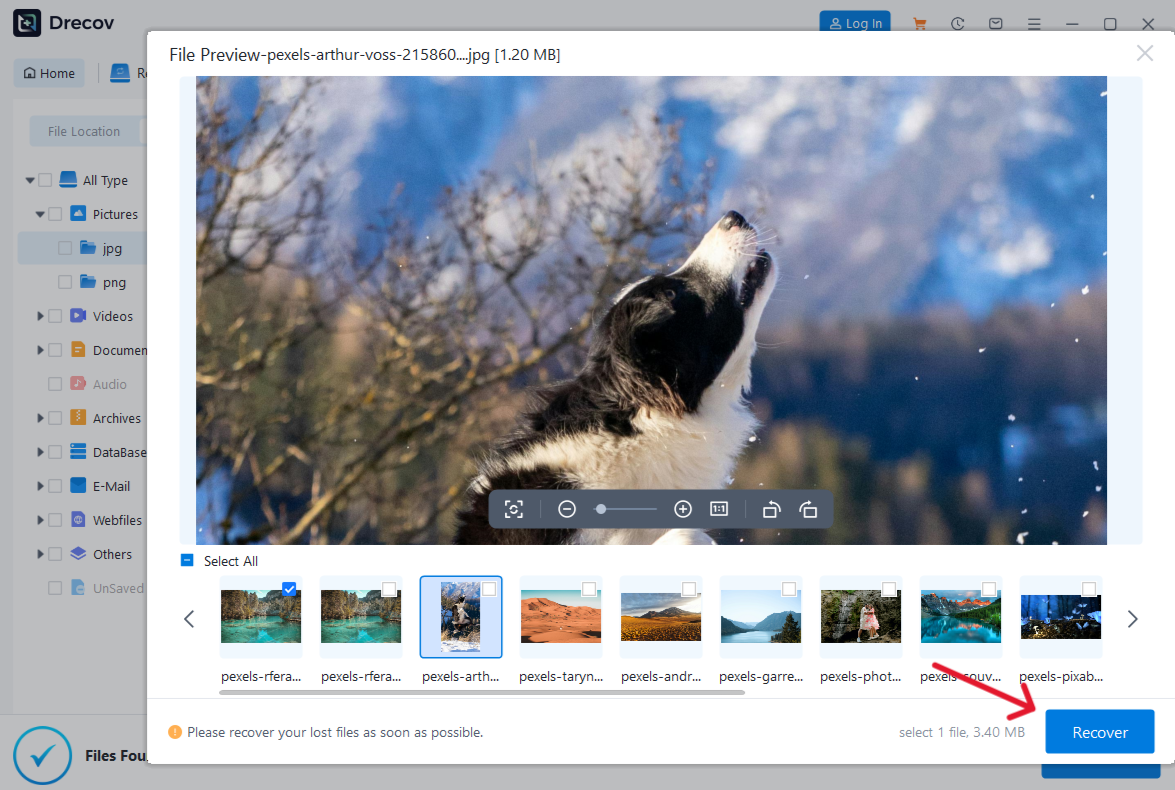
- Step 4: Preview and Verify File Integrity
PandaOffice Drecov allows you to preview images and text files before committing to the recovery. Select the checkboxes next to your missing files and click the “Recover” button.
Select an external USB drive or a different partition as the destination. Once the process is finished, your project should be back to its pre-loss state.
Professional Tips for Preventing Future OpenClaw File Loss
Once you have managed to recover deleted files OpenClaw lost, the next step is ensuring it never happens again. Prevention is always more cost-effective than recovery.
1. Implement Strict Path Validation
When writing scripts for OpenClaw, never use hardcoded absolute paths or unvalidated variables. Always include a check to ensure the target directory exists before executing a “delete” or “clean” command.
2. Use “Dry Run” Flags
Many command-line tools used within OpenClaw support a “dry run” mode (e.g., git clean -n). This allows you to see what would be deleted without actually performing the action, providing a vital safety buffer against OpenClaw file loss.
3. Dedicated Sandbox Environments
Run experimental OpenClaw automations inside a Virtual Machine (VM) or a Docker container. If a catastrophic OpenClaw file loss occurs within a container, your host machine’s primary data remains protected.
4. Regular Data Extraction
If your workflow involves downloading many assets, ensure they are moved to a secure, non-automated directory immediately. If you need help with this, refer to the guide on how to download video from browser Firefox 2026 for best practices on managing downloaded media safely.
5. Advanced Registry and System Monitoring
For Windows power users, monitoring changes to the registry can provide clues as to why OpenClaw file loss is occurring. OpenClaw settings are often stored in:
HKEY_CURRENT_USER\Software\OpenClaw\Settings
If these keys are corrupted, the software may default to “Cleanup Mode” upon every launch.
Summary of Recovery Methods
| Method | Best For | Success Rate |
| Ctrl + Z / Cmd + Z | Immediate accidental deletes | Low |
| Recycle Bin | Standard deletions | Medium |
| Git Reflog / Reset | Version control errors | High (if committed) |
| PandaOffice Drecov | Deep OpenClaw file loss | Very High |
| System Restore | OS-level corruption | Medium |
Conclusion
The occurrence of OpenClaw file loss can be a daunting experience for any developer, especially when working on tight deadlines. Whether the disappearance was triggered by an aggressive AI agent, a mistyped shell command, or a cloud sync conflict, the key to success lies in a calm, methodical response.
By understanding the underlying causes of file loss OpenClaw systems exhibit, you can transition from being a victim of data loss to a master of data recovery. Tools like PandaOffice Drecov provide a reliable safety net, allowing you to recover deleted files OpenClaw might have otherwise erased forever. Remember to always back up your work, validate your scripts, and keep a recovery tool ready in your digital toolkit.






