







Managing your digital memories has never been easier than in 2026, yet the intersection of mobile hardware and cloud storage often creates a bit of a puzzle for users. If you are wondering can the camera on android be used for onedrive photos, the answer is a resounding yes. Integrating your Android camera with Microsoft OneDrive not only provides a seamless backup solution but also acts as a primary defense mechanism against data loss.
In this comprehensive guide, we will explore how to bridge the gap between your physical camera lens and your cloud storage, while providing expert-level data recovery insights to ensure your photos stay safe forever.
Can You Use the Android Camera for OneDrive Photos?
When we discuss whether the Android camera works with OneDrive photos, we are really talking about automating the “Camera Roll” sync. Modern Android devices allow the OneDrive app to hook directly into the system’s gallery folders. This means every time you press the shutter button, the system queues the resulting image for an encrypted upload to Microsoft’s servers.
This synergy is vital for professional photographers and casual users alike. By utilizing this connection, you transform your phone into a gateway for a persistent digital archive. However, merely knowing it’s possible isn’t enough; you must understand the settings to ensure that the process is efficient and doesn’t drain your mobile data or battery.
Mastering Your Sync: OneDrive Android Camera Backup Settings
To get the most out of your device, you need to dive into the onedrive android camera backup settings. Properly configuring these ensures that your photos are uploaded in the highest quality without interrupting your daily phone usage.
Step 1: Accessing the Configuration Menu
First, open the OneDrive app on your Android device. Tap the Me icon (typically located at the bottom right or top left, depending on your version) and select Settings. From here, you will see an option labeled Camera backup.
Step 2: Selecting the Target Account
If you have both personal and work accounts, you must specify which one will receive your photos. Tap on Camera backup account and toggle the switch to On. This is the foundational step in answering “can the camera on android be used for onedrive photos” because it establishes the link.
Step 3: Optimizing Upload Quality and Network
Within the same menu, you can choose to “Upload using” Wi-Fi only or Wi-Fi and mobile network. To save on data costs, we recommend Wi-Fi only. Additionally, ensure the Include videos toggle is active if you want your motion clips saved as well.
Pro Tip: Look for the “Clean up space on your device” setting. This allows OneDrive to delete local copies of photos that have already been safely backed up to the cloud, keeping your phone’s internal storage lean.
Understanding File Lifecycle: Does Deleting Photos on Android Delete Them from OneDrive?
A common source of anxiety for users is the fear of accidental synchronization. A frequent question we encounter is: does deleting photos on android delete them from onedrive? The answer depends heavily on how you perform the deletion and your specific device brand.
The Standard Android Behavior
On most stock Android devices, if you delete a photo from your phone’s native gallery app after OneDrive has already uploaded it, the cloud copy remains safe. OneDrive acts as a repository. However, if you delete the photo from within the OneDrive app’s “Files” view, OneDrive removes it from the cloud and transfers it to the OneDrive Recycle Bin.
The Samsung Gallery Exception
If you use a Samsung device, your gallery is likely integrated via “Samsung Cloud powered by OneDrive.” In this specific ecosystem, the two are mirrored. Therefore, does deleting photos on android delete them from onedrive? Yes, in the case of Samsung Gallery Sync, deleting a photo on your phone will trigger a deletion in the cloud.
How to Safely Delete Local Files
If you need to free up space without losing your cloud backups, always use the “Free up space” feature within the OneDrive settings rather than manually deleting files from your gallery. This ensures the cloud handshake confirms the backup is successful before removing the local bitstream.
When Things Go Wrong: Advanced Data Recovery for Android
Despite our best efforts with cloud sync, data loss still occurs. Perhaps you turned off your sync settings, or a system crash occurred before the upload finished. When the standard “Recycle Bin” doesn’t have your files, you need professional-grade tools. This is where PandaOffice Drecov data recovery software becomes an essential part of your toolkit.
Unlike basic apps, this software performs a deep sector-level scan to find “ghost” data that the operating system has marked as deleted but hasn’t yet overwritten.
Introducing PandaOffice Drecov Data Recovery Software
PandaOffice Drecov data recovery software is a high-performance utility designed for Windows and macOS that can interface with Android devices, SD cards, and hard drives. It supports over 2,000 file formats, making it the gold standard for recovering lost JPG, PNG, and HEIC files from your Android camera roll.
⚠ Warning: Install it on a drive different from the one where your data was lost to prevent overwriting.
Step-by-Step Guide: Recovering Lost Photos with PandaOffice Drecov
If you’ve realized that your answer to “can the camera on android be used for onedrive photos” was “no” because the photos disappeared before they synced, follow these steps to get them back.
Step 1: Select the Drive and Scan
Launch the PandaOffice Drecov data recovery software. You will see a list of available drives. Select your phone or the specific SD card partition where your photos were stored. Click the “Scan” button to begin the Quick Scan, which will be followed automatically by a Deep Scan.

Step 2: Preview and Filter
As the scan progresses, you can filter the results by “Pictures.” One of the best features of Drecov is the Preview function. You can double-click a thumbnail to see if the file is intact before committing to the recovery.
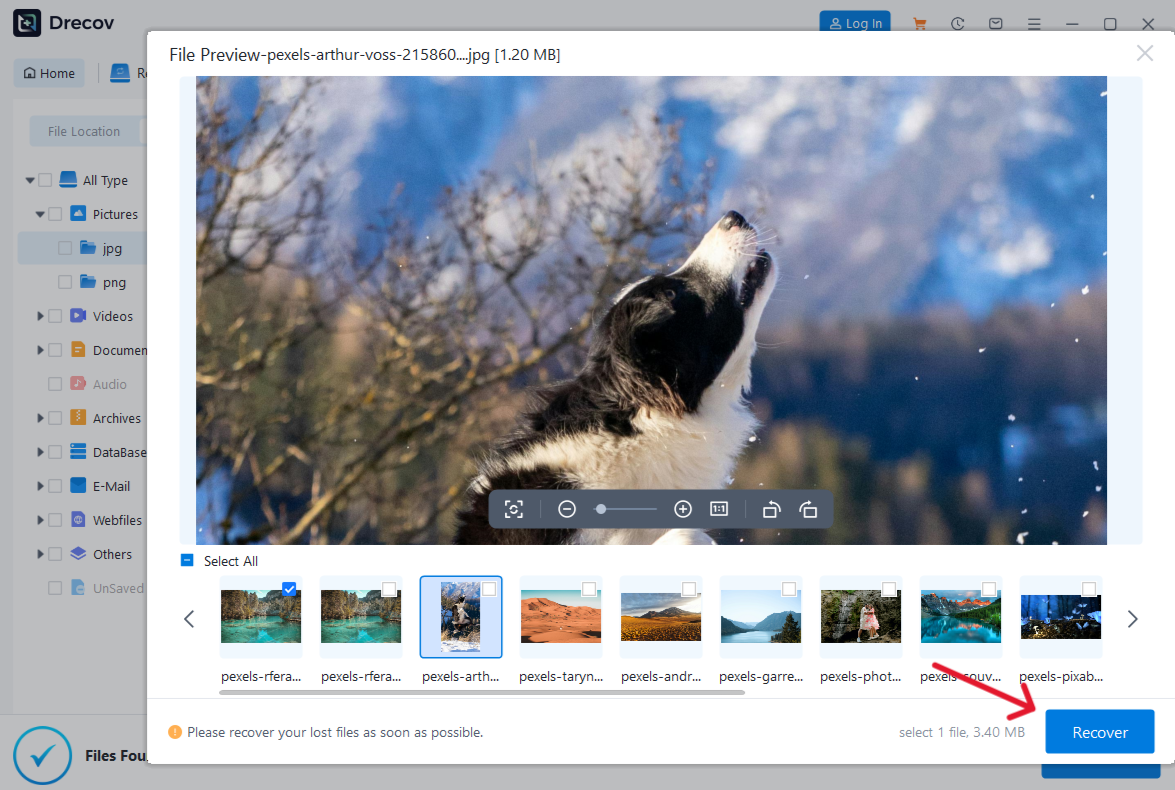
Step 3: Execute Recovery
Select the checkboxes for the photos you wish to save. Click the “Recover” button.
Crucial Warning: Always save the recovered files to your computer’s hard drive, never back onto the same phone or SD card you are scanning. This prevents data overwriting.
For more advanced tips on managing your cloud storage and ensuring you never lose a file again, check out our related guides:
- How to disable a folder from OneDrive and recover lost files
- How to remove OneDrive from File Explorer: Step-by-step guide
- How do I completely remove OneDrive Personal from my computer?
By mastering these tools and settings, you ensure that your Android camera remains a powerful tool for capturing the world, giving you the peace of mind that OneDrive preserves and protects every pixel.
Technical Paths and Troubleshooting
To ensure you are using the most accurate information for 2026, here are the technical specifics for managing your OneDrive and Android environment.
Important Registry and App Paths
If you are managing OneDrive on a Windows PC to organize your Android photos, you may need to know these paths:
- OneDrive Local Folder Path:
%UserProfile%\OneDrive - Android Camera Folder Path:
/Internal Storage/DCIM/Camera - Registry Key for OneDrive Version (Windows):
HKEY_CURRENT_USER\Software\Microsoft\OneDrive
Relevant External Resources
For further official documentation, please refer to:
- Microsoft Support: Automatically save photos with OneDrive for Android
- Samsung Support: Samsung Gallery and OneDrive
Maintaining a Healthy Digital Ecosystem
Now that you understand that can the camera on android be used for onedrive photos is just the beginning, you should focus on maintenance. Data recovery is a powerful safety net, but a robust backup strategy is your primary shield.
Always review your onedrive android camera backup settings after every major Android OS update, as these updates can sometimes reset “Background Data Usage” permissions to default and pause your uploads. Furthermore, stay vigilant about the question does deleting photos on android delete them from onedrive by testing a single, non-important photo whenever you change devices.
If you ever find yourself in a situation where files are missing, remember that PandaOffice Drecov data recovery software is built to handle the heavy lifting of bit-by-bit restoration.






