Home » USB Flash Memory Repair: Revive Your Drive and Save Your Files
USB Flash Memory Repair: Revive Your Drive and Save Your Files
This expert guide covers usb flash memory repair and data recovery. Learn to use PandaOffice Drecov, understand usb 2.0 vs 3.0, and master how to format a usb drive to rescue your important files efficiently.
In our hyper-digital era, the humble USB drive remains a cornerstone of data portability. However, these compact devices are prone to a variety of issues—from file corruption and “drive not formatted” errors to physical wear and tear. When your critical documents or precious photos seem trapped behind a wall of digital errors, understanding the nuances of usb flash memory repair becomes a vital skill.
This comprehensive guide will walk you through everything from basic maintenance to advanced recovery techniques, ensuring you have the tools to revive your drive and rescue your data.
Before diving into complex repairs, it is essential to distinguish between physical damage and logical errors. If your computer doesn’t detect the drive at all, or if the USB connector is bent, you are likely dealing with a hardware issue. However, if the drive appears in your system but shows errors like “Access Denied” or “Please Insert Disk,” a logical usb flash memory repair is usually possible through software.
USB 2.0 vs 3.0: Performance and Repair Implications
When troubleshooting, it is helpful to know the hardware standard you are working with. The comparison of usb 2.0 vs 3.0 isn’t just about speed; it also affects how the device interacts with your motherboard’s power delivery.
USB 2.0: Recognizable by its black internal plastic, it offers speeds up to 480 Mbps. These older drives are often more susceptible to “under-powering” issues on modern front-panel ports.
USB 3.0 (and 3.1/3.2): Distinguished by blue internal plastic (usually), these offer speeds up to 5 Gbps and higher. They require more sophisticated controllers, which means firmware-level usb flash memory repair can be more complex than with older 2.0 models.
If a USB 3.0 drive is failing, try plugging it into a USB 2.0 port. Sometimes, the slower data rate allows a failing controller to stabilize long enough for you to move your files.
Initial Troubleshooting and Software Fixes
Many “broken” drives are simply suffering from file system confusion. Before reaching for heavy-duty tools, let’s try the built-in Windows repair features.
Step 1: Check for Driver Issues
Sometimes the drive is fine, but the “bridge” between the OS and the hardware is broken.
Right-click the Start button and select Device Manager.
Expand Universal Serial Bus controllers.
Right-click your USB Mass Storage Device and select Uninstall device.
Unplug the USB, restart your computer, and plug it back in. Windows will automatically reinstall the driver.
Step 2: Use the CHKDSK Command
The “Check Disk” tool is a powerful ally in usb flash memory repair. It scans the file system and repairs logical bad sectors.
Type cmd in the Windows search bar, right-click, and Run as Administrator.
Type chkdsk E: /f (Replace E: with your actual USB drive letter).
If the Windows built-in tools fail to find your files, or if you have accidentally formatted the drive, you need professional-grade intervention. This is where PandaOffice Drecov data recovery software shines. It is designed to bypass the operating system’s file table and read the raw data directly from the NAND flash chips.
⚠ Warning: Install it on your primary hard drive—never install recovery software onto the USB drive you are trying to fix, as this might overwrite the data you are trying to save.
PandaOffice Drecov Data Recovery Software: A Step-by-Step Guide
Using PandaOffice Drecov is straightforward, but following these steps precisely ensures the highest success rate for usb flash memory repair and retrieval.
Step 1: Connect and Identify
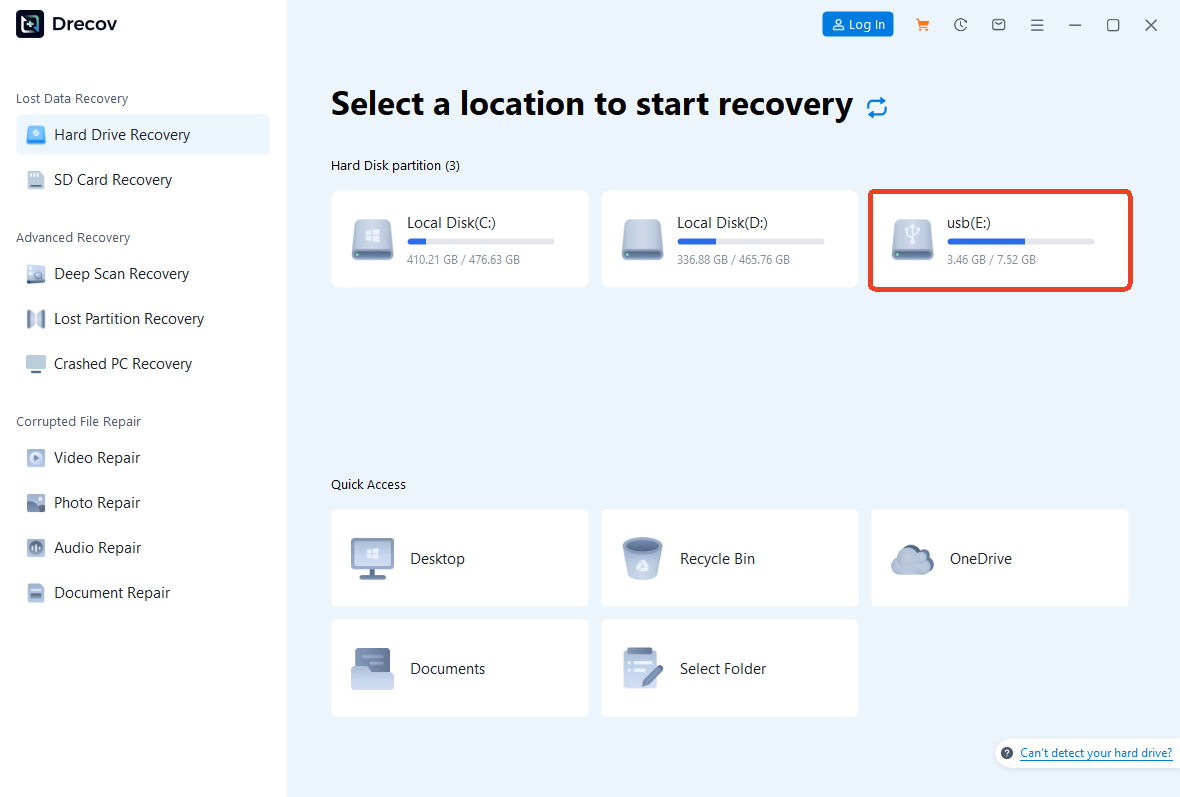
Plug your USB drive into a stable USB port (preferably on the back of a desktop computer). Launch the software. On the main interface, you will see a list of available drives. Select your USB drive from the list.
Step 2: Deep Scan for Lost Particles
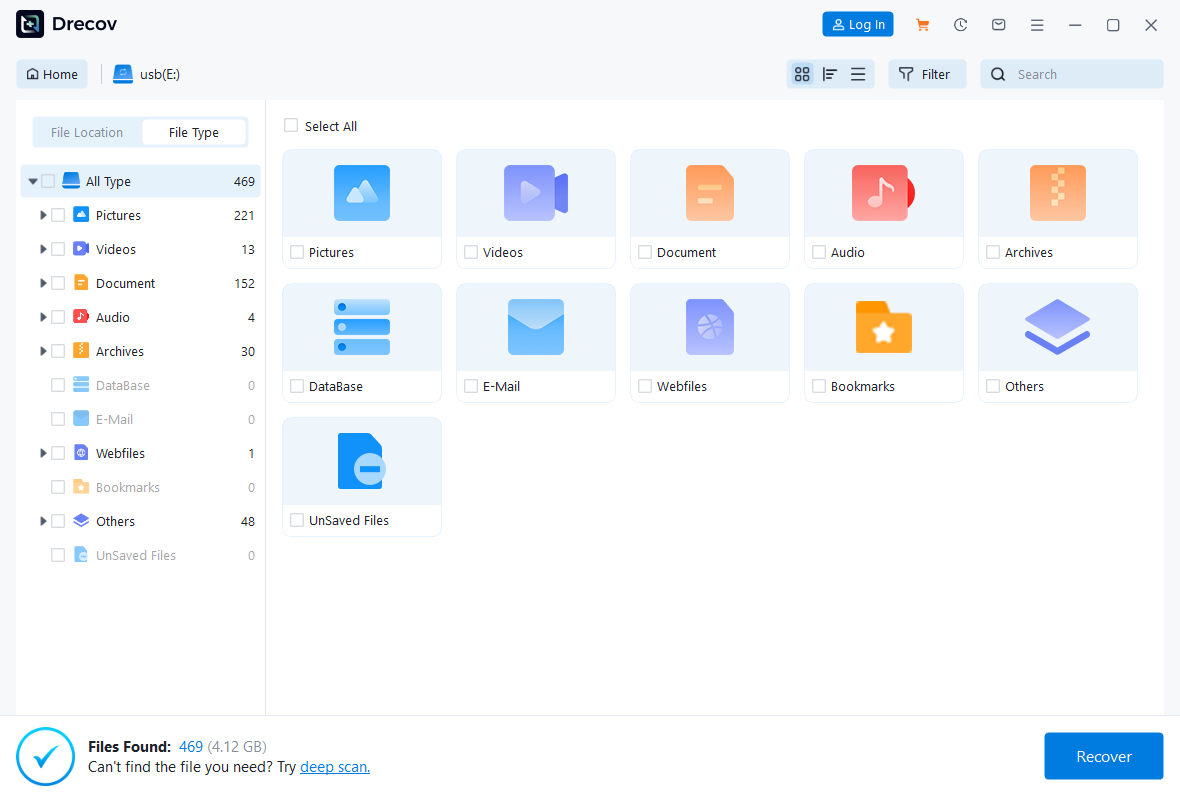
Click the “Scan” button. The software will perform a Quick Scan followed by a Deep Scan.
Warning Prompt: Do not disconnect the USB drive during the Deep Scan. Interrupting the power can lead to further logical corruption.
Step 3: Preview and Filter
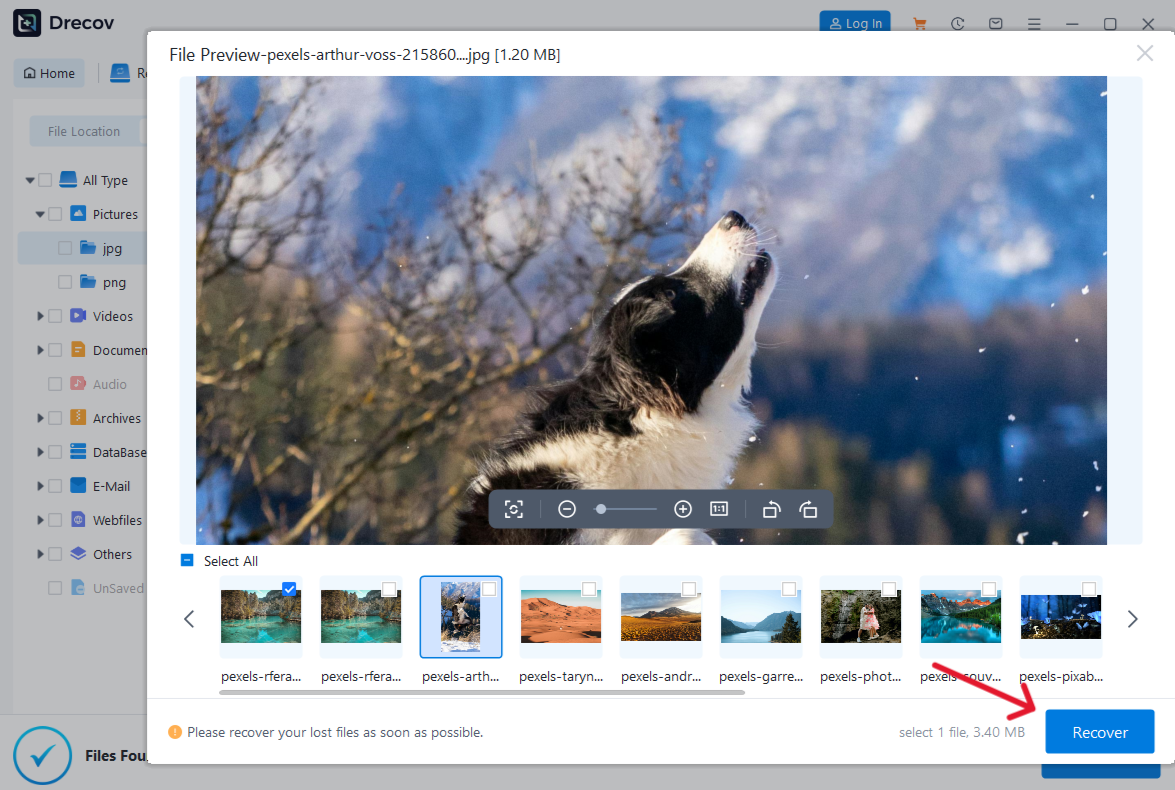
One of the best features of PandaOffice Drecov is the preview function. You can filter by file type (e.g., .jpg, .docx, .pdf) to find your specific documents.
Step 4: Execute Recovery
Select the files you wish to rescue and click “Recover.”
Key Operation Point: Always save the recovered files to your computer’s local drive or a different external disk. Saving them back to the original USB drive during recovery can cause permanent data loss.
For more information on handling specific data types or browser data that might have been stored on your drive, you might find these resources helpful:
When the file system is marked as “RAW” or the drive is write-protected, a standard Windows format often fails. In these cases, a dedicated usb flash disk formatter tool is required to reset the drive’s low-level structure.
When to Use a USB Flash Disk Formatter
If you receive the error “Windows was unable to complete the format,” the partition table is likely destroyed. Professional formatting tools like the HP USB Disk Storage Format Tool or the HDD LLF Low Level Format Tool can force a rewrite of the boot sector.
Step 1: Download a reputable usb flash disk formatter tool.
Step 2: Run the application as an Administrator.
Step 3: Select the “Low-Level Format” option if the drive is severely corrupted.
Step 4: Choose the FAT32 or exFAT file system.
Step 5: Click “Format this device.” This will wipe all data but often restores a “dead” drive to a functional state.
Master Guide: How to Format a USB Drive Correctly
Once your usb flash memory repair is complete, or if you simply want to start fresh, you must know how to format a usb drive properly for your specific needs. Formatting isn’t just about deleting files; it’s about choosing the right architecture.
How to Format a USB Drive: Complete Beginner-Friendly Guide
On Windows:
Insert the USB drive: Plug it into an available port.
Open File Explorer: Use the shortcut Win + E.
Right-click the drive: Find your USB under “This PC” and select Format.
Choose File System: Select exFAT for best compatibility between Mac and PC.
Quick Format: Ensure “Quick Format” is checked unless you suspect the drive has physical errors.
Start: Click Start and then OK to confirm.
On macOS:
Open Disk Utility (via Spotlight or Applications > Utilities).
Select the USB drive from the left sidebar.
Click the Erase button at the top.
Select a Name and choose exFAT or MS-DOS (FAT) for the format.
Click Erase to finish the process.
Resolving Write Protection and “ReadOnly” Errors
A common hurdle in usb flash memory repair is the dreaded write protection. If you can’t add or delete files, try the Registry fix:
Press Win + R, type regedit, and hit Enter.
Navigate to: HKEY_LOCAL_MACHINE\SYSTEM\CurrentControlSet\Control\StorageDevicePolicies
If StorageDevicePolicies doesn’t exist, you may need to create it.
Find the WriteProtect DWORD value and change it from 1 to 0.
Restart your computer.
Conclusion
Successful usb flash memory repair is a rewarding process, but prevention is always better than cure. To keep your flash drive healthy:
Always use the “Safely Remove Hardware” option.
Avoid using your USB drive as a primary workspace; work on your PC and copy the final version to the USB.
Keep your drive away from extreme heat and moisture.
By mastering tools like PandaOffice Drecov data recovery software and understanding the technical differences in usb 2.0 vs 3.0, you are now equipped to handle almost any data disaster. Whether you need a simple usb flash disk formatter or a deep registry dive, your data is no longer out of reach.