







“Windows installation encountered an unexpected error” is not one diagnosis. Record the error code, setup phase, and whether this is an upgrade, reset, or clean installation. If the target disk still contains personal files, stop deleting partitions or restarting destructive setup steps until those files are backed up or recovered. Then verify the installation media, USB path, memory, storage detection, and available space.
Identify the Installation Mode and Failure Phase
A clean install can erase partitions, while an in-place upgrade usually attempts to retain files and applications. Note whether the error occurs before disk selection, while copying files, during feature installation, after the first restart, or while starting services. Microsoft documents one specific setup error 0xE0000100 caused by insufficient VM memory, illustrating why the code and environment matter.
| What you observe | What it suggests | Safest next move |
|---|---|---|
| Before disk selection | Media, firmware, memory, or controller | Recreate official media and check hardware |
| While copying installation files | USB media, RAM, source image, or storage writes | Change one component and preserve logs |
| At partition selection | Layout, controller driver, encryption, or disk state | Protect data before deleting partitions |
| After first restart | Boot mode, boot files, or wrong target | Remove install USB only when setup expects it |
| During upgrade rollback | Compatibility, driver, space, or app conflict | Review Setup logs and rollback reason |
| Target disk disappears | Connection, controller, or hardware | Stop setup and rescue data if it returns |
Match the Error to the Exact Setup Phase
For windows installation encountered an unexpected error, use the matching observation, make one reversible change, and then retest the original symptom.
If You See: Before disk selection
Media, firmware, memory, or controller becomes the leading explanation, but the observation does not justify a destructive change by itself. Recreate official media and check hardware.
When the Result Is: While copying installation files
This result shifts attention toward usb media, ram, source image, or storage writes. Use the narrow response: change one component and preserve logs.
What At partition selection Changes
The practical implication is layout, controller driver, encryption, or disk state. The next action should therefore be limited to this branch: protect data before deleting partitions.
Do Not Misread: After first restart
It can indicate boot mode, boot files, or wrong target, yet it does not prove every other component is healthy. Start with remove install usb only when setup expects it.
The Safe Branch for During upgrade rollback
Here, compatibility, driver, space, or app conflict deserves priority over broad system repair. Review Setup logs and rollback reason.
Escalation Point: Target disk disappears
Treat this as a sign of connection, controller, or hardware. Beg
Protect Personal Files Before Partition Changes
If Windows still boots, copy user folders and verify the backup. If it does not, use another Windows computer or recovery environment to retrieve files from stable readable storage. Do not use DiskPart clean, delete partitions, format, or initialize before needed recovery. The bootable USB safety article helps prevent selecting the wrong removable device, and the unbootable Windows recovery article covers file access before repair.
Fix the Setup Component That Actually Failed
Recreate Official Installation Media
Use Microsoft’s current media creation path and a known-good USB drive. Verify the download and avoid third-party modified images. A media rebuild is most relevant when setup cannot read its sources.
Match UEFI Mode and Disk Layout
Boot the installer in the mode intended for the target system. Do not switch Legacy, Secure Boot, or storage-controller settings randomly; record original firmware values and confirm driver requirements.
Test Memory and Remove Nonessential Hardware
Disconnect extra drives and peripherals so setup cannot place boot files on the wrong disk. Run a memory diagnostic when codes or phases suggest access violations or decompression failures.
Check the Target Disk Without Erasing It
Confirm model, capacity, encryption, and health. A RAW, missing, or unstable disk is a recovery case. A healthy empty target can be repartitioned only after the correct disk is proven.
Use Setup Logs for Upgrade Failures
For an upgrade, inspect Panther and rollback logs for the phase and component. Remove only documented blockers, restore free space, and retry after a clean boot rather than repeating the same failed installation.
Recover Files Before a Clean Install or Disk Rebuild
If windows installation encountered an unexpected error and personal files remain on a stable disk, use PandaOffice Drecov before deleting partitions, formatting, resetting, or attempting another clean installation. Drecov recovers files from supported storage; it does not correct bad installation media, memory errors, firmware settings, or defective hardware.
⚠ Warning: Install it on a drive different from the one where your data was lost to prevent overwriting.
Step 1: Open the Original Disk From a Working Windows System
When the old Windows installation still runs reliably, open Drecov there and select the partition that held the files. If the PC cannot boot, connect the stable disk to another Windows computer and select it from that environment. Never install Drecov or save downloads onto the affected partition.

Step 2: Scan Before Setup Changes the Layout
Try Quick Scan for recently missing personal files. Choose Deep Scan when Setup damaged access, a partition disappeared, the file system is unreadable, or Quick Scan omits required folders. Stop if the disk drops offline, reports severe read errors, or cannot retain its correct identity and capacity.
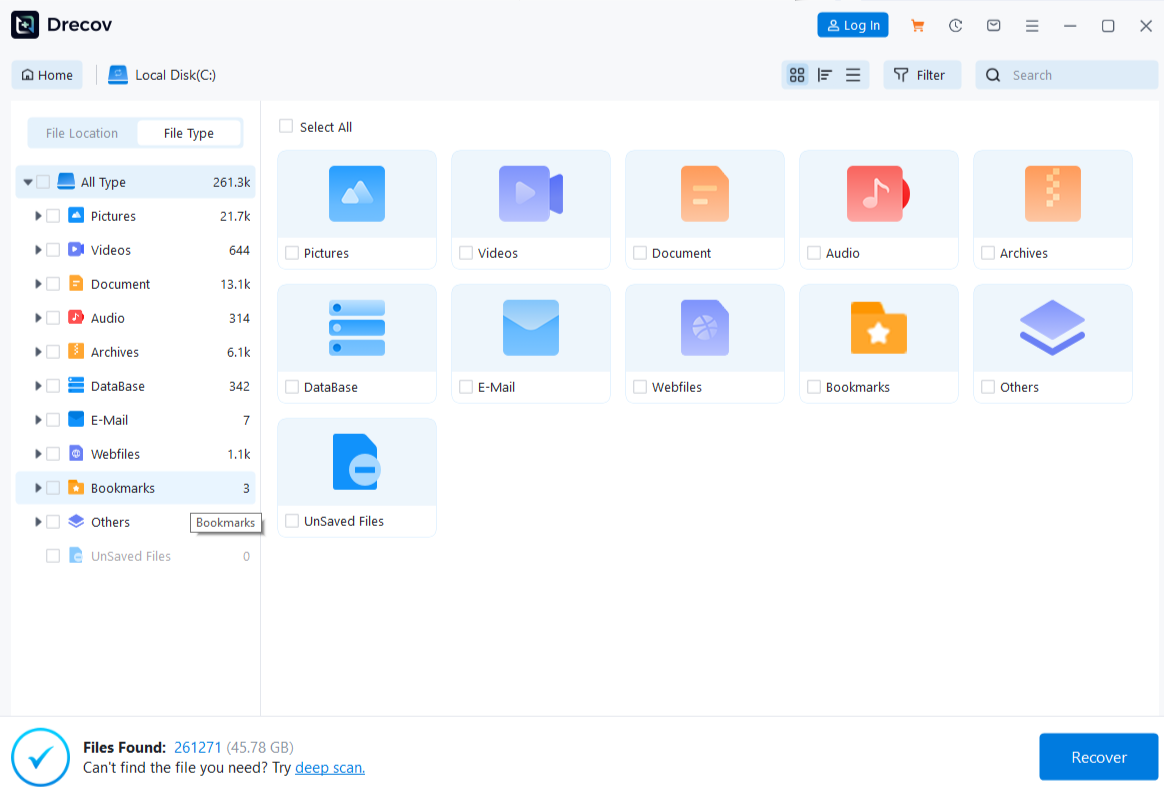
Step 3: Restore to a Disk Setup Will Not Erase
Filter and preview important documents, photos, videos, archives, and other required data. Recover them to another healthy external or internal drive outside the installation target. Check the Drecov folder or Recovery folder when original paths are unavailable, then open the restored files before returning to Windows Setup.
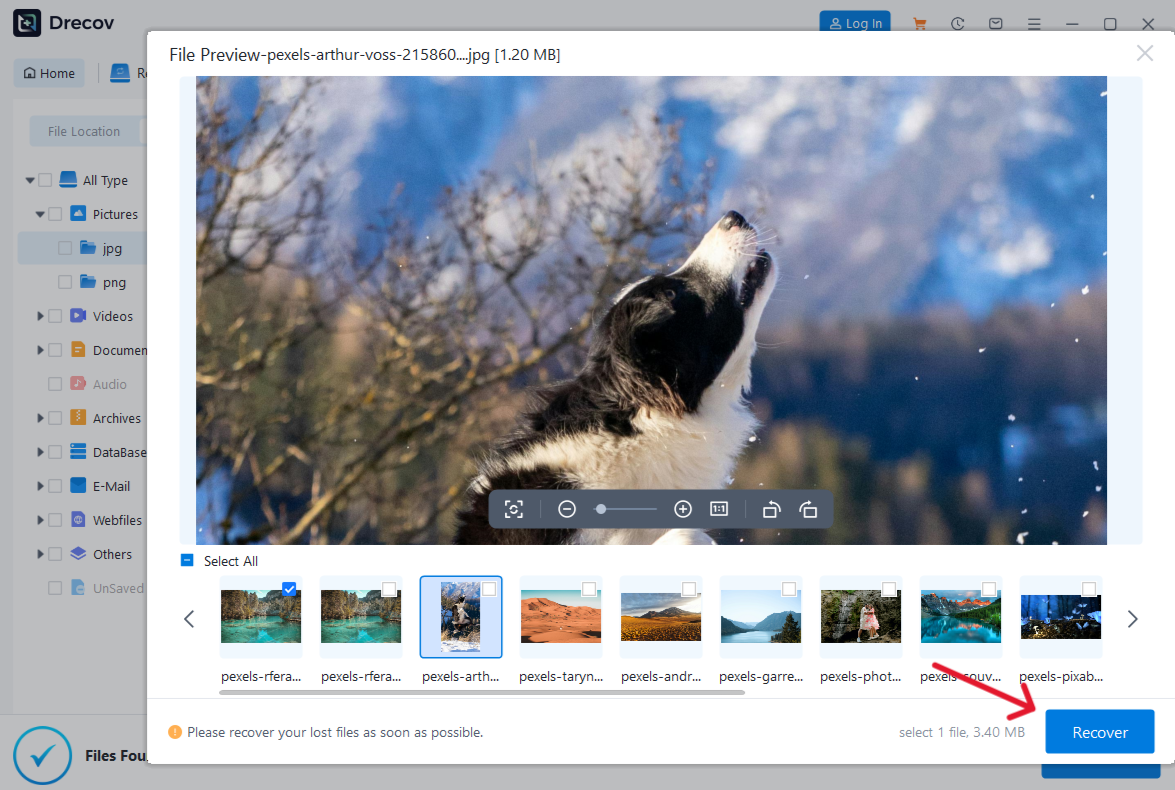
Verify Both Windows and the Restored Data
After setup completes, confirm Windows boots with installation media removed, Device Manager shows expected storage controllers, activation and encryption states are understood, and updates install normally. Open recovered files from the separate destination before reusing the old partitions. The partition terminology article helps distinguish disk, partition, and volume during setup decisions.
- Deleting every partition before confirming the correct disk and backup
- Using modified installation media without a trustworthy source
- Changing firmware and controller settings together
- Treating an access-violation code as proof of one cause
- Recovering files back onto the disk being prepared for Windows
Installation failures before the disk-selection screen point toward different components than failures during file expansion or the first reboot. Record the numeric code, percentage, and phase before changing anything. Disconnect unnecessary peripherals, verify the installation image and USB creation method, and use a direct port. If Setup repeatedly fails while expanding files, test the media, memory, and storage path independently instead of recreating partitions after every attempt.
On a computer that already contains personal files, identify the current Windows and data partitions before deleting or formatting anything. A clean-install screen does not show which files have been backed up, and changing UEFI/Legacy mode or storage-controller mode can make an existing installation temporarily unbootable. If the disk disappears, reports the wrong capacity, or produces I/O errors, stop Setup and protect data first. Once the cause is corrected, a successful installation should complete two restarts, load the expected storage driver, and leave restored files readable from their separate destination.
Windows Installation Error Questions
Should I restart setup immediately?
Record the code and phase first. A simple restart may help a transient issue, but repeating destructive steps can overwrite recoverable files.
Does the message mean the USB installer is bad?
It may, but memory, storage, controller drivers, firmware mode, and target layout can produce similar failures.
Can I delete the partitions to fix it?
Only after important files are verified elsewhere and the correct target is confirmed. Partition deletion is destructive.
Can Drecov repair Windows Setup?
No. Drecov recovers files from supported stable storage. Installation media, firmware, drivers, memory, and setup repair are separate.
Where are Windows Setup logs?
Upgrade and setup logs commonly appear under Panther and rollback locations. Use the phase and error code to choose the relevant log.
Recheck Setup Without Repeating Destructive Disk Work
After securing personal files, rebuild or replace only the component supported by the evidence. Verify the installation image, recreate the USB through an official method when necessary, and use a direct reliable port. Return firmware and storage-controller settings to their documented values instead of cycling through combinations. During the next attempt, note whether Setup reaches a later phase or fails with the same code and percentage. Repeated failure at the same file-expansion point can justify separate media, memory, and storage tests; it does not justify deleting partitions again when the disk layout was not the cause.
Keep the original error record until Windows completes normally and restored files pass verification.
Conclusion
If Windows installation encountered an unexpected error, record the code and setup phase before changing media, firmware settings, drivers, or partitions. Protect personal files before any clean-install operation. When the original disk is stable, Drecov can recover those files through a working Windows computer and save them to another healthy drive. Return to Setup only after validating the recovery and correcting the actual installation failure.






