







Encountering a memory management blue screen can feel like your computer has suddenly hit a wall. One moment you’re working, gaming, or browsing, and the next—boom—a blue screen appears with an error message that seems cryptic and intimidating. If you’ve ever experienced this, you’re definitely not alone. This particular error is one of the most common Blue Screen of Death (BSOD) issues on Windows systems, and while it looks serious, it’s often fixable with the right approach.
Think of your computer’s memory like a workspace desk. If everything is organized, tasks run smoothly. But if things get messy—files scattered, tools misplaced—chaos happens. The memory management blue screen is your system’s way of saying something has gone wrong in how memory is being handled. The good news? You can clean up that “desk” and get things running again.
This guide will walk you through everything you need to know about the memory management blue screen, including causes, step-by-step fixes, and prevention strategies. We will also explore how to handle the aftermath of a crash, ensuring your vital documents remain safe even when the system fails.
Understanding the Root of the Problem
What exactly is a memory management blue screen? In technical terms, the “MEMORY_MANAGEMENT” stop code (0x0000001A) indicates that a severe memory management error has occurred. Windows uses a complex subsystem to allocate memory to various processes. When this subsystem encounters a conflict it cannot resolve—such as a driver trying to access a memory address that doesn’t exist or a physical failure in the hardware—it triggers a BSOD to prevent your data from becoming hopelessly corrupted.
Common Causes to Investigate
- Faulty RAM (Random Access Memory): This is the leading cause. If the physical chips on your motherboard are failing, they cannot store data reliably.
- Corrupted System Files: If the Windows kernel files responsible for resource allocation are damaged, the memory management blue screen will appear frequently.
- Incompatible Hardware Drivers: New hardware or an incorrect update can cause drivers to “clash” over memory space.
- Firmware and BIOS Issues: An outdated BIOS can sometimes lead to poor communication between the operating system and the RAM modules.
- Software Conflicts: Certain high-resource programs or conflicting security software can trigger memory faults.
The Ultimate Memory Management Blue Screen Windows 11/10 Fix
When your workflow is interrupted, you need a logical sequence to restore order. We have organized these solutions from the easiest software tweaks to more involved hardware diagnostics. Follow these steps to implement a comprehensive memory management blue screen windows 11/10 fix.
Step 1: Run the Windows Memory Diagnostic Tool
Before opening your computer case, use the built-in Windows tool to check for hardware defects.
- Step 1: Press Windows + R on your keyboard to open the Run dialog box.
- Step 2: Type
mdsched.exeand hit Enter. - Step 3: Select “Restart now and check for problems (recommended)”. Note: Ensure all your work is saved before clicking this.
- Step 4: Your PC will reboot into a blue environment where it performs a “Standard” test.
Warning: If the tool reports “Hardware problems were detected,” it is a clear sign that your RAM sticks may need physical replacement.
Step 2: Repair System Files with SFC and DISM
Often, the memory management blue screen is a result of a software glitch rather than a hardware failure. Windows provides the System File Checker (SFC) for exactly this reason.
- Step 1: Click the Start menu and type “cmd”. Right-click Command Prompt and select Run as Administrator.
- Step 2: In the black window, type
sfc /scannowand press Enter. - Step 3: Wait for the verification to reach 100%. If it finds errors, Windows will attempt to fix them automatically.
- Step 4: For a deeper repair, type
DISM /Online /Cleanup-Image /RestoreHealthand press Enter. This connects to Microsoft’s official servers to download healthy copies of corrupted files.
Step 3: Update Critical Drivers via Device Manager
Outdated video card drivers or chipset drivers are notorious for causing the memory management blue screen.
- Step 1: Right-click the Start button and select Device Manager.
- Step 2: Look for any items with a yellow exclamation mark.
- Step 3: Right-click your Display adapters and select Update driver.
- Step 4: Choose “Search automatically for drivers.” If Windows finds nothing, visit the manufacturer’s website (NVIDIA, AMD, or Intel) to download the 2026 latest version manually.
How to Recover Lost Data After Memory Management Blue Screen
One of the most stressful aspects of a BSOD is the potential for data loss. If your computer crashed while you were editing an important document or transferring files, those files might become “invisible” or corrupted. Knowing how to recover lost data after memory management blue screen is just as important as fixing the error itself.
When a crash occurs, the file system can lose the “pointers” to your data. The files are still on the disk, but Windows no longer knows where they are. This is where professional-grade recovery logic becomes essential.
Why Data Becomes Unreadable
During a memory management blue screen, the “write” process to your SSD or HDD is abruptly cut off. This can leave files in a partial state or damage the Master File Table (MFT). To get these files back, you need a tool that can bypass the OS’s file directory and scan the raw sectors of the drive.
PandaOffice Drecov Data Recovery Software: Your Safety Net
If the standard fixes didn’t bring your files back, it’s time to use PandaOffice Drecov data recovery software. This tool is specifically designed to handle the aftermath of system crashes and file system corruption. It is highly effective for users who need to recover lost data after memory management blue screen events without needing a degree in computer science.
⚠ Warning: Install it on a drive different from the one where your data was lost to prevent overwriting.
Step-by-Step Guide to Using PandaOffice Drecov
- Step 1: Select the Location. Upon launching PandaOffice Drecov, you will see a list of available drives. Select the partition (usually the C: drive) where your lost files were stored.

- Step 2: Deep Scan Initiation. Click the “Scan” button. The software will perform a Quick Scan followed by a Deep Scan. The Deep Scan is vital after a memory management blue screen because it reconstructs files from raw data fragments.
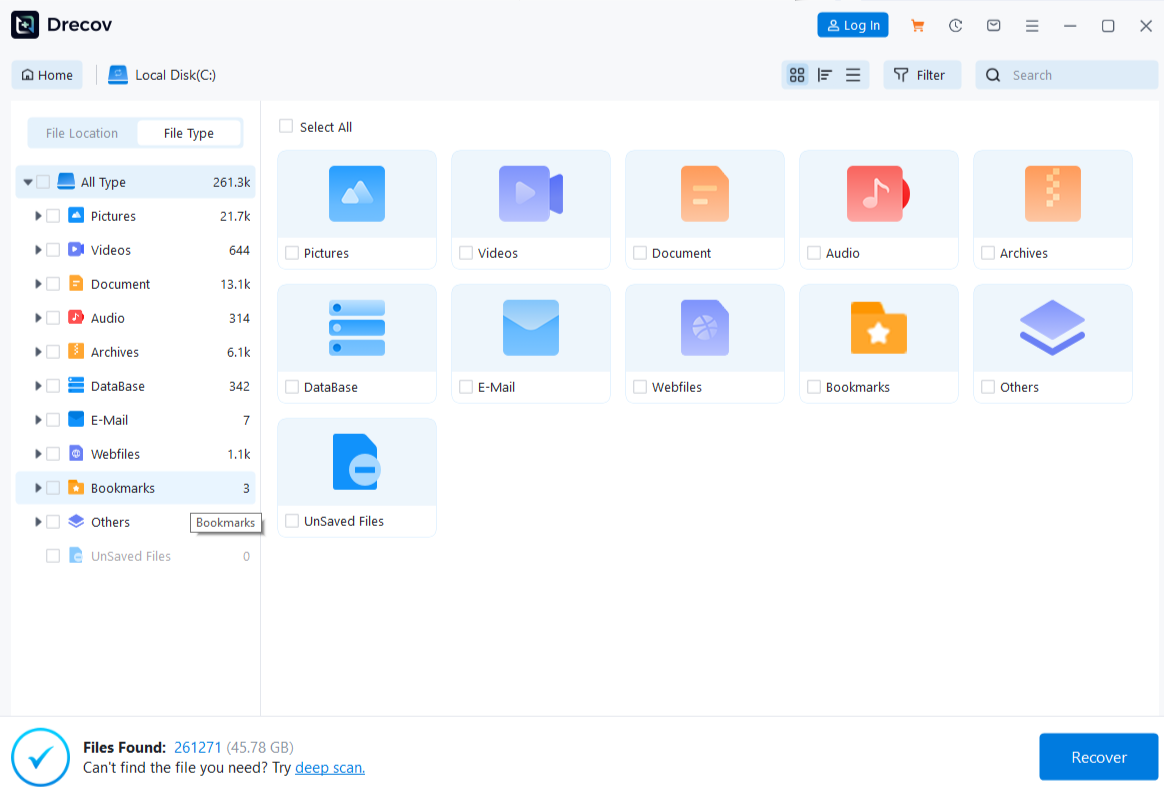
- Step 3: Preview and Filter. Once the scan is complete, use the sidebar to filter by file type (e.g., .docx, .jpg, .pdf). PandaOffice Drecov allows you to preview images and documents before committing to the recovery.
- Warning Prompt: Always check the “File Integrity” status in the preview window. If a file is severely overwritten, it may not be fully functional.

- Step 4: Execute Recovery. Select the checkboxes next to your files and click “Recover”.
Key Point: Always save the recovered files to an external USB drive or a different internal partition to ensure the original data remains untouched during the process.
Summary of Recovery Resources
After you have successfully navigated the challenges of a system crash, you might find that specific file types require unique attention. Beyond the general steps to recover lost data after memory management blue screen, you can find specialized help for various scenarios:
- If your crash occurred while working on a spreadsheet, learn how to recover overwritten Excel files effectively.
- If the blue screen was actually a symptom of a physical drive failure, consult the guide on hard drive crash recovery.
- For those who lost progress on a report, here is the method to recover overwritten Word documents.
Advanced Troubleshooting for Persistent Issues
If you have tried the memory management blue screen windows 11/10 fix steps above and the error persists, you may need to look deeper into the hardware or configuration.
Check for Disk Corruption (CHKDSK)
The virtual memory system relies on your hard drive (the page file). If the drive has “bad sectors,” the memory management blue screen will recur.
- Step 1: Open Command Prompt (Admin).
- Step 2: Type
chkdsk C: /f /rand press Enter. - Step 3: You will be asked if you want to schedule the volume to be checked the next time the system restarts. Type
Yand press Enter. - Step 4: Restart your PC. Windows will scan and attempt to repair physical disk errors.
Resetting Windows to Factory State
When software corruption is too deep for SFC or DISM to handle, a reset is the final software-based memory management blue screen windows 11/10 fix.
- Navigate to Settings > System > Recovery.
- Click Reset PC.
- Choose “Keep my files” if you want to preserve your documents, though “Remove everything” is more effective for clearing out persistent glitches.
Proactive Prevention: Stop the Blue Screen Before It Starts
Consistency is the enemy of the memory management blue screen. By maintaining a healthy system, you can significantly reduce the chances of seeing that blue screen again.
1. Monitor RAM Usage
Use the Task Manager (Ctrl + Shift + Esc) to see if any specific app is “leaking” memory. If an app’s memory usage grows indefinitely, uninstall or update it.
2. Avoid Aggressive Overclocking
While pushing your hardware can increase performance, it often leads to instability. If you encounter a memory management blue screen, return your RAM and CPU to their factory clock speeds in the BIOS/UEFI settings.
3. Keep Hardware Clean
Dust is a silent killer. It causes heat, and heat causes RAM to malfunction. Periodically use compressed air to clean your PC’s internal components.
4. Regular Backups
No fix is 100% permanent because hardware eventually ages. Using PandaOffice Drecov data recovery software is an excellent reactive measure, but proactive backups to the cloud or an external drive are your best defense.
| Potential Cause | Quick Diagnostic Tool | Primary Fix |
| Faulty RAM Stick | Windows Memory Diagnostic | Replace RAM Module |
| Corrupted OS Files | SFC /Scannow | Windows Update / DISM |
| Disk Sector Error | CHKDSK | Drive Replacement |
| Incompatible Driver | Device Manager | Roll back or Update Driver |
Conclusion
The memory management blue screen is a signal that your computer needs attention, not a death sentence for your machine. By methodically applying the memory management blue screen windows 11/10 fix strategies—from running diagnostic tools to verifying system files—you can resolve the majority of these errors.
In those unfortunate cases where files vanish during the crash, remember that tools like PandaOffice Drecov data recovery software provide a reliable way to recover lost data after memory management blue screen events. Stay calm, follow the steps, and your digital life will be back on track in no time.






