







Understanding Word Read-Only Mode Issue
What does read-only mean in Microsoft Word
Microsoft Word uses a “read-only” state to prevent accidental modifications to a document. When a file opens in this mode, users can view the content but cannot directly edit, overwrite, or save changes unless the restriction is removed.
This behavior is often applied for security, file protection, or compatibility reasons. For example, documents downloaded from the internet or received via email may automatically open in a restricted mode to protect the user from potentially unsafe content.
When this happens, users usually start searching for solutions like turn off read only in word or how to turn off read only mode in word, especially when they urgently need to edit the file.
In most cases, this restriction does not mean the file is damaged. Instead, it indicates that Word has applied a protective layer based on file source, permissions, or system policy settings.
Overview of how to turn off read only in word problem
When a Word document is stuck in read-only mode, several symptoms may appear. The most obvious one is that typing or editing is not allowed, and the document title bar may show “Read-Only” or “Protected View.”
Users may also see a yellow security warning bar at the top of the document asking them to enable editing. This leads many users to search for how do i turn off read only in word or how do you turn off read only in word when the issue persists.
In some cases, even after clicking “Enable Editing,” the document remains locked. This is usually caused by deeper restrictions such as file properties, permission settings, or cloud synchronization rules.
The issue can also appear differently depending on the file source. Locally saved files, email attachments, and OneDrive documents may each trigger different types of read-only behavior. That is why users often encounter word file read only problems in multiple scenarios rather than a single consistent cause.
Why Word becomes read-only unexpectedly
File permissions and security settings
One of the most common reasons Word enters read-only mode is due to file security settings. When a document is downloaded from the internet or received from another device, Windows may automatically mark it as unsafe. As a result, Word opens it in Protected View, which limits editing.
This is a built-in security mechanism designed to prevent malicious scripts or hidden content from affecting the system. While useful, it often causes confusion when users are simply trying to edit a normal document.
Another related cause is incorrect file permissions. If the user does not have full write access to the folder where the file is stored, Word will automatically restrict editing. This leads to repeated cases of how to turn off read only in word even when the file itself is not damaged.
Document protection and editing locks
Another major cause of read-only behavior is document-level protection. Word allows authors to restrict editing by applying passwords or limiting formatting options. When this is enabled, users can only view the document unless they have the correct permission.
This is often seen in shared workplace documents or templates where control over content is required. In such cases, users searching for how to turn read only off in word may not realize that the restriction is intentional rather than accidental.
Additionally, organizational policies in enterprise environments can enforce editing restrictions automatically. These policies ensure document consistency but may prevent normal users from making changes.
Storage and file source issues
The storage location of a Word file can also affect whether it opens in read-only mode. Files stored in cloud services such as OneDrive or SharePoint may be locked temporarily during synchronization or version control updates.
If the sync process is incomplete or interrupted, Word may open the file as read-only to prevent conflicting edits. This is a common reason behind how to turn off read only mode in word issues in cloud-based workflows.
Corrupted files can also trigger this behavior. When Word detects structural inconsistencies in a document, it may switch to read-only mode to avoid further damage. In such situations, the issue is not just about permissions but also file integrity.
⚠️ Warning: Avoid repeatedly saving over a potentially corrupted file, as it may overwrite recoverable data.
How to turn off read only in word Issue Fix Methods
Method 1: Disable read-only from file properties
Test environment: Windows 11, Microsoft Word 2021, locally stored .docx file on NTFS drive
One of the simplest reasons a document opens in restricted mode is that the file itself is marked as read-only at the system level. Windows allows users to apply this attribute to prevent accidental changes, but it can unintentionally cause turn off read only in word problems.
To fix it, locate the Word file in File Explorer, right-click it, and choose Properties. Under the General tab, check whether the “Read-only” box is enabled. If it is, uncheck it and click Apply, then OK.
After removing this attribute, reopen the document in Word. In most cases, the restriction disappears immediately, and editing becomes fully available again.
This method is especially effective for files transferred between USB drives or downloaded from external sources, where system-level restrictions are commonly applied.
⚠️ Warning: If the file is located in a restricted system folder, changes may not apply unless you have administrator permission.
Method 2: Enable editing in Word Protected View
Test environment: Windows 10, Microsoft 365 Apps, document opened from email attachment (Outlook)
When a file is downloaded from the internet or opened from email, Word often activates Protected View automatically. This is a security feature designed to protect users from potentially unsafe documents.
In this state, editing is disabled until the user manually enables it. A yellow bar usually appears at the top of the document with an “Enable Editing” button. Clicking this option is the quickest fix for how do i turn off read only in word situations.
Once enabled, the document switches from protected mode to normal editing mode, allowing full access to content.
However, if the file keeps reopening in read-only mode even after enabling editing, it may indicate deeper trust or security settings that need adjustment.
⚠️ Warning: Only enable editing for files from trusted sources to avoid security risks.
Method 3: Remove document protection settings
Test environment: Windows 10 Pro, Microsoft Word 2019, shared workplace document with editing restrictions
Some Word documents are intentionally protected by the author. This type of restriction prevents unauthorized changes and is commonly used in official templates or shared reports.
To check this, go to the Review tab and look for the “Restrict Editing” option. If restrictions are active, Word will display editing limitations such as read-only access or form-only input.
If you have permission, you can disable protection by clicking “Stop Protection” and entering the required password. Once removed, the file will no longer behave as a restricted document, resolving how to turn read only off in word issues caused by intentional locks.
In organizational environments, however, you may not have permission to remove these restrictions, as they are enforced by policy.
⚠️ Warning: Removing document protection without authorization may violate workplace rules.
Method 4: Repair or restore corrupted Word file
Test environment: Windows 11, Microsoft Word 365, unstable document showing formatting errors and partial access issues
In some cases, read-only behavior is caused by file corruption. When Word detects inconsistencies in document structure, it may automatically switch to restricted mode to prevent further damage. This can lead to persistent word file read only issues even after changing settings.
A practical solution is to use a recovery approach that rebuilds or extracts usable content from the damaged file. Tools like PandaOffice Drecov can help restore readable content from corrupted Word documents and recover editable versions without directly modifying the original file.
This method is especially useful when the document cannot be unlocked using normal settings or when multiple Word files show similar issues after a system crash or storage error.
After recovery, save the restored file under a new name and test whether editing is fully restored.
⚠️ Warning: Always work on a copy of the original file to avoid permanent data loss during recovery.
Method 5: Check OneDrive or cloud permission restrictions
Test environment: Windows 11, Microsoft 365 with OneDrive sync enabled, shared cloud document
When Word files are stored in OneDrive or SharePoint, they may be controlled by cloud-based permissions. If synchronization is incomplete or the file is locked by another user, Word may open it in read-only mode.
This is a common cause of how do you turn off read only in word problems in collaborative environments. Even if local settings are correct, cloud permissions can override them.
To fix this, ensure the file is fully synced and not currently opened by another user. You can also download a local copy of the document and test whether editing is allowed.
Once cloud synchronization is stable, Word should automatically remove the restriction.
⚠️ Warning: Avoid editing cloud files while sync is still in progress to prevent version conflicts.
Recover Deleted Word Files Using PandaOffice Drecov
Test environment: Windows 11, Microsoft Word 365, local SSD drive + recently deleted .docx files
Accidentally deleting a Word document can feel more serious than a simple read-only issue, especially when the file is not found in the Recycle Bin or has been permanently removed using Shift + Delete. In these situations, the file is not immediately gone from the storage device—it is usually just marked as free space and can still be recovered if it hasn’t been overwritten.
To handle this scenario, a recovery tool like PandaOffice Drecov can be used to scan the drive and locate deleted Word documents. It works by analyzing file system traces and recovering recoverable .docx fragments or fully reconstructed documents.
Step 1: Connect the Drive / USB)
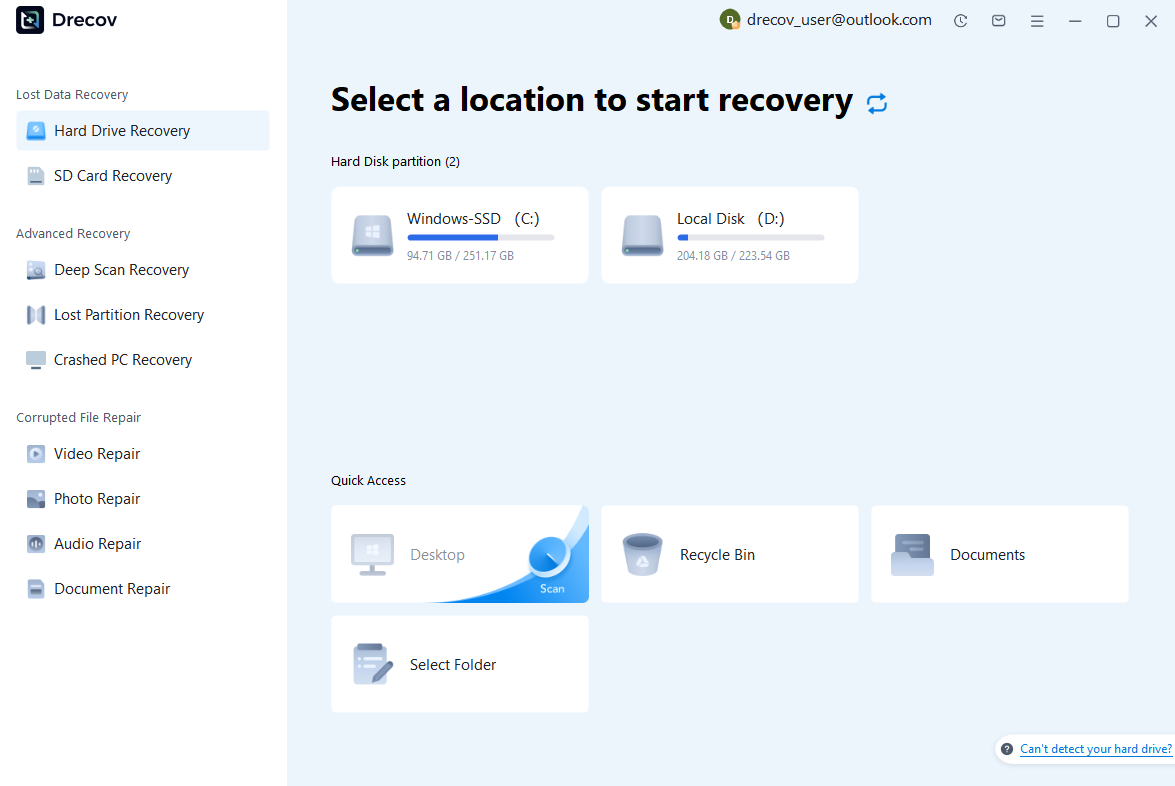
Connect your device (SD card, HDD/SSD, or USB drive) to your computer and launch PandaOffice Drecov. Select the target device and start the scan. The software will perform a quick scan and deep scan to detect lost or deleted data.
Step 2: Locate and Preview Lost Files
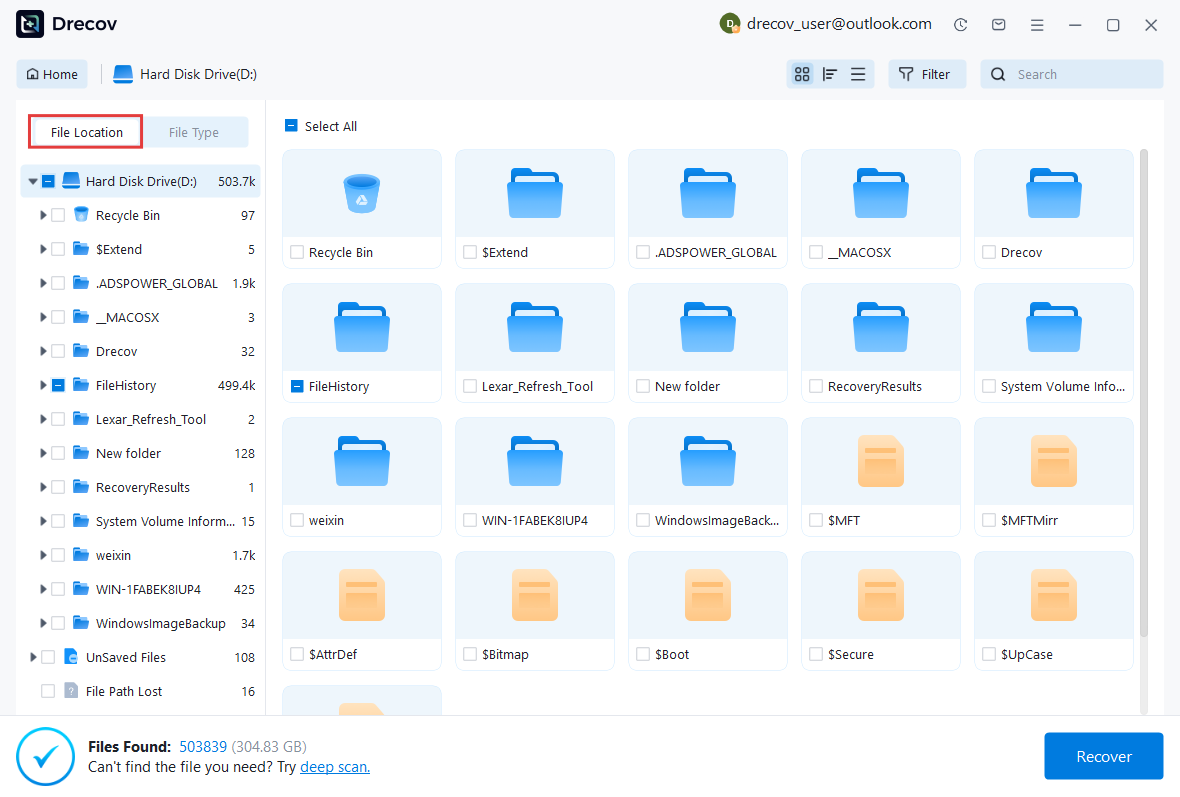
After scanning, browse the detected files and use the preview feature to check recoverable data. You can preview documents (Word, Excel, PDF), photos, and videos to ensure file integrity before recovery.
Step 3: Recover and Save to a New Location
Select the files you want to restore and click recover. Save all recovered data to a different drive or location (not the original device) to avoid overwriting lost data.

Why Choose PandaOffice Drecov Recovery Software?
PandaOffice Drecov offers a fast, secure, and user-friendly solution for recovering lost files across multiple scenarios. Whether you need email recovery, ZIP File Recovery, format data recovery, or help to recover deleted drafts Outlook, the software provides reliable recovery performance for both personal and business users.
PandaOffice Drecov supports recovery from formatted hard drives, SSDs, USB drives, SD cards, and external storage devices. Its advanced scanning engine can locate deleted archives, damaged ZIP files, lost Outlook drafts, and accidentally removed documents with high accuracy. For users searching for how to find deleted messages in Teams, PandaOffice Drecov can also help recover exported chat files, attachments, and related local cache data when available.
This method is especially useful when dealing with unexpected file loss during editing sessions, system crashes, or accidental deletion while managing multiple documents.
⚠️ Warning: Do not save new files to the same drive before recovery, as this may overwrite deleted data and reduce recovery success rate.
FAQ About turn off read only in word
Why does my Word file keep opening as read-only?
This is one of the most common issues users face when dealing with restricted documents. In most cases, it happens because Word is applying automatic security or permission-based protection rather than the file being truly damaged.
A file may open as read-only if it was downloaded from the internet, received via email, or copied from another device. Windows often marks these files as “unsafe,” which triggers Protected View. This leads many users to search for how to turn off read only in word even though the file is functioning normally.
Another frequent cause is cloud synchronization. If a document stored in OneDrive is still syncing or is being accessed by another user, Word will restrict editing to avoid conflicts. In some cases, system-level folder permissions can also force word file read only behavior even when the document itself is fine.
Understanding the source of the file is key, because different causes require different fixes.
Can I permanently disable read-only mode in Word?
There is no single global switch that permanently disables read-only mode in Word, because it is designed as a safety and permission control system. However, you can significantly reduce how often it appears by adjusting system and application settings.
For example, ensuring files are saved in trusted local folders instead of restricted directories can prevent automatic locking. You can also configure Word’s Trust Center settings to reduce unnecessary Protected View triggers.
In addition, maintaining stable cloud synchronization helps avoid temporary file locks that lead to how to turn read only off in word issues. If OneDrive or SharePoint is frequently used, keeping files fully synced before editing is important.
While you cannot completely eliminate read-only behavior, you can control when and why it appears through proper configuration and safe file handling practices.
Conclusion: Fixing how to turn off read only in word
Key takeaways and prevention strategies
The issue commonly known as how to turn off read only in word is usually not caused by a single problem, but rather a combination of file permissions, security settings, document protection, or cloud synchronization behavior.
In most cases, simple fixes such as removing the read-only attribute, enabling editing in Protected View, or adjusting document protection settings are enough to restore normal editing access. More advanced cases involving word file read only behavior may require checking OneDrive sync status or repairing corrupted documents.
For severely damaged files where normal methods fail, recovery solutions like PandaOffice Drecov can help restore editable content safely by rebuilding or extracting usable data from corrupted Word documents.
To prevent future issues, it is recommended to keep files in trusted locations, avoid interrupting cloud sync processes, and only open documents from reliable sources. These practices greatly reduce the chances of encountering how to turn read only mode in word problems again.






