







Understanding Excel Recent Files Missing Issue
What is Excel recent files feature and why it matters
Microsoft Excel includes a built-in “Recent Files” feature that helps users quickly reopen spreadsheets they have worked on recently. This function is part of Excel’s productivity system and is designed to save time by avoiding repeated navigation through folders.
When working normally, Excel automatically records opened workbooks and displays them in the File > Open > Recent section. It also integrates with the Windows taskbar Jump List, allowing users to right-click the Excel icon and instantly access recently used files.
This system is especially useful for office workers and data analysts who frequently switch between multiple spreadsheets. However, when something goes wrong, users may find that excel not showing recent files or that the history list suddenly becomes empty.
In such cases, it can feel like Excel has stopped tracking activity altogether. In reality, the feature is usually still present but disabled, misconfigured, or blocked by system-level settings.
Overview of excel not showing recent files problem
When this issue occurs, users typically notice that previously opened files no longer appear in the Recent list. Even after opening multiple Excel documents, the list remains blank or fails to update. This is commonly referred to as excel recent files not showing or recent files not showing in excel.
Another variation of the issue affects the Windows taskbar. When users right-click the Excel icon, the Jump List does not display recent spreadsheets. This is often described as excel not showing recent files in taskbar or excel taskbar not showing recent files.
The problem can appear on both Windows 10 and Windows 11 systems. In some cases, users report recent excel files not showing in taskbar windows 10, while others experience the same issue on newer systems like Windows 11.
Although the symptoms look similar, the root cause can vary depending on whether the issue originates from Excel settings, Windows system configuration, or corrupted cache data. Most of the time, it is not a serious failure but rather a disabled feature or broken history storage mechanism.
Why recent files not showing in excel Happens
Disabled Excel settings or privacy options
One of the most common reasons behind excel not showing recent files is that the feature has been disabled inside Excel settings. Microsoft Excel allows users to control how many recent workbooks are displayed, and it also includes options to turn off recent file tracking entirely.
If the “Show this number of Recent Workbooks” option is set to zero, Excel will stop displaying recent files completely. Similarly, privacy settings or organizational policies may disable file history to prevent tracking of user activity.
This issue is often unintentional. Users may change settings while customizing Excel or optimizing privacy options, only to later realize that excel recent files not showing has occurred.
Once disabled, Excel will no longer record file history, even if documents are opened normally.
Windows or Office configuration issues
Another major cause of recent files not showing in excel is misconfiguration within Windows or Microsoft Office itself. System updates can sometimes reset application preferences or interfere with how Excel stores recent file history.
In Windows 10 and Windows 11, the taskbar Jump List feature is responsible for showing recently opened files. If this feature is disabled or reset, users may experience excel not showing recent files in taskbar even though Excel itself is functioning normally.
Differences between operating systems can also affect behavior. For example, users may report recent excel files not showing in taskbar windows 10 after updates, while Windows 11 users experience similar issues due to redesigned taskbar handling.
These inconsistencies usually stem from background changes in how Windows manages application history and permissions.
Corrupted cache or registry data
In some cases, the issue is caused by corrupted cache files or damaged registry entries. Excel and Windows both store recent file data in temporary system locations. If these files become corrupted, Excel may fail to load or update the recent file list.
This often leads to excel taskbar not showing recent files, especially when the Jump List cache is broken. Even if Excel continues to open files normally, the system may not remember them for quick access.
Such corruption can occur after unexpected shutdowns, software crashes, or incomplete updates. Over time, these small errors accumulate and affect the reliability of recent file tracking.
⚠️ Warning: Manually editing registry entries without proper knowledge can cause system instability. Always proceed carefully when troubleshooting system-level issues.
How to Fix excel not showing recent files Issue
Method 1: Enable recent files settings inside Excel
Test environment: Windows 11, Microsoft Excel 365 (latest update), standard user profile
The first and most direct fix is to check whether Excel’s recent file tracking feature is enabled. Open Excel, go to File → Options → Advanced, then scroll down to the “Display” section. Look for the setting labeled “Show this number of Recent Workbooks.”
If this value is set to 0, Excel will not display any recent files at all, which directly causes excel not showing recent files and excel recent files not showing issues. Increase the number (for example, 10–50) to restore normal behavior.
Next, go to the File tab and check the Open section. If recent files are enabled correctly, previously opened spreadsheets should immediately reappear.
This method is often the simplest fix because many users unknowingly disable the feature while adjusting privacy or performance settings.
⚠️ Warning: Changes only apply after restarting Excel, so close and reopen the application before testing.
Method 2: Reset Windows Taskbar Jump List
Test environment: Windows 10 Pro, Microsoft Excel 2019, taskbar personalization enabled
If Excel settings are correct but excel not showing recent files in taskbar still occurs, the issue may be related to the Windows Jump List system. This feature controls the right-click menu on taskbar icons and stores recent activity history.
To fix it, open Windows Settings → Personalization → Start, and ensure “Show recently opened items in Jump Lists” is enabled. If it is already enabled, turn it off and back on again to reset the cache.
You can also clear corrupted Jump List data by deleting temporary files in the system AppData folder. After clearing, restart Windows Explorer or reboot the system.
This method is particularly effective for recent excel files not showing in taskbar windows 10, where system-level caching issues are more common.
Once reset, Excel should begin repopulating the taskbar history automatically as files are opened.
Method 3: Repair Microsoft Office installation
Test environment: Windows 10, Microsoft Office 2019, stable internet connection
If the issue persists after adjusting settings, the problem may be caused by damaged Office components. In this case, repairing Microsoft Office is recommended.
Go to Control Panel or Settings → Apps → Microsoft Office → Modify. You will see two repair options: Quick Repair and Online Repair.
Quick Repair fixes minor file corruption and registry inconsistencies. Online Repair performs a deeper restoration by reinstalling core Office components, which can resolve more persistent issues like excel recent files not showing in taskbar.
After completing the repair, restart your computer and open Excel again. In most cases, the recent files list and Jump List functionality will be restored automatically.
⚠️ Warning: Online Repair requires a stable internet connection and may take longer depending on system performance.
Method 4: Restore Excel recent history using recovery and cache rebuild tools
Test environment: Windows 11, Microsoft Excel 2021, system with corrupted AppData cache
In more complex cases, the problem may be caused by corrupted system cache files or damaged user profile data. When this happens, Excel cannot properly store or retrieve recent file history, resulting in recent excel files not showing even after standard fixes.
A more advanced solution is to rebuild system-level application metadata. Tools like PandaOffice Drecov can help recover damaged file history structures and restore lost application traces without affecting personal spreadsheets.
This approach is especially useful when both Excel and other Office applications fail to remember recent activity, indicating a broader system-level issue rather than a single application error.
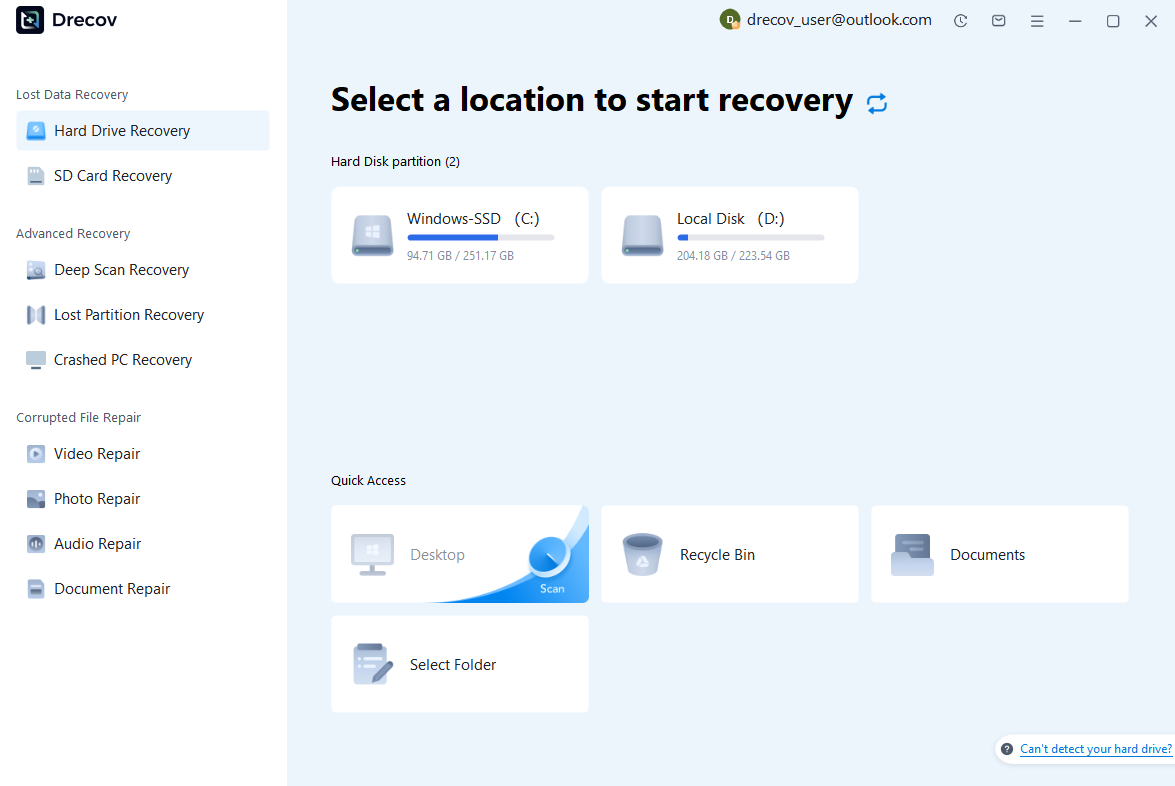
Step 1: Connect the Drive / USB)
Connect your device (SD card, HDD/SSD, or USB drive) to your computer and launch PandaOffice Drecov. Select the target device and start the scan. The software will perform a quick scan and deep scan to detect lost or deleted data.
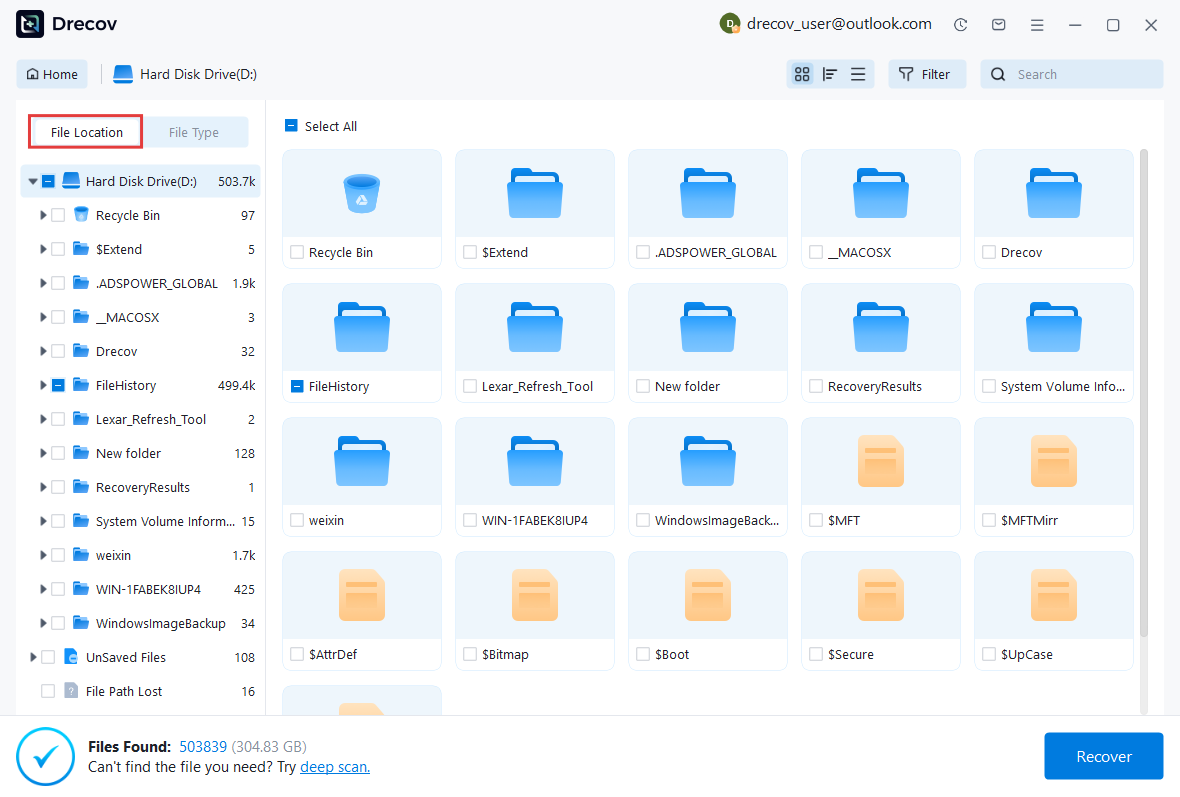
Step 2: Locate and Preview Lost Files
After scanning, browse the detected files and use the preview feature to check recoverable data. You can preview documents (Word, Excel, PDF), photos, and videos to ensure file integrity before recovery.
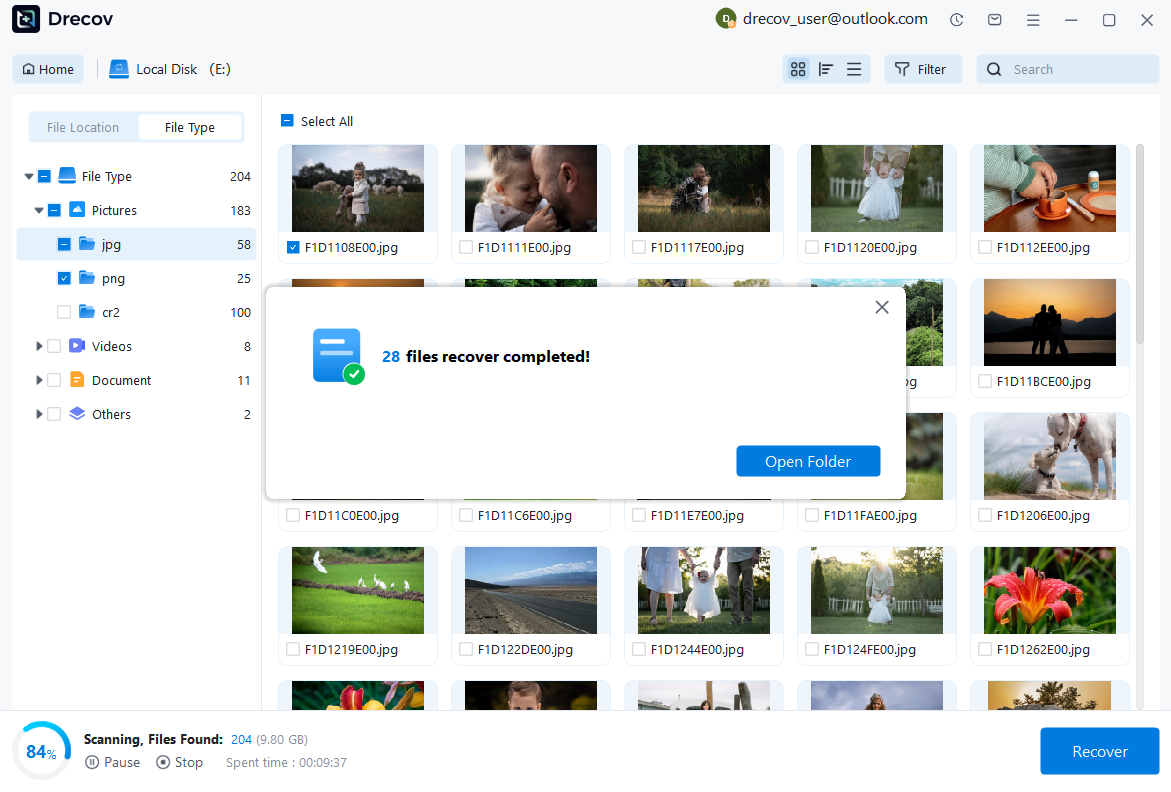
Step 3: Recover and Save to a New Location
Select the files you want to restore and click recover. Save all recovered data to a different drive or location (not the original device) to avoid overwriting lost data.
Why Choose PandaOffice Drecov Recovery Software?
PandaOffice Drecov offers a fast, secure, and user-friendly solution for recovering lost files across multiple scenarios. Whether you need email recovery, ZIP File Recovery, format data recovery, or help to recover deleted drafts Outlook, the software provides reliable recovery performance for both personal and business users.
PandaOffice Drecov supports recovery from formatted hard drives, SSDs, USB drives, SD cards, and external storage devices. Its advanced scanning engine can locate deleted archives, damaged ZIP files, lost Outlook drafts, and accidentally removed documents with high accuracy. For users searching for how to find deleted messages in Teams, PandaOffice Drecov can also help recover exported chat files, attachments, and related local cache data when available.
⚠️ Warning: Always ensure important documents are backed up before performing system-level recovery operations.
Method 5: Check Group Policy or Registry restrictions
Test environment: Windows 10 Enterprise, Microsoft Excel 2016, domain-managed environment
In managed or corporate systems, recent files not showing in excel can be caused by Group Policy restrictions set by IT administrators. These policies may intentionally disable recent file tracking for privacy or compliance reasons.
To check this, open the Group Policy Editor (gpedit.msc), then navigate to User Configuration → Administrative Templates → Microsoft Office → Excel Options → Advanced. Look for policies related to “Disable recent documents list” or “Turn off recent file tracking.”
If any of these policies are enabled, Excel will stop recording history, which leads to excel not showing recent files even if local settings appear correct.
In some cases, registry-level restrictions may also be applied. The key responsible for recent document tracking may be set to disable history storage entirely.
After adjusting or disabling these restrictions, restart Excel and verify whether recent files begin to appear again.
⚠️ Warning: Changes in Group Policy or registry settings can affect other Office applications. Proceed only if you understand system administration basics.
Method 6: Rebuild Windows Explorer and File History cache
Test environment: Windows 11, Microsoft Excel 365, multi-app usage environment with heavy file activity
Another effective solution for excel taskbar not showing recent files is rebuilding the Windows Explorer cache. The taskbar Jump List system depends on Explorer processes to store and display recent activity.
To refresh it, open Task Manager, locate Windows Explorer, and restart the process. This will immediately reset taskbar behavior without affecting open applications.
If the issue persists, you can manually clear Jump List cache files stored in the system directory under AppData\Roaming\Microsoft\Windows\Recent Items. Deleting these files forces Windows to rebuild the history database.
After clearing the cache, reopen Excel and work with a few files. The system will begin repopulating the recent list automatically.
This method is especially helpful for recent excel files not showing in taskbar windows 11, where UI changes sometimes interfere with cache updates.
⚠️ Warning: Deleting system cache only removes shortcuts, not actual Excel files.
Method 7: Check Excel privacy and cloud sync settings
Test environment: Windows 11, Microsoft 365 with OneDrive sync enabled, signed-in user profile
In some cases, excel recent files not showing in taskbar or within Excel itself is caused by privacy or cloud synchronization settings. Microsoft 365 includes privacy options that may disable file tracking when certain privacy modes are enabled.
Go to File → Options → Trust Center → Trust Center Settings → Privacy Options. Ensure that options related to disabling recently used file list or document tracking are not enabled.
Additionally, if OneDrive or SharePoint sync is active, recent file history may be stored in the cloud instead of locally. If synchronization is interrupted, the recent list may appear empty or incomplete.
Re-signing into your Microsoft account and allowing sync to complete can often restore missing entries in recent excel files not showing scenarios.
After syncing stabilizes, reopen Excel and check the Recent tab again.
⚠️ Warning: Do not disable cloud sync permanently unless necessary, as it may affect file version history.
FAQ About excel recent files not showing
Why did my Excel recent files disappear suddenly?
This usually happens after a Windows update, Office repair, or settings reset. Excel may revert to default configurations where recent file tracking is disabled or set to show zero items. In some cases, corrupted cache files can also cause excel not showing recent files even though files were opened normally.
How can I restore recent files in Excel taskbar permanently?
To maintain stable behavior, ensure that recent file tracking is enabled in Excel options, Windows Jump List history is turned on, and Office is kept updated. Avoid disabling privacy-related settings that affect file tracking. Keeping both Excel and Windows Explorer cache healthy helps prevent excel not showing recent files in taskbar from recurring.
Conclusion: Fixing recent files not showing in excel
The issue of recent files not showing in excel is usually caused by configuration changes, disabled history settings, or corrupted cache data rather than serious software damage. In most cases, simply re-enabling recent file options or resetting Windows Jump List resolves the problem quickly.
More persistent cases involving excel recent files not showing in taskbar or excel taskbar not showing recent files often require repairing Office or rebuilding system cache. In rare situations, recovery tools like PandaOffice Drecov can help restore damaged system metadata and recover lost file history traces.
By following these methods step by step, users can fully restore Excel’s recent file functionality and ensure smooth access to frequently used spreadsheets across Windows 10 and Windows 11.






