







Understanding Blank Word Document Issue
What is a blank Word document problem
A blank Word document issue occurs when a file opens normally in Microsoft Word but shows no visible content. The interface may load correctly, but the page appears empty, sometimes described as a blank word doc or even completely unresponsive document view. In some cases, users can still scroll through pages, but everything remains invisible.
This problem does not always mean the file is empty. Instead, it often indicates that Word is unable to properly render or display the document content. The file may still contain text, images, or formatting data, but something in the loading or display process prevents it from appearing.
Many users first notice this issue when a previously saved file suddenly opens as a word doc blank, leading to confusion and concern that their work has been lost. However, in most cases, the content is still recoverable.
Overview of blank page and empty document symptoms
When this issue occurs, users may see different variations of the same problem. The most common symptom is a completely white page with no text, formatting, or images visible. This is often described as a blank page or blank white page, even though the document is technically opened.
In other cases, Word may appear to load the file normally, but the content area remains empty. The status bar may still show page numbers, which indicates that the document structure exists, even if it is not visible. This is commonly referred to as a word doc blank situation.
Some users also report that the file opens but behaves unusually, such as missing formatting, invisible text, or delayed rendering. This can happen across different versions of Microsoft Word, especially after updates or system changes. When the Word document opens but shows no content, it is usually a sign of rendering or file integrity issues rather than true data loss.
Why Word document opens as blank white page
File corruption or damaged structure
One of the most common reasons a Word file appears blank is file corruption. This happens when the internal structure of the document is damaged, often due to unexpected shutdowns, incomplete saves, or storage errors. When corruption occurs, Word may still open the file but fail to correctly interpret its contents.
In such cases, the document may appear as a blank white page, even though the underlying data still exists within the file. The formatting engine may skip or fail to load certain sections, making the content invisible to the user.
Corruption can also occur when files are transferred between devices or stored on unstable drives. Even minor interruptions during saving can result in incomplete document structures that lead to blank page display issues.
Compatibility and version conflicts
Another frequent cause of a blank Word document is compatibility issues between different versions of Microsoft Word. Older documents created in legacy formats may not always render correctly in newer versions of Office, especially if they contain outdated formatting elements or embedded objects.
When version conflicts occur, Word may open the file but fail to display its content properly, resulting in a word doc blank appearance. This is particularly common when opening files created in older software or transferred from different operating systems.
Additionally, recent Office updates can sometimes introduce temporary compatibility glitches. These issues may affect how documents are parsed and displayed, leading to situations where the Word document opens but appears empty or partially rendered.
In some cases, the issue is not related to the file itself but to system display settings or Word’s rendering engine. Hardware acceleration, graphics drivers, or cached display data can interfere with how Word renders document content on screen.
When this happens, the file may load correctly in the background, but the interface shows a blank white page instead of the actual content. This can be misleading because the document is still intact, but not properly displayed.
Temporary system files or corrupted Word cache can also contribute to this issue. These small errors can accumulate and prevent proper rendering, leading to repeated blank page or blank word doc experiences across multiple files.
⚠️ Warning: Do not assume the file is empty immediately—always try alternative viewing or recovery methods before overwriting or replacing the document.
How to Fix blank Word doc Issue
Method 1: Open and Repair Word document
Test environment: Windows 11, Microsoft Word 365, corrupted .docx file showing empty content after double-click opening
When a Word file opens as a blank word doc, the built-in “Open and Repair” feature is often the first and most effective solution. This tool attempts to rebuild damaged document structures and restore readable content from corrupted files.
To use it, open Microsoft Word first (do not double-click the file). Then go to File → Open → Browse, select the affected document, click the small arrow next to “Open,” and choose “Open and Repair.” Word will try to fix structural errors automatically and reload the document.
In many cases, this method restores hidden text or formatting that caused the word doc blank display issue. It is especially useful when the file was damaged due to unexpected shutdowns or incomplete saving.
After repair, always save the file under a new name to preserve the recovered version.
⚠️ Warning: If repair fails once, avoid repeated attempts on the same file and try alternative recovery methods to prevent further corruption.
Method 2: Disable Protected View and enable editing
Test environment: Windows 10, Microsoft Word 2019, file downloaded from email attachment or browser
Sometimes a document appears as a blank white page because Word opens it in Protected View. This security feature blocks full content rendering until the user explicitly allows editing.
When this happens, the document may look empty or partially loaded, and users often assume it is a word doc blank issue. However, the content is usually still present but hidden due to restricted mode.
To fix it, look for a yellow security bar at the top of the window and click “Enable Editing.” Once enabled, Word should fully render the content and restore normal view.
If the file continues to open blank even after enabling editing, the issue may involve deeper compatibility or corruption problems.
Method 3: Recover content using previous versions or backup
Test environment: Windows 11, Microsoft 365 with OneDrive enabled, automatically synced Word document
If the file was stored in OneDrive or another cloud service, previous versions may be available for recovery. This is particularly useful when a Word document opens as blank due to accidental overwriting or sync errors.
To access this feature, right-click the file in OneDrive, select Version History, and review earlier saved states. You can open each version to check whether the content appears correctly and restore the most complete one.
This method is highly effective for blank page issues caused by recent edits or synchronization conflicts, especially in collaborative environments.
Cloud version history often provides multiple restore points, making it easier to recover content without relying on repair tools.
Method 4: Advanced file recovery using system tool
Test environment: Windows 11 Pro, corrupted Word document stored on local SSD after system crash
When standard methods fail and the file continues to open as a blank word doc, deeper recovery may be required. In cases of severe corruption or file damage, system-level recovery tools can help retrieve usable data fragments.
Tools like PandaOffice Drecov can scan storage devices and attempt to reconstruct lost or damaged Word content. This is especially useful when the file no longer displays correctly or appears empty despite being present on disk.
This approach is recommended when users repeatedly face word doc blank issues after crashes, power failures, or storage errors. It works by analyzing recoverable file structures that Word itself may no longer recognize.
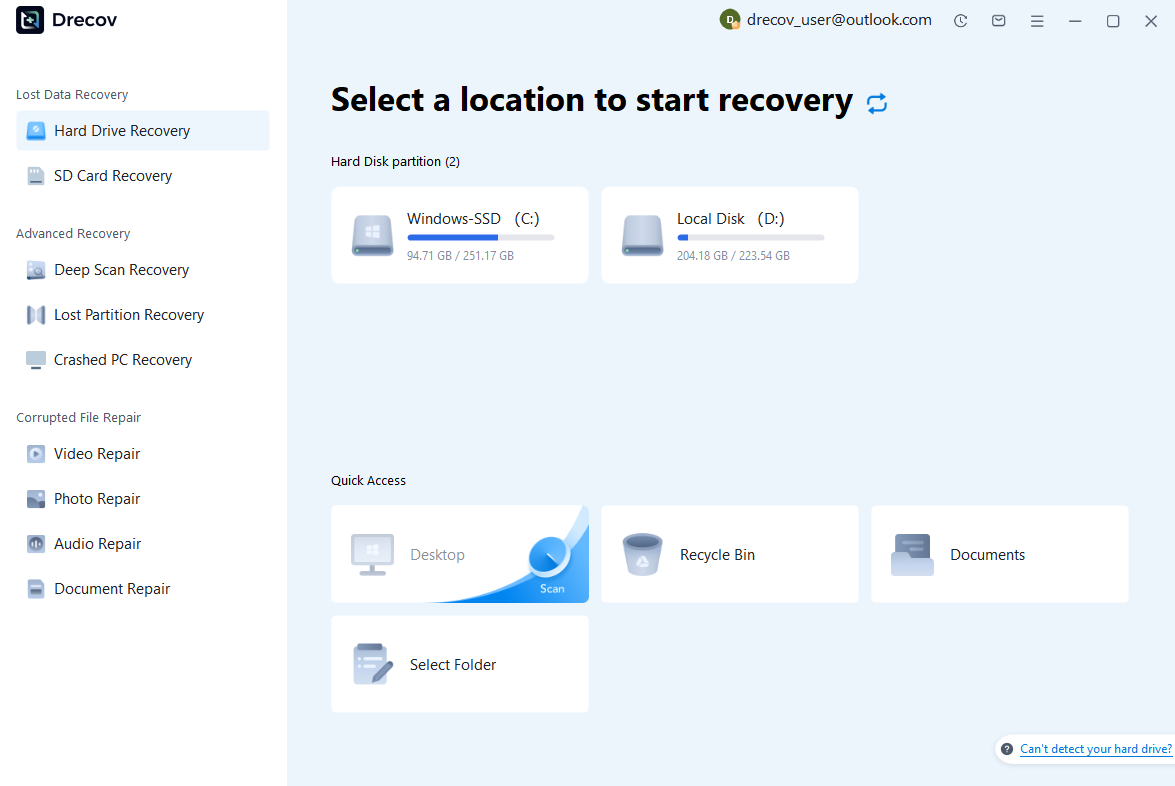
Step 1: Connect the Drive / USB)
Connect your device (SD card, HDD/SSD, or USB drive) to your computer and launch PandaOffice Drecov. Select the target device and start the scan. The software will perform a quick scan and deep scan to detect lost or deleted data.
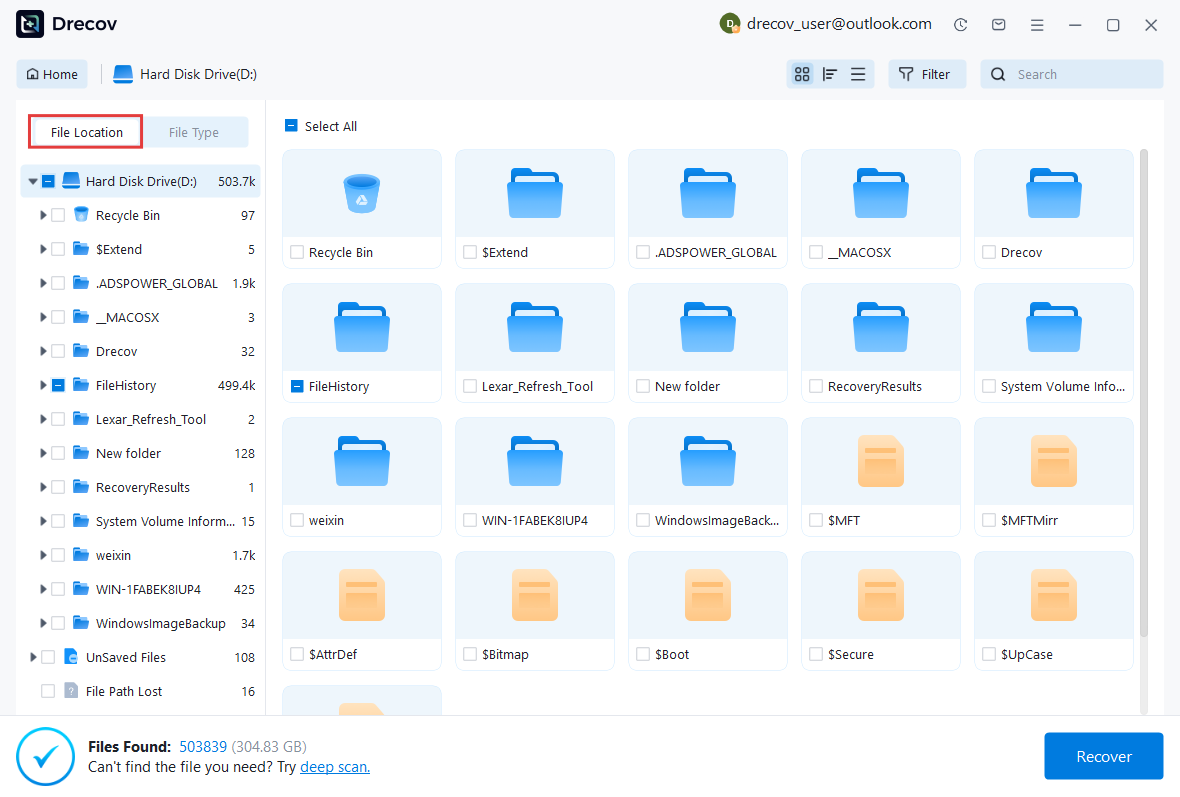
Step 2: Locate and Preview Lost Files
After scanning, browse the detected files and use the preview feature to check recoverable data. You can preview documents (Word, Excel, PDF), photos, and videos to ensure file integrity before recovery.
Step 3: Recover and Save to a New Location
Select the files you want to restore and click recover. Save all recovered data to a different drive or location (not the original device) to avoid overwriting lost data.

Why Choose PandaOffice Drecov Recovery Software?
PandaOffice Drecov offers a fast, secure, and user-friendly solution for recovering lost files across multiple scenarios. Whether you need email recovery, ZIP File Recovery, format data recovery, or help to recover deleted drafts Outlook, the software provides reliable recovery performance for both personal and business users.
PandaOffice Drecov supports recovery from formatted hard drives, SSDs, USB drives, SD cards, and external storage devices. Its advanced scanning engine can locate deleted archives, damaged ZIP files, lost Outlook drafts, and accidentally removed documents with high accuracy. For users searching for how to find deleted messages in Teams, PandaOffice Drecov can also help recover exported chat files, attachments, and related local cache data when available.
After recovery, save the restored file separately to avoid overwriting remaining data.
Method 5: Disable hardware acceleration in Word
Test environment: Windows 10 Pro, Microsoft Office 2019, display rendering glitch causing missing document content
In some situations, a blank white page is caused not by file damage but by display rendering issues inside Word. Hardware acceleration, which uses the GPU to render documents, can sometimes malfunction and prevent content from appearing correctly.
To fix this, open Word, go to File → Options → Advanced, scroll to the Display section, and enable “Disable hardware graphics acceleration.” After restarting Word, the document may render correctly again.
This method is particularly helpful when multiple files open as blank page even though they are known to contain content.
It resolves display-level issues rather than file-level problems, making it a quick and safe troubleshooting step.
FAQ About blank Word document issues
Why does my Word file open but show nothing inside?
This usually happens when Word fails to render the document content properly rather than the file being truly empty. In many cases, the data is still inside the file, but display errors, corruption, or compatibility issues prevent it from appearing.
A common trigger is file corruption caused by unexpected shutdowns or incomplete saving. When this happens, the document may open normally but display a blank word doc or blank white page instead of text and images.
Another cause is Protected View or security restrictions, where Word loads the file in a limited mode. This can make the document appear empty until editing is enabled. In some cases, graphics rendering issues also interfere with display, especially after system updates.
Can a blank Word document be recovered?
Yes, in many situations a blank Word document can be recovered, depending on the cause of the issue. If the file is affected by display errors or temporary glitches, enabling editing or adjusting settings may immediately restore the content.
If the issue is caused by corruption or file damage, recovery tools and backup systems may be required. Features like AutoRecover, version history, or cloud backups often allow users to restore earlier working versions where the content is still visible.
For more severe cases where the file cannot be opened correctly or continues showing a word doc blank, advanced recovery solutions may be necessary. The success rate depends on whether the original data has been overwritten or remains partially intact.
Conclusion: Fixing blank Word doc safely
Key takeaways and prevention tips
A blank word doc or blank white page issue does not always mean data is lost. In many cases, the problem is caused by rendering errors, protection settings, or temporary system glitches rather than permanent file deletion.
Most issues where a Word document opens but shows no content can be resolved using built-in repair tools, enabling editing, or restoring previous versions from cloud or system backups. For more severe corruption cases, recovery tools like PandaOffice Drecov can help retrieve damaged or inaccessible document content.
To prevent future issues, it is recommended to keep AutoSave enabled, avoid force-closing Word during editing, and store important files in cloud services with version history. These simple habits greatly reduce the risk of encountering blank page problems again and help ensure document stability during everyday use.






