







Understanding Excel Crash Data Loss and Recovery Needs
What happens when Excel crashes unexpectedly
When Microsoft Excel crashes suddenly, the program usually closes without completing the normal saving process. This can happen during heavy calculations, large dataset processing, or even simple editing if the system becomes unstable. In most cases, Excel tries to protect user data by generating temporary backup files through its AutoRecover system.
These temporary files are stored in the background and may be used to restore work when Excel is reopened. However, this recovery is not always guaranteed, especially if AutoSave was disabled or if the crash was severe. This is why many users start searching for recover excel file solutions immediately after losing their work.
In a typical scenario, Excel may display a recovery panel when restarted, offering the last autosaved versions. If this panel does not appear, it usually means the recovery process was interrupted or the files were not successfully created.
Overview of recover excel file after crash issue
The issue of losing Excel data after a crash is common and often unexpected. Users may find that a workbook they were actively editing is missing, partially restored, or completely unsaved. This leads to frequent searches like how to recover an excel file after a crash or how to recover an excel file when urgent work is lost.
In some cases, Excel opens normally but without the latest changes. In other situations, the file may not appear at all in recent documents or recovery panels. This inconsistency depends on whether AutoRecover was enabled, how frequently backups were created, and whether the file was stored locally or in the cloud.
Cloud-based files tend to have better recovery options because they automatically sync changes. Local files, however, rely heavily on system-generated temporary data. If that data is missing or overwritten, users may need more advanced recovery approaches to how to recover excel files effectively.
Why Excel files are lost after a crash
Unexpected system shutdown or software freeze
One of the most common reasons Excel files are lost is an unexpected system shutdown or application freeze. This can occur due to power failure, system overload, or Excel becoming unresponsive during complex tasks such as large dataset calculations or macro execution.
When this happens, Excel may not have enough time to trigger its normal saving process. As a result, users often face situations where they need to urgently figure out how to recover an excel file after a crash.
In many cases, the program still creates partial recovery data in the background, but it may not be complete or accessible depending on system stability at the time of the crash.
AutoRecover and saving configuration issues
Another major cause of lost Excel data is improper configuration of AutoRecover or AutoSave settings. If these features are disabled or set with long time intervals, Excel may not create frequent backup versions of the file.
This means that when a crash occurs, only outdated or incomplete versions may be available. Users then begin searching for how to recover an excel file because the latest edits are missing.
In addition, if Excel is closed improperly or if the system crashes before AutoRecover can trigger, the recovery file may not be generated at all. This makes recovery more difficult and increases reliance on external methods or system-level backups.
File corruption or storage failure
File corruption is another serious reason behind Excel data loss. This can happen when a workbook is saved on a failing hard drive, unstable USB device, or interrupted network storage. Corruption may also occur if Excel crashes while writing data to the file.
When corruption happens, Excel may refuse to open the file or display only partial content. In such cases, users often search for how to recover excel files because standard recovery options no longer work.
Storage-related issues, such as bad sectors or sudden disconnection of external drives, can also cause incomplete file writes. This increases the risk of permanent data loss if no backup exists.
⚠️ Warning: Avoid repeatedly opening or saving corrupted files, as this may overwrite recoverable data and reduce recovery chances.
How to recover excel file after crash Issue Fix Methods
Method 1: Recover unsaved Excel file using AutoRecover
Test environment: Windows 11, Microsoft Excel 365, unexpected application crash during active spreadsheet editing
One of the fastest ways to restore lost work after a crash is using Excel’s AutoRecover feature. This built-in function automatically saves temporary copies of your workbook at regular intervals, allowing you to restore work that was not manually saved.
To use it, reopen Excel after the crash. In many cases, a “Document Recovery” pane will appear on the left side showing available versions of your file. If it does not appear, you can go to File → Info → Manage Workbook → Recover Unsaved Workbooks.
From there, select the most recent file and open it. Save it immediately under a new name to avoid overwriting future recovery attempts. This method is often the first solution when users search recover excel file after unexpected shutdowns.
In many cases, this process successfully restores most or all unsaved changes depending on the AutoRecover interval settings.
⚠️ Warning: AutoRecover files may be deleted automatically after a certain period or after normal shutdowns, so act quickly.
Method 2: Use Excel built-in recovery panel
Test environment: Windows 10, Microsoft Excel 2019, system restart after Excel freeze
When Excel crashes and restarts, it often automatically launches a recovery interface. This panel lists all available versions that were saved before the crash, including autosaved and temporary files.
If available, you can simply click on the recovered file and review its contents before saving it permanently. This is particularly useful when dealing with how to recover an excel file after a crash scenarios where multiple versions may appear.
The recovery panel prioritizes the most recent autosaved version, but older versions may also be available depending on system activity and file size.
If no recovery panel appears, it usually means Excel did not successfully generate recovery data, or it was cleared during shutdown.
Method 3: Restore previous file version from system or cloud
Test environment: Windows 11, Microsoft 365, Excel file stored in OneDrive with version history enabled
If your Excel file is stored in OneDrive, SharePoint, or another cloud service, you may be able to recover earlier versions even if AutoRecover fails. Cloud storage systems automatically keep multiple snapshots of your file as you edit it.
To restore a version, locate the file in OneDrive, right-click it, and select Version History. You can then browse through saved versions, preview them, and restore the one you need.
This method is especially helpful for users searching how to recover excel file, as it does not depend on local temporary files. Even if Excel crashes completely, cloud backups often remain intact.
For locally stored files, Windows File History or restore points may also provide earlier versions if enabled.
Method 4: Advanced recovery using system repair tool
Test environment: Windows 11 Pro, Excel 2021, corrupted workbook after repeated crash cycles
In more severe cases where Excel files become corrupted or completely inaccessible, built-in recovery options may not be enough. This often happens after repeated crashes, storage errors, or sudden system shutdowns during file writing.
In such situations, a deeper recovery approach may be required. Tools like PandaOffice Drecov can scan storage drives and attempt to recover lost or damaged Excel files by reconstructing readable data fragments from the disk.
This method is useful when users face persistent how to recover excel files issues and standard recovery methods fail. It is especially effective for retrieving files that are no longer visible in Excel’s recovery panel or cloud history.
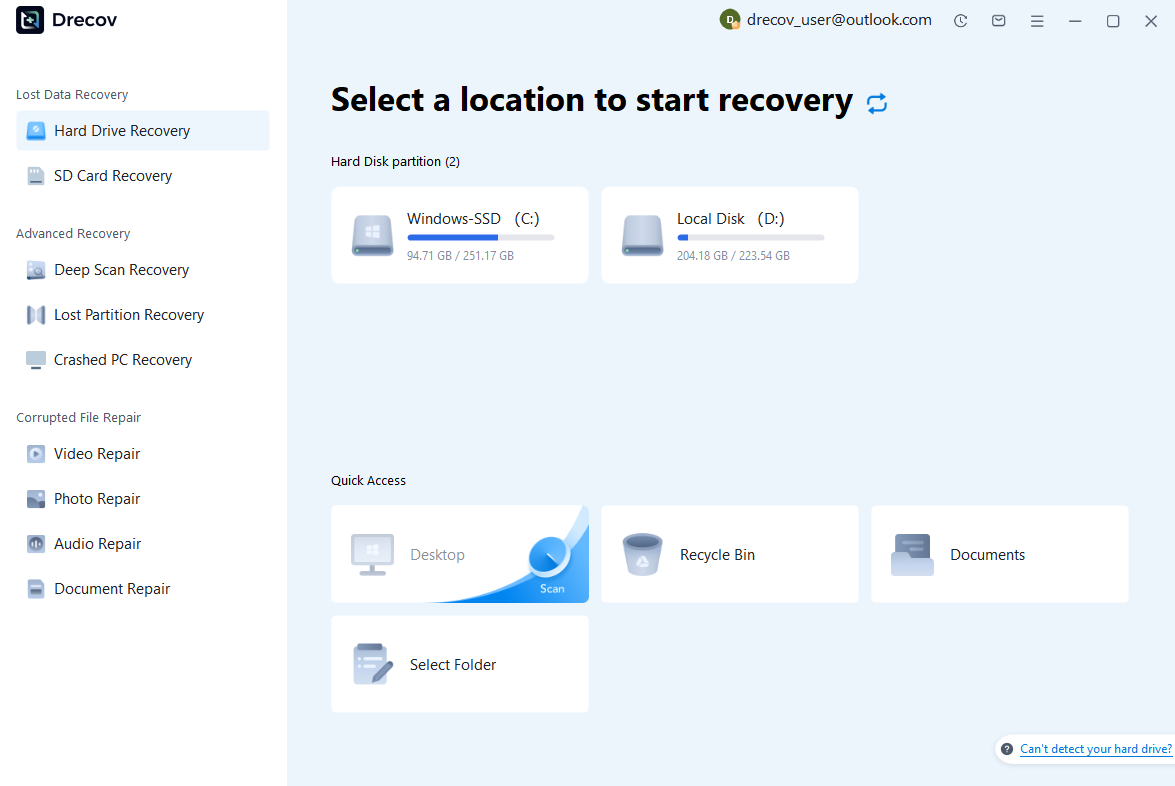
Step 1: Connect the Drive / USB)
Connect your device (SD card, HDD/SSD, or USB drive) to your computer and launch PandaOffice Drecov. Select the target device and start the scan. The software will perform a quick scan and deep scan to detect lost or deleted data.
Step 2: Locate and Preview Lost Files
After scanning, browse the detected files and use the preview feature to check recoverable data. You can preview documents (Word, Excel, PDF), photos, and videos to ensure file integrity before recovery.

Step 3: Recover and Save to a New Location
Select the files you want to restore and click recover. Save all recovered data to a different drive or location (not the original device) to avoid overwriting lost data.

Why Choose PandaOffice Drecov Recovery Software?
PandaOffice Drecov offers a fast, secure, and user-friendly solution for recovering lost files across multiple scenarios. Whether you need email recovery, ZIP File Recovery, format data recovery, or help to recover deleted drafts Outlook, the software provides reliable recovery performance for both personal and business users.
PandaOffice Drecov supports recovery from formatted hard drives, SSDs, USB drives, SD cards, and external storage devices. Its advanced scanning engine can locate deleted archives, damaged ZIP files, lost Outlook drafts, and accidentally removed documents with high accuracy. For users searching for how to find deleted messages in Teams, PandaOffice Drecov can also help recover exported chat files, attachments, and related local cache data when available.
After recovery, always save the restored file to a different drive to prevent overwriting remaining recoverable data.
Method 5: Recover Excel file using temporary file location
Test environment: Windows 10 Pro, Excel 2016, crash during large dataset processing session
Another effective method involves manually searching for temporary Excel files stored on your system. When Excel runs, it often creates hidden backup files with extensions like .tmp or .asd in system directories.
These files can sometimes contain partial or complete versions of your lost workbook. By navigating to the temporary file folder or searching for recent file modifications, you may be able to locate recoverable data.
This method is especially helpful when users search how to recover an excel file but cannot find results in AutoRecover or cloud storage.
Once identified, rename the file with a .xlsx extension and try opening it in Excel. If successful, immediately save it as a new file.
⚠️ Warning: Temporary files may be overwritten quickly by system processes, so recovery success depends on timing.
FAQ About Excel crash recovery
Can I recover Excel file if I didn’t save it at all?
Yes, in many cases it is still possible to recover an unsaved Excel file, but success depends on whether AutoRecover or temporary backup files were created before the crash. When Excel closes unexpectedly, it often generates background recovery data even if you never clicked “Save.”
If AutoRecover is enabled, Excel may show a recovery panel when you reopen the program, allowing you to restore the last autosaved version. If that doesn’t appear, you can go to File → Info → Manage Workbook → Recover Unsaved Workbooks to check manually stored drafts.
This is why users frequently search for how to recover excel file after a crash, especially when they assume all work is lost. However, unsaved recovery is not guaranteed if the system crashed before any temporary snapshot was created or if cleanup processes removed the files.
Why does Excel crash and cause file loss in the first place?
Excel crashes can happen for several reasons, and understanding them helps reduce the risk of future data loss. One common cause is system overload, especially when working with large datasets, complex formulas, or multiple add-ins running at the same time.
Another frequent reason is insufficient memory or CPU resources, which forces Excel to stop responding. When this happens, users often experience interruptions that lead to how to recover an excel file after a crash scenarios.
File corruption, unstable storage devices, or sudden power loss can also interrupt saving processes. In cloud-based environments, sync conflicts may further complicate file recovery, especially if changes were being uploaded during the crash.
Conclusion: How to recover excel file safely
Key takeaways and prevention strategies
Recovering lost Excel data after a crash is often possible, but success depends on how quickly you act and whether recovery features were enabled beforehand. In most cases, how to recover excel files can be resolved using AutoRecover, built-in recovery panels, cloud version history, or temporary system files.
For more severe situations where files are missing, corrupted, or not visible in Excel at all, advanced solutions such as PandaOffice Drecov can help extract recoverable data from storage and restore usable versions of damaged workbooks.
To prevent future data loss, it is strongly recommended to enable AutoSave, reduce crash risks by closing unused applications, and store important Excel files in cloud services that support version history. These simple practices significantly reduce the need to repeatedly search for recover excel file solutions after unexpected crashes.






