







If you cannot delete a file, start with its value and exact error. A file in use, Access denied, item not found, invalid name, cloud-sync conflict, and I/O error require different responses. Make a verified copy when the file matters; force deletion should never be the experiment used to discover whether it was the only good version.
Decide Whether the File Should Be Deleted
Microsoft notes that an open file cannot be deleted. Close the application that created it, preview panes, terminals using its folder, archive utilities, media players, and sync clients. Wait for saves to finish, then retry. A restart often releases a stale handle without invasive commands.
Task Manager can close a known application, but do not terminate unfamiliar system processes. For persistent handles, Resource Monitor or Process Explorer from Microsoft Sysinternals can identify which process references the path. Save work in that process before closing it.
Close the Program That Owns the Handle
Access denied may reflect ownership, NTFS permissions, encryption, a read-only device, or organizational policy. Check the Security tab and sign into the account that owns the file. Do not grant Everyone full control to an entire drive merely to remove one item.
On network shares, another user may have the file open and server permissions govern deletion. Ask the owner or administrator to release it. Offline manipulation of a synchronized or shared file can create a second conflict rather than remove the intended object.
Check Permissions and the Storage Location
Cloud clients may show placeholders whose online item was moved, unshared, or still synchronizing. Inspect the provider’s web interface, activity, version history, and recycle bin. Pause only long enough to establish state, and preserve unsynced local edits before unlinking an account.
A long path, trailing character, reserved name, or stale directory entry can make File Explorer report that the item does not exist. Rename a parent folder, use the extended path supported by Windows tools, or work from an elevated terminal only after confirming the exact target. Wildcards in destructive commands can match more than expected.
Resolve Sync, Path, and Name Problems
Safe Mode is useful when a startup program continually reopens the file. A clean boot can isolate a third-party service. Document disabled items and restore normal startup afterward; leaving security or backup services disabled creates a larger problem.
I/O errors, freezes, repeated disconnections, wrong capacity, or a drive that becomes read-only unexpectedly suggest storage trouble. Stop deletion attempts and copy or image important data. CHKDSK modifies file-system structures, so recover valued files before using it on uncertain media.
Treat Disk Errors as a Data-Protection Event
Deleting a file normally sends it to the Recycle Bin only on eligible local storage. Shift+Delete, command-line deletion, network shares, and many removable devices can bypass it. Verify the destination and backup before using permanent methods.
PandaOffice Drecov is useful after an important file is accidentally deleted from a stable, recognized Windows disk, USB drive, SD card, memory card, SSD, or external drive. It does not unlock a file in use, change permissions, or repair physical media.
⚠ Warning: Install it on a drive different from the one where your data was lost to prevent overwriting.
Recover an Accidental Deletion With Drecov
Stop writing to the source and prepare another healthy destination. Open Drecov and select the original loss location; do not install it on that source. Run Quick Scan first, then filter by name, former path, date, and file type. Preview several candidates where supported.
If Quick Scan does not find the file and the device remains stable, use Deep Scan. Recover selected results to the separate destination, never back to the source. Check the Drecov folder or Recovery folder if needed, then open and verify the output before repairs, cleanup, or formatting.
Use neighboring guidance only when the evidence matches: see restoring Recycle Bin files, temporary files explained, or File Explorer crash troubleshooting. If a separate event has actually deleted local files, PandaOffice Drecov provides a Windows recovery path; it is not a substitute for diagnosing the problem described here. Current platform-specific facts are documented in the Microsoft’s file-deletion guidance.
Keep a Rollback Path Through the Final Test
Create a short case record covering error text, open handle, permission, path, and device health. Include the exact wording, time, account or device involved, and the last known-good state. Reproduce the symptom once with the fewest variables possible. This record is more useful than a collection of screenshots taken after several settings have already changed.
Before force deletion or file-system repair, preserve the current working material and note how to undo the change. Apply one action that directly matches the evidence, then repeat the same test. If access becomes worse or a new error appears, stop and roll back instead of adding another speculative fix.
Compare scope around error text, open handle, permission, path, and device health: one file versus every file, one account versus every account, and one device versus the whole computer. A narrow failure deserves a response narrower than force deletion or file-system repair. Broad resets can erase useful evidence and create extra work without resolving this boundary.
Verification must include absence after restart plus normal folder operation. Observe the result long enough to catch delayed recurrence. Keep backups, logs, and the previous configuration until the corrected state survives ordinary work; an isolated successful click is not a completed diagnosis.
Additional Checks for This Specific Case
System files and application databases may be recreated immediately after deletion because a service owns their lifecycle. Identify the parent application and use its uninstall, cleanup, or retention settings. Removing one generated file repeatedly can corrupt state while leaving the responsible service unchanged.
Before permanent deletion, compare the file’s path with backups and synchronization rules. A cleanup in one replica may propagate to other devices. If retention matters, archive the verified copy outside the synchronized tree and test that it opens there.
Step 1: Open Drecov and select the original loss location
For the Why Can’t I Delete a File? Identify the Lock Before Force loss branch, use the stable source that actually held the missing files. Keep installation away from that source, and prepare another healthy device for recovered output in this case.

Step 2: Run Quick Scan and review the likely paths
Begin the Why Can’t I Delete a File? Identify the Lock Before Force search with Quick Scan. Browse its relevant former folder structure; then narrow candidates by available filename, date, location, and file-type filters.
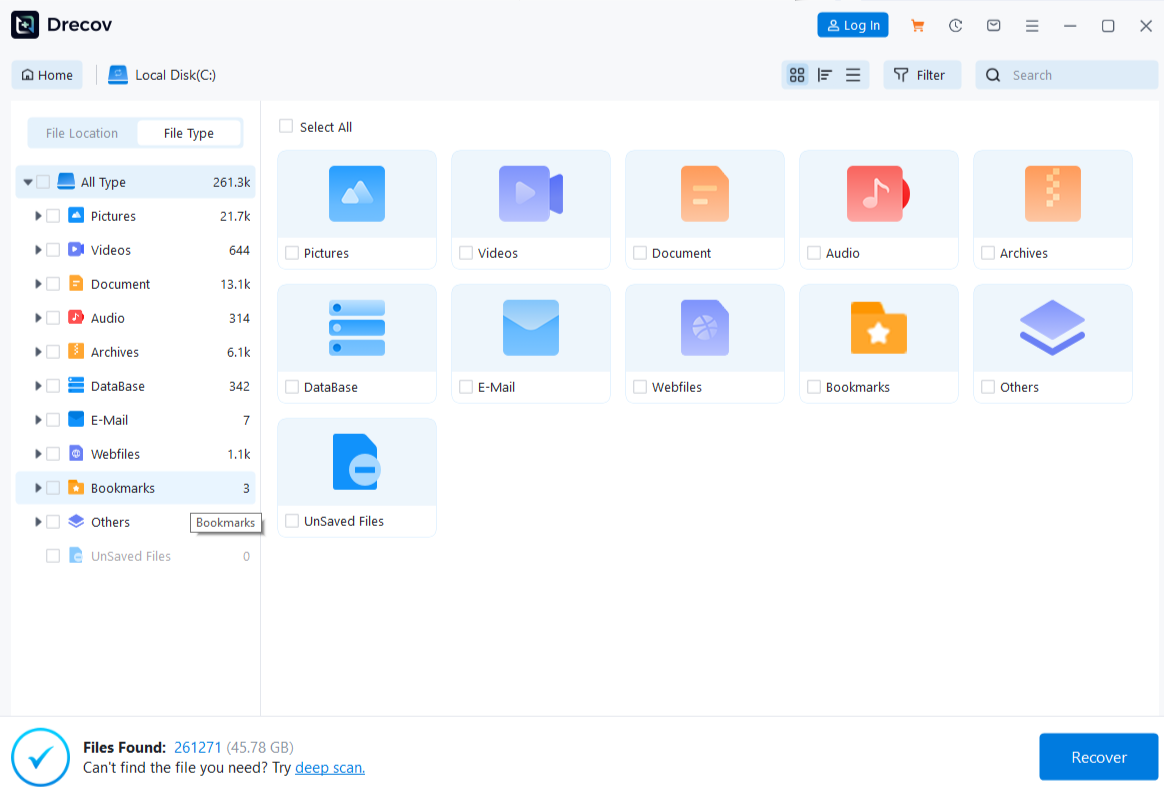
Step 3: Continue with Deep Scan only on stable media
Run Deep Scan for this Why Can’t I Delete a File? Identify the Lock Before Force case only when required files remain absent and the device stays connected without severe read errors. Physical instability ends direct scanning.
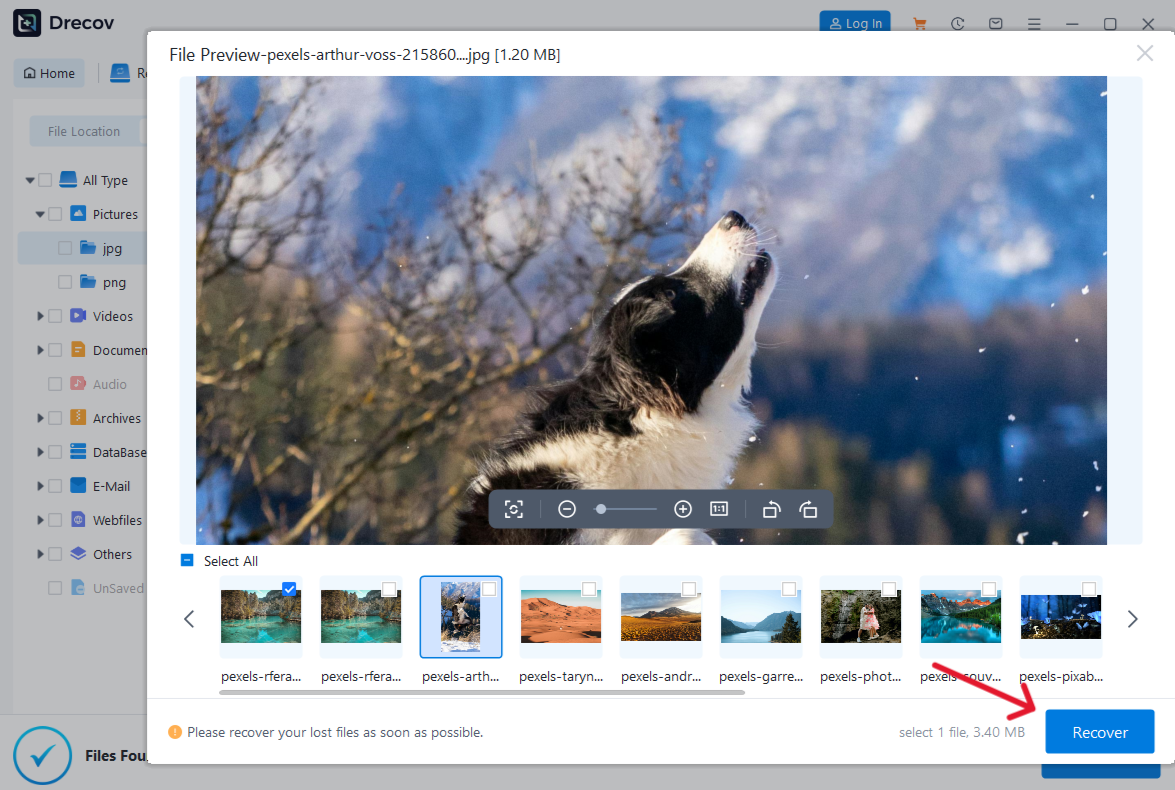
Step 4: Preview representative candidates
Preview several supported candidates related to Why Can’t I Delete a File? Identify the Lock Before Force before selecting the set. A readable sample provides useful evidence without certifying every page, frame, attachment, or linked object.
Step 5: Recover to another healthy device and verify
Save this Why Can’t I Delete a File? Identify the Lock Before Force recovery set away from the source. If output seems absent, check the Drecov folder or Recovery folder; open representative samples before any repair or deletion.
⚠ Warning: Install it on a drive different from the one where your data was lost to prevent overwriting.
Five Questions About Undeletable Files
Why does Windows say the file is in use?
An application, preview handler, terminal, sync client, or service still has an open handle. Close the identified owner or restart safely.
Can I delete an Access denied file as administrator?
Only when you are authorized and understand its role. Ownership, encryption, policy, and system protection may be intentional.
Why does File Explorer say the item is not found?
The displayed path may be stale or contain a name/path form Explorer cannot handle normally. Confirm the exact path before command-line deletion.
Does every deleted file enter the Recycle Bin?
No. Network, removable, command-line, and permanent deletion can bypass it.
When should I avoid CHKDSK?
When important data is not protected and the drive may be damaged or unstable. Recover or image first because CHKDSK changes structures.
Conclusion
After the file is removed, reproduce the original operation once. If the lock returns, identify the program recreating or reopening it. Repeated force deletion is not a fix for an application database, sync policy, malware persistence, or failing storage.
⚠ Warning: Install it on a drive different from the one where your data was lost to prevent overwriting.






