







Temporary files are working data created for a limited purpose: caching, installation, updates, browser sessions, previews, crash recovery, printing, or an application’s unsaved work. Many can be removed after the creating process finishes, but the label temporary does not mean every item is worthless right now. Review the category and application state before cleaning, especially when an unsaved document, interrupted export, or rollback option matters. This guide explains “what are the temporary files” with practical checks that protect important files before system or storage changes.
Separate ZIP Compression From File Conversion
Start with the current state, not the most dramatic possible cause for this an archive or its originals vanished case. Protect irreplaceable files, note exact messages and recent changes, and confirm which disk or folder is involved for this an archive or its originals vanished case. safe temporary-file cleanup To confirm the platform behavior for an archive or its originals vanished, consult the official documentation.
| What you observe | What it means | Safest next move |
|---|---|---|
| Browser cache | Re-creatable web resources | Clear through browser settings |
| Installer extraction | Short-lived setup components | Remove after setup is complete |
| Autosave or recovery file | Potentially unique unsaved work | Open through the creating application |
| Windows.old | Rollback and previous installation data | Delete only after the rollback decision |
| Unknown recent project-sized file | May belong to active work | Identify the owner before deletion |
Temporary Describes a Job, Not a Single Format
Windows and applications store temporary content in several locations, and extensions vary. A browser cache accelerates repeat visits, an installer extracts setup components, and an editor may keep an autosave or lock file near a document. Age and location help, but the creating program provides the real context.
Write down the result and compare it with the previous state before proceeding for this an archive or its originals vanished case.
Recognize Caches, Installers, and Work Copies
Cache files are usually reproducible, while an autosave can contain unique recent edits. Update remnants may support rollback. Thumbnail caches are disposable previews, but downloaded content and application workspaces can be mistaken for cache. Close the associated application before deciding.
Use that evidence to stay on this branch; do not combine unrelated repairs in one attempt for this an archive or its originals vanished case.
Use Windows Cleanup Categories Instead of Guessing
Settings, Storage, Temporary files and Cleanup recommendations expose categories with descriptions. Disk Cleanup remains available for system categories. Review Downloads, Recycle Bin, Previous Windows Installation, and delivery files separately because their consequences differ and some removals cannot be undone.
Choose a reversible check where possible and define what a successful result should look like for this an archive or its originals vanished case.
Preserve Unsaved Work and Rollback Data
Finish saves, close creative software, pause installers, and copy current projects before cleanup. If an application crashed, reopen it and check its documented recovery interface before deleting temp folders. Corporate devices may also use managed caches and retention policies.
Keep the source and the verified backup separate so a later action cannot overwrite both for this an archive or its originals vanished case.
Recover Only When a Real File Was Deleted
Data recovery is unnecessary for ordinary disposable cache. It becomes relevant when cleanup deleted the only useful autosave, export, attachment, or project copy from local storage. Stop writing to that volume, check application recovery, Recycle Bin, cloud versions, and backups before scanning.
Retest the original symptom once, then stop if the device becomes less stable for this an archive or its originals vanished case.
Test the Archive Before Deleting Originals
Temporary folders can contain files that are locked because an application is still using them. A deletion failure is therefore not proof of malware or corruption. Close the creating program, save active work, and restart when necessary. Avoid force-unlocking unknown system files merely to achieve an empty folder. Windows and applications manage many of these objects automatically, and an empty Temp directory is not a meaningful performance goal.
Cleanup categories should be evaluated by consequence. Removing thumbnails costs only regeneration time, while removing Previous Windows Installation ends a rollback option. Clearing a browser cache differs from clearing cookies, saved sessions, or downloads. Creative software may store scratch data that is disposable after a proper save but valuable after a crash. Read the label, size, age, and application documentation before accepting a bulk selection.
If recovery is attempted, temp filenames may be meaningless and multiple generations may exist. Modified time, size, embedded metadata, and a safe application preview become more useful than the name. Recover several candidates to another disk and never open unknown executable temporary files. For office or creative work, compare autosave contents with the last normal project rather than overwriting it. Preserve both until the document structure and linked assets are confirmed.
A Practical Checkpoint
A sensible cleanup result is adequate free space with applications still behaving normally, not the lowest possible Temp-folder size. Measure storage before and after the supported cleanup tool, then launch the applications that had active work. Confirm browser sessions, update status, and recent documents remain available. If a needed file is missing, stop further cleanup immediately. repeated cleaners and ordinary downloads may overwrite the deleted local data that could otherwise be recoverable.
- Clear through browser settings; confirm the observed condition was browser cache before using that action.
- Remove after setup is complete; confirm the observed condition was installer extraction before using that action.
- Open through the creating application; confirm the observed condition was autosave or recovery file before using that action.
- Delete only after the rollback decision; confirm the observed condition was windows.old before using that action.
- Identify the owner before deletion; confirm the observed condition was unknown recent project-sized file before using that action.
When a Real Local File Has Been Lost
Drecov is relevant only if a valuable local temp-backed file or its original was actually deleted. Its read-only workflow can recover documents, media, emails, audio. Also, archives from stable Windows storage; it does not clean caches, reconstruct unsaved RAM-only work, or guarantee overwritten files. When an archive or its originals vanished, PandaOffice Drecov provides Windows data recovery for PCs, HDDs, SSDs, external disks, USB drives, SD cards, and memory cards. For an archive or its originals vanished, the supported recovery set includes photos, video, documents, email data, audio, and archives. That an archive or its originals vanished recovery path combines Quick Scan, Deep Scan, filters, preview, a healthy destination, and Lost Partition Recovery.
⚠ Warning: Install it on a drive different from the one where your data was lost to prevent overwriting.
Step 1: Stabilize the Source and Select the Original Location
Stop creating, extracting, or copying archives on the affected volume. Read errors, truncation, or a disconnecting archive disk require imaging or specialist help. Prepare a separate healthy target for an archive or its originals vanished, keep the Drecov installation off the loss volume, then open PandaOffice Drecov. Also, select the stable local volume and former application or temp folder that held the deleted work.

Step 2: Start With Quick Scan
Quick Scan suits a newly deleted archive or original folder, while Deep Scan is the fallback for a stable disk with incomplete results. Do not initialize, format, repartition, or create a replacement volume for this an archive or its originals vanished case. If the required files are absent and the source remains stable, continue with Deep Scan for this an archive or its originals vanished case. Use Lost Partition Recovery when the partition entry itself has disappeared rather than treating formatting as a recovery method for this an archive or its originals vanished case.
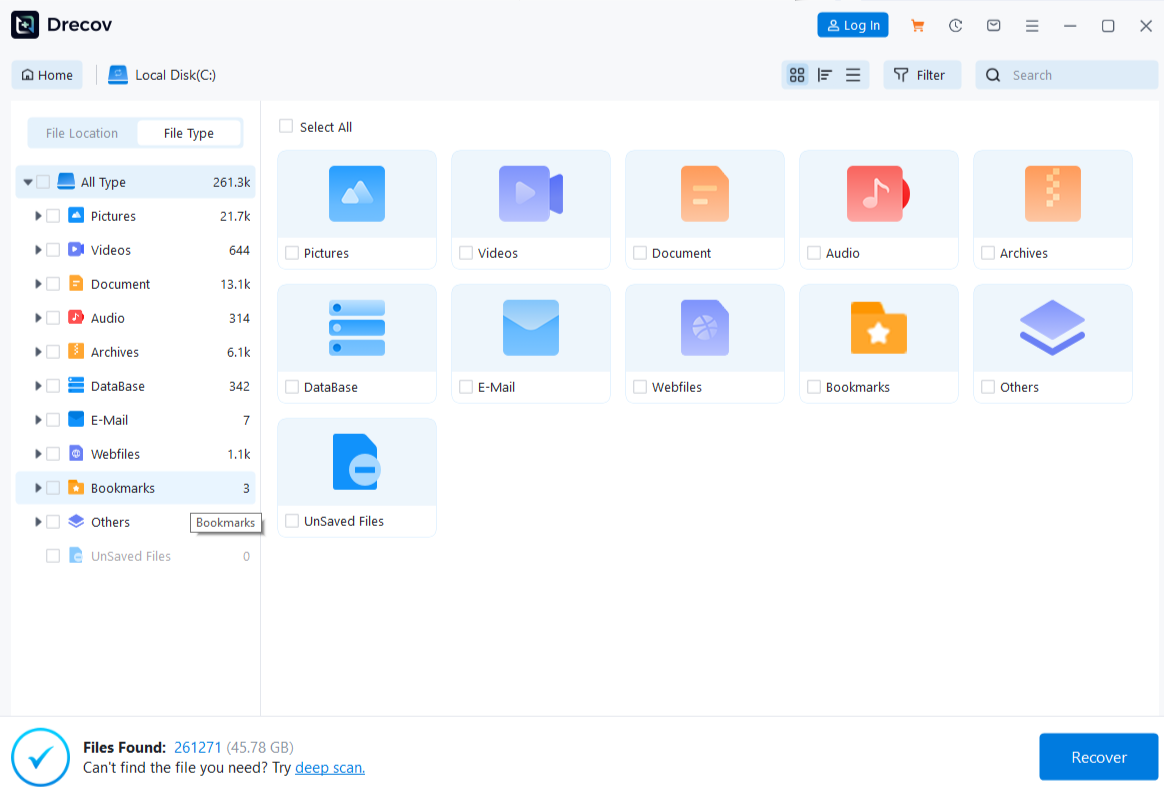
Step 3: Filter, Locate, and Preview Candidates
Filter by likely file type, approximate size, modified time, application folder, filename fragments, and the original project location. Preview representative supported files before selecting the entire set for this an archive or its originals vanished case. A preview is evidence for that sample, not a promise that every page, frame, archive member, or related project asset is intact for this an archive or its originals vanished case.
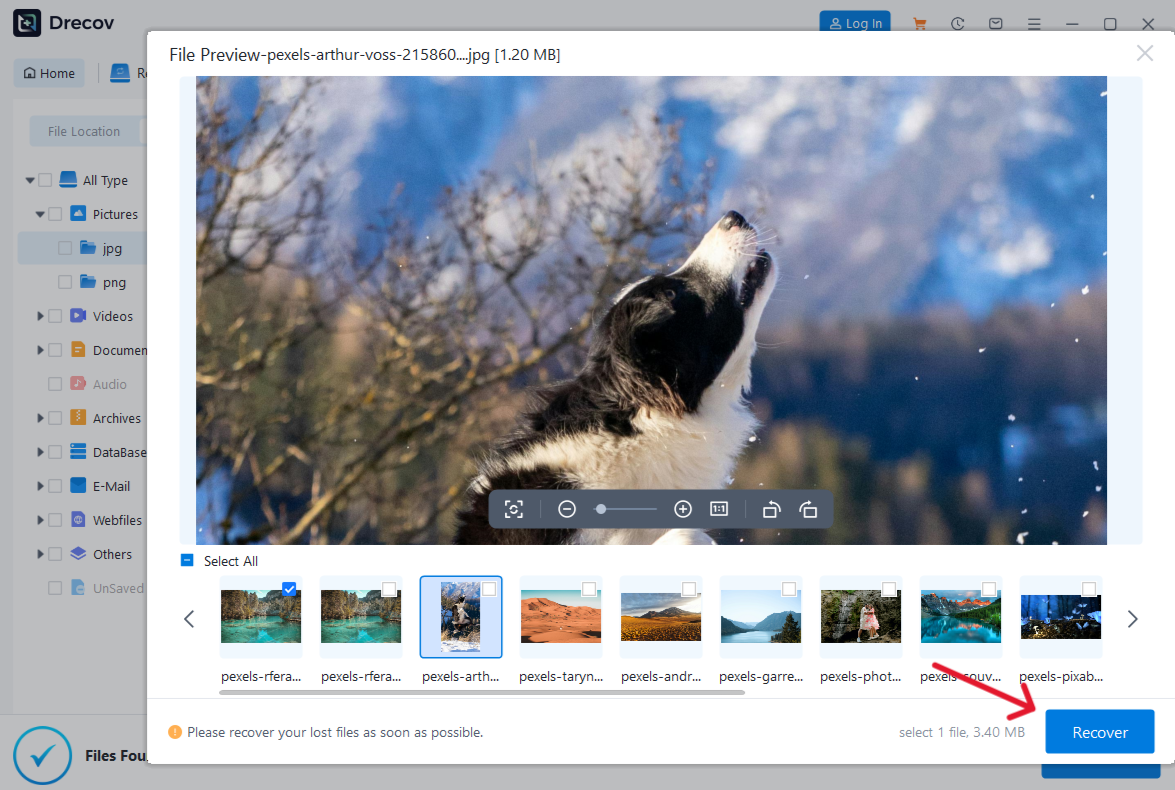
Step 4: Recover Elsewhere and Confirm the Output
Extract recovered originals or archives to the alternate disk, leaving the source unchanged. If the output for this an archive or its originals vanished case is not where expected, inspect Drecov Folder or Recovery Folder before scanning again. Open recovered candidates in a safe copy, compare their timestamps and contents, and keep multiple versions until the correct work is identified. Keep the original source unchanged until the an archive or its originals vanished checks pass and the result has a second verified copy.
Step 5: Repair Only After Verification
Complete recovery and verification before Storage Sense cleanup, Disk Cleanup, manual temp-folder deletion, application reset, Windows update cleanup, or system reset. Drecov does not repair physical damage, remove malware, fix Windows or applications, or guarantee recovery of overwritten data for this an archive or its originals vanished case. Those boundaries determine when repair tools or a specialist should take over for this an archive or its originals vanished case.
Verify Extraction and Recovered Copies
Open recovered candidates in a safe copy, compare their timestamps and contents, and keep multiple versions until the correct work is identified. Use recent deletion recovery when exact identity matters. Retain the recovered set and any disk image until the original problem has remained stable through normal use for this an archive or its originals vanished case.
ZIP Preservation Questions
Are all temporary files safe to delete?
No. Active work files, autosaves, installers, and rollback data may still matter.
Why do temporary files return?
Applications and Windows recreate them as their workloads continue.
Does deleting cache remove personal files?
Proper cache cleanup normally targets reproducible data, but review each category first.
Can Drecov recover an unsaved document?
Only if recoverable data was written to local storage and later deleted or lost.
Should I empty every Temp folder manually?
Prefer application and Windows cleanup tools, and close active programs first.
For a related safeguard in the an archive or its originals vanished branch, review verify restored files.
When troubleshooting “what are the temporary files”, begin with the least invasive step and verify recovered files before attempting repairs.
Conclusion
Temporary files are working data created for a limited purpose: caching, installation, updates, browser sessions, previews, crash recovery, printing, or an application’s unsaved work. Protect important local data before broad repair, follow the evidence toward the narrowest suitable action, and verify the outcome for this an archive or its originals vanished case. When files are genuinely missing while an archive or its originals vanished, Drecov supplies Quick Scan, Deep Scan, preview, and Lost Partition Recovery. Also, recovery to another healthy destination.






