







Managing digital audio files can often feel like organizing a massive library without a catalog. Whether you are a professional sound engineer, a podcast creator, or a casual music lover, keeping your file names organized is the first step toward a productive workflow. However, in the process of tidying up your folders, accidents happen. You might accidentally delete a precious recording or find that a file has become corrupted after a system crash.
In this comprehensive guide, we will explore the simplest ways to rename a WAV file in Windows, ranging from basic File Explorer tricks to advanced Command Prompt methods. Furthermore, because data integrity is paramount, we will dive deep into professional data recovery techniques using PandaOffice Drecov to ensure your audio masterpieces are never truly lost.
Understanding the WAV Format and Why Organization Matters
Before we jump into the mechanics of how to rename a WAV file in Windows, it is essential to understand what makes these files unique. Developed by IBM and Microsoft, the Waveform Audio File Format (WAV) is a standard for storing an audio bitstream on PCs. Unlike MP3s, which use lossy compression, WAV files are typically uncompressed (PCM), meaning they retain the highest possible audio quality.
Because WAV files are often large and contain high-fidelity data, they are the “gold standard” in recording studios. However, high quality comes with a price: many recording devices generate generic names like “REC001.wav” or “Untitled_Track_04.wav.” If you don’t learn how to rename a WAV file in Windows effectively, your hard drive will quickly become a graveyard of unidentifiable sounds.
How to Rename a WAV File in Windows: Method 1
The most straightforward way to manage your files is through Windows File Explorer. This method is perfect for users who have just a few files to organize and want a visual interface.
Step 1: Locate your WAV file
Open File Explorer by pressing the shortcut Windows Key + E. Navigate to the folder where your audio recordings are stored. Ensure you can see the file extensions; if you cannot see “.wav” at the end of the file name, go to the View tab (or View > Show in Windows 11) and check File name extensions.
Step 2: Initiate the rename
You have three easy ways to trigger the rename action:
- Right-Click: Right-click the file and select the Rename icon (or the word “Rename” in older Windows versions).
- Slow Double-Click: Click the file name once, wait a second, and click it again.
- Keyboard Shortcut: Select the file and press F2. This is the fastest way for power users.
Step 3: Enter the new name
Type the desired name. While Windows allows for long file names, avoid using special characters like / \ : * ? " < > |, as the system will block these. Once you are finished, press Enter.
How to Rename a WAV File in Windows: Method 2
What if you have fifty recordings from a single concert? Renaming them one by one is a recipe for boredom. Luckily, Windows has a built-in “Batch Rename” feature that works perfectly for WAV files.
Step 1: Select all relevant files
In File Explorer, highlight all the WAV files you wish to rename. You can do this by holding Ctrl and clicking individually, or by pressing Ctrl + A to select everything in the folder.
Step 2: Rename the primary file
With all files selected, press F2. Type a descriptive name, such as “Summer_Concert_2026.”
Step 3: Execute the batch
Press Enter. Windows will automatically rename a WAV file in Windows for every item selected, appending a number at the end (e.g., Summer_Concert_2026 (1), Summer_Concert_2026 (2), etc.).
How to Rename a WAV File in Windows: Method 3
For those who prefer a “hands-under-the-hood” approach or need to perform specific string replacements, the Command Prompt (CMD) is a powerful tool.
Step 1: Open Command Prompt
Press the Windows Key, type cmd, and press Enter.
Use the cd command to move to your music folder. For example:
cd C:\Users\YourName\Music\Recordings
Step 3: Use the Ren command
To rename a WAV file in Windows via CMD, use the following syntax:
ren "oldname.wav" "newname.wav"
Pro Tip: If you want to change the extension (though not recommended for WAVs unless you know what you’re doing), you can use
ren *.wav *.audio.
The Hidden Risk: File Corruption and Accidental Deletion
While learning how to rename a WAV file in Windows is simple, the process of moving and organizing files can sometimes lead to data loss. Perhaps you accidentally dragged a folder into the Recycle Bin, or a sudden power outage occurred while Windows was writing the new file name to the Master File Table (MFT).
When a WAV file “disappears,” it isn’t immediately erased from your hard drive. Instead, Windows marks the space as “available.” This is where professional data recovery comes into play.
Advanced Data Recovery with PandaOffice Drecov
If you have lost your audio files due to a renaming error, formatting, or accidental deletion, PandaOffice Drecov is the industry-leading solution designed to retrieve lost bits and bytes with surgical precision. It supports a wide array of file systems including NTFS, FAT32, and exFAT.
Why Choose PandaOffice Drecov?
Unlike basic undelete tools, PandaOffice Drecov features a deep-scan algorithm that can reconstruct fragmented WAV files. This is crucial because large audio files are often stored in non-contiguous sectors on a hard drive.
⚠ Warning: Install it on a drive different from the one where your data was lost to prevent overwriting.
Step-by-Step Recovery Process
Step 1: Select the Location
Launch the program. On the main interface, you will see a list of available drives. Select the partition where you were trying to rename a WAV file in Windows before it went missing.

Step 2: Scan for Lost Audio
Click the Scan button. PandaOffice Drecov will perform a “Quick Scan” followed by a “Deep Scan.” You can filter the results by file type—simply select “Audio” and then “WAV” to narrow down the list.
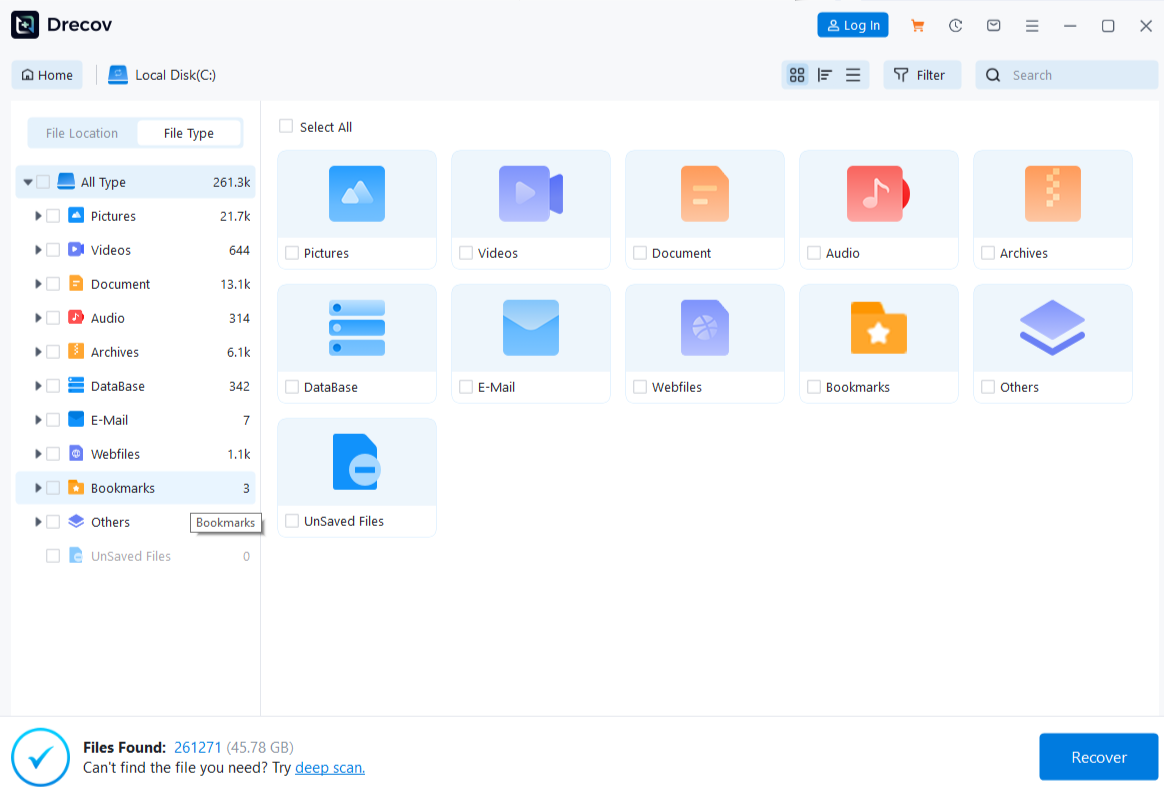
Step 3: Preview and Recover
One of the best features of Drecov is the preview function. You can actually listen to a snippet of the recovered WAV file to ensure it isn’t corrupted. Once satisfied, select the files and click Recover.
Warning: Always save recovered files to an external drive or a different partition to ensure 100% data integrity.
Preventing Future Data Loss
Now that you know how to rename a WAV file in Windows and how to get it back if things go wrong, let’s look at some preventative measures.
- Use Metadata Tags: Instead of relying solely on file names, use tools to edit the ID3 tags of your WAV files. This allows Windows Search to find files even if the name is obscure.
- Regular Backups: Use the built-in Windows File History feature. You can learn more about system-level management through resources like Microsoft Support.
- Check Disk Health: Periodically use the
chkdskcommand to ensure your hard drive doesn’t have bad sectors that could corrupt your audio files during a rename.
Expanding Your Windows Management Skills
Data management doesn’t stop at audio files. Often, organizing your media library is part of a larger system cleanup. If you find that your partitions are cluttered or you need to revert system changes that caused file errors, check out these helpful guides:
- If you’re dealing with stubborn disk structures while organizing your media, you may need to learn how to force delete a partition using Diskpart.
- If a recent software update made it difficult to rename a WAV file in Windows or caused system instability, here is how to restore your computer to an earlier date.
- Lost more than just audio? If you’ve accidentally saved over an important spreadsheet while managing your project folders, see this guide on recovering overwritten Excel files.
Frequently Asked Questions About Managing WAV Files in Windows
To further enhance your understanding of file management and troubleshooting, here are five common questions users often encounter when they rename a wav file in windows.
1. Why does Windows warn me that “the file might become unusable” when I rename a WAV file?
This warning typically appears if you accidentally change or delete the file extension (the .wav part) during the renaming process. Windows relies on these extensions to know which application should open the file.
- The Fix: When you rename a wav file in windows, ensure you only change the text before the dot. If you have “Song.wav” and change it to “Song.mp3” without converting it, the file won’t play correctly. Always keep the
.wavsuffix intact.
2. Can I rename a WAV file while it is playing in a media player?
Generally, no. Windows places a “file lock” on any asset currently in use by another program (like VLC, Windows Media Player, or a DAW).
- The Fix: Close any software that might be accessing the file. If you still cannot rename a wav file in windows, you might need to check the Task Manager to ensure a background process isn’t holding the file open.
3. Does renaming a WAV file affect its audio quality or metadata?
Renaming a file is a filesystem-level change, not a data-level change. It simply updates the “label” on the storage map of your hard drive.
- Important Note: While the audio quality remains 100% identical, some older database-driven music managers might “lose” the link to the file because they are looking for the old filename. You may need to re-import the file into your library after you rename a wav file in windows.
4. What should I do if the “Rename” option is greyed out?
If you cannot rename a wav file in windows, it is usually due to one of three reasons:
- Permissions: You don’t have administrative rights to the folder (common in
C:\WindowsorProgram Files). - Read-Only Attribute: The file is marked as “Read-only” in its properties.
- Cloud Syncing: Tools like OneDrive or Dropbox might be syncing the file at that exact moment.
- The Fix: Right-click the file, select Properties, and ensure the Read-only box is unchecked.
5. Can I use emojis or non-English characters when I rename a WAV file in Windows?
Windows 10 and 11 support Unicode, which allows for most international characters and even some emojis in filenames.
- Warning: While Windows can handle it, many professional audio editing softwares or older hardware players (like car stereos or MP3 players) cannot. To ensure your files remain compatible across all platforms, it is best to use standard alphanumeric characters and underscores when you rename a wav file in windows.
Conclusion
Mastering the ability to rename a WAV file in Windows is a small but vital skill for any digital creator. Whether you use the simple F2 shortcut or the robust Command Prompt, keeping your files organized saves time and reduces stress. However, always remember that digital files are fragile. By keeping a tool like PandaOffice Drecov in your arsenal, you ensure that even when a rename goes wrong or a file disappears, your creative work remains protected.
Happy organizing, and may your audio always be crystal clear!






