







Losing precious memories is a digital nightmare that almost every smartphone user faces at some point. You might be cleaning up your storage to make room for a new system update, or perhaps you mistakenly swiped left on a folder of vacation photos. The panic sets in when you realize those files aren’t just in the trash—you’ve already emptied the “Recently Deleted” folder.
Many people believe that once the secondary safety net is gone, the photos are vaporized into the digital void. However, as a data recovery expert, I can tell you that “permanent” is often a relative term in the world of computer forensics. Understanding how to recover deleted photos after deleting from recently deleted requires a blend of quick action, the right tools, and a basic grasp of how flash storage functions. In this comprehensive guide, we will explore every viable method to bring those images back to life, ranging from simple cloud checks to professional-grade recovery software.
Understanding What “Recently Deleted” Really Means
Before we dive into the technical solutions, we must clarify the architecture of modern mobile storage. When you interact with your gallery app, you aren’t just looking at files; you are looking at an indexed database.
How Do I Get to Recently Deleted Photos
If you are currently panicking and haven’t yet confirmed the status of your trash bin, you might ask: how do I get to recently deleted photos?
- On iOS (iPhone/iPad): Open the Photos app, tap “Albums” at the bottom, and scroll all the way to the bottom under the “Utilities” section. You will find “Recently Deleted” there. In iOS 16 and later, this folder is locked behind FaceID or your passcode for added privacy.
- On Android (Google Photos): Open the Google Photos app, tap “Library” at the bottom right, and then tap the “Bin” or “Trash” icon at the top.
- On Samsung Devices: Open the Gallery app, tap the “hamburger” menu (three horizontal lines) at the bottom right, and select “Recycle Bin.”
Knowing how do I get to recently deleted photos is the first step in any recovery journey. If the photos are there, you simply select them and hit “Restore.” If they aren’t, you have officially moved into the realm of “permanent deletion,” which requires the advanced steps outlined below.
How Long Photos Stay Before Permanent Deletion
Most modern operating systems provide a grace period. On iPhones and most Android devices using Google Photos, this window is typically 30 to 60 days.
During this time, the file stays on your storage, but it is moved to a hidden directory. It doesn’t count toward your primary gallery view, but it still occupies physical space on your NAND flash chip. Once this timer expires, the system automatically triggers a command to “permanently” remove the entry. However, as we will discuss, the physical data may still linger until it is overwritten by new information.
Can You Recover Photos After Deleting from Recently Deleted?
The short answer is yes, but with a significant caveat: success is heavily dependent on time and device usage. To understand how to recover deleted photos after deleting from recently deleted, you must understand the “index” concept.
When Recovery Is Still Possible
Imagine your phone’s memory is a giant library. When you delete a photo from the “Recently Deleted” folder, the librarian doesn’t immediately burn the book. Instead, they simply rip the entry out of the card catalog and mark that specific shelf space as “Available.”
Recovery is possible if:
- The shelf hasn’t been filled yet: If you haven’t taken 500 new photos or downloaded large 4K videos since the deletion, the original data fragments likely still sit on the storage cells.
- Cloud Sync Latency: Sometimes, a deletion on your phone hasn’t yet synced to your tablet or computer.
- Local Backups: You have an older iTunes, Finder, or Samsung Smart Switch backup tucked away on a hard drive.
When Photos Are Gone Forever
Unfortunately, there are scenarios where even the best experts cannot help. This usually happens due to the TRIM command. On modern SSDs and smartphone storage, the system periodically runs a cleanup script that physically wipes “unindexed” data to maintain high write speeds. If your phone has performed a TRIM operation or if the storage is nearly full (forcing the system to reuse space immediately), the photos are likely overwritten.
Method 1: Recover Using Cloud Backups
The most reliable way to recover photos deleted from recently deleted is through the cloud. Because cloud services often have their own independent “trash” rules or version histories, they act as a secondary fail-safe.
iCloud Backup Recovery
If you are an Apple user, iCloud is your strongest ally. Even if you emptied the “Recently Deleted” folder on your iPhone, the photos might still exist in a full system backup.
- Step 1: Go to iCloud.com on a computer and log in with your Apple ID. Check the “Photos” section there. Sometimes, a sync error prevents a deletion on the phone from reflecting on the web immediately.
- Step 2: If they aren’t on the website, check your “iCloud Backup” settings (Settings > [Your Name] > iCloud > iCloud Backup). Look at the date of the “Last successful backup.”
- Step 3: If the backup predates the deletion, you can perform a full factory reset of your iPhone and choose “Restore from iCloud Backup” during the setup process.
Warning: Restoring from a backup will revert your entire phone to that date. Any messages or data created after that backup will be lost unless you save them elsewhere first.
Google Photos Backup Recovery
Google Photos is incredibly resilient. Many users don’t realize that Google Photos often backs up images even if they delete them from the local device gallery.
- Step 1: Check the Google Photos “Trash” on the web version via photos.google.com.
- Step 2: If you have an education or business Google account, your administrator might be able to recover deleted items from the “Google Workspace” vault for up to 25 days after they were cleared from the trash.
- Step 3: Check “Google Takeout.” If you recently performed a data export, your photos might be sitting in a zip file on your computer.
Method 2: Restore from Device Backup
When the cloud fails, we look toward local physical backups. This is often how to recover photos deleted from recently deleted for users who prefer keeping their data off the internet.
iTunes / Finder Backup
For those who still plug their iPhones into a Mac or PC, a local backup is a goldmine.
- Step 1: Connect your iPhone to your computer using a certified Lightning or USB-C cable.
- Step 2: Open Finder (on Mac) or iTunes (on Windows).
- Step 3: Select your device and click “Restore Backup.”
- Step 4: Choose the backup entry that was created before you deleted the photos.
Android Manufacturer Backup
Android brands like Samsung, Xiaomi, and OnePlus have their own proprietary backup ecosystems (e.g., Samsung Cloud or OnePlus Switch).
- Step 1: On a Samsung device, go to Settings > Accounts and Backup > Restore Data.
- Step 2: Check if “Gallery” is included in the backup list.
- Step 3: Select the backup and tap “Restore.”
Method 3: Use Data Recovery Software
If you have no backups and the cloud is empty, you must turn to professional-grade tools. This is the most technical way to solve the problem of how to recover deleted photos after deleting from recently deleted. Among the various options, PandaOffice Drecov stands out for its high success rate and user-friendly interface.
Software like PandaOffice Drecov works by scanning the raw sectors of your storage device. It bypasses the operating system’s “Table of Contents” and looks for file headers (like the FF D8 hex code that identifies a JPEG).
⚠ Warning: Do not install the software on the same drive from which you lost the photos, as the installation process itself could overwrite the deleted data. Connect your SD card or device to the computer via a card reader.
Step-by-Step Guide to Using PandaOffice Drecov
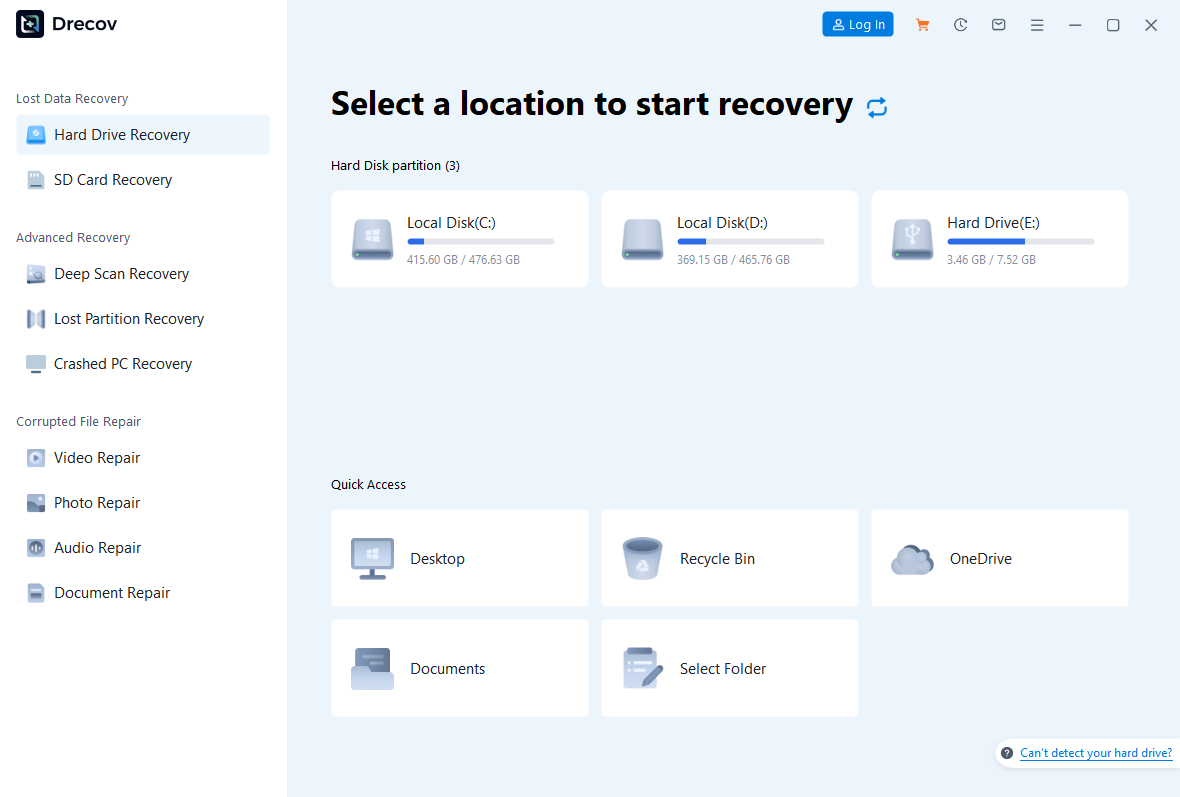
If your photos were stored on an SD card, a USB drive, or a synced folder on your PC, follow these steps to use PandaOffice Drecov:
- Step 1: Scan for Lost Data. Launch the application. Select the drive or specific partition where the photos were originally located. Click the “Scan” button. The software will begin a “Deep Scan,” which identifies fragmented files that standard system scans miss.
- Step 2: Preview and Filter. Once the scan is complete, use the “File Type” filter to select “Photos” (JPEG, PNG, HEIC, etc.). PandaOffice Drecov allows you to preview the photos before recovery. This is crucial because it confirms the file is not corrupted.
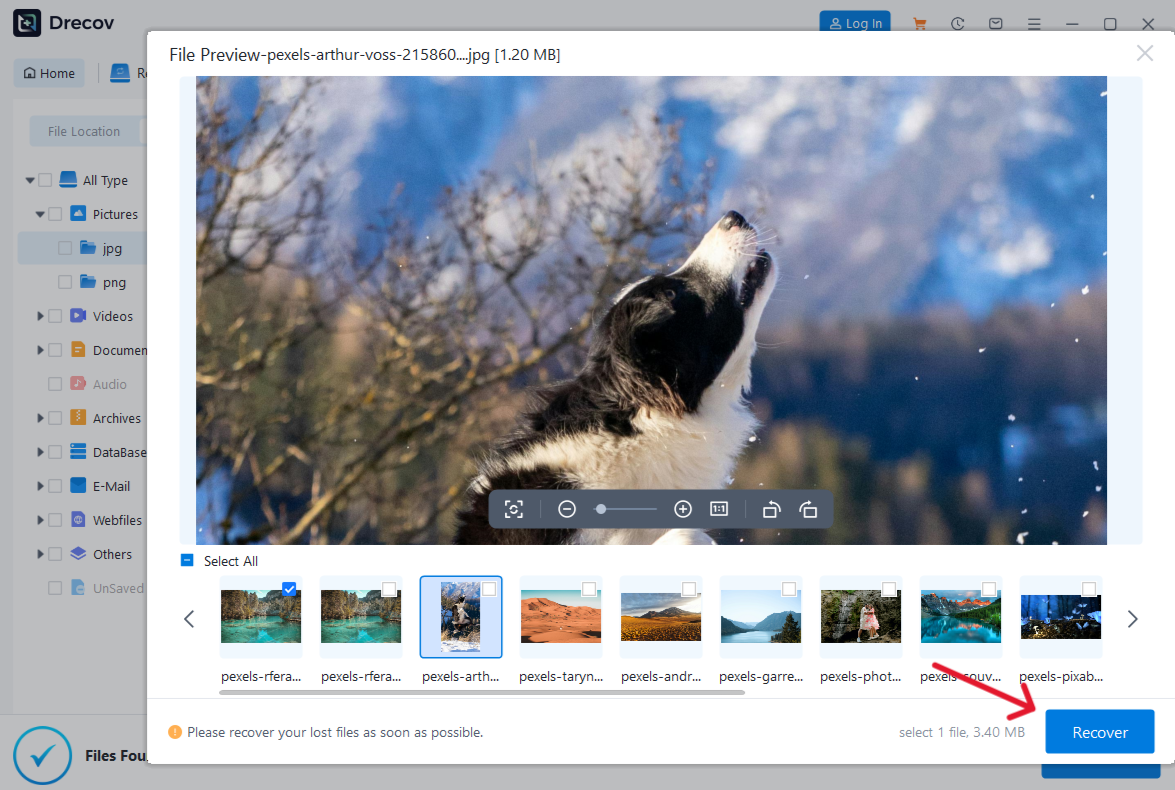
- Step 3: Safe Recovery. Select the photos you want to bring back and click “Recover.” Always save the recovered files to a different drive (like an external HDD or a cloud folder) to ensure 100% safety.
For more specialized file recovery tasks, you might find this Recuva expert guide helpful for comparison.
Method 4: Check Synced Devices Immediately
This is the “Golden Rule” of modern sync ecosystems. If you realize you’ve made a mistake, you must act before the “Delete” command propagates through the network.
H3: iPad, Mac, or Other Devices
If you deleted a photo on your iPhone, your iPad might not have synced that deletion yet if it is currently offline or in sleep mode.
- Step 1: Immediately turn off the Wi-Fi and Cellular data on your secondary device (iPad, secondary phone, or Mac).
- Step 2: Open the gallery on that secondary device. If the photos are there, they are “orphaned” from the main sync.
- Step 3: Manually export those photos to a USB drive or via AirDrop (using Bluetooth only) before turning the internet back on.
Method 5: Recover from SD Card (Android Users)
Android users often have a massive advantage: expandable storage. If your photos were saved to a microSD card, your chances of recovering photos deleted from recently deleted are significantly higher.
Why SD Cards Are Easier to Recover
Unlike internal phone storage, SD cards usually don’t use the same aggressive encryption or TRIM commands. When you delete a photo on an SD card, the data remains virtually untouched until a new file is written to that specific sector.
If you are dealing with peripheral storage issues, you may also need to know how to install USB 3.0 drivers to ensure your computer correctly recognizes the recovery environment.
Key Factors That Affect Recovery Success
Not all deletions are created equal. Several environmental factors determine whether you will be successful in your quest of how to recover deleted photos after deleting from recently deleted.
Time Since Deletion
This is the most critical factor. If you deleted the photos five minutes ago, your chances are excellent. If you deleted them three weeks ago and have been using the phone heavily to record 4K video, the chances drop to near zero. Every megabyte of new data written to the device is a “bullet” that could hit your deleted photos.
Storage Type (SSD vs SD Card)
As mentioned earlier, smartphones use UFS or NVMe storage (essentially high-speed SSDs). These are designed for performance, which means they are very efficient at permanently erasing data to keep the device fast. SD cards are “dumb” storage, which makes them much easier to “cheat” using recovery software.
Common Mistakes to Avoid After Deletion
When people realize their photos are gone, they often panic and make mistakes that finalize the data loss. To successfully recover photos deleted from recently deleted, avoid the following:
- Don’t Restart Repeatedly: Every time a phone boots up, it writes system logs and cache files. This can overwrite your photos.
- Don’t Download “Recovery Apps” on the Phone: If you download an app from the Play Store directly onto the phone, the app’s data might be written over the exact sectors where your deleted photos were located. Always use a computer-based recovery tool.
- Don’t Take New Photos: It sounds obvious, but many people try to “test” if their camera still works. Stop using the camera immediately.
- Don’t Update the OS: System updates involve moving gigabytes of data around the storage chip. This is the ultimate “data shredder.”
Pro Tips to Prevent Future Photo Loss
Once you have attempted recovery, it is time to build a “Digital Fortress” so you never have to search for how to recover deleted photos after deleting from recently deleted again.
- The 3-2-1 Rule: Keep 3 copies of your data, on 2 different media types (e.g., phone and external hard drive), with 1 copy off-site (cloud).
- Automatic Backup Verification: Don’t just trust that iCloud is working. Once a month, log in to the web portal to ensure your latest photos are actually there.
- Use “Archive” Instead of “Delete”: If you want to declutter your gallery, move photos to a hidden or archived folder instead of the trash.
- Hardware Redundancy: Occasionally download videos from your browser or save web-based memories to a physical drive.
Comparison Table of Recovery Methods
| Method | Success Rate | Difficulty | Best For |
| Cloud Trash (Web) | High | Easy | Google Photos / iCloud users |
| Device Backup | Very High | Medium | People who use iTunes/Finder |
| PandaOffice Drecov | High | Medium | SD Cards, USBs, and PC Syncs |
| Synced Devices | Low | Easy | Multi-device owners (Quick Action) |
| Manual System Restore | Moderate | Hard | Advanced Windows/PC users |
If you are working on a Windows PC where your photos were synced, you might also consider knowing how to restore a computer to an earlier date as a way to recover folder structures.
Recover Deleted Photos FAQs
1. Can I recover photos deleted from “Recently Deleted” without a computer?
It is extremely difficult. Most mobile “recovery apps” that run directly on the phone only scan the thumbnail cache. To perform a deep, sector-level scan, you almost always need a computer-based tool to avoid overwriting the very data you are trying to save.
2. Does factory resetting a phone make photos unrecoverable?
Yes. On modern encrypted devices (iOS and Android 6.0+), a factory reset wipes the encryption keys. Even if the data fragments remain, they are mathematically impossible to unscramble without the original key.
3. Why do some recovered photos look blurry or have “half-grey” boxes?
This indicates that the file was partially overwritten. The recovery software found the “header” of the photo, but some of the actual image data was replaced by a new file. This is why acting fast is so important.
4. Is PandaOffice Drecov safe to use?
Yes. It is a read-only utility, meaning it does not modify your original storage during the scan. It only copies the found data to a new location, ensuring no further damage occurs to your lost files.
5. How much does professional data recovery cost if software fails?
If software cannot find the data, “cleanroom” recovery (where experts physically disassemble the chip) can cost anywhere from $500 to $2,000. This is why maintaining a backup is the best financial decision you can make.
Conclusion
The journey of how to recover deleted photos after deleting from recently deleted is a race against time. While modern technology makes “permanent” deletion more effective than it used to be, the existence of cloud shadows, local backups, and powerful scanning tools like PandaOffice Drecov provides a ray of hope.
The most important thing to remember is to stop using the device immediately the moment you realize the error. By preventing new data from overwriting the old, you keep the “library books” on the shelves, even if they’ve been removed from the catalog. Stay calm, check your backups, and use professional tools to reclaim your digital history.






