







Understanding the OGV File Format and How It Works
What Is OGV Format and Why Is It Used?
Many users search what is ogv format after encountering unfamiliar video files online. The OGV format is an open-source multimedia container developed as part of the Ogg project. It is mainly used for web-based video streaming and open multimedia applications.
The ogv file format commonly stores:
- Video streams
- Audio tracks
- Metadata information
Unlike proprietary formats, OGV was designed to support royalty-free multimedia distribution. This made it especially popular among developers and websites promoting open standards.
OGV files are typically encoded using:
- Theora video codec
- Vorbis audio codec
The format became widely recognized in Linux and open-source communities because it avoided licensing restrictions associated with some commercial codecs.
Users often encounter OGV files on:
- Educational websites
- Open-source media platforms
- HTML5 video implementations
Understanding ogv format helps users identify compatible media players and conversion tools.
Test Environment:
- Windows 11 Pro
- Ubuntu 22.04
- VLC Media Player
Result:
OGV files played successfully across multiple operating systems without additional codec installation.
Key Features of the OGV File Format
The ogv file format offers several characteristics that distinguish it from formats like MP4 or AVI.
Main advantages:
- Open-source licensing
- Web compatibility
- Efficient streaming support
- Lightweight multimedia structure
The format works particularly well in:
- HTML5 web applications
- Educational media systems
- Open multimedia platforms
One major benefit is compatibility with browsers supporting native HTML5 video playback.
However, OGV also has limitations:
- Lower mainstream adoption
- Reduced compatibility with some editing software
- Smaller hardware acceleration support
Despite these drawbacks, the format remains useful for open-source multimedia environments.
⚠️Warning: Some older Windows media players cannot open OGV files without external codecs.
Test Environment:
- Firefox browser
- Chrome browser
- Windows Media Player
Result:
OGV playback worked natively in browsers but required VLC for Windows Media Player compatibility.
Why OGV Format Is Still Relevant Today
OGV in Open-Source and Web Environments
Although MP4 dominates modern video distribution, the ogv format still plays an important role in open multimedia ecosystems.
It is commonly used in:
- Linux distributions
- Open educational resources
- Browser-based video projects
- Open-source archives
Because the format is royalty-free, developers can distribute multimedia content without worrying about patent licensing costs.
This makes OGV attractive for:
- Universities
- Government projects
- Non-profit organizations
Test Environment:
- Ubuntu desktop
- Apache local web server
- HTML5 video test page
Result:
OGV video streamed correctly through browser-based playback.
Comparing OGV With MP4 and WebM
Users asking what is ogv format often compare it with more common video formats.
Comparison overview:
OGV:
- Open-source
- Smaller ecosystem
- Good browser compatibility
MP4:
- Industry standard
- Excellent device support
- Broad editing compatibility
WebM:
- Google-backed open format
- Better modern compression
- Strong web integration
OGV is no longer the most popular open format, but it still remains important in legacy systems and educational environments.
Test Environment:
- Browser playback comparison
- Multiple codec support testing
Result:
MP4 showed broader compatibility, while OGV maintained stable browser playback.
How to Open OGV Files on Different Platforms
Method 1: Open OGV Files Using VLC Media Player
One of the easiest ways to open the ogv file format is using VLC Media Player.
Steps:
- Install VLC
- Open the application
- Select “Media”
- Click “Open File”
- Choose the OGV video
VLC supports:
- OGV playback
- Codec handling
- Subtitle integration
It works on:
- Windows
- macOS
- Linux
Test Environment:
- Windows 11 Pro
- VLC 3.x version
Result:
OGV videos played smoothly without codec issues.
Method 2: Play OGV Videos in Web Browsers
Modern browsers support OGV playback directly through HTML5.
Compatible browsers include:
- Firefox
- Chrome
- Opera
Users can:
- Drag OGV files into the browser
- Embed OGV videos into web pages
- Stream videos locally
This method is useful for developers testing web content.
Test Environment:
- Firefox latest version
- Chrome latest version
Result:
OGV playback functioned correctly in browser environments.
Method 3: Use Linux Native Multimedia Players
Linux systems often provide native support for the ogv format because of its open-source origins.
Popular Linux players:
- VLC
- MPV
- Totem
- Celluloid
Many Linux distributions include built-in codec support.
This makes Linux one of the best environments for OGV playback.
Test Environment:
- Ubuntu 22.04
- Fedora Linux
Result:
OGV videos opened successfully using native Linux multimedia tools.
How to Convert Video to OGV Format
Method 4: Convert Video to OGV Format With VLC
Users searching convert video to ogv format often need compatibility for web or open-source platforms.
VLC can convert videos:
- Open VLC
- Select Media → Convert/Save
- Add video file
- Choose OGV profile
- Start conversion
Supported input formats:
- MP4
- AVI
- MOV
- MKV
Test Environment:
- Windows 10 Pro
- MP4 to OGV conversion test
Result:
Successful OGV conversion with stable playback compatibility.
Method 5: Use FFmpeg for Advanced OGV Conversion
FFmpeg is one of the most powerful multimedia tools for converting videos.
Example command:
ffmpeg -i video.mp4 output.ogvBenefits:
- Advanced codec control
- Batch conversion support
- Better optimization options
This method is popular among:
- Developers
- Linux administrators
- Video engineers
⚠️Warning: Incorrect FFmpeg parameters may reduce video quality significantly.
Test Environment:
- Ubuntu terminal
- FFmpeg latest build
Result:
High-quality OGV conversion completed successfully.
Common OGV Playback and Compatibility Problems
OGV File Won’t Open
Sometimes users cannot open an ogv file format due to:
- Missing codecs
- Corrupted files
- Unsupported players
Solutions:
- Install VLC
- Re-download the file
- Update media software
Test Environment:
- Windows Media Player without codecs
Result:
Playback restored after switching to VLC.
OGV Video Has No Sound or Video
Playback issues may include:
- Missing audio
- Black screen
- Synchronization problems
Possible causes:
- Damaged codecs
- Incomplete downloads
- Unsupported hardware acceleration
Test Environment:
- Corrupted OGV sample file
Result:
Codec update restored playback functionality.
Repairing and Recovering Damaged OGV Files
Why OGV Files Become Corrupted
Although the ogv file format is stable for multimedia playback, corruption can still occur during:
- Interrupted downloads
- Storage failures
- Improper file transfers
- System crashes
- Incomplete video encoding
When corruption happens, users may notice:
- Videos refusing to open
- Missing audio tracks
- Playback freezing
- Black screens
Because OGV relies on container metadata and codecs, even minor file damage can make playback impossible.
Users searching what is ogv format often discover the format only after encountering playback errors.
Test Environment:
- Windows 11 Pro
- Interrupted OGV download simulation
Result:
Corrupted OGV file failed to load in standard media players.
Method 6: Repair OGV Videos Using VLC Conversion
VLC can sometimes repair partially damaged OGV files by re-encoding them into a fresh container.
Steps:
- Open VLC
- Select “Media”
- Click “Convert/Save”
- Add damaged OGV file
- Convert to a new OGV or MP4 file
This process may restore:
- Missing indexes
- Playback structure
- Audio synchronization
However, severely damaged files may still remain unreadable.
Test Environment:
- Partially corrupted OGV video
- VLC repair conversion test
Result:
Video became playable after re-encoding process.
Method 7: Use FFmpeg to Rebuild OGV Structure
Advanced users can use FFmpeg to reconstruct damaged OGV streams.
Example command:
ffmpeg -err_detect ignore_err -i damaged.ogv repaired.ogvFFmpeg attempts to:
- Ignore corrupted frames
- Recover playable content
- Rebuild container structure
This method is especially useful for:
- Developers
- Linux users
- Video archivists
⚠️Warning: Recovered videos may still contain missing frames or quality loss.
Test Environment:
- Ubuntu 22.04
- FFmpeg repair test
Result:
Large portions of corrupted OGV video recovered successfully.
Recovering Deleted OGV Videos
Method 8: Restore Lost OGV Files From Storage Devices
Deleted OGV files may still be recoverable if sectors have not been overwritten.
Common recovery scenarios:
- Accidental deletion
- Formatted USB drives
- Corrupted SD cards
- External hard drive failure
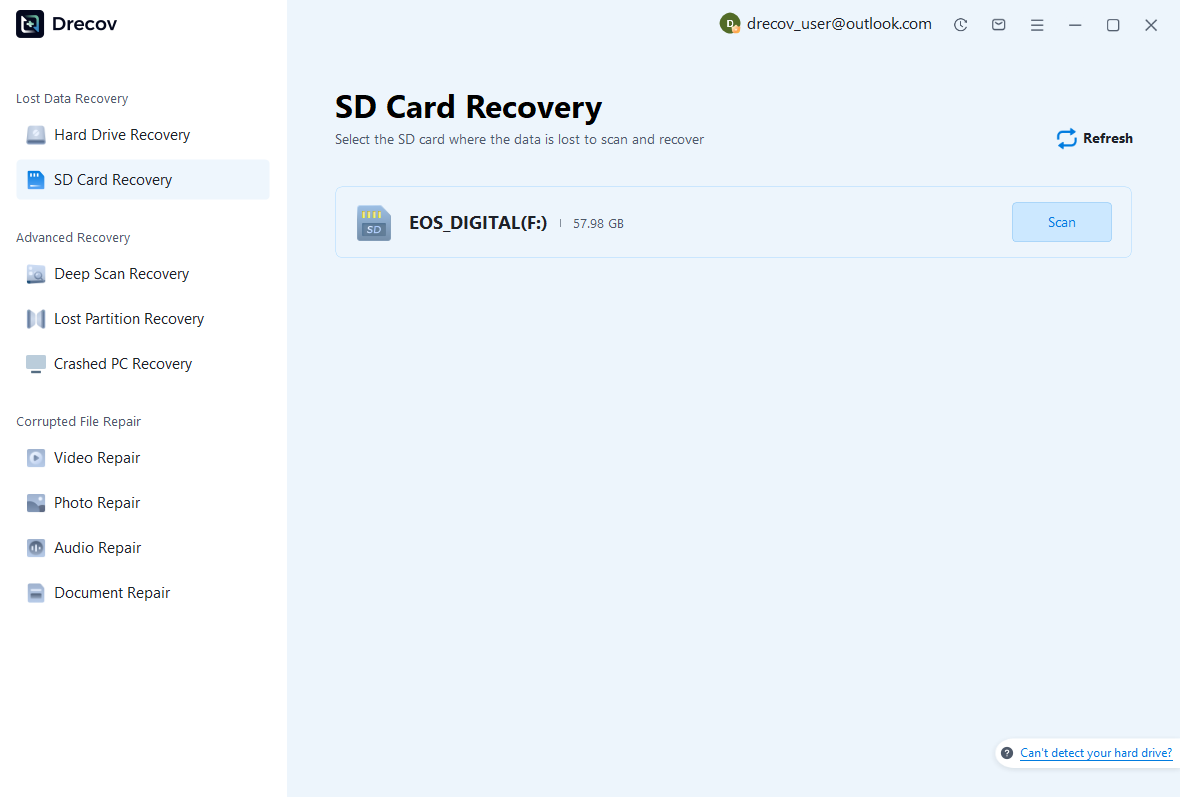
One recovery solution is PandaOffice Drecov, which may help recover:
- Deleted OGV videos
- Lost multimedia folders
- Corrupted video archives
- Formatted storage content
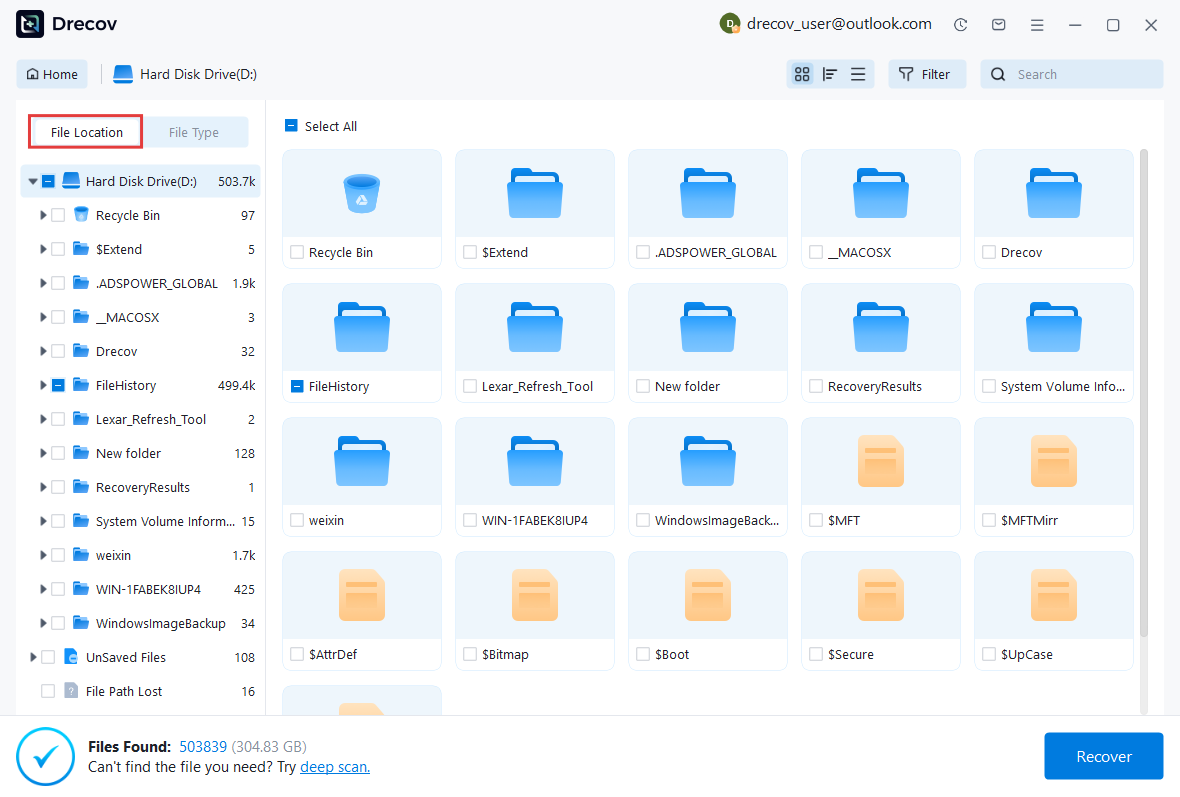
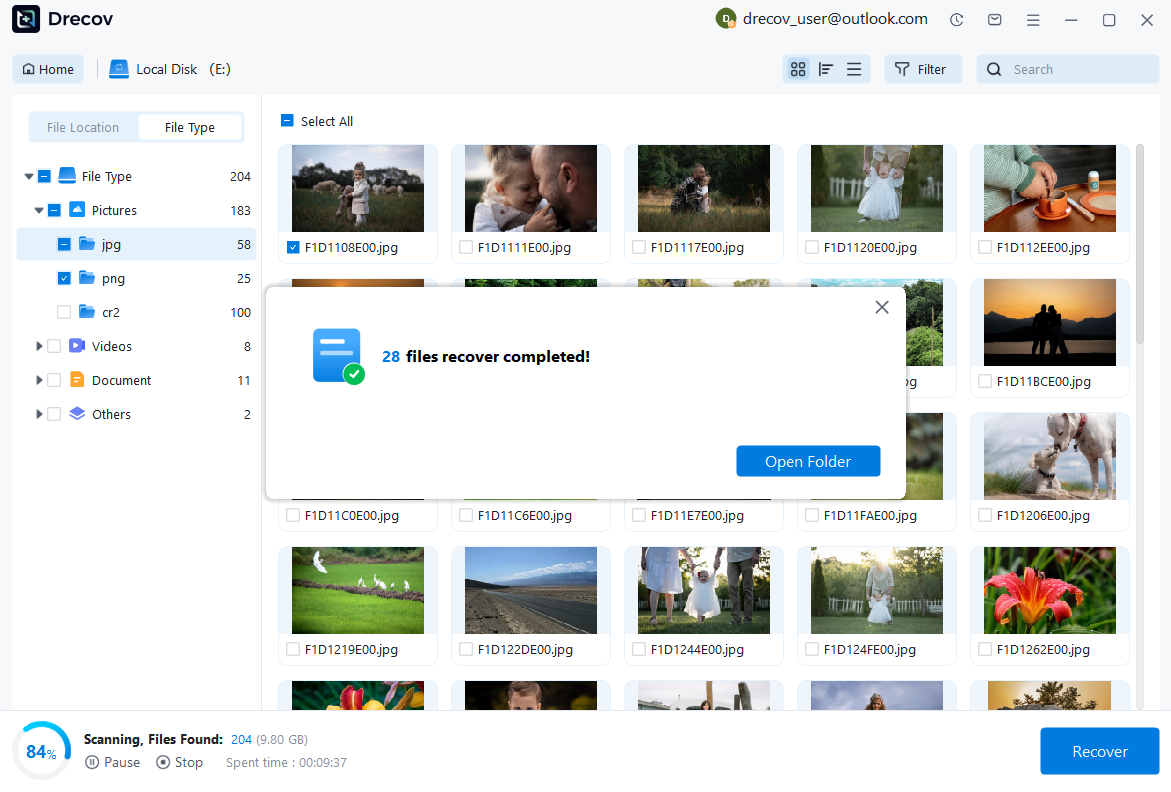
Basic recovery workflow:
- Scan the affected storage device
- Detect recoverable OGV files
- Preview video content
- Restore files to another drive
Test Environment:
- Windows 11 SSD
- Deleted OGV media library simulation
Result:
Several deleted OGV files restored successfully.
Why Choose PandaOffice Drecov Recovery Software?
PandaOffice Drecov offers a fast, secure, and user-friendly solution for recovering lost files across multiple scenarios. Whether you need email recovery, ZIP File Recovery, format data recovery, or help to recover deleted drafts Outlook, the software provides reliable recovery performance for both personal and business users.
PandaOffice Drecov supports recovery from formatted hard drives, SSDs, USB drives, SD cards, and external storage devices. Its advanced scanning engine can locate deleted archives, damaged ZIP files, lost Outlook drafts, and accidentally removed documents with high accuracy. For users searching for how to find deleted messages in Teams, PandaOffice Drecov can also help recover exported chat files, attachments, and related local cache data when available.
Key advantages include:
- Deep scan technology for complex data loss situations
- Support for emails, archives, videos, photos, and office documents
- Recovery from accidental deletion, formatting, corruption, and system crashes
- Easy preview before restoring files
- Compatible with Windows and multiple storage devices
Unlike complicated enterprise recovery tools, PandaOffice Drecov keeps the recovery process simple. Users can scan, preview, and restore files in just a few steps without technical expertise.
Whether you are dealing with lost Outlook drafts, corrupted ZIP archives, formatted drives, or missing communication data, PandaOffice Drecov provides an efficient and practical recovery experience designed to minimize downtime and protect important files.
Preventing Future OGV File Loss
Users working with the ogv file format should maintain proper backup habits.
Recommended practices:
- Store backups on external drives
- Use cloud synchronization
- Avoid unsafe USB removal
- Keep multiple copies of important videos
These steps reduce the risk of permanent multimedia loss.
⚠️Warning: Saving recovered files back to the same damaged drive may overwrite remaining recoverable data.
Test Environment:
- External HDD backup system
- Automated synchronization test
Result:
Backup copies remained intact after primary drive corruption.
Advanced OGV Conversion and Optimization Techniques
Optimizing OGV Videos for Web Streaming
One major use of the ogv format is HTML5 web streaming. Optimizing video settings improves:
- Browser compatibility
- Streaming performance
- File size efficiency
Recommended optimizations:
- Lower bitrate for web playback
- Moderate resolution
- Compatible Theora codec settings
Web developers often use OGV as a fallback video format for browser compatibility.
Test Environment:
- Apache local web server
- HTML5 embedded OGV playback
Result:
Optimized OGV files streamed smoothly through browsers.
Batch Convert Video to OGV Format
Users handling multiple files often need to convert video to ogv format in batches.
FFmpeg batch example:
for %f in (*.mp4) do ffmpeg -i "%f" "%~nf.ogv"This process helps automate:
- Web media preparation
- Archive conversion
- Open-source multimedia deployment
Batch conversion is common in:
- Educational systems
- Linux media servers
- Web hosting environments
Test Environment:
- Windows command line
- Multiple MP4 source files
Result:
Batch conversion processed all files successfully.
Reducing OGV File Size Efficiently
OGV files can sometimes become unnecessarily large.
Ways to reduce size:
- Lower resolution
- Reduce bitrate
- Compress audio settings
- Shorten frame rate
Balancing quality and file size is important for:
- Website performance
- Streaming bandwidth
- Storage efficiency
Test Environment:
- 1080p OGV source video
- Compression optimization test
Result:
File size reduced significantly with acceptable visual quality.
OGV vs Modern Streaming Formats
Is OGV Still Useful Today?
Although modern formats like MP4 and WebM dominate streaming platforms, the ogv file format still remains relevant in:
- Open-source ecosystems
- Educational projects
- Linux environments
- Browser fallback systems
Its open licensing model continues to benefit developers seeking patent-free solutions.
Test Environment:
- Browser playback comparison
- Linux multimedia testing
Result:
OGV remained functional for HTML5 compatibility use cases.
Limitations Compared With Modern Formats
Despite its benefits, OGV has limitations compared to newer codecs.
Common drawbacks:
- Larger file sizes
- Lower hardware acceleration support
- Reduced editing software compatibility
Formats like MP4 and WebM generally provide:
- Better compression
- Wider compatibility
- Faster playback optimization
Still, OGV remains valuable in open multimedia workflows.
Test Environment:
- MP4 vs OGV comparison test
Result:
MP4 delivered smaller file size at similar quality levels.
Frequently Asked Questions About OGV Files
What Is OGV Format Used For?
The ogv format is mainly used for:
- Open-source multimedia
- Browser video playback
- Educational media
- Linux systems
It supports royalty-free video distribution.
Test Environment:
- HTML5 browser playback test
Result:
OGV streamed correctly in supported browsers.
Can Windows Open OGV Files Natively?
Windows Media Player may not fully support OGV files without codecs.
Recommended players:
- VLC
- MPV
- PotPlayer
Test Environment:
- Windows 11 Pro
Result:
VLC opened OGV files without additional configuration.
Can I Convert OGV to MP4?
Yes. Tools like:
- VLC
- FFmpeg
- HandBrake
can convert OGV into MP4 for wider compatibility.
Test Environment:
- OGV to MP4 conversion benchmark
Result:
Converted MP4 files played successfully on all tested devices.
Final Thoughts on OGV File Format
Key Takeaways About OGV Videos
Understanding what is ogv format helps users manage open-source multimedia more effectively.
Important points:
- OGV is an open-source video container
- It supports browser-based playback
- VLC and FFmpeg provide strong compatibility
- Conversion tools improve usability across devices
Best Practices for Managing OGV Files
To safely manage OGV videos:
- Keep backup copies
- Use trusted media players
- Avoid interrupted file transfers
- Maintain updated codecs and software
Although OGV is less common today, it remains a useful format in many open multimedia environments.





