







We have all been there: you are working on a critical spreadsheet for hours, only to accidentally close it without saving or permanently delete it. Suddenly, days of financial forecasting, client data, or project tracking vanish. If you are panicking about how to restore deleted excel file data, take a deep breath. Data loss is incredibly stressful, but it is rarely permanent.
Whether your file disappeared due to a sudden system crash, an accidental shift-delete, or a formatted drive, recovery is highly achievable. Modern operating systems and specialized tools are designed to salvage this data. In this comprehensive guide, we will walk you through the most reliable methods to achieve successful deleted excel file recovery. While built-in manual fixes can work in basic scenarios, a professional solution like PandaOffice Drecov data recovery software offers the highest success rate for complex data loss. Let’s dive into the exact steps required to get your essential spreadsheets back.
Understanding the Basics of Deleted Excel File Recovery
Before attempting a rescue mission, it helps to understand what happens when a file is deleted. When you delete a spreadsheet in Windows or macOS, the operating system does not immediately erase the actual data from your storage drive. Instead, it simply marks that space as “available” for new data.
Why Your Excel Files Go Missing
- Accidental Bypass: Pressing
Shift + Deletebypasses the temporary storage bin entirely. - Storage Corruption: Bad sectors on your hard drive can cause file corruption.
- Unexpected Power Outages: If your PC shuts down mid-save, the file structure breaks.
Consequently, the golden rule to restore deleted excel file data is immediate cessation of use. If you continue downloading files, browsing the web, or writing new data to that drive, you risk overwriting the very sectors holding your lost spreadsheet. In these high-stakes scenarios, using PandaOffice Drecov data recovery software ensures that you can safely scan and extract these invisible files before they are gone for good.
3 Proven Solutions to Restore Your Excel Files
Depending on how your file was lost, the method to recover it will vary. Below, we have broken down the solutions from beginner-friendly manual fixes to advanced software recovery.
Solution 1: Check the Recycle Bin
Before trying advanced tactics, check the most obvious location. If you performed a standard deletion, your file is likely resting safely in your system’s temporary trash folder.
- Step 1: Double-click the Recycle Bin icon on your Desktop. If you cannot find it, you can review this guide on where is Recycle Bin in Windows 10.

- Step 2: Use the search bar in the top-right corner to type the name of your Excel file (e.g.,
.xlsx). - Step 3: Right-click on the file and select Restore. The spreadsheet will instantly return to its original folder.
Solution 2: Use PandaOffice Drecov Data Recovery Software
If you emptied your trash, you need a professional-grade tool to scan the deeper sectors of your drive. PandaOffice Drecov data recovery software is uniquely optimized to locate, reconstruct, and restore deleted excel file formats seamlessly. It handles deep-level fragmentation that standard tools often miss.
- Step 1: Launch the application. Select the specific drive or folder where your Excel file was originally stored, then click Scan.
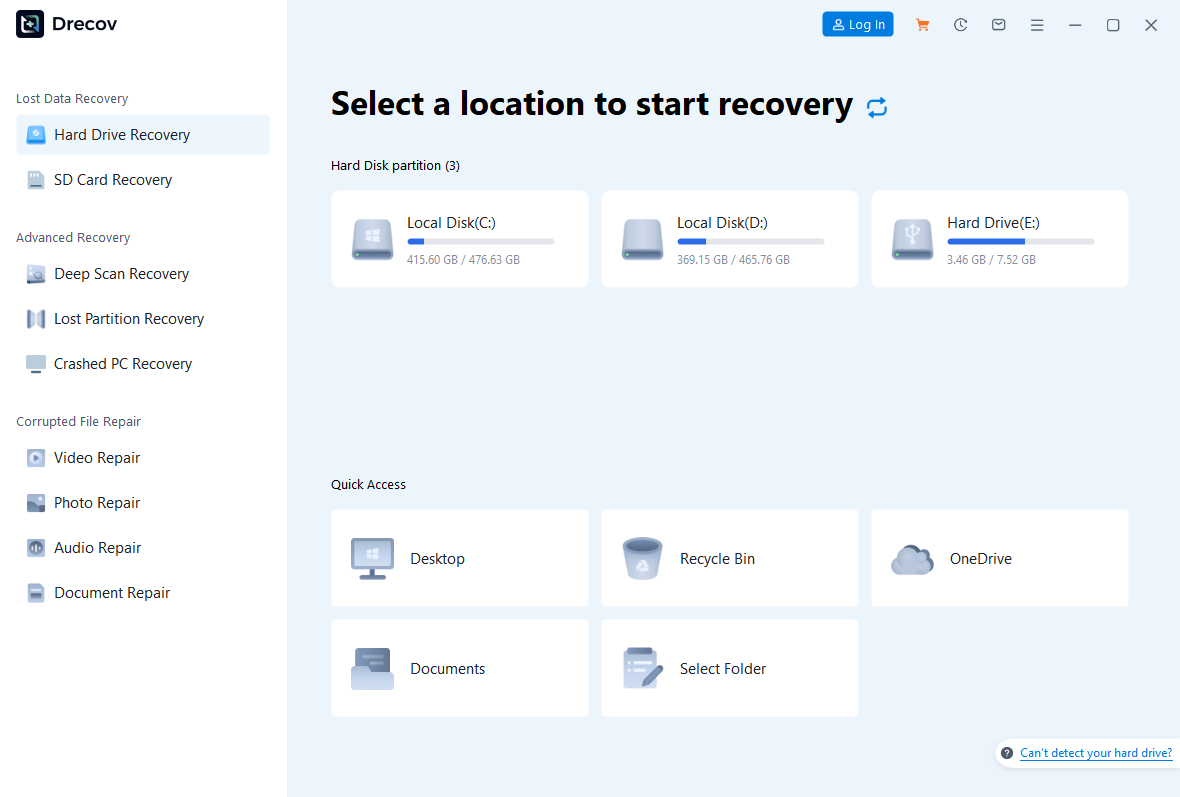
- Step 2: The software will perform a Quick Scan followed by a Deep Scan. You can use the file filter sidebar to select Document -> XLSX / XLS to narrow down results.

- Step 3: Preview the found Excel files to ensure their integrity. Select your desired spreadsheet, click Recover, and save it to a safe, external destination.
Note: If you recently cleared your desktop trash entirely, you can read our specialized deep dive on how to handle an empty recycle bin for more technical context.
Solution 3: Leverage Excel AutoRecover & Unsaved Files
Microsoft Excel features built-in safety nets called AutoRecover and AutoSave. If Excel crashed or closed unexpectedly, these background mechanisms might save your progress.
Default AutoRecover Path:
C:\Users\<UserName>\AppData\Roaming\Microsoft\Excel\
- Step 1: Open a fresh, blank Microsoft Excel workbook.
- Step 2: Click the File tab in the top-left corner and select Info.
- Step 3: Click the Manage Workbook dropdown menu and select Recover Unsaved Workbooks.
- Step 4: Browse the temporary directory for your missing file. If found, open it and immediately use
Ctrl + Sto save it to your local drive.
Alternative and Complementary Methods
If the primary options do not yield results, you can turn to native system utilities. These methods rely on your operating system having proactive backup features enabled prior to the data loss event.
| Method | Pros | Cons | Best Used For |
| Windows File History | Completely free; restores precise historical versions. | Requires an external backup drive to have been plugged in beforehand. | Restoring previous versions of an edited file. |
| System Restore Points | Restores entire directory states without third-party tools. | Might revert recently installed software updates and drivers. | Major system crashes or malware incidents. |
Restoring via Windows File History
To execute this, navigate to the folder where your Excel file used to live. Right-click an empty space inside the folder, select Properties, and switch to the Previous Versions tab. If File History was active, you will see a list of timestamps. Select a version from before the deletion occurred and click Restore.
Should a catastrophic system failure require a complete OS refresh before you can attempt these, you may need to learn how to securely reinstall Windows 10 from USB to stabilize your machine first.
Tips & Best Practices for Successful Data Recovery
Maximizing your chances of a successful deleted excel file recovery requires following strict protocols. Data sectors are fragile, and a single wrong move can corrupt a spreadsheet permanently.
- Stop Using the Drive Immediately: Furthermore, avoid installing any new applications or saving large media files to the drive containing the lost file.
- Recover to an External Device: When saving recovered data via PandaOffice Drecov data recovery software, always output the file to an external flash drive or a separate hard drive partition.
- Enable Cloud AutoSave: To mitigate future risk, link your Microsoft Excel application to OneDrive or SharePoint. Cloud storage tracks real-time version history natively, according to official Microsoft Support Documentation.
- Check the Hidden AppData Directory: Sometimes, temporary files are marked as hidden. Ensure your File Explorer settings have “Show hidden files, folders, and drives” checked.
Frequently Asked Questions
Can I restore a deleted Excel file if the Recycle Bin was emptied?
Yes. When the trash is emptied, the data still exists on your drive but is marked as invisible. You can easily retrieve it using PandaOffice Drecov data recovery software before it gets overwritten by new files.
How do I recover an Excel file that was closed without saving?
Open Excel, go to File > Info > Manage Workbook, and click Recover Unsaved Workbooks. Excel keeps temporary backups of unsaved progress in this directory.
What is the fastest hotkey for deleted excel file recovery?
If you just deleted the file while working in File Explorer, press Ctrl + Z on Windows or Cmd + Z on Mac immediately to undo the deletion.
Why can’t I open my restored Excel spreadsheet?
This usually happens due to data corruption. If new data was written to the drive after deletion, part of the Excel file may have been overwritten, causing file format errors.
Where does Excel store its temporary AutoRecover files?
By default, Windows stores these emergency backups in the hidden AppData folder:
C:\Users\<UserName>\AppData\Roaming\Microsoft\Excel\
Conclusion
In summary, discovering that an important spreadsheet has vanished is incredibly frustrating, but knowing how to restore deleted excel file entries removes the stress from the situation. Start with basic manual checks like the Recycle Bin or Excel’s AutoRecover vault. However, if your data was permanently purged or lost during a drive format, do not waste time on unreliable freeware.
Using specialized utilities like PandaOffice Drecov data recovery software provides an efficient, safe, and reliable approach to rebuilding fractured files. Implement solid cloud backup solutions today so you never have to face a data loss crisis unprotected again.






