







For usb flash backup, protect the original data first. The safest response to a removable-media backup starts with evidence, not a destructive shortcut. A working copy carried between computers needs a different plan from archival media or bootable equipment. Define what must be restorable before choosing a tool. A normal file copy is readable without special software and is ideal for documents and media. It may omit hidden structures needed for a bootable or specialty USB. Preserve folders missing from the backup or source, record the state of the original flash drive, and change one variable at a time so the result remains understandable.
For current platform behavior and command details, consult the Microsoft File History guidance. Preserve the current state before applying any modifying instruction.
usb flash backup: safe diagnosis
A sector image preserves layout for forensic or migration purposes, but it also copies empty space and logical damage. Store it on a larger healthy disk. Versioned backup protects against accidental editing and deletion because an older state remains available. Synchronization alone may propagate a deletion to both sides.
List the folders that must survive and decide how quickly they need to be restored. A simple file copy is transparent and easy to inspect. A versioned backup is better when accidental edits matter, while a disk image is reserved for cases where boot structures or a specialized layout must be preserved.
Choose Files, an Image, or Versioned History
Create a destination folder named with the device and date. Copy in manageable groups so one error does not obscure which folders were completed. Read errors, freezing, or disconnects require a change of plan. Stop ordinary copying and image the stable portions or consult a professional rather than retrying endlessly.
Copy from the USB to a healthy disk rather than moving files. A move can remove the source after transfer and leaves less evidence when an error occurs. Work in groups, note failed files, and avoid repeated retries if the device starts disconnecting or slows dramatically.
Adjacent tasks require their own checks: external drive backup planning covers the first neighboring issue, recover files from a USB drive addresses a different decision, and repair a USB only after protecting files applies when the situation has already moved into data loss. For a removable-media backup, use a linked procedure only when its symptoms match rather than combining several fixes at once.
Make the First Backup Without Hiding Errors
Compare total size, folder counts, and representative files. Open documents, play portions of videos, and extract a sample archive from the destination. Hashes can confirm bit-for-bit equality when integrity matters. A hash match cannot prove that the source file was already healthy, so open-file checks still matter.
Verification should match the content. Open spreadsheets and documents, view full-size photos, play several points in long videos, and extract a sample archive. File counts and total bytes detect obvious omissions, but they cannot prove that every file is internally readable.
Verify Content Instead of Trusting File Counts
Keep at least one copy disconnected. Ransomware, mistaken deletion, electrical failure, and theft can affect simultaneously connected devices. Encryption protects a lost backup but adds key-management risk. Store recovery information separately from the encrypted device.
For updates, use dated snapshots or versioning instead of blindly mirroring deletions. A mirror is convenient until ransomware, corruption, or an accidental delete is copied immediately to the backup. Keep at least one recent version disconnected from the working computer.
Update the Backup Without Copying Damage
File History is designed around protected Windows folders and another destination; it is not automatically a complete image of every removable device. Retire flash media that becomes read-only unexpectedly, changes capacity, or produces verification errors. Backup media should not require repeated persuasion to stay connected.
Practice restoring a small folder to a temporary location and compare it with the source. This test confirms that permissions, encryption keys, software, and documentation are sufficient. A backup that has never been restored remains an assumption rather than a dependable recovery plan.
Separate a Temporary Symptom From a Lasting Fix
A temporary success during a removable-media backup after reconnecting, restarting, or clearing one condition shows that the pathway can work; it does not prove the cause is gone. Repeat the same task with the original flash drive, then verify folders missing from the backup or source from beginning to end. Note whether the improvement survives a cold restart or safe reconnection.
If a removable-media backup follows one application, file type, port, or account, keep the scope narrow. Compare one known-good example for a removable-media backup and inspect the relevant setting before changing system-wide storage. Broad cleanup, formatting, or partition work is not justified by this isolated a removable-media backup symptom.
When a removable-media backup follows the original flash drive across ports or computers, preserve data and retire the device after verification. When a removable-media backup stays with one computer, investigate that machine’s software, firmware, connection path, and storage layout. This distinction prevents unnecessary work on healthy media.
This check is especially useful for usb flash backup. Only move toward synchronizing, repairing, or retiring the source after the recovered or copied set has been opened and sampled. Keep notes about an incomplete copy, deletion, or inaccessible device, because recurrence after a repair often reveals an unstable source or an automated process that the first change did not address.
Reduce the Chance of Another A Removable-Media Backup
It helps diagnose usb flash backup without changing the source data. Keep one verified copy of folders missing from the backup or source outside the original flash drive, and decide how often it must be updated from the amount of work you can afford to lose. Label storage used for a removable-media backup clearly and remove it safely when applicable. Preserve encryption keys associated with the original flash drive, note unusual errors, and retire it when disconnections or verification failures recur.
Document the settings and test that resolved a removable-media backup. After an update, migration, or hardware change, repeat that test before deleting the previous backup of folders missing from the backup or source. If an incomplete copy, deletion, or inaccessible device occurs again, compare the new evidence with the saved baseline rather than immediately repeating synchronizing, repairing, or retiring the source. The resulting a removable-media backup record shortens diagnosis without turning every warning into an invasive repair project.
Recover Files Affected by a removable-media backup
PandaOffice Drecov is Windows data recovery software for PCs, USB drives, SD cards, memory cards, hard drives, SSDs, and external drives. In a removable-media backup, its read-only workflow is relevant after an incomplete copy, deletion, or inaccessible device, provided the original flash drive remains stable and recognizable. Quick Scan, Deep Scan, filtering, preview, and recovery to a selected healthy destination separate the search for folders missing from the backup or source from synchronizing, repairing, or retiring the source. Drecov does not fix physical hardware or restore overwritten bytes.
⚠ Warning: Install it on a drive different from the one where your data was lost to prevent overwriting.
Step 1: Open Drecov and select the source involved in a removable-media backup
Stop writing to the original flash drive and prepare another healthy device with enough free space. Do not install Drecov on the partition that held folders missing from the backup or source. Open the program and identify the original flash drive by capacity and context before selecting it. If the original flash drive disconnects, clicks, changes capacity, or produces severe read errors, stop direct scanning and seek imaging or professional recovery.

Step 2: Start Quick Scan for the missing material
Run Quick Scan first and look specifically for folders missing from the backup or source. Browse the former paths and categories where folders missing from the backup or source belonged rather than selecting every result immediately. This initial pass can locate recently lost entries without changing the original flash drive.
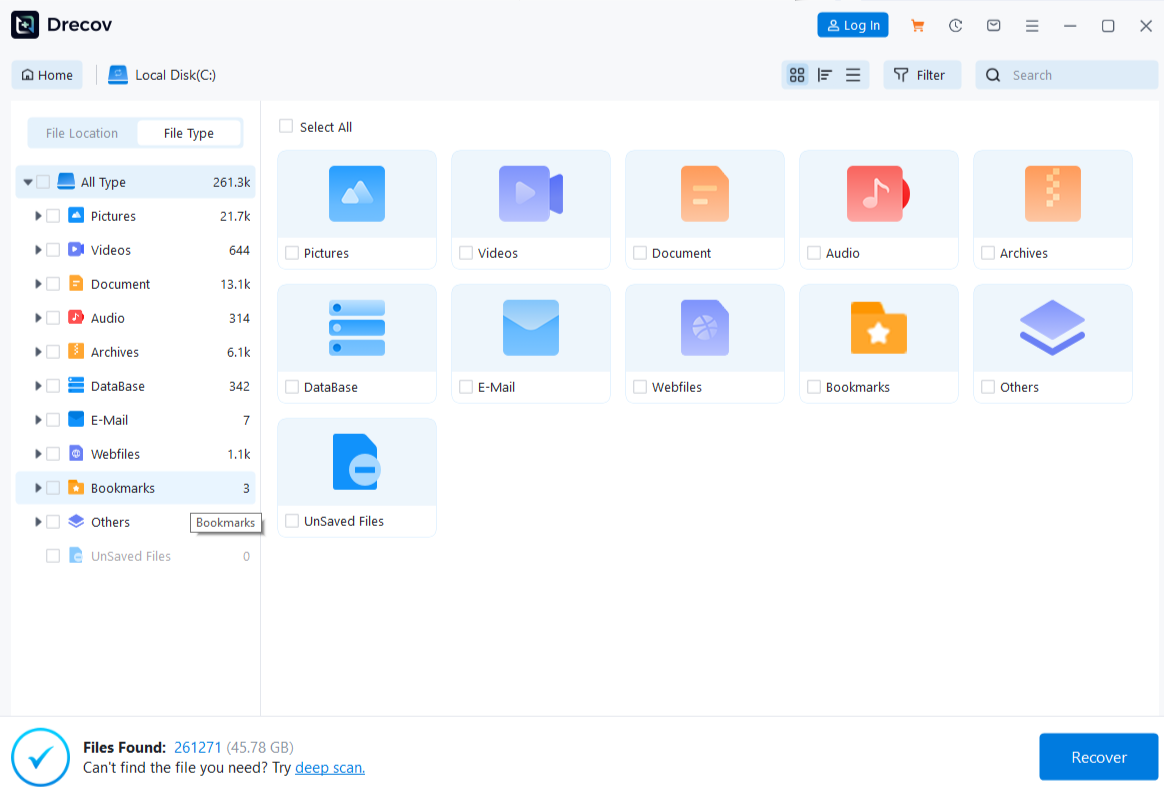
Step 3: Use Deep Scan only if this source remains stable
If Quick Scan does not locate the required material and the original flash drive remains stable, continue with Deep Scan. The deeper search may find content whose original folder record is gone, but it cannot reconstruct areas overwritten after an incomplete copy, deletion, or inaccessible device.
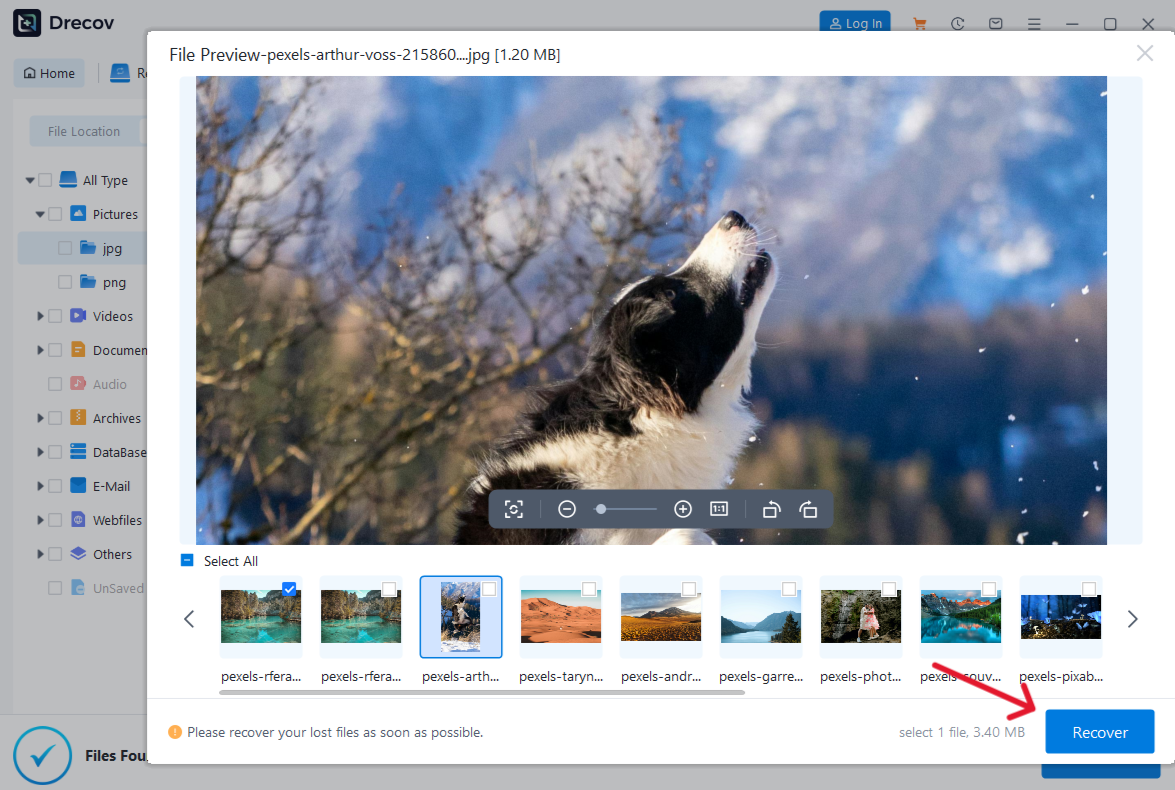
Step 4: Filter and preview files relevant to a removable-media backup
Filter by file type, filename, former path, size, or date where those details are available. Preview several examples of folders missing from the backup or source. A successful preview of folders missing from the backup or source shows that a sample can be decoded; it does not certify every page, frame, linked item, or archive member.
Step 5: Recover to a healthy destination and verify the result
Recover selected items to the prepared healthy device, never to the original flash drive. If folders missing from the backup or source are not where expected, check the Drecov folder or Recovery folder. Open samples, compare expected sizes and dates, and leave the original flash drive unchanged until the important results are verified. Only then consider synchronizing, repairing, or retiring the source.
⚠ Warning: Install it on a drive different from the one where your data was lost to prevent overwriting.
Questions About Flash-Drive Backups
Is copying a USB enough?
It is enough for ordinary files when the copy is complete and verified, but not always for boot structures or specialty layouts.
Is synchronization a backup?
Only when versions or another protected copy remain available; a mirror can reproduce deletions and corruption.
Should I image the entire USB?
Use an image when layout matters or the medium is being preserved for analysis. Ordinary documents are easier to restore from file copies.
How often should I update it?
Base frequency on how much work you can afford to lose, and keep at least one disconnected version.
How do I verify a flash backup?
Compare counts and sizes, open representative files, and perform a small test restore.
Conclusion
File History is designed around protected Windows folders and another destination; it is not automatically a complete image of every removable device. Retire flash media that becomes read-only unexpectedly, changes capacity, or produces verification errors. Backup media should not require repeated persuasion to stay connected. For a removable-media backup, the safest plan protects folders missing from the backup or source first, verifies each result, and changes only the layer identified by the evidence.
⚠ Warning: Install it on a drive different from the one where your data was lost to prevent overwriting.





